
Rider Strong's $30,000 pay rise drama reveals Ben Savage's windfall
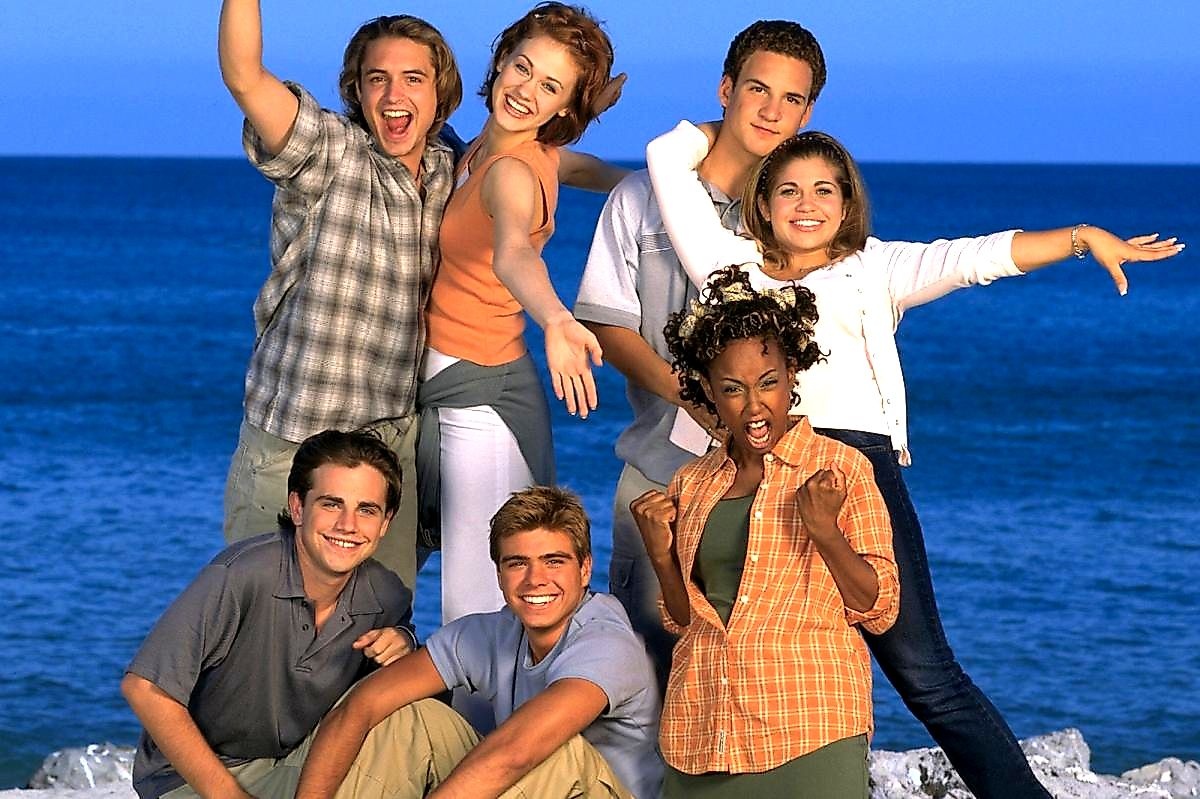
# **Rider Strong Accuses Ben Savage of “Screwing” Him Over a $30,000‑Per‑Episode Pay Rise** The final chapter of *Boy Meets World* may have ended on a laugh track, but behind the scenes a bitter contract battle left a small group of former teens at odds.
Rider Strong, who portrayed the long‑suffering Shawn Hunter, now says he was left “completely screwed” by the same producers that handed Ben Savage, the former Cory Matthews, a windfall that eclipsed their own paychecks.
When the beloved sitcom wrapped in 2000, the studio announced a seventh season that would bring the series to a neat conclusion. What the cast never anticipated was how that decision would split them into two camps and set a long‑lasting wedge between friends.
Strong’s account, revealed in the new book *Book Meets World: The Definitive Inside Story of the Hit Sitcom*, paints a portrait of miscommunication, personal ambition and a power‑play that still echoes in the actors’ lives today. --- ## Background & Context In the mid‑1990s, *Boy Meets World* had grown into a cultural touchstone for a generation of teens and families.
By 1999, the show had entered its seventh year, and the network had already lined up a new season that promised to close the show on a high note. The cast, now in their early forties, had mixed feelings about extending the show.
Rider Strong, who had been ready to leave the spotlight to pursue a college degree, found himself caught in a contractual limbo that he later described as “completely screwed.” Strong’s misunderstanding began with a meeting with the series creator, Michael Jacobs.
The actor had believed he was bound by contract to return for an eighth season, a misunderstanding that left him feeling blindsided when the producers clarified that it was a discussion about a seventh season.
Jacobs, in a move that seemed intended to keep the stars on board, relayed the miscommunication to the executive team. Strong realized too late that he had already agreed to a contract renewal without fully grasping the financial implications.
He had not considered walking away after his existing contract expired at the end of season six, and his manager’s incentive structure—who only earned when Strong was on set—further sealed the deal.
In contrast, Ben Savage, who had already been accepted to Stanford University, used his imminent college plans as leverage. Savage approached negotiations with the threat of “Are you going to not allow me to go to college?” This stance paid off.
Savage secured a pay raise that brought him close to, if not equal with, William Daniels, the show’s iconic Mr. Feeny, who earned a six‑figure salary Meanwhile, Will Friedle, who played Eric Matthews, and Strong themselves were still making far less, despite their own joint push for equal wages.
Danielle Fishel, who portrayed Topanga Lawrence, received a raise to $30,000 a figure that was still roughly 20% lower than the amounts paid to Strong and Friedle. The disparity between the actors’ salaries was not solely a matter of individual bargaining power.
Strong’s book suggests a systemic lack of communication among the cast, a failure to coordinate a collective approach that might have secured more equitable compensation for everyone.
The absence of a united front left the actors to navigate a maze of negotiations in isolation, a mistake that has left lingering resentment. --- ## What People Are Saying Strong’s revelation that he was “completely screwed” by the producers has resonated with former colleagues and fans alike.
In his book, he underscores how the contractual confusion left him feeling trapped: “I thought, why is nobody looking out for me and just saying, ‘Rider, if you don’t want to do this, you don’t have to’?” The tone suggests a broader sense of betrayal that extends beyond the specific financial terms.
Will Friedle, who now co‑hosts the popular rewatch podcast *Pod Meets World*, has been vocal about his frustrations.
In 2023, Friedle told reporters that the fallout with Savage was not born of an explicit fight but rather an abrupt decision by the former castmate to “disappear.” He has maintained that the break was one-sided, a painful outcome that still haunts the trio’s dynamic.
By June, Friedle expressed that he had not given up on the friendship, “I know I’m shouting into the void, but I’m going to keep doing it,” hinting that the door remains ajar, though the timing of its reopening is uncertain.
The cast’s feelings about their shared history are further complicated by their public personas. Rider Strong, who has been open about his career struggles, is now faced with a narrative that contrasts his own experiences against the backdrop of a teammate’s triumph.
He frames the situation as a cautionary tale about how professional relationships can fracture when financial negotiations are handled in silos. The contrast between Strong’s modest pay and Savage’s lucrative deal underscores the importance of collective bargaining and transparent communication in creative industries.
For audiences, the revelations add a new layer of intrigue to a beloved sitcom. Many fans, who grew up laughing at the show’s quirky moments, are now re‑examining the behind‑the‑scenes dynamics that shaped the final season.
Social media discussions swirl around the fairness of the pay disparities and the ethics of using future education as leverage in contract talks.
The conversation is not just about money; it’s about the camaraderie that once defined a generation and how it can erode when business interests take center stage. --- ## What Happens Next The fallout between Rider Strong, Ben Savage, and the rest of the original cast remains unresolved, but the actors are not standing still.
Strong’s book has already sparked interest in the financial mechanics of television contracts, prompting industry insiders to reassess how compensation is negotiated for long‑running shows. His detailed account may serve as a blueprint for actors who find themselves in similar contractual quagmires.
Will Friedle’s ongoing outreach suggests that a reconciliation could be possible, but it hinges on whether Ben Savage is willing to re-engage.
Friedle has continued to reach out indicates a genuine desire to mend ties, though the practicalities of re‑integrating into the *Boy Meets World* brand—especially given Savage’s current commitments—remain uncertain.
Meanwhile, the cast’s podcast *Pod Meets World* has been a forum for airing grievances and offering insights into the series’ legacy. The show’s continued popularity hints that fans remain invested in the personal stories of the actors, even as they grapple with their own professional challenges.
The podcast could potentially bridge the divide, as Strong and Friedle have shown a willingness to discuss their experiences openly, and if Savage chooses to participate, it may catalyze a broader conversation about equity and solidarity among former cast members.
From an industry perspective, the saga has already prompted studios to review their contract practices, especially for shows with long runs. The case of *Boy Meets World* has highlighted the need for transparent, collaborative negotiations and clearer communication between talent and executives.
Whether these changes will ripple across other series remains to be seen, but the conversation has already begun, spurred by a former teen star’s candid disclosure of what happened behind the curtain. --- The final season of *Boy Meets World* ended on a nostalgic note for fans, but the financial battles that raged behind the scenes have left an indelible mark on the cast.
Rider Strong’s story reveals how a misunderstanding can spiral into a bitter divide, while Ben Savage’s decisive negotiation shows the power of strategic leverage.
The next chapter—whether it is reconciliation, legal settlements, or industry reform—remains unwritten, but the drama that unfolded on the set of a 1990s sitcom continues to resonate with a new generation of viewers.
At a Glance
- Rider Strong alleges he was ‘completely screwed’ by a mis‑communicated contract, feeling betrayed after a $30,000‑per‑episode pay rise for Ben Savage.
- Ben Savage leveraged imminent college plans to secure a windfall that eclipsed other cast members’ salaries, sparking a rift with Strong and Friedle.
- The fallout has prompted industry scrutiny over collective bargaining, contract transparency, and the lasting impact on former teen‑star relationships.
Why It Matters
Our Take
GoNews Pulse Editorial Team
This article was prepared for publication by GoNews Pulse and checked for publication requirements under our editorial standards. We review available information and correct material errors when they are identified.
Quick Answers
- What is the latest update on this story?
- Strong says the $30,000-a-episode pay rise left him feeling ‘completely screwed’ after a mis‑handled contract, sparking a feud with Ben Savage.
- Who is this story about?
- This article covers developments related to Rider Strong's $30,000 pay rise drama reveals Ben Savage's windfall. GoNews Pulse's editorial team monitors the story and updates the article as new verified information becomes available.
- Where can I read more about celebrity news?
- GoNews Pulse publishes original reporting on celebrity news and related entertainment news. Visit the homepage or browse the section dedicated to this story for the latest coverage.
More From This Section
Reese Witherspoon's $2M per episode deal blows Hollywood's pay norms
The revelation that Zendaya also earns $1M alongside Witherspoon's $2M, sent shockwaves through Hollywood's contract standards and hinted at a new era of star power.
John Mulaney's 7th SNL Host Gig Drops New York Musical, Fans Are Shocked
Mulaney jokes that the New York Musical will feature a lobster-themed chorus, a detail that has fans buzzing.
Sam Hartman's 27‑Year‑Old QB Switches to The Bachelor, Fans Shocked
Hartman admitted he first turned down the role, but a pitch from former star Jesse Palmer won him over—and now he'll have contestants battle in football challenges.