
Netflix’s ‘Minimum Wage’ 15‑Minute Episodes Shock 2.4M Viewers in 4 Hours
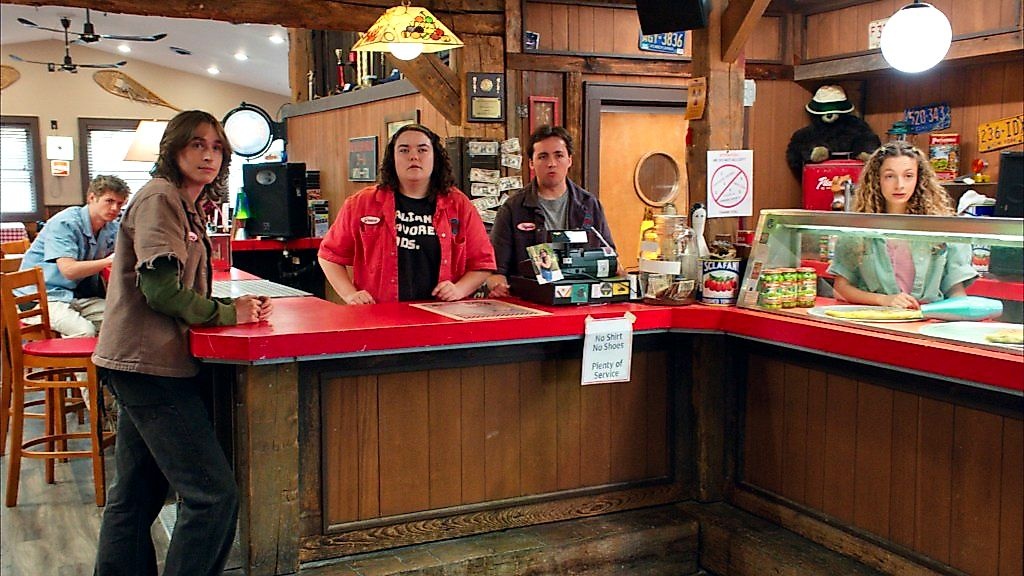
# Netflix’s ‘Minimum Wage’ Shocks Viewers With 15‑Minute Episodes, 2.4M Hits In an age where audiences can scroll from one bite‑size clip to another in a heartbeat, Netflix has turned a kitchen into a proving ground for a new kind of comedy.
The first season of *Minimum Wage*, a sitcom that drips with adolescent angst and pizza‑shop banter, debuted in late October and immediately cracked the platform’s global top‑ten charts, pulling in 2.4 million views in under four hours of total runtime.
The series defies the industry’s long‑standing formula of 22‑minute sitcoms and hour‑long dramas, offering instead 14 episodes that range from a brisk 12 minutes to a relaxed 20, each crafted to keep viewers glued to the screen without a single filler frame.
The premise is deceptively simple: a rag‑tag crew of high‑schoolers runs a neighborhood pizza joint, The Slice Club, and must juggle late‑night deliveries, pop‑quiz emergencies, and the occasional awkward crush.
The ensemble—Grace Reiter, Aidan Micho, Hyde Healy, Julia Dicesare, Luke Burke, Ryan Micho, Tommy Armstrong, and Randall Park—plays off a chemistry that feels more like an improv jam than a tightly scripted show.
Their humor is fast, their gags tight, and the stakes, while low‑profile, feel crushingly real in the high‑pressure world of teenage entrepreneurship. Beyond its comedic chops, *Minimum Wage* has become a case study in how streaming platforms can experiment with format.
While the typical U.S. sitcom still leans toward a half‑hour slot, Netflix’s insistence that the new series run between twelve‑and‑a‑half and twenty minutes forced its creators to rethink pacing, dialogue, and structure.
By slashing each episode to roughly fifteen pages of script, the writers—Jeremy Garelick and Will Phelps of American High—were pushed to eliminate “fat” and keep narrative momentum razor‑sharp.
Their background in YouTube sketch comedy and late‑night intern productions gave them a unique perspective on what truly captivates an audience in the short‑form era. ## Background & Context American High, the studio behind *Minimum Wage*, is not your typical Hollywood outfit.
Founded by Garelick, a former assistant to Joel Schumacher, and Phelps, the pair once purchased a high school in upstate New York to produce a slate of films such as *Banana Split* and *Pete Davidson‑starrer Big Time Adolescence*.
Their experience in low‑budget, high‑energy projects equipped them with a flexible, trust‑based approach that Netflix prized.
When the streaming giant demanded episodes that were a minimum of twelve‑and‑a‑half minutes long, the duo saw an opportunity to invent a new narrative structure rather than conform to the 22‑minute blueprint that has dominated network television for decades.
The process of creating *Minimum Wage* was, in many ways, a throwback to the early days of online comedy. What began as a series of midnight YouTube sketches, shot with interns as camera operators and a building manager handling the boom mic, evolved into a polished, scripted series.
Yet even as the writers penned fifteen‑page scripts, they encouraged the cast to improvise, blending traditional screenplay techniques with the spontaneous flair that defines TikTok‑style humor.
The result was a show that feels fresh and immediate, a kind of “SpongeBob‑length” episode that delivers punchlines and emotional beats in a single sitting. Industry observers have noted that *Minimum Wage* is part of a broader shift toward shorter formats on streaming platforms.
HBO Max’s *Stuart Fails To Save The Universe* and Netflix’s own *Tires*, starring Shane Gillis, all feature episodes that hover around the 18‑ to 23‑minute mark.
Chuck Lorre, who has built his career on network sitcoms, has publicly argued that the old 22‑minute length is an artifact of advertising needs, no longer relevant in a subscription‑based ecosystem.
The current trend suggests a future where the length of a show is dictated by content quality rather than slotting constraints. ## What People Are Saying Will Phelps has been candid about the creative philosophy behind *Minimum Wage*.
He says the future belongs to these quick, punchy episodes that leave no room for redundancy. “You can captivate an audience for fifteen minutes really well,” he tells us, recalling how the cast, accustomed to crafting micro‑moments for social media, thrives in a medium that rewards tight storytelling.
Jeremy Garelick, meanwhile, frames the show as a hybrid of traditional Hollywood studio work and grassroots production, stating, “We’ve become a traditional Hollywood studio, but we give a lot more trust to the creators and the artists.” Their partnership reflects a larger industry conversation about how to balance commercial viability with creative autonomy.
Behind the scenes, the show’s success was buoyed by Netflix’s willingness to invest beyond the initial order. Originally greenlit for twenty episodes, *Minimum Wage* ended up with 28 scripts, a move that required the studio to convince the platform that producing the additional ten would be cost‑effective.
“We don’t get hung up on the actual business side of things,” Phelps remarks. “We’ll just do it for the love of the game.” This attitude underscores a growing sentiment that short‑form content can be produced efficiently without sacrificing production values.
The reception from viewers has been equally enthusiastic. In its first month, the series secured a spot in Netflix’s global top ten, a feat rarely achieved by a show under four hours of total runtime.
Critics and fans alike praised its authentic portrayal of teenage ambition and its quick-fire humor, noting that the show’s brevity only amplifies its energy.
The success has sparked speculation that the format could become a template for future projects, not only on Netflix but across the streaming landscape. ## What Happens Next American High has already mapped out a long‑term vision for *Minimum Wage*.
After the first fourteen episodes, the team has drafted roughly fifty more scripts, signaling a potential second part of season one or an entirely new season slated for spring 2027.
The creators remain open to redefining the show’s trajectory based on audience engagement and platform metrics, but the commitment to short, sharp storytelling appears firm. Beyond the pizza shop, Garelick and Phelps are testing new concepts across a suite of YouTube channels that have amassed millions of subscribers.
American High Shorts, with 4.5 million viewers, College Life, and the upcoming Entry Level and Gurgle, USA, all serve as incubators for ideas that could translate into full‑scale series.
The process involves months of online testing, audience building, and iterative refinement—an approach that positions the duo at the vanguard of a new TV model that values community involvement from the earliest stages. In the coming months, Netflix may also look to capitalize on the format’s scalability.
The platform’s global appetite for fresh content, combined with the proven viability of 15‑minute episodes, could lead to more series that emulate *Minimum Wage*’s blend of comedy, improvisation, and real‑world stakes.
Whether this will herald a broader shift away from longer formats remains to be seen, but the current momentum suggests that the future of streaming may be, paradoxically, a shorter, more focused journey.
The success of *Minimum Wage* reminds us that innovation can come from the kitchen—literally and figuratively—when creators are willing to cut the fluff and serve audiences exactly what they crave: quick, sharp, and irresistibly human storytelling.
At a Glance
- Netflix’s new sitcom *Minimum Wage* delivers 14 fifteen‑minute episodes that amassed 2.4 million views in under four hours, topping global charts.
- Created by American High, the series blends YouTube‑style improvisation with tightly‑scripted narratives, cutting each episode to roughly fifteen pages to keep momentum razor‑sharp.
- The show's success signals a broader industry pivot toward short‑form storytelling, challenging the 22‑minute sitcom standard and opening doors for future streaming experiments.
Why It Matters
Our Take
GoNews Pulse Editorial Team
This article was prepared for publication by GoNews Pulse and checked for publication requirements under our editorial standards. We review available information and correct material errors when they are identified.
Quick Answers
- What is the latest update on this story?
- The rag‑tag crew of high‑schoolers runs a pizza joint while delivering punchy jokes in a brisk 15‑minute format, earning 2.4 million views in under four hours.
- Who is this story about?
- This article covers developments related to Netflix’s ‘Minimum Wage’ 15‑Minute Episodes Shock 2.4M Viewers in 4 Hours. GoNews Pulse's editorial team monitors the story and updates the article as new verified information becomes available.
- Where can I read more about celebrity news?
- GoNews Pulse publishes original reporting on celebrity news and related entertainment news. Visit the homepage or browse the section dedicated to this story for the latest coverage.
More From This Section

Trump says Putin bond stops Russia's nuclear satellite launch—see why
The former president says Putin’s bond keeps the nation safe, yet Russia’s nuclear satellite launch threatens a treaty breach that could cripple satellite networks.

Porsha Williams' Engagement to Patrice 'Sway' McKinney Shocked Fans
In her Instagram video, Porsha Williams said, “I love you, and I want to marry you,” as a sparkling diamond ring shone beside her, making fans swoon.

Sofía Vergara's 24‑foot Statue in Barranquilla Shocks Fans
She even got a life‑scale bronze replica from the sculptor, and the mayor honored her as a Distinguished Barranquillera today.