
Trump says Putin bond stops Russia's nuclear satellite launch—see why
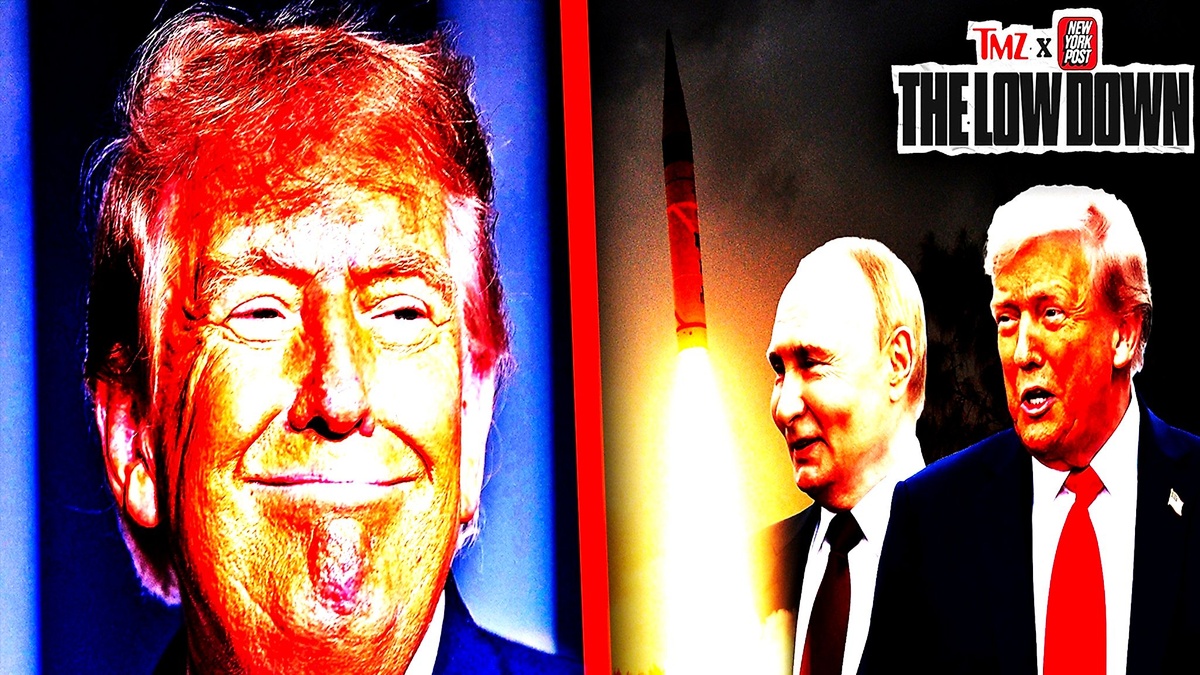
**Trump’s Friendship With Putin Sparks Over Russia’s Satellite Launch** Donald Trump has repeatedly described his relationship with Russian President Vladimir Putin as a bond that protects the United States.
In recent comments, the former president insisted that even if the Kremlin were not a friend of America, his personal rapport with Putin keeps the nation safe.
Yet the world’s attention has shifted to a different, far more unsettling issue: Russia’s potential launch of a satellite armed with a nuclear weapon, possibly as early as next month.
The prospect of a nuclear‑armed satellite raises serious concerns about treaty violations and the destabilizing effect of space‑borne weapons on global communications.
While the weapon would not be aimed at civilian targets on Earth, a detonation in orbit could wreak havoc on satellites that underpin everything from navigation to finance.
The news arrived just after Trump’s summit with Putin and Chinese President Xi Jinping, a meeting that had focused on nuclear disarmament and arms control. The new reports, therefore, appear to signal a reversal rather than a relaxation of tensions.
In a newly launched online series that blends political analysis with pop‑culture commentary, the debate erupted. One of the hosts—an investigative journalist—highlighted the timing of the satellite news, suggesting that it might be a strategic counter‑move by Russia in response to the summit.
Another panelist raised a broader question: what should the U.S. do in the face of adversaries who are simultaneously engaging in diplomatic outreach and quietly advancing military capabilities?
The discussion, streamed in real time to a global audience, underscores the growing disconnect between diplomatic rhetoric and military maneuvering. ## Background & Context Russia’s pursuit of space‑borne nuclear weapons is not a new idea.
The country has long maintained a clandestine program aimed at developing a system that could deliver a nuclear payload from orbit.
In 2023, the United Nations Office for Disarmament Affairs noted that Russia had conducted several tests of the technology that could allow a satellite to detonate a nuclear warhead in space.
While the specifics remain classified, the International Court of Justice and the Outer Space Treaty both prohibit the placement of nuclear weapons in orbit, categorizing such actions as a grave breach of international law.
The potential launch, rumored to be slated for the following month, would violate the 1967 Outer Space Treaty and the 1972 Nuclear Non‑Proliferation Treaty. Even if the satellite were never deployed, the mere act of preparation signals an aggressive posture that can undermine global trust.
Experts point to the risk of a cascading failure: a detonation could generate a charged particle cloud that would interfere with satellite operations worldwide, leading to disruptions in GPS navigation, communications, and even the power grid.
In a world where virtually every critical infrastructure relies on space‑based assets, the stakes are staggering. Trump’s comments arrive amid a broader context of strained U.S.–Russia relations.
Since the 2016 election, the United States has imposed sanctions on Russian officials and entities, In contrast, the former president has repeatedly suggested that a personal relationship with Putin could be leveraged to keep the nation safe.
The contradiction between policy actions and personal statements has long been a subject of scrutiny among scholars of international relations. ## What People Are Saying The online series, a collaboration between two major media entities, quickly became the site of a spirited debate.
One host, a seasoned journalist known for investigative reporting, emphasized the significance of the satellite timing. He noted that the announcement came on the heels of the U.S.–Russia summit, which had focused on nuclear disarmament.
The implication, he argued, is that Russia may be playing a double game: publicly engaging in dialogue while quietly moving forward with a disruptive military capability. Another contributor, a political analyst, challenged the notion that personal friendship can translate into strategic advantage.
He questioned what actions the United States should take when its own leadership appears to be endorsing an adversary’s clandestine program. His line of questioning highlighted a broader concern about the erosion of institutional norms and the reliance on individual relationships to secure national interests.
Audience reactions were swift. Viewers posted comments ranging from incredulous support for Trump’s stance to fierce criticism of what they saw as a dangerous undermining of U.S. security policy.
Some commentators drew parallels to historical episodes where personal diplomacy led to unintended escalation, . Others argued that a single conversation cannot alter the trajectory of a nation's defense strategy, especially when that nation is pursuing a program that contravenes international treaties.
The discussion also touched on the role of media in shaping public perception. By broadcasting the debate on a platform accessible to millions, the hosts inadvertently amplified the narrative that U.S.–Russia relations are more intimate and less adversarial than the policy record suggests.
This, critics argue, risks normalizing a relationship that could embolden Russia to take bolder actions in the international arena. ## What Happens Next The next month will be pivotal. If Russia proceeds with the satellite launch, it will trigger an immediate response from the United Nations Security Council.
The International Court of Justice is already poised to convene an emergency session to address the treaty violations. Meanwhile, the United States will likely consider diplomatic and economic measures, potentially escalating sanctions against Russian entities involved in the program.
At the same time, the Biden administration faces a strategic decision: whether to engage in direct talks with Russia about the space program or to push for a multilateral framework that limits space‑borne weapons.
The policy briefings in Washington suggest that the administration is leaning toward a multilateral approach, emphasizing the need for robust verification mechanisms. This could involve cooperation with allies such as the European Union and NATO members to establish monitoring protocols for space assets.
On the domestic front, the debate may influence upcoming congressional hearings. Senators with expertise in defense and international affairs have signaled intent to question the administration’s stance on Russia’s space program.
The hearings will likely probe the balance between diplomatic engagement and enforcement of international law, as well as the implications for U.S. national security. As for Trump, his public statements are already drawing renewed scrutiny.
Political analysts speculate that his comments could be part of a broader strategy to shape the narrative around U.S.–Russia relations, potentially to bolster his standing among certain voter blocs that favor a more conciliatory approach.
Whether his position will affect policy or merely fuel public debate remains to be seen. In any case, the unfolding situation underscores the fragility of space security and the need for a coordinated, transparent response that transcends individual relationships.
The next several weeks will reveal whether the international community can unite to prevent the militarization of orbit, or whether a single nation’s clandestine program will set a dangerous precedent. The world watches, and the stakes could not be higher.
At a Glance
- Trump claims his friendship with Putin protects U.S. security, even as Russia plans a nuclear‑armed satellite launch.
- Russia’s planned launch would violate the Outer Space Treaty and NPT, risking global satellite infrastructure.
- Experts warn that diplomatic rhetoric masks a covert military strategy, prompting calls for multilateral verification and sanctions.
Why It Matters
Our Take
GoNews Pulse Editorial Team
This article was prepared for publication by GoNews Pulse and checked for publication requirements under our editorial standards. We review available information and correct material errors when they are identified.
Quick Answers
- What is the latest update on this story?
- The former president says Putin’s bond keeps the nation safe, yet Russia’s nuclear satellite launch threatens a treaty breach that could cripple satellite networks.
- Who is this story about?
- This article covers developments related to Trump says Putin bond stops Russia's nuclear satellite launch—see why. GoNews Pulse's editorial team monitors the story and updates the article as new verified information becomes available.
- Where can I read more about celebrity news?
- GoNews Pulse publishes original reporting on celebrity news and related entertainment news. Visit the homepage or browse the section dedicated to this story for the latest coverage.
More From This Section

Porsha Williams' Engagement to Patrice 'Sway' McKinney Shocked Fans
In her Instagram video, Porsha Williams said, “I love you, and I want to marry you,” as a sparkling diamond ring shone beside her, making fans swoon.

Sofía Vergara's 24‑foot Statue in Barranquilla Shocks Fans
She even got a life‑scale bronze replica from the sculptor, and the mayor honored her as a Distinguished Barranquillera today.

Matthew Perry's Grave Marker Breaks 'Friends' Tribute, Says Family
The new plaque reads ‘REST NOW’ and ‘WE LOVE YOU WITH OUR WHOLE HEARTS’, replacing the familiar Friends shoutout.