
Netflix's $400M Radford bid shatters LA studio expectations
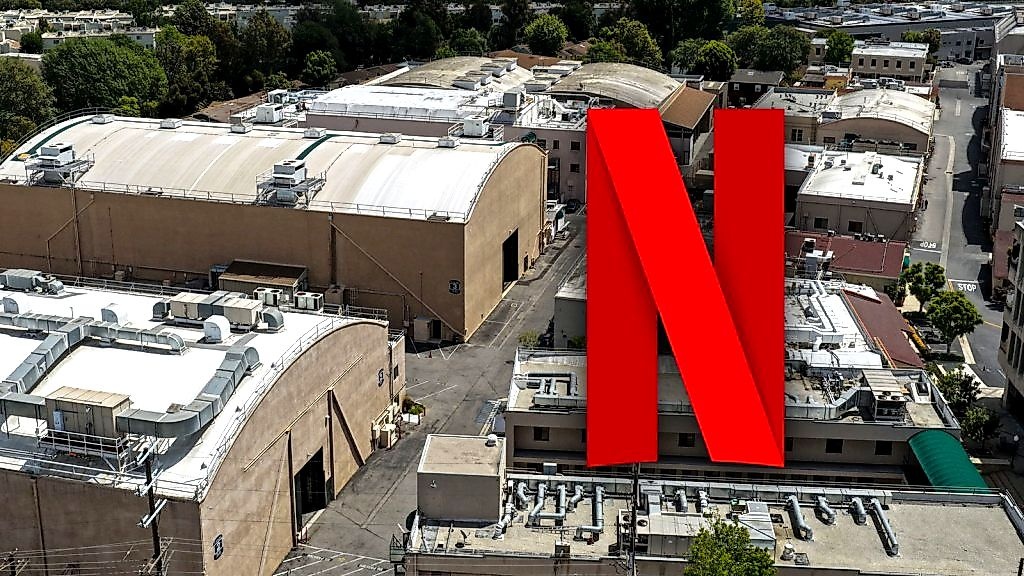
**Netflix’s $400 Million Bid for Radford Studio Center Pushes Hollywood Toward a New Era** Netflix’s pursuit of the historic Radford Studio Center is moving forward, even after the company’s earlier setback with the Warner Bros. lot.
The streaming titan, led by Ted Sarandos and Greg Peters, is now slated to acquire the 55‑acre, 22‑stage complex in Studio City for more than $400 million, a deal that could reshape the company’s footprint in Los Angeles.
This move follows a high‑profile rejection of a rival bid for the Burbank facility and signals Netflix’s determination to establish a fully integrated, owned production hub that will house both its creative and corporate operations.
The acquisition, still in the negotiation phase, has been reported as progressing on the originally agreed timetable.
While Netflix has yet to file any formal documents with the Securities and Exchange Commission or Los Angeles County, insiders confirm that the company is committed to finalizing the purchase later this year. The timeline, however, remains vague, with milestone dates kept under wraps.
Meanwhile, Netflix’s share price has dipped to $63.4, reflecting investor concerns about the company’s high operating costs, recent layoffs, and the leadership shuffle that saw Peter Rice replace Bela Bajaria as content chief.
Despite these challenges, the desire for a dedicated studio lot continues to weigh heavily on Netflix’s top executives. In the broader context, Netflix’s expansion strategy has moved beyond its rented spaces in Hollywood.
The company has invested heavily in studios across the country, including a 108‑acre Albuquerque campus with 12 sound stages, a six‑stage Brooklyn complex, and a nearly 300‑acre Fort Monmouth project in New Jersey slated to cost over $1 billion.
These moves illustrate Netflix’s intent to shift from a predominantly digital content creator to a full‑service production powerhouse.
The Radford acquisition would bring the company’s Los Angeles presence under its own roof, echoing the model of other industry giants that own and operate their own sound stages and administrative facilities. ## Background & Context Radford Studio Center, a 98‑year‑old complex that has hosted productions such as *Seinfeld*, *Gunsmoke*, and *The Mary Tyler Moore Show*, boasts 22 stages, 210,000 square feet of office space, and 172,737 square feet of support space.
Its storied past as the original Republic Studios and later CBS hub gives it a legacy that Netflix aims to preserve while modernizing. In 2021, Hackman Capital Partners purchased the site from ViacomCBS for $1.85 billion, with plans for substantial upgrades.
However, a default on a $1.1 billion loan and a downturn in Los Angeles production in 2023 derailed those ambitions, leaving the lot underutilized and its tenants scrambling for lease buyouts. For Netflix, the acquisition represents more than just an expansion; it is a strategic pivot.
The company’s current headquarters is a patchwork of rented Hudson Pacific-owned buildings, including the ICON structure, with leases running until 2031. As Netflix’s production demands grow, the reliance on external spaces has become a logistical and financial strain.
Owning Radford would provide an integrated environment for both creative teams and corporate staff, eliminating the need for long‑term leases in a city where space is at a premium.
The negotiation process began in earnest after a meeting in December 2023, when Sarandos and Peters visited the Warner Bros. lot and demonstrated a keen interest in a full‑service studio.
Their enthusiasm carried over to Radford, where a partnership with Goldman Sachs, which took over the 98‑year‑old site after Hackman’s default, is in the final stages.
Although no official closing has been announced, a spokesperson from a Los Angeles real‑estate firm confirmed that the deal will likely be signed later this year, subject to final inspections and renovation plans. ## What People Are Saying Reactions to Netflix’s bid have been mixed.
Inside Hollywood, some view the acquisition as a bold statement of the company's commitment to long‑term content production. Others express concern over the impact on existing tenants who will need to renegotiate or relocate.
The Hudson Pacific CEO, Victor Coleman, publicly stated on a November 5 earnings call that Netflix had not yet closed the transaction, a comment that generated a flurry of speculation in the real‑estate market.
He later added that the company was still evaluating the timing of the deal, hinting that a later‑year closure was possible. While Netflix has not released a formal comment, industry analysts note that the company’s strategic focus on owning production assets aligns with a broader trend among streaming platforms.
The shift from mere content licensing to end‑to‑end production has been accelerated by the need for exclusive, high‑quality programming to retain subscribers.
Netflix’s investment in facilities across the country, coupled with the Radford deal, positions it to compete more directly with traditional studios that have owned and operated their own stages for decades. Within the Los Angeles community, the potential acquisition has stirred both excitement and apprehension.
Some local businesses anticipate increased activity and job creation, while others worry about rising property values and the displacement of small production companies.
The Radford lot’s historical significance adds another layer of complexity, as preservationists hope to maintain its legacy even as it transitions to new ownership. ## What Happens Next The path to finalizing the Radford deal will involve several critical steps.
First, Netflix will need to conduct a thorough due diligence process to assess the facility’s condition, the status of current leases, and the scope of required renovations. Goldman Sachs, as the current owner, will likely coordinate with Netflix to streamline these inspections.
Once the property’s legal and operational status is confirmed, the parties will negotiate the final purchase price, which has been pegged at more than $400 million. Following the sale, Netflix must navigate the logistical challenges of integrating Radford into its existing corporate structure.
This will entail redesigning office layouts, updating sound stages with state‑of‑the‑art technology, and ensuring compliance with local building codes.
The company will also need to manage the transition for current tenants, potentially offering lease buyouts or relocation assistance to maintain goodwill in the community.
In the broader strategic sense, securing Radford allows Netflix to consolidate its production operations under one roof, reducing reliance on external studios and creating a vertically integrated model.
The company’s focus on original content has been a cornerstone of its growth, and owning a major studio facility will enhance its ability to produce high‑budget projects without external constraints.
For subscribers, this could translate into a richer array of exclusive titles, while for investors, it may signal Netflix’s commitment to long‑term value creation in an increasingly competitive media landscape.
In the coming months, the industry will watch closely as Netflix moves from negotiation to acquisition, assessing how this pivotal move reshapes both the company’s internal dynamics and the Hollywood studio ecosystem.
As the deal inches toward closure, the next chapter in Netflix’s evolution from streaming giant to full‑service studio operator is poised to begin. ---
At a Glance
- Netflix's $400M bid for 55‑acre Radford Studio Center aims to create an integrated production hub in LA.
- The acquisition would replace current rented HQ and reduce long‑term lease costs, while boosting Netflix’s shift to full‑service studio model.
- Investors face uncertainty as share price dips amid high operating costs and leadership changes, but the deal could signal Netflix’s strategic pivot.
Why It Matters
Our Take
GoNews Pulse Editorial Team
This article was prepared for publication by GoNews Pulse and checked for publication requirements under our editorial standards. We review available information and correct material errors when they are identified.
Quick Answers
- What is the latest update on this story?
- The deal could consolidate Netflix's LA operations, giving it a 55‑acre studio with 22 stages, a move seen as a game‑changer.
- Who is this story about?
- This article covers developments related to Netflix's $400M Radford bid shatters LA studio expectations. GoNews Pulse's editorial team monitors the story and updates the article as new verified information becomes available.
- Where can I read more about celebrity news?
- GoNews Pulse publishes original reporting on celebrity news and related entertainment news. Visit the homepage or browse the section dedicated to this story for the latest coverage.
More From This Section

Reese Witherspoon's $2M per episode deal blows Hollywood's pay norms
The revelation that Zendaya also earns $1M alongside Witherspoon's $2M, sent shockwaves through Hollywood's contract standards and hinted at a new era of star power.
John Mulaney's 7th SNL Host Gig Drops New York Musical, Fans Are Shocked
Mulaney jokes that the New York Musical will feature a lobster-themed chorus, a detail that has fans buzzing.

Sam Hartman's 27‑Year‑Old QB Switches to The Bachelor, Fans Shocked
Hartman admitted he first turned down the role, but a pitch from former star Jesse Palmer won him over—and now he'll have contestants battle in football challenges.