
Kris Bowers' Score for Ghanaian Legacy Uncovers Nkrumah Footage
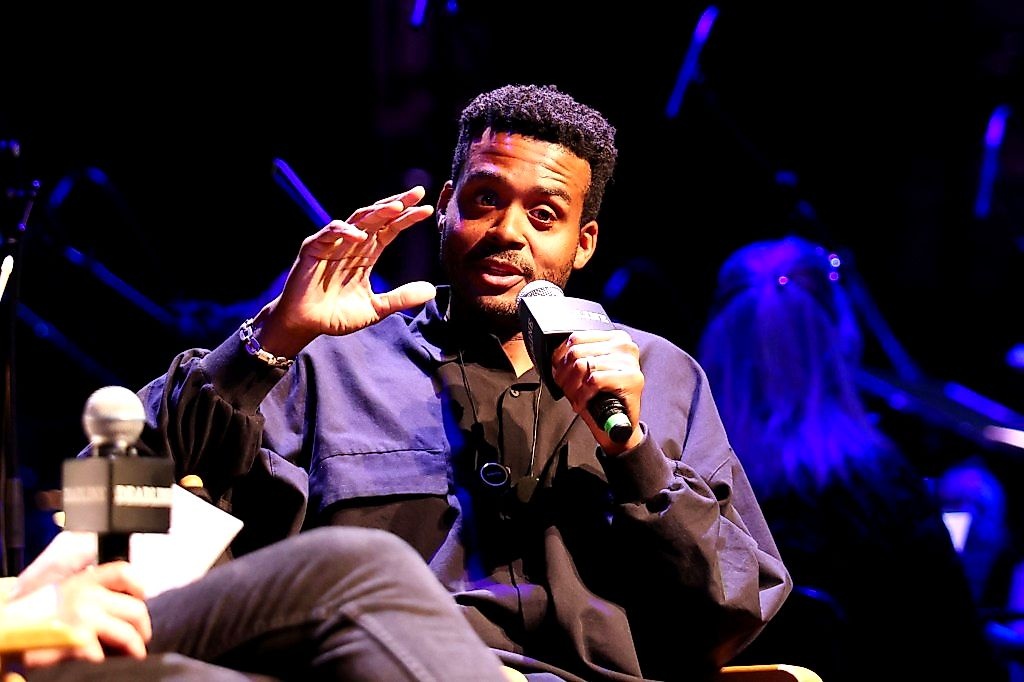
# Kris Bowers Crafts a Sonic Love Letter to Ghana in “The Eyes of Ghana” Kris Bowers, the Oscar‑winning composer behind “The Last Repair Shop,” has turned his extraordinary talent into a sonic tribute for the forgotten films of Ghana’s first president.
In a recent presentation at a film‑music forum, Bowers revealed how the score for “The Eyes of Ghana” became a personal mission to honor both a nation and a lost cinematic legacy.
The documentary, directed by Canadian filmmaker Ben Proudfoot, unearths a hidden trove of 20th‑century celluloid shot by 93‑year‑old cinematographer Chris Hesse.
Hesse preserved these reels for more than six decades after the 1966 CIA‑backed coup that toppled Kwame Nkrumah, Ghana’s trailblazing leader and pan‑African icon.
The film spotlights Nkrumah’s rise and fall, the burning of his official footage, and Hesse’s quiet guardianship that saved a vital chapter of Africa’s visual history.
Executive producers include Barack and Michelle Obama, and the project was released as a one‑night theatrical event across the United States and Canada on October 28, drawing sold‑out crowds in London and Ghana alike. Bowers’ involvement was sparked by a sizzle reel Proudfoot shared with him.
“I remember watching it in my car,” Bowers recalls, his voice resonant with the weight of the footage. “After I finished watching it, I was filled with emotion because as a Black man, my own history feels lost.
And it’s sad that at some point you have to give up.
So, the idea that someone like Chris Hesse has preserved this history and a vision of people that look like me that I had never seen from that era made me feel incredibly moved.” The resulting score, performed live by an orchestra at the event, seeks to echo the urgency and reverence of the rescued archives. ## Background & Context “The Eyes of Ghana” traces the arc of Kwame Nkrumah, Ghana’s first president and a pivotal figure in the decolonization wave that rippled across Africa.
After leading the country to independence in 1957, Nkrumah pursued ambitious social reforms and a pan‑African vision that earned him admirers and enemies alike. In 1966, a CIA‑orchestrated military coup toppled him, and the regime ordered the burning of all film materials produced during his tenure.
The destruction of these documents erased visual testimony of a transformative era. Enter Chris Hesse, a personal cinematographer who worked closely with Nkrumah and documented his presidency on film.
When the official archives were slated for destruction, Hesse took it upon himself to safeguard the reels. Over the ensuing decades, he became an unsung hero, keeping the footage hidden from political upheavals and potential censorship.
His dedication came to light only recently, thanks to a partnership with filmmaker Anita Afonu, a protégé who helped bring the archive to the public eye.
The duo’s discovery of a vault of surviving celluloid—filled with candid shots, speeches, and behind‑the‑scenes moments—offers historians and audiences a rare, unfiltered window into Ghana’s liberation era. The film’s creative team is an international collaboration that reflects its global significance.
Breakwater Studios’ Proudfoot and Nana Adwoa Frimpong, alongside Afonu, Bwayo, and Brandon Somerhalder, co‑produced the documentary with Higher Ground’s Ethan Lewis and Vinnie Malhotra.
Barack and Michelle Obama’s involvement as executive producers underscores the story’s resonance with the broader discourse on African history and the preservation of cultural memory. ## What People Are Saying Audience reactions to “The Eyes of Ghana” have been overwhelmingly positive.
The sold‑out run at DocHouse in London drew a diverse crowd of film scholars, activists, and general viewers, all moved by the blend of historical footage and contemporary storytelling.
Social media chatter highlighted the film’s powerful depiction of a lost narrative and its timely relevance amid global conversations about decolonization and representation. Critics have praised Bowers’ score as a sonic counterpart to the visual rediscovery.
The live orchestral performance at the film‑music event was described as “a stirring homage that amplifies the emotional weight of the recovered reels.” The composition weaves traditional Ghanaian motifs with contemporary orchestral textures, creating a bridge between past and present.
This musical approach has been noted for its ability to contextualize the footage without overpowering it, allowing the images to speak for themselves while the music underscores their significance.
The film’s release strategy—one‑night theatrical showings in major cities and screenings at cultural centers in Accra—has further amplified its impact.
By positioning the documentary within both cinematic and community spaces, the producers have made the story accessible to a wide audience, ensuring that the legacy of Hesse’s preservation effort reaches beyond academia. ## What Happens Next “The Eyes of Ghana” is set to continue its journey through the film festival circuit, with upcoming showings in Africa and Europe.
The production team plans to release a digital version for streaming platforms, expanding access to audiences unable to attend the limited theatrical runs.
Additionally, a companion educational package is in development, featuring discussion guides and archival materials that can be integrated into university curricula focused on African studies, film history, and archival preservation.
Kris Bowers has hinted at further collaboration with Proudfoot on projects that explore under‑documented histories. “There’s a wealth of stories out there that have been lost or ignored,” Bowers said.
“I want to bring them to life through sound.” As the documentary gains traction, it is expected to inspire similar preservation initiatives, encouraging archivists and filmmakers to safeguard cultural heritage in the face of political and economic pressures.
The partnership between Bowers, Proudfoot, and Hesse sets a powerful precedent for how contemporary artists can honor and amplify voices that have been historically marginalized.
By transforming a forgotten archive into a living, breathing narrative, the team demonstrates that history can be reclaimed and celebrated, even after decades of suppression. In the wake of “The Eyes of Ghana’s” success, the conversation around preserving visual histories continues to grow.
The film’s triumph proves that music, film, and storytelling can converge to resurrect lost chapters of our shared past, ensuring that the struggles and triumphs of leaders like Kwame Nkrumah and the men who captured them remain visible for future generations.
At a Glance
- Kris Bowers crafts a sonic tribute to Ghana’s lost film legacy, scoring the documentary “The Eyes of Ghana.”
- The film unearths 20th‑century footage preserved by 93‑year‑old cinematographer Chris Hesse, revealing Nkrumah’s rise, fall, and the hidden archive.
- Executive producers Barack and Michelle Obama backed the project, which premiered in U.S., Canada, London, and Ghana, sparking global conversation on decolonization and cultural preservation.
Why It Matters
Our Take
GoNews Pulse Editorial Team
This article was prepared for publication by GoNews Pulse and checked for publication requirements under our editorial standards. We review available information and correct material errors when they are identified.
Quick Answers
- What is the latest update on this story?
- Chris Hesse, a 93‑year‑old cinematographer, hid Ghana’s lost Nkrumah footage for six decades, a secret Bowers now brings to life in his score.
- Who is this story about?
- This article covers developments related to Kris Bowers' Score for Ghanaian Legacy Uncovers Nkrumah Footage. GoNews Pulse's editorial team monitors the story and updates the article as new verified information becomes available.
- Where can I read more about celebrity news?
- GoNews Pulse publishes original reporting on celebrity news and related entertainment news. Visit the homepage or browse the section dedicated to this story for the latest coverage.
More From This Section

Russell Brand's 10-Year Jail Sentence Shakes 2014 Lohan Interview
In the resurfaced clip, Brand called police cells “boring” and admitted he sought drugs, a confession that jolted a new scandal.

Kathy Ireland’s Yacht Explodes 3 Miles Off Santa Barbara—Rescue
Kathy Ireland says, “Engine exploded and a fire quickly melted all navigation equipment and survival raft!” as the yacht burned 3 miles off Santa Barbara.
Joe Jonas' 2025 Tour Turmoil Shuts Tatiana Gabriela's Love
A close source reveals the split was sealed after Jonas's 2025 tour dates clashed with Gabriela’s modeling commitments, leaving fans stunned.