
Jacob Elordi's First Producer Role Breaks Silence on Gary Gilmore
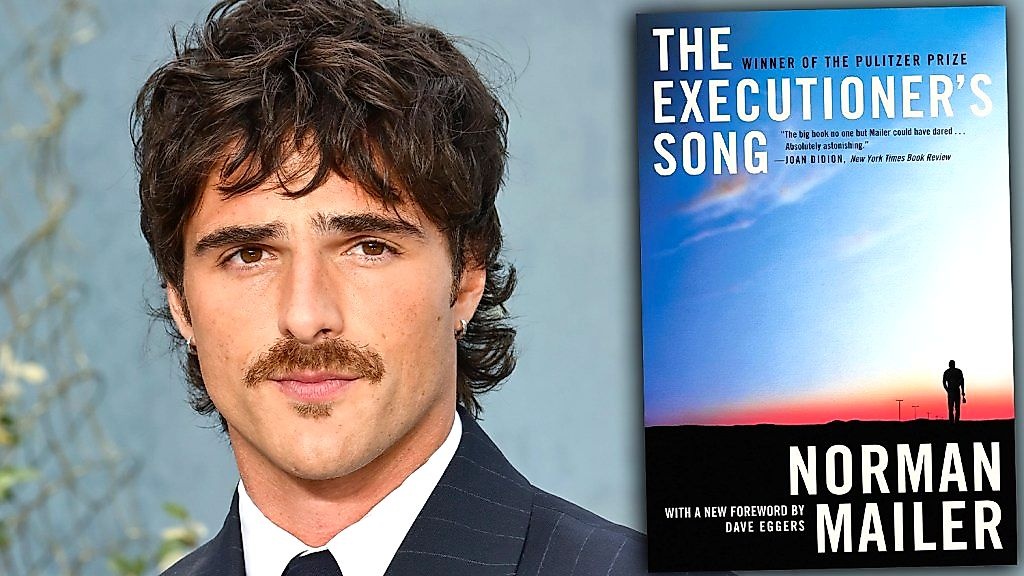
# Jacob Elordi Turns the Gun on Norman Mailer's True‑Crime Classic For the first time since his breakout role in *Frankenstein*, Jacob Elordi is stepping behind the camera as well as in front of it.
United Artists has secured the rights to Norman Mailer’s 1979 Pulitzer‑winning novel *The Executioner’s Song* and paired the Australian‑born actor with the studio’s veteran producer Scott Stuber.
Elordi will not only star as the notorious Utah killer Gary Gilmore, but also take the helm as a hands‑on producer—a role he has yet to explore in depth.
The film promises to revisit a period of American history that has long fascinated true‑crime enthusiasts: a four‑year pause in capital punishment followed by the execution of the first death‑row inmate in the modern era. Gilmore, convicted of murdering two men in 1976, famously demanded his own execution.
The story was turned into a book and a 1982 movie, both of which captured the nation’s fascination with violence, media spectacle, and the solitude that can accompany a criminal’s final days. Elordi’s involvement signals a fresh take on a story that has already been told twice.
Elordi’s résumé is already a catalog of critically acclaimed work. A Golden Globe and Critics Choice nod for his performance as the monster in *Frankenstein* were followed by an Oscar nomination for the same role.
He has earned praise for his work in HBO’s *Euphoria* and the Australian‑produced WWII series *The Narrow Road to the Deep North*, the latter of which earned him an AACTA award. Upcoming projects include a thriller with Scarlett Johansson for A24 and a new role in *Scapegoat*.
Now, with *The Executioner’s Song*, he adds producing credits to his portfolio, marking a new chapter in his career. ## Background & Context The source material for this project is a true‑crime classic. Norman Mailer’s *The Executioner’s Song* won a Pulitzer in 1979 and remains a staple of crime literature.
It chronicles Gilmore’s legal battles and media frenzy, exposing the American public’s hunger for a story about a man who wanted to die on his own terms.
The book’s narrative is built upon extensive interviews with Gilmore, his family, and key witnesses, a foundation laid by filmmaker Lawrence Schiller, who also directed the original 1982 adaptation. Schiller’s involvement adds continuity and depth to the new adaptation.
He was a key figure in the original film’s production, having overseen the interviews that shaped Mailer’s novel. In the new project, he will serve as an executive producer, ensuring that the film stays true to the material’s roots while embracing contemporary cinematic techniques.
Schiller’s career also boasts an Emmy for *Peter the Great* and the authorship of *American Tragedy*, a best‑seller that earned him a spot on the New York Times best‑seller list. United Artists’ production team is assembled with a mix of experience and fresh perspective.
Scott Stuber and Nick Nesbitt are seasoned producers who have shepherded several high‑profile projects. Sherry Marsh, known for her work on *Vikings*, *Pose*, and *The Winter King*, brings a track record of successful adaptations.
Matt Vioral, Elordi’s manager, is also on board as a producer, reflecting the actor’s deep commitment to the project.
Together, they form a powerhouse capable of translating a complex, controversial narrative into a compelling on‑screen experience. ## What People Are Saying Industry insiders view the decision to cast Elordi as Gilmore as both bold and risky.
The actor’s recent accolades for *Frankenstein* and *Euphoria* showcase his range, yet the role of a convicted murderer who actively demands execution is a stark departure from his previous work.
Many anticipate that Elordi will bring a nuanced, humanistic lens to a character that is often reduced to a cautionary tale in popular media. Production news has also drawn attention to the collaboration between Elordi and Lawrence Schiller.
Schiller’s history with the original film and his archival materials—over 800 boxes preserved at the Briscoe Center—offer a wealth of authenticity for the new adaptation.
Fans of the original 1982 movie are hopeful that this partnership will result in a film that respects the source while updating it for a modern audience.
Meanwhile, the involvement of Sherry Marsh, whose slate includes *Vikings: Valhalla* and *Pose*, suggests a commitment to high production values and thoughtful storytelling. The media has begun to speculate about the creative direction of the film.
With United Artists backing and Elordi’s dual role as star and producer, expectations are high for a version that balances gritty realism with a compelling narrative arc.
The casting of a younger actor in such a complex role is unusual, but Elordi’s recent work has proven he can handle demanding characters with emotional depth.
Critics are also looking forward to seeing how the film will handle the broader themes of media sensationalism and the personal loneliness of a man facing death in a very public way. ## What Happens Next From a production standpoint, the next steps involve pre‑production planning, location scouting, and securing a release window.
With a script already in development, the team is expected to begin rehearsals in the coming months. The film will likely shoot in locations that replicate 1970s Utah, with a focus on authenticity.
Filming is anticipated to take place over several months, during which Elordi will collaborate closely with the director and producers to shape both his performance and the overall vision of the film.
Distribution plans are still in the early stages, but United Artists’ involvement guarantees a wide release strategy once post‑production is complete.
The studio’s history of handling crime dramas suggests that the film will be positioned for both theatrical release and streaming platforms, allowing it to reach a broad audience.
Marketing will likely emphasize Elordi’s transformation into a chilling antagonist and the film’s roots in a Pulitzer‑winning novel, appealing to both fans of true crime and cinema enthusiasts. Post‑release, the project could spark renewed debate about capital punishment and the role of media in shaping public opinion.
Elordi’s performance may become a talking point in discussions of how Hollywood portrays real‑life tragedies. The film’s release may also reinvigorate interest in Norman Mailer’s work, prompting readers to revisit the novel or explore other true‑crime literature from the era.
In the long term, Elordi’s dual role as star and producer could open doors for more ambitious projects, both in front of and behind the camera. The collaboration with seasoned producers and a director with deep ties to the original story provides a solid foundation for future creative ventures.
Fans of Elordi’s work will no doubt be eager to see how his experience in *Frankenstein* and *Euphoria* informs his portrayal of a man who demanded his own death, while the film itself may become a new benchmark for adaptations of classic true‑crime narratives.
The journey from page to screen is rarely straightforward, especially when the subject matter is as charged as the story of Gary Gilmore. Yet with a powerhouse team and a fresh, daring approach, Jacob Elordi’s new project promises to ignite conversation and, perhaps, re‑define how we view capital punishment in cinema.
At a Glance
- Elordi steps behind the camera as producer while starring as 1976 murderer Gary Gilmore in ‘The Executioner’s Song’.
- The film revisits the Utah capital‑punishment pause, adapting Norman Mailer’s Pulitzer‑winning novel and the original 1982 adaptation.
- Industry impact: first dual role for Elordi, collaboration with seasoned producers and Lawrence Schiller, signaling a fresh direction for true‑crime cinema.
Why It Matters
Our Take
GoNews Pulse Editorial Team
This article was prepared for publication by GoNews Pulse and checked for publication requirements under our editorial standards. We review available information and correct material errors when they are identified.
Quick Answers
- What is the latest update on this story?
- Elordi will also star as Gary Gilmore, the 1976 murderer who demanded his own execution, making this a groundbreaking true‑crime debut.
- Who is this story about?
- This article covers developments related to Jacob Elordi's First Producer Role Breaks Silence on Gary Gilmore. GoNews Pulse's editorial team monitors the story and updates the article as new verified information becomes available.
- Where can I read more about celebrity news?
- GoNews Pulse publishes original reporting on celebrity news and related entertainment news. Visit the homepage or browse the section dedicated to this story for the latest coverage.
More From This Section

Russell Brand's 10-Year Jail Sentence Shakes 2014 Lohan Interview
In the resurfaced clip, Brand called police cells “boring” and admitted he sought drugs, a confession that jolted a new scandal.

Kathy Ireland’s Yacht Explodes 3 Miles Off Santa Barbara—Rescue
Kathy Ireland says, “Engine exploded and a fire quickly melted all navigation equipment and survival raft!” as the yacht burned 3 miles off Santa Barbara.

Joe Jonas' 2025 Tour Turmoil Shuts Tatiana Gabriela's Love
A close source reveals the split was sealed after Jonas's 2025 tour dates clashed with Gabriela’s modeling commitments, leaving fans stunned.