
Carrie Coon's Holocaust‑tied cult escape drama 'The Liberation' Jan 8
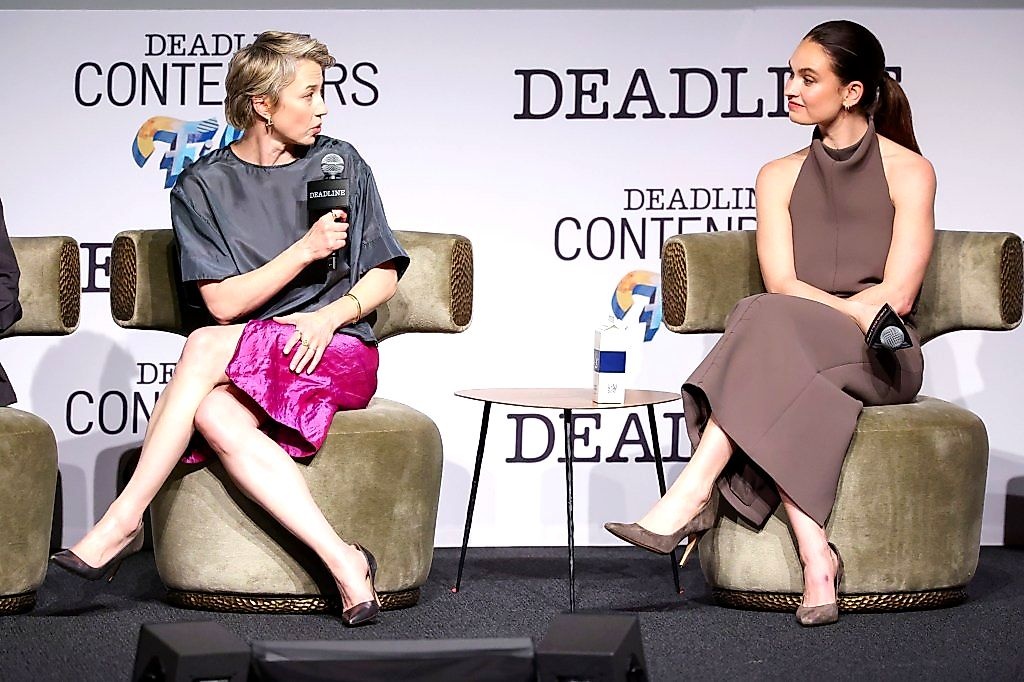
# **Rita's Cult Escape Echoes Holocaust Survival as 'The Liberation' Opens January 8** Carrie Coon and Lily James sit side‑by‑side on a quiet set in Los Angeles, their faces calm as they discuss a film that feels like a confession.
Guy Nattiv’s latest thriller, *The Liberation*, follows the story of Rita—a woman who leaves a ruthless cult and seeks freedom, only to discover the ghosts of her past.
The film’s backdrop is a chilling blend of contemporary manipulation and a generational trauma that reaches back to the Holocaust, a connection that has made the project a personal undertaking for Nattiv and a profound one for Coon, who shares a deep empathy for the survivor’s plight.
At the Contenders Film Los Angeles screening, the three actors and the director unpack the layers of the narrative.
They speak about how the story mirrors real history, how the characters’ choices echo patterns of oppression and liberation, and how the film has become a vehicle for reckoning with a family secret that has haunted Nattiv since childhood.
It is a conversation that is as much about art as it is about memory, identity, and the painful costs of choosing one’s own path. The film, slated for an Oscar‑qualifying theatrical run this year, is set to open January 8, offering audiences a chance to witness a tale that is both unsettling and deeply human.
Below we trace the roots of the story, the actors’ perspectives, and what we can expect as the film travels the festival circuit and beyond. ## Background & Context Guy Nattiv drew inspiration for *The Liberation* from his own grandmother’s life, a survivor of the Holocaust who endured unimaginable loss before finding herself pulled into a charismatic cult that promised salvation.
Nattiv recalls, “She was miserable and unhappy, then she became happy again. Then she started dancing and found herself again, which made sense to us as a family.
It didn’t make sense when money started disappearing and she was advised to divorce my grandfather and live for good somewhere in America writing postcards.” The director’s childhood memories of visiting the cult leader after the grandmother’s death are woven into the film’s fabric, giving the story an intimate authenticity that only a personal connection can provide.
The characters in the film are modeled closely on real people. Rita, portrayed by Carrie Coon, is the survivor who leaves the cult with a fragile sense of agency.
Ricki King, played by Lily James, is a mentor figure who promises Rita a new life but ultimately guides her toward financial loss and a divorce from her husband, Reuben. Reuben is portrayed by Tracy Letts, Coon’s husband in real life, adding another layer of genuine intimacy to the narrative.
The film’s younger daughters, portrayed by Bella Ramsey and Odessa Young, are symbolic anchors, representing the next generation that must carry forward the legacy of trauma and resilience.
The director and actors have worked to portray the complex dynamics of a woman who becomes both a savior and a victim, highlighting how manipulation can masquerade as empowerment.
The film’s story is set against the broader cultural context of post‑World War II survivor narratives, reflecting the way trauma can be transmitted through families and across generations. As Nattiv notes, “When you’re out, you’re out.
Her motivations are so clear. She truly believes she’s saving these women.
She truly believes she has this power.” This perspective underscores the film’s exploration of the thin line between healing and exploitation. ## What People Are Saying Carrie Coon opens the discussion by reflecting on the emotional weight of the film.
“I just was so moved by Guy’s grandmother’s story and the way Guy has humanized every step,” she says. “We understand just how radical what she’s doing is.
As a woman, I understand why she might want to cede all agency to someone else.
I understand why a patriarchal structure wasn’t fulfilling to her.” Coon’s commentary underscores the character’s inner turmoil and her eventual search for autonomy, mirroring the grandmother’s real struggle between survival and self‑assertion.
Lily James shares a similar sentiment, emphasizing the importance of not reducing Ricki to a villainous caricature. “We really wanted to do that to find the total humanity in these women,” she says.
“It’s not the villain. It’s so much more complicated. she could switch from generosity and empathy and love and kindness to savagery and annihilation.” James points out that Ricki’s motivations are rooted in a belief that she is saving the women she mentors, and that this conviction drives her to extreme actions.
The actress underscores the nuance the film brings to a character that could easily be dismissed as a one‑dimensional antagonist. Coon also addresses the representation of Jewish trauma in the film, noting her own distance from the culture.
“The video gets stopped very frequently,” she says, referring to the sensitive scenes depicting the Holocaust. “I wanted to dignify that experience because I’m not culturally Jewish.
I would never want that to feel not lived in.” The actress highlights the film’s commitment to honoring the unspeakable reality of her grandmother’s past while maintaining a respectful and authentic portrayal.
Beyond the actors, critics and audience members at the screening have remarked on the film’s raw emotional impact. Many note how the story’s layered narrative—balancing personal freedom, collective trauma, and the dangers of charismatic leadership—creates a tense, immersive experience.
The film’s opening scenes set the stage for a gripping psychological thriller that remains grounded in its human roots.
The juxtaposition of a post‑war Holocaust survivor’s memories with a contemporary cult experience offers a fresh perspective on the enduring scars of historical violence. ## What Happens Next *The Liberation* is poised to debut at the Oscar‑qualifying theatrical run this year, beginning with its January 8 opening.
The film will be screened in limited release across a select number of cities, giving it the potential to make the Academy’s shortlist for the Best Foreign Language Film category.
As part of the festival circuit, it is expected to appear at several international film festivals, where it will likely attract both critical acclaim and audience intrigue. The director and cast have hinted at future projects that could build upon the themes explored in this film.
Guy Nattiv has expressed interest in developing additional narratives that the complexities of survivor stories, while Carrie Coon and Lily James have indicated that they are open to revisiting the character dynamics should a sequel or spin‑off emerge.
The production team is also exploring ways to make the film accessible to a broader audience, including partnerships for educational screenings and discussions that could illuminate the historical and psychological contexts of cult dynamics.
In the months leading up to its release, the marketing campaign will likely emphasize the film’s unique blend of thriller and historical drama, positioning it as a must‑watch for fans of character‑driven storytelling.
Social media buzz is expected to focus on the powerful performances of Coon and James, the authenticity of the story’s roots, and the director’s personal connection to the material.
Film critics will pay close attention to how *The Liberation* navigates the fine line between sensationalism and respectful portrayal of trauma.
The release of the film also presents an opportunity for the broader cultural conversation about the lasting effects of the Holocaust on subsequent generations, and how those memories can shape contemporary experiences of manipulation and power.
By highlighting the interconnectedness of past and present, *The Liberation* stands to prompt thoughtful discussion and reflection among viewers, adding a significant layer to its cinematic impact. **Closing** *The Liberation* arrives as a stark reminder that the search for freedom is rarely straightforward.
With Carrie Coon’s heartfelt performance and Lily James’s nuanced portrayal, the film invites audiences to confront the shadows of history while questioning the promises of charismatic leaders.
As the story unfolds in theaters this January, viewers will be left to ponder the fine line between salvation and exploitation, and how the past continues to shape our present choices.
At a Glance
- Carrie Coon stars as Rita, a Holocaust survivor‑turned‑cult victim seeking freedom.
- Guy Nattiv draws on his grandmother’s real‑life escape, blending generational trauma with modern manipulation.
- The January 8 theatrical release positions the film as an Oscar‑qualifying thriller with a profound cultural conversation.
Why It Matters
Our Take
GoNews Pulse Editorial Team
This article was prepared for publication by GoNews Pulse and checked for publication requirements under our editorial standards. We review available information and correct material errors when they are identified.
Quick Answers
- What is the latest update on this story?
- Guy Nattiv’s thriller has Carrie Coon confront her grandmother’s Holocaust past while escaping a charismatic cult, a chilling truth revealed early.
- Who is this story about?
- This article covers developments related to Carrie Coon's Holocaust‑tied cult escape drama 'The Liberation' Jan 8. GoNews Pulse's editorial team monitors the story and updates the article as new verified information becomes available.
- Where can I read more about celebrity news?
- GoNews Pulse publishes original reporting on celebrity news and related entertainment news. Visit the homepage or browse the section dedicated to this story for the latest coverage.
More From This Section

Russell Brand's 10-Year Jail Sentence Shakes 2014 Lohan Interview
In the resurfaced clip, Brand called police cells “boring” and admitted he sought drugs, a confession that jolted a new scandal.

Kathy Ireland’s Yacht Explodes 3 Miles Off Santa Barbara—Rescue
Kathy Ireland says, “Engine exploded and a fire quickly melted all navigation equipment and survival raft!” as the yacht burned 3 miles off Santa Barbara.

Joe Jonas' 2025 Tour Turmoil Shuts Tatiana Gabriela's Love
A close source reveals the split was sealed after Jonas's 2025 tour dates clashed with Gabriela’s modeling commitments, leaving fans stunned.