
Alex Gibney's 4-Hour 'Musk' Doc Turns DOC NYC Into Algorithmic Battle
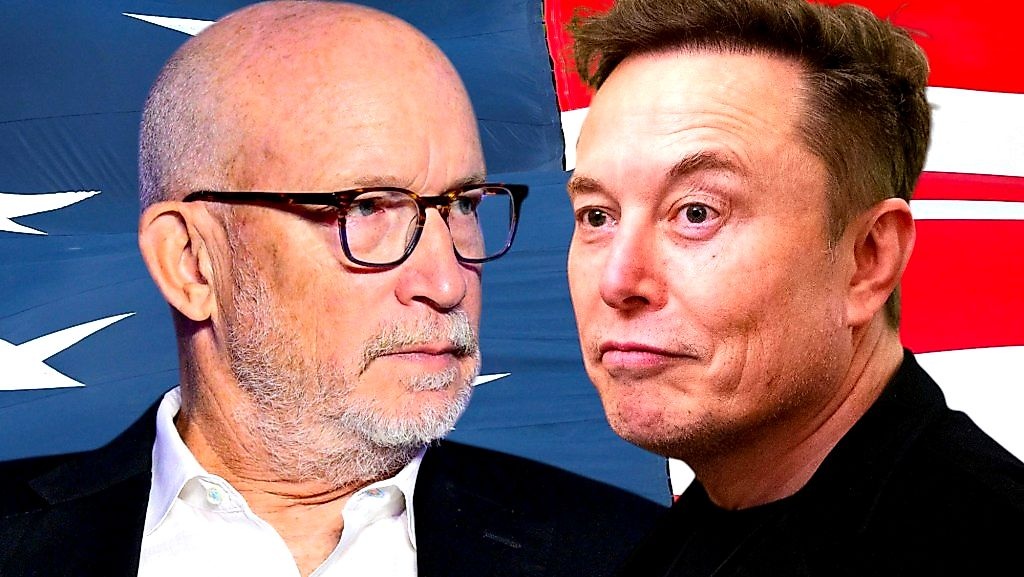
# Alex Gibney Declares 'Musk' Doc a Battle Against Algorithmic Blue Wave The opening day of DOC NYC set the stage for a rallying cry that transcended the festival’s usual fare.
In the hush of Gotham Hall, the world’s most celebrated documentary filmmaker addressed a room filled with peers, emerging talent, and a curious cross‑section of political commentators.
His subject—a sweeping portrait of Elon Musk’s rise—was already the talk of the Venice Film Festival and the recent October release at Bleecker Street, but the real drama unfolded as he tied the film’s themes to a nation still reeling from a stunning midterm shift.
For Alex Gibney, the "blue wave" was not just a political headline; it was a symbol of the new kind of battleground that filmmakers now face. Gibney’s remarks came at a moment when the American electorate had just turned the tide in favor of Democratic candidates across the board.
His reference to the “magnificent blue wave” was a nod to the fresh hope felt by many, but he also warned that the real work of preserving creative freedom was only beginning.
In a speech that wove together the politics of the election and the politics of the screen, he argued that the forces shaping public discourse were less about politicians and more about algorithms—those invisible engines that dictate what we see, how we engage, and ultimately who has a voice.
The room listened, some in rapt silence, others in cautious agreement, as Gibney positioned his documentary as a counter‑force to the data‑driven culture that has increasingly dictated the rhythm of artistic expression. The significance of his address extends beyond the festival’s celebratory atmosphere.
As a lifetime achievement honoree, Gibney’s words resonated with a generation of filmmakers who had to navigate a rapidly shifting media landscape where data is currency and the algorithm is the gatekeeper.
The context of the documentary, which had premiered in Venice and opened in U.S. theaters on October 9, provided a concrete example of how a single story can illuminate broader systemic issues.
His mention of the film’s critical eye on Musk’s political sway—Musk being the world’s wealthiest man—brought to life the question of who holds power in the age of digital surveillance. ## Background & Context Alex Gibney’s career spans more than four decades of investigative storytelling, with award‑winning titles such as *Taxi to the Dark Side*, *Enron: The Smartest Guys in the Room*, and the Emmy‑winning *Going Clear: Scientology & The Prison of Belief*.
Each work has challenged audiences to confront uncomfortable truths, whether about corporate greed, religious secrecy, or governmental manipulation. In 2024, he expanded this legacy with *Musk*, a four‑hour deep dive into the life and influence of Tesla’s chief engineer and SpaceX’s founder.
The documentary follows a path from the early days of electric vehicles to Musk’s role in shaping policy debates on climate change, artificial intelligence, and space exploration.
Its premiere at Venice signaled the film’s ambition to spark conversation at the intersection of technology, politics, and personal ambition. The timing of Gibney’s remarks was not incidental.
The U.S. midterm elections, held a week prior to the festival, marked the most sweeping Democratic victory in modern history, with the party regaining control of both chambers of Congress.
In the aftermath, public discourse was dominated by debates over social media regulation, election security, and the influence of tech giants on democratic processes.
Gibney, who had long critiqued the role of corporate interests in shaping cultural narratives, seized the moment to underscore the urgency of protecting creative voices from the tightening grip of algorithmic oversight.
His reference to the “hard work that has just begun” underscored the notion that the struggle for free expression was ongoing, extending well beyond the festival’s immediate context. the presence of fellow honorees—JT Takagi, an award‑winning sound recordist, and Stephen Maing, a documentary filmmaker known for his investigative work—highlighted a broader community of artists confronting the same challenges.
Raney Aronson‑Rath, whose *20 Days in Mariupol* earned her the Leading Light Award, was also in attendance, adding further weight to the collective call for a new ecosystem that respects individual expression while leveraging technology responsibly.
The festival’s focus on lifetime achievements and documentary excellence positioned Gibney’s message as a rallying point for a generation of filmmakers who must balance artistic integrity with the realities of a data‑driven world. ## What People Are Saying Gibney’s address was met with a mixture of enthusiasm and contemplative silence.
As he unfolded his critique of algorithmic dominance, the audience erupted into applause, signaling a shared recognition of the issue. Some peers took a moment to reflect on how their own work has been shaped by platform policies, while others exchanged nods that spoke to the quiet acknowledgment of a common struggle.
His declaration that “f‑k the algorithms” was both a rallying cry and a defiant statement that resonated with anyone who has felt constrained by platform guidelines or algorithmic pushback. Beyond the immediate festival community, the conversation spread across industry circles.
Colleagues who had collaborated with Gibney on projects like *Knife: The Attempted Murder of Salman Rushdie*—which premiered at Sundance and was narrated by the author himself—echoed his sentiments about the necessity of protecting editorial independence.
The film’s connection to Rushdie’s memoir, *The Satanic Verses*, and the involvement of his wife, Rachel Eliza Griffiths, as a cinematographer and producer, added a layer of intellectual gravitas to the discussion.
Gibney’s gratitude for editors, whom he has long championed, underscored the often-unseen labor that ensures a documentary’s integrity, a point that resonated with editors and producers alike.
Industry insiders also noted Gibney’s humor in shortening his original nearly five‑hour speech to a more digestible format—a nod to the very algorithms he criticized.
By referencing the runtime of *Musk* itself, he highlighted the tension between long‑form storytelling and the short‑attention spans cultivated by social media platforms. The laughter that followed his joke served as a reminder that even as creatives fight for narrative depth, the market demands brevity and immediacy.
Meanwhile, the presence of the Robert and Anne Drew Award recipient, Stephen Maing, reinforced the festival’s commitment to documentary excellence, suggesting that the community would continue to support and amplify voices that confront societal injustices.
The broader audience response, especially from viewers who followed the festival online, indicated a growing appetite for content that interrogates power structures. Discussions on social media platforms about algorithmic bias, data privacy, and the role of tech giants in public life found new fuel in Gibney’s speech.
The documentary’s release on a mainstream distributor like Bleecker Street further amplified its reach, allowing it to spark conversation among a wider demographic beyond film enthusiasts.
As a result, the debate about the relationship between creative content and technological gatekeepers gained momentum, with filmmakers and viewers alike recognizing the necessity of a more equitable and transparent ecosystem. ## What Happens Next Looking ahead, the implications of Gibney’s speech extend far beyond DOC NYC.
His call for a new documentary ecosystem that protects free speech while enabling filmmakers to reach audiences is likely to shape industry practices in the coming months.
As platforms refine their content moderation policies and search algorithms, independent filmmakers are already exploring alternative distribution channels, including direct‑to‑consumer streaming and community‑based platforms that promise greater transparency.
The momentum generated by Gibney’s advocacy may catalyze policy discussions at the intersection of technology regulation and creative rights, potentially influencing upcoming legislative proposals aimed at curbing algorithmic manipulation.
In the immediate term, *Musk* continues to draw attention on the festival circuit. Its critical acclaim at Venice and the subsequent U.S. theatrical release have positioned it for a broader dialogue about corporate influence on democracy.
Industry trade shows and film markets are likely to host panels that expand on Gibney’s themes, with filmmakers sharing strategies to navigate the algorithmic landscape.
Additionally, the collaboration between Gibney and editors—an area he specifically praised—might spur initiatives that bolster editorial support systems for documentary projects, ensuring that investigative rigor remains uncompromised. For the audience, the conversation is already evolving.
As viewers confront the content of *Musk* and the broader question of how technology shapes perception, there is a growing movement to demand greater accountability from social media giants.
The festival’s acknowledgment of Lifetime Achievement and other honors, such as the Robert and Anne Drew Award and the Leading Light Award, reinforces the notion that storytelling powerfully influences public discourse.
By championing these awards, the festival underscores its role in fostering a community that resists homogenization and champions diverse narratives. In sum, Alex Gibney’s address has set the stage for a renewed reckoning with the forces that shape what we see and how we respond.
By highlighting the intersection of politics, technology, and art, he has sparked a conversation that will likely echo across film festivals, streaming platforms, and legislative chambers in the months to come.
The battle against algorithmic dominance is only beginning, and the documentary community, energized by Gibney’s call to action, stands ready to fight for a future where creative expression thrives on freedom rather than compliance.
The festival’s lights dimmed as the applause faded, leaving an echo of possibility that will reverberate long after the final credits roll.
At a Glance
- Gibney’s speech framed the new documentary as a direct challenge to algorithmic gatekeepers.
- He highlighted the 4‑hour runtime of *Musk* as a bold statement against the brevity demanded by social platforms.
- The address ignited industry dialogue about preserving creative autonomy in a data‑driven media landscape.
Why It Matters
Our Take
GoNews Pulse Editorial Team
This article was prepared for publication by GoNews Pulse and checked for publication requirements under our editorial standards. We review available information and correct material errors when they are identified.
Quick Answers
- What is the latest update on this story?
- Gibney stunned the crowd by declaring 'f‑k the algorithms' during his speech, sparking a fiery debate on how social media shapes film and urging filmmakers to fight back.
- Who is this story about?
- This article covers developments related to Alex Gibney's 4-Hour 'Musk' Doc Turns DOC NYC Into Algorithmic Battle. GoNews Pulse's editorial team monitors the story and updates the article as new verified information becomes available.
- Where can I read more about celebrity news?
- GoNews Pulse publishes original reporting on celebrity news and related entertainment news. Visit the homepage or browse the section dedicated to this story for the latest coverage.
More From This Section
Russell Brand's 10-Year Jail Sentence Shakes 2014 Lohan Interview
In the resurfaced clip, Brand called police cells “boring” and admitted he sought drugs, a confession that jolted a new scandal.

Kathy Ireland’s Yacht Explodes 3 Miles Off Santa Barbara—Rescue
Kathy Ireland says, “Engine exploded and a fire quickly melted all navigation equipment and survival raft!” as the yacht burned 3 miles off Santa Barbara.
Joe Jonas' 2025 Tour Turmoil Shuts Tatiana Gabriela's Love
A close source reveals the split was sealed after Jonas's 2025 tour dates clashed with Gabriela’s modeling commitments, leaving fans stunned.