
America’s political divide exposed—watch The Great Experiment trailer
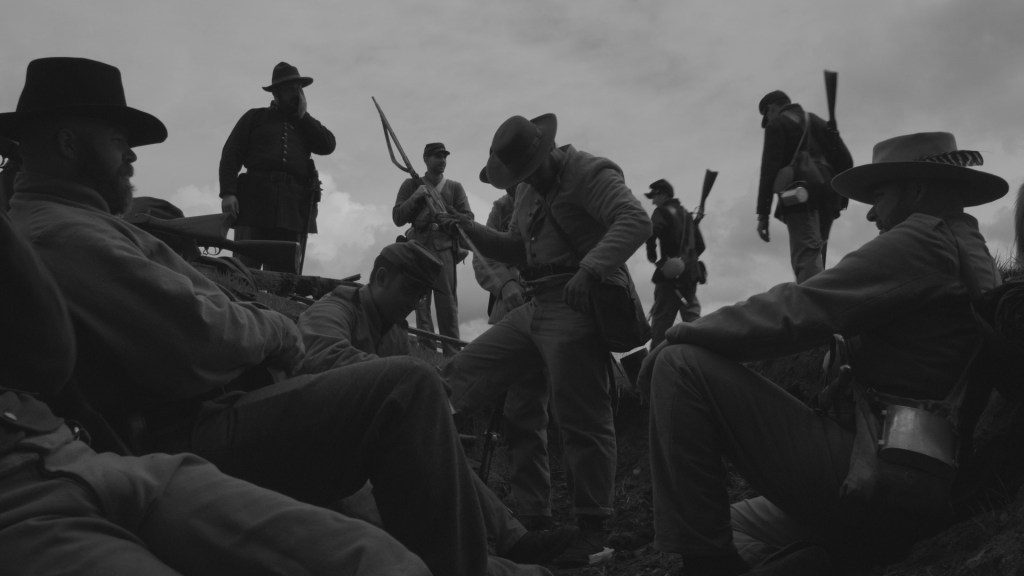
**Documentary “The Great Experiment” Opens National Tour, Examining 2017‑2021 Political Division**
A new film that chronicles the surge of American political polarization from 2017 to 2021 has entered theaters across the country. “The Great Experiment,” directed by Stephen Maing and Eric Daniel Metzgar, debuted at New York City’s IFC Center on October 16 before moving to Los Angeles’s Laemmle Glendale on October 23.
The black‑and‑white documentary follows the nation’s tense political journey culminating in the Capitol attack and President Biden’s inauguration.
The film’s title references George Washington’s description of America as “our last great experiment” in democracy, while its opening line echoes President Lincoln’s warning that a house divided cannot stand.
By juxtaposing contemporary footage with archival material, the filmmakers aim to explore how ordinary Americans navigated division without framing the story as a left‑right conflict.
The project has already appeared at multiple international festivals, including the True/False Film Festival in Columbia, MO, CPH:DOX in Copenhagen, DC/DOX in Washington, DC, Full Frame in Durham, NC, and RiverRun International Film Festival in Winston‑Salem, NC.
A trailer for the film has been released online to preview its observational style and thematic focus.
## Background & Context
“The Great Experiment” was shot across dozens of U.S. regions—from Boston to San Diego to New Orleans—during the four‑year span of heightened political strife that began with the 2016 election and accelerated through Trump’s first term, the 2020 election, the pandemic, and the January 6 Capitol assault.
Directors Maing and Metzgar rejected traditional interview formats in favor of immersive observation, striving to capture “the vast connections between personal needs, deeply held values and the impreciseness of political affiliation.” Their aim was to present a film that does not resolve ideological contradictions but holds them together within a single frame long enough for new insights to emerge.
The documentary’s visual language draws on the work of Fred Wiseman and Ron Fricke, while also echoing the associative storytelling found in RaMell Ross’s *Hale County This Morning,
This Evening* and Arthur Jafa’s *Love Is the Message.* By filming in black and white and interweaving archival footage, the directors sought a clear‑eyed reckoning that only distance—real or imagined—can provide.
Produced by Farihah Zaman, Stephen Maing, and Eric Daniel Metzgar, the film benefits from executive producers Anne Marie Stein, Richard MacMillan, Agnes Mentre, Lyda Kuth, and Kirsten Johnson. Co‑executive producers Rachel Traub and Jihan Robinson also contributed to the project’s development.
## Festival Circuit & Release Strategy
The documentary premiered in March at the True/False Film Festival in Columbia, MO, before traveling to other notable festivals such as CPH:DOX, DC/DOX, Full Frame, and RiverRun International. These early screenings positioned the film within a community of viewers attuned to socially conscious cinema.
Upcoming festival appearances include Woodstock Film Festival in New York and Montclair Film Festival in New Jersey.
The filmmakers have positioned the film as an “epic poem in documentary form,” emphasizing its observational approach over narrative commentary. , the film examines how “people navigate division and foster meaningful local dialogue.” The festival run serves to generate word‑of‑mouth buzz ahead of the broader theatrical tour.
## Nationwide Tour & Community Engagement
After its New York opening, the film will embark on a nationwide social cinema tour designed to bring screenings back to regions featured in the documentary. Planned stops include Milwaukee, Boston, San Diego, San Francisco, Berkeley, New Orleans, Austin, Baltimore, and Memphis.
Additional cities and community screenings are expected to expand as the tour progresses.
The tour’s goal is to extend the exploration of American division by engaging viewers in the locales depicted on screen. By returning the film to these communities, producers hope to stimulate local dialogue about how ordinary citizens experience political polarization.
The schedule and dates for each city are being finalized as the tour expands.
In closing, “The Great Experiment” offers a contemplative look at a recent chapter in U.S. history, aiming to hold viewers in a shared frame long enough for surprising perspectives to surface. Its national release strategy reflects the filmmakers’ commitment to fostering conversations about democracy’s future amid deep societal fractures.
---
## The Story Behind the Story
Stephen Maing and Eric Daniel Metzgar had both spent years documenting small‑town America and the ways in which national politics seep into local life. Their first feature, *The Village That Changed Its Name*, won a regional award for its quiet portrayal of a community grappling with gentrification.
For *The Great Experiment*, they shifted focus to the national canvas but kept their emphasis on everyday people.
The decision to use black‑and‑white film was deliberate. It strips away the distraction of color, forcing viewers to focus on form, composition, and the starkness of emotion that often becomes diluted in saturated footage.
The archival segments—presidential speeches, news clips from 2017 to 2021—serve as anchors, reminding audiences that the present is built upon a past that continues to reverberate.
While filming, Maing and Metzgar adopted a “no‑voiceover” policy. Instead of guiding the audience through a linear narrative, they let scenes unfold naturally.
The result is a collage of vignettes: a woman in a Chicago laundromat debating over whether to vote; a pair of neighbors in Texas arguing across the fence line; students at an African‑American history workshop in Nashville.
Each segment is intentionally left ambiguous, inviting viewers to draw their own conclusions rather than being told what to think.
## Fan Reaction and Community Dialogue
The response to the film has been mixed, but overwhelmingly reflective. In Boston, a post‑screening discussion at the University of Massachusetts was attended by more than 200 students.
One participant remarked, “I’ve seen footage of protests from all over the country, but seeing it in the context of my own neighborhood made it feel like a shared experience.”
In San Diego, a local church hosted a “watch and talk” evening that turned into a debate about media consumption and civic responsibility.
A parishioner explained, “Seeing the same footage we’ve all seen on television but hearing it from people who live right next to me made me realize how disconnected we can feel even when we’re physically close.”
Across the country, social media threads have been fueled by phrases such as “a mirror held up to us” and “the film makes you question whether division is natural.” Some viewers criticize the lack of a clear solution, but many appreciate the honest portrayal of complexity.
## Industry Impact
“The Great Experiment” arrives at a time when documentary filmmakers are experimenting with hybrid formats—mixing journalistic footage with poetic visual storytelling. The film’s success on the festival circuit has prompted several distributors to explore similar projects that foreground everyday voices over sensational headlines.
The social cinema model used for the national tour is a notable development. Rather than relying solely on traditional theaters, the filmmakers partner with community centers, libraries, and even small businesses to create intimate viewing spaces.
This approach aligns with a broader industry trend toward “distributed cinema,” where films reach audiences through unconventional venues that foster dialogue.
the film’s focus on polarization has resonated with scholars who study media ecosystems. In recent academic conferences, several papers cited the documentary as a case study for how media narratives shape public perception.
By refusing to reduce the story to binary politics, Maing and Metzgar challenge a prevailing industry narrative that often frames political documentaries as advocacy pieces.
## Looking Forward
The nationwide tour is slated to conclude in late December, after which the film will be available on select streaming platforms. The creators plan to launch a companion online discussion forum where viewers can share reflections, moderated by political science professors and community leaders.
This digital extension aims to sustain the conversation beyond the theater walls.
In interviews, Maing and Metzgar emphasized that their goal is not to “heal” a fractured nation but to provide a space where people can see the humanity in each other. They say that by documenting the subtle ways ordinary citizens interact—whether in grocery stores, churches, or local debates—they hope to rekindle empathy.
“The experiment,” they argue, is still ongoing. As new elections approach and new social movements rise, their documentary serves as both a record of what has happened and a challenge to think about how it could be different.
---
## Final Thoughts
“The Great Experiment” invites audiences to slow down, observe, and question. Its black‑and‑white aesthetic strips away distraction, its immersive structure offers a new way of seeing the past and present intertwine, and its community‑centered tour brings the conversation back to the places it matters most.
Whether one sees it as a cautionary tale or a hopeful roadmap, the film stands as the power of documentary cinema to reflect, provoke, and ultimately connect us in a divided era.
Why It Matters
Our Take
GoNews Pulse Editorial Team
This article was prepared for publication by GoNews Pulse and checked for publication requirements under our editorial standards. We review available information and correct material errors when they are identified.
Quick Answers
- What is the latest update on this story?
- Black‑and‑white footage captures the moment America split, from 2016 to the Capitol riot—don’t miss the chilling narrative unfolding in The Great Experiment.
- Who is this story about?
- This article covers developments related to America’s political divide exposed—watch The Great Experiment trailer. GoNews Pulse's editorial team monitors the story and updates the article as new verified information becomes available.
- Where can I read more about Stephen Maing?
- GoNews Pulse publishes original reporting on Stephen Maing and related entertainment news. Visit the homepage or browse the section dedicated to this story for the latest coverage.
Related topics
- #Stephen Maing
- #Eric Metzgar
- #Capitol attack
- #distributed cinema
More From This Section
Jessica Edwards' 27-Year Legacy Shakes Woodstock Film Festival
Jessica Edwards announced she will double the festival’s screen time for women filmmakers, promising a new wave of diverse stories at next spring’s event.
Taylor Swift's 36-Year-Old Red Turns Chiefs Fans Into Celebrity Crowd
Swift's front‑row red turtleneck and a heartfelt hug to Donna Kelce at Arrowhead left fans stunned as Chiefs edged Chargers 33‑30 in overtime.
Taylor Swift's 36-year-old drops 'The Fate of Ophelia' at Academy Gala
She stunned in a strapless pale‑blue Dior gown, opening with a brand‑new Toy Story 5 track and a 'Blank Space' performance, showcasing her theatrical flair.