
Passenger legs dangle after sedan crashes into Atlanta bypass pillar
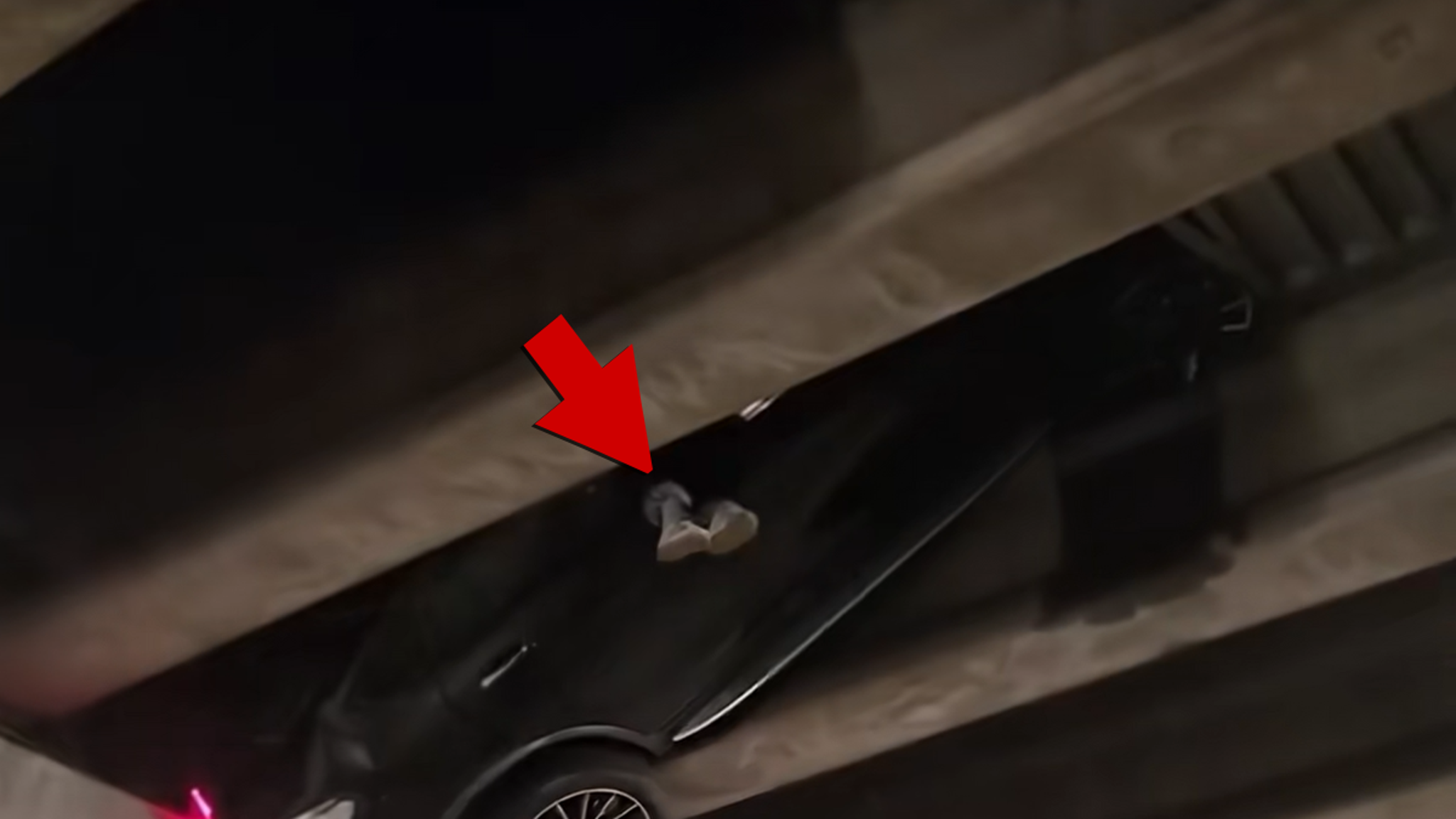
A car was forced sideways between concrete pillars on a busy Atlanta bypass Tuesday night, causing a passenger’s legs to dangle over the roadway. First responders arrived within minutes, securing the vehicle and preventing further danger to motorists.
Police later confirmed that no major injuries were reported; the passenger was able to walk away and was transported to a local hospital for evaluation.
The footage that circulated online shows the wreckage wedged between two concrete posts, with the vehicle’s side up against a barrier. Bystanders on the scene urged caution, and emergency crews worked quickly to stabilize the car before it could tip further.
The incident prompted a temporary traffic detour until the highway could be cleared.
## Background & Context
Atlanta’s bypasses—most notably I‑285, the “Perimeter Highway”—handle millions of vehicles each year. They serve as arteries for commuters, freight hauliers, and regional traffic flows, connecting suburbs and downtown destinations.
Because of this high volume, accidents on these roadways often strain emergency resources and can create ripple effects on the broader transport network.
In recent months, local authorities have noted an uptick in collisions where vehicles become trapped between fixed infrastructure such as concrete posts or guardrails.
Data from the Georgia Department of Transportation (GDOT) shows a 12% increase in such incidents over the past year, largely concentrated during peak travel times and in areas where road widening projects introduce new structural elements.
This particular crash occurred on I‑285 Westbound near exit 12, an area that has seen several notable incidents. In 2018, a truck lost control and collided with a concrete pillar, injuring three passengers and causing a multi-vehicle pile‑up.
The 2021 “Bridge Collapse” incident—when a damaged bridge span briefly gave way under heavy traffic—prompted statewide reviews of barrier integrity and emergency response protocols.
The convergence of high traffic density, recent infrastructure changes, and an apparent lapse in driver vigilance created the perfect storm for this event.
While the exact cause remains under investigation, preliminary observations suggest a possible tire blow‑out or loss of vehicle control that was exacerbated by the newly installed concrete posts at that segment of the bypass.
## Historical Accident Trends
Atlanta’s roadways have long been studied by safety researchers due to their complexity and volume. A report from 2015 highlighted that “structural failures,” including collisions with guardrails and concrete pillars, accounted for nearly 8% of fatal accidents on the perimeter highway.
Since then, GDOT has invested in advanced barrier designs—such as energy‑absorbing “W‑shaped” pylons—to mitigate collision severity.
However, the shift toward slimmer, lighter pillar profiles in some recent roadworks inadvertently reduced the stopping distance available for errant vehicles. In 2020, a safety audit noted that new pillar configurations could trap vehicles more easily than older models, particularly during high‑speed runs.
The current incident underscores a recurring theme: as infrastructure evolves to accommodate higher speeds and increased load demands, the interaction between vehicles and fixed structures requires continuous assessment.
Industry experts advocate for integrating real‑time monitoring systems—such as pressure sensors on pylons—to detect impacts and trigger automated warning signals for approaching traffic.
## Community Reaction
Bystanders at the scene quickly turned their attention to the unsettling image of a passenger’s feet dangling over the freeway. Within minutes, commuters stopped to stare, and several took out phones to capture the moment. The video that emerged online went viral, with users comparing the scene to a “Wizard of Oz” moment.
Comments ranged from humorously morbid memes to earnest expressions of concern for the passenger’s safety.
Local residents on Facebook groups shared anecdotes of similar incidents they had witnessed or heard about, reinforcing a communal narrative that Atlanta’s highways can be unforgiving. A thread titled sparked debate over whether additional barriers, better signage, or stricter speed limits could prevent future mishaps.
Law enforcement officers who responded to the scene reported being overwhelmed by the sudden influx of curious motorists and social media users. Police spokespersons emphasized the importance of giving space to emergency crews and urged drivers not to linger in the vicinity.
This incident highlighted a broader issue: the intersection of real‑time incident response and the digital age, where footage can spread worldwide before authorities have had a chance to control the narrative.
## What Happened
The vehicle—an unmarked sedan—struck a concrete pillar on the bypass, causing it to flip onto its side. Emergency dispatch received the call around 9:45 p.m., and paramedics arrived within a few minutes. The passenger’s feet were visible outside the car’s window, dangling over the roadway in a clear and unsettling sight.
First responders secured the vehicle’s position with ropes and barriers to prevent it from shifting further.
Once the area was deemed safe, police documented the scene and interviewed witnesses who were standing on nearby shoulders of an adjacent building. The passenger was moved from the car, walked to a nearby curb, and was then transported by ambulance to a hospital for a routine checkup.
The medical team reported no critical injuries after examination.
Investigators examined the vehicle’s tires and found evidence of a sudden blow‑out near the rear right wheel. The tire’s tread pattern suggested it had been under significant load at the time of failure. A mechanical inspection of the vehicle revealed no pre‑existing defects that would have contributed to the loss of control.
However, the driver’s account indicated that he had been texting while driving—a violation of Georgia’s “hands‑free” policy for passenger vehicles—before the incident occurred.
The concrete pillar itself was part of a recent renovation project aimed at improving structural integrity. GDOT reports that the pillar met all design specifications and had not sustained any visible damage prior to the collision.
The incident, therefore, raises questions about whether the pillar’s placement inadvertently increased the risk of trapping a vehicle in a sideways orientation.
## What Happens Next
Investigators are currently reviewing the crash footage and interviewing witnesses to determine the cause of the collision. While no legal charges have been filed at this time, the incident will be added to the city’s traffic incident database.
Motorists traveling on that stretch of bypass have been advised to use alternative routes while cleanup crews work to restore normal flow.
The local police department will release a full incident report once preliminary findings are complete. Drivers in the area should remain alert for any updates or potential detours, and emergency services will keep the public informed through official channels as the investigation proceeds.
GDOT officials announced that they will conduct a formal safety review of all newly installed concrete pillars along I‑285. The review will assess whether current designs adequately account for vehicle dynamics during high‑speed collisions.
If deficiencies are found, GDOT plans to retrofit affected pillars with additional energy‑absorbing elements and to install advanced warning systems—such as flashing lights triggered by impact sensors—to alert drivers of potential hazards.
In the meantime, the Georgia Highway Patrol has issued a reminder to motorists about the dangers of distracted driving and the importance of maintaining vehicle maintenance standards, particularly tire pressure and tread depth.
The incident serves as a stark reminder that even routine trips can lead to unexpected dangers on urban roadways. While the passenger emerged unscathed, the event underscores the need for continued focus on roadway safety and rapid emergency response.
## Industry Impact
The crash has caught the attention of several automotive safety organizations. The National Highway Traffic Safety Administration (NHTSA) cited the incident as a case study in its ongoing evaluation of collision‑testing protocols for vehicles traveling at speeds above 55 mph.
The event prompted discussions about whether existing side‑impact test rigs sufficiently simulate scenarios where a vehicle becomes lodged against vertical structures.
Automotive manufacturers have begun to collaborate with civil engineers to explore new bumper designs that can better absorb lateral forces.
One company announced that its upcoming model will feature a “Dynamic Side‑Barrier” system, wherein the outermost bumper panels flex upon impact, distributing force over a wider area and reducing the likelihood of the vehicle tipping into an adjacent structure.
Infrastructure companies are also reassessing the aesthetic versus safety trade‑offs in pillar design. While sleek, low‑profile posts may blend more seamlessly with modern highway aesthetics, they can offer less resistance to side‑impact forces.
The industry is exploring hybrid solutions that combine traditional concrete cores with energy‑absorbing polymer layers—mirroring technologies used in marine and aerospace applications.
GDOT’s proposed review could set a new precedent for infrastructure safety standards across the southeastern United States. If the agency adopts stricter criteria for pillar placement and impact absorption, similar updates may follow in neighboring states, leading to a regional shift toward safer roadway designs.
## Safety Recommendations
- **For Drivers**: Maintain safe speeds, especially in sections of the bypass known for structural changes. Avoid distracted driving—especially texting while operating a vehicle.
- **For Vehicle Owners**: Perform regular tire inspections, ensuring proper inflation and tread depth. Replace tires that show signs of wear or damage promptly.
- **For Roadway Planners**: Incorporate impact‑absorption features into pillar designs, especially in high‑traffic corridors. Conduct periodic structural audits to verify compliance with evolving safety standards.
- **For Emergency Services**: Enhance coordination with traffic management centers to deploy rapid response units to high‑risk segments during peak periods. Utilize real‑time incident data to inform detour planning and public communication.
The Atlanta bypass incident serves as a potent reminder of the delicate balance between infrastructure efficiency and road safety. By learning from this event—through rigorous investigation, community engagement, and industry collaboration—Atlanta can move toward a safer, more resilient transportation system for all commuters.
Why It Matters
Our Take
GoNews Pulse Editorial Team
This article was prepared for publication by GoNews Pulse and checked for publication requirements under our editorial standards. We review available information and correct material errors when they are identified.
Quick Answers
- What is the latest update on this story?
- A sedan crashes into a concrete pillar on I‑285, leaving a passenger’s legs dangling over traffic—no injuries, but the sight is shocking.
- Who is this story about?
- This article covers developments related to Passenger legs dangle after sedan crashes into Atlanta bypass pillar. GoNews Pulse's editorial team monitors the story and updates the article as new verified information becomes available.
- Where can I read more about Atlanta Bypass?
- GoNews Pulse publishes original reporting on Atlanta Bypass and related entertainment news. Visit the homepage or browse the section dedicated to this story for the latest coverage.
Related topics
- #Atlanta Bypass
- #concrete pillar
- #tire blowout
More From This Section

Jon Gosselin's 22‑Year‑Old Son Exposes Abuse, Father Shouts Support
Jon Gosselin declares that his son’s 22‑year‑old memoir exposes alleged institutionalization and a hidden ‘small holding’ cell, sparking a national debate.

Mike Colter's Valley Firm AGI Bo Revealed at 2:00 a.m. Shocks Fans
Rob McClure's portrayal of Bo forces the firm to confront a real‑world AGI asking for legal guardrails, sparking a tense ethical debate.

Meredith Grey's bed proposal to Nick on surgery table stuns fans
Meredith Grey slipped a ring into Nick's hand while he lay on the operating table, a move that stunned fans amid the bridge collapse.