
Fast & Furious Hollywood Drift ignites Hollywood Sign with roaring show
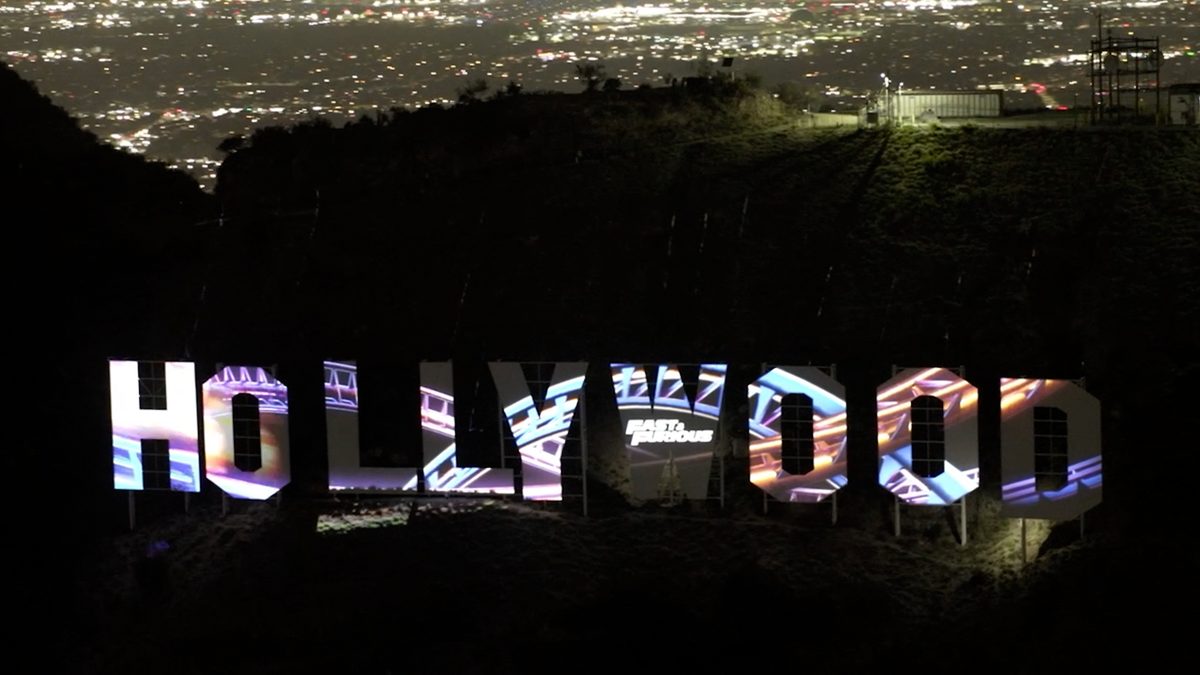
Universal Studios Hollywood lit up the Hollywood Sign on Thursday night, turning the landmark into a dynamic tribute to the Fast & Furious franchise.
The projection mapping featured scenes from the park’s newest roller coaster, *Fast & Furious: Hollywood Drift*, as it drifts past Griffith Observatory and onto the hills.
Over the course of a single evening, visitors witnessed a spectacle that fused cinematic history with modern engineering, making the sign itself a moving road for adrenaline‑filled fans.
## Background & Context
The Hollywood Sign, erected in 1923 as a for the “Hollywood” movie studio, has long been a canvas for creative expression. Over the decades it has hosted everything from glow-in-the-dark messages to tribute displays for blockbuster franchises.
Universal’s decision to dedicate a night of light mapping to *Fast & Furious* taps into this tradition while aligning the sign with one of the world’s most iconic action series.
*Fast & Furious: Hollywood Drift*, Universal’s latest thrill ride, is built on cutting‑edge spinning car technology borrowed from the franchise’s own stunt design teams. Each vehicle mimics a fan‑favorite car—think the sleek “T-1000” or the rugged “Bodhi”—and can reach up to 72 mph, making it the fastest attraction on the West Coast.
The ride’s design integrates a series of high‑speed turns, banked drops, and synchronized light effects that echo the frenetic energy of the films.
## What Happened
At dusk, the park’s projection crew activated a series of high‑resolution LEDs that covered every inch of the sign’s white lettering. The lights flickered like headlights, zooming past the silhouette of Griffith Observatory before racing down into the valley.
A bold “Fast & Furious” message spanned the letter “W,” mirroring the franchise’s signature typography. Behind this visual feast ran a carefully curated montage of iconic moments from the franchise—drift sequences, rooftop chases, and car‑to‑car standoffs—set to an adrenaline‑boosting soundtrack.
While the lights danced, riders on *Hollywood Drift* launched into a 300‑foot track that wove through a mirrored maze of high‑speed turns. The spinning cars rotated in sync with the projected lights, giving guests the illusion that they were part of the cinematic narrative displayed overhead.
As the ride’s final drop approached, the lights brightened to match the roar of engines, culminating in a coordinated finale where the sign pulsed like a heartbeat.
## Fan Reaction
Crowds gathered on the surrounding hills and in front of the park’s entrance to witness the event. Many fans posted instant reaction videos on social media, praising Universal for turning a beloved landmark into an immersive fan experience.
One enthusiast described the moment as “like stepping straight into a movie scene,” noting that the projection was “so realistic, you could almost feel the wind.” Others expressed nostalgia, recalling childhood dreams of racing cars across Hollywood’s famed skyline.
The community’s response underscored a broader trend: fans increasingly seek multisensory experiences that blend storytelling with physical interaction. By projecting the *Fast & Furious* narrative onto an iconic symbol of film history, Universal tapped into a deep well of cultural resonance.
## Industry Impact
This lighting spectacle demonstrates how theme parks can leverage large‑scale projection mapping to create unforgettable brand moments.
The technique, which requires precise calibration of light intensity, color temperature, and synchronization with audio, showcases a growing intersection between entertainment technology and architectural art. Other parks are likely to follow suit, integrating dynamic signage into their own storytelling ecosystems.
*Hollywood Drift*’s use of spinning cars—originally developed for on‑screen stunts—illustrates how film innovations can be translated into ride mechanics. The result is a more immersive experience that blurs the line between spectator and participant, raising expectations for future attractions across the industry.
## Looking Forward
Universal’s Hollywood Sign illumination has set a new benchmark for how franchises can celebrate milestones through experiential design. By marrying the franchise’s high‑speed aesthetic with one of cinema’s most enduring symbols, the park has created an event that feels both nostalgic and cutting‑edge.
As *Fast & Furious* continues to expand its presence in live entertainment, fans can expect even more daring collaborations that push the boundaries of storytelling, technology, and fan engagement.
Why It Matters
Our Take
GoNews Pulse Editorial Team
This article was prepared for publication by GoNews Pulse and checked for publication requirements under our editorial standards. We review available information and correct material errors when they are identified.
Quick Answers
- What is the latest update on this story?
- Universal Studios lights up Hollywood Sign with Fast & Furious scenes, syncing the dazzling display to the new coaster.
- Who is this story about?
- This article covers developments related to Fast & Furious Hollywood Drift ignites Hollywood Sign with roaring show. GoNews Pulse's editorial team monitors the story and updates the article as new verified information becomes available.
- Where can I read more about celebrity news?
- GoNews Pulse publishes original reporting on celebrity news and related entertainment news. Visit the homepage or browse the section dedicated to this story for the latest coverage.
More From This Section

Jon Gosselin's 22‑Year‑Old Son Exposes Abuse, Father Shouts Support
Jon Gosselin declares that his son’s 22‑year‑old memoir exposes alleged institutionalization and a hidden ‘small holding’ cell, sparking a national debate.

Mike Colter's Valley Firm AGI Bo Revealed at 2:00 a.m. Shocks Fans
Rob McClure's portrayal of Bo forces the firm to confront a real‑world AGI asking for legal guardrails, sparking a tense ethical debate.

Meredith Grey's bed proposal to Nick on surgery table stuns fans
Meredith Grey slipped a ring into Nick's hand while he lay on the operating table, a move that stunned fans amid the bridge collapse.