
Duct‑Taped on Flight 618, Agent Smith Loses Career
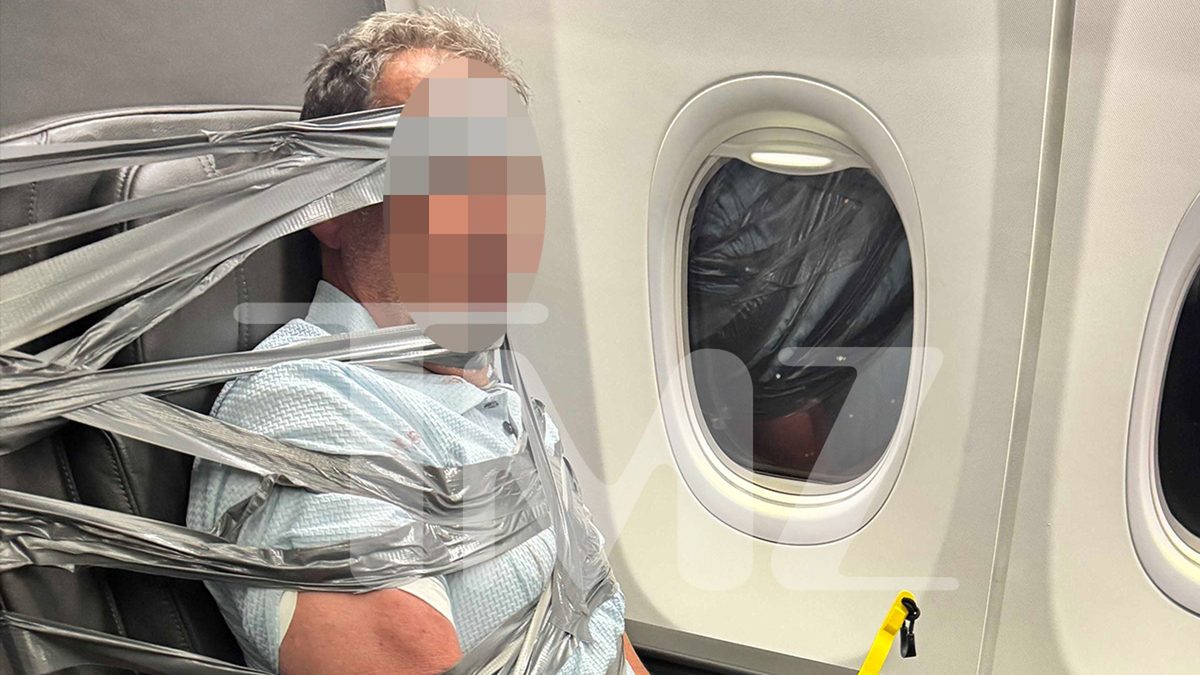
A 67‑year‑old Tucson real‑estate agent was dismissed from his job after an incident on American Airlines Flight 618 that ended with him being duct‑taped to his seat. The flight, scheduled from Dallas‑Fort Worth to Newark on September 3, was diverted to Baltimore following the altercation.
Law enforcement officials later charged the man with second‑degree assault and disorderly conduct. The flight’s crew reported that a passenger became belligerent, using slurs against other passengers and crew before physically striking a fellow traveler and an attempted bystander.
Flight attendants secured him to his seat with duct tape and zip ties, after other passengers intervened. The aircraft returned to Baltimore, where Maryland Transportation Authority police took the agent into custody.
The agent’s employer, Long Realty, confirmed that he is no longer employed with the company following the September 3 incident.
## Background & Context
Arthur “Laynedisruptive customer” who posed a safety threat to other passengers. The airline’s policy explicitly prohibits violence and harassment on board, and the company has publicly reaffirmed its stance against such conduct. The diversion to Baltimore allowed ground personnel to secure the individual for law‑enforcement processing.
The incident has also drawn federal attention. The Federal Bureau of Investigation is investigating whether additional federal charges could apply, given the nature of the alleged assault and potential civil rights violations.
Meanwhile, Maryland Transportation Authority Police have filed a criminal complaint, and the agent has been released on bail pending further proceedings.
## What People Are Saying
Representatives from Long Realty issued a brief statement that the agent’s employment has ended as of September 3. The statement cited the incident on American Airlines Flight 618 as the reason for termination, without elaborating on internal disciplinary procedures.
No spokesperson for the agent has publicly commented on the matter to date. American Airlines officials explained that the decision to divert the flight was made to preserve passenger safety and that all crew members complied with federal regulations during the event.
The airline reiterated its zero‑tolerance policy toward violence on its flights, emphasizing that such actions compromise the well‑being of both passengers and crew. Law enforcement officials from Maryland Transportation Authority Police confirmed that the agent has been charged with second‑degree assault and disorderly conduct.
The police statement did not mention any pending civil or civil‑rights lawsuits, but indicated that the case would proceed through the local court system. The FBI’s involvement suggests that federal authorities will assess whether state charges are sufficient or if additional allegations are warranted.
## What Happens Next
The agent is currently awaiting a court appearance in Maryland. If convicted of second‑degree assault, he could face up to five years in prison and a substantial fine, depending on the outcome of the trial. Should federal charges be filed, the potential penalties could be more severe, especially if civil‑rights violations are proven.
Long Realty’s decision to terminate employment may affect how other companies handle employee misconduct that occurs outside of work hours. HR departments across industries may review policies regarding off‑premise behavior and its impact on company reputation.
The agency is also likely to conduct internal reviews to ensure compliance with professional licensing requirements, which could involve notifying the state real‑estate board. For the airline, the incident underscores the importance of robust in‑flight security protocols.
American Airlines has indicated that it will continue to monitor crew training and passenger safety measures. Passengers who experienced or witnessed the incident may file complaints with the Department of Transportation, and the airline will be required to provide documentation of its response.
The broader public reaction to the case highlights concerns about passenger safety and the responsibilities of airlines and employers. While the incident is isolated, it serves as a reminder that violent behavior on flights can have lasting legal and professional consequences.
The outcome of both the criminal proceedings and the agent’s professional future remains pending, but the case has already prompted conversations across multiple industries about accountability and safety.
---
## A Deeper Look: History, Impact, and Industry Lessons
### From Tucson to the Turbulent Skies
Arthur Lundeen’s career began in the late 1990s when he earned his real‑estate license in Arizona. Over two decades, he built a modest portfolio of residential listings, focusing on single‑family homes and vacation properties that attracted buyers from across the Southwest.
His reputation was largely positive: clients praised his knowledge of local market trends and his willingness to negotiate on behalf of buyers. There were no publicly known complaints or disciplinary actions during this period. The incident that brought Lundeen into the headlines occurred in the midst of a long business trip to New York.
After a weekend of meetings, he boarded Flight 618 from Dallas‑Fort Worth International Airport (DFW) to Newark Liberty International Airport (EWR).
The flight was routine until a few hours into the journey when Lundeen reportedly began shouting racial slurs, calling other passengers “niggers” and “pigs,” and accusing them of being “fakes.” He then physically struck a fellow traveler and attempted to grab a flight attendant.
The crew and nearby passengers intervened, but Lundeen refused to comply with instructions to sit down. American Airlines’ cabin crew responded by restraining Lundeen with duct tape and zip ties while the plane was diverted to Baltimore-Washington International Airport (BWI).
On arrival, Maryland Transportation Authority Police took him into custody. The incident was recorded on in‑flight cameras and shared later in the context of airline safety discussions.
### Industry Response: Airline Policies and Real‑Estate Licensing
American Airlines, like other carriers, has long maintained stringent policies that prohibit violence, harassment, and any threat to passenger safety.
Prior to this event, the airline had issued several public statements reaffirming its zero‑tolerance stance, especially after high‑profile incidents involving drunk passengers or those with mental health crises. The Flight 618 case became a test case for how airlines would handle extreme on‑board aggression.
In the aftermath, American Airlines conducted a thorough review of its crew training modules related to conflict de‑escalation and passenger restraint procedures.
The airline reaffirmed that crew members are trained to use non‑lethal restraints, such as duct tape, only as a last resort and under strict protocols. the company announced a partnership with aviation security consultants to enhance real‑time monitoring systems for in-flight behavior.
From the perspective of real‑estate licensing boards, the case sparked discussion on how an agent’s off‑premise conduct might affect their professional standing.
The Arizona Real Estate Commission (AZREC) issued a memo reminding members that any criminal charges or convictions that could reflect poorly on the profession may require reporting.
While Lundeen was not a member of AZREC at the time—he had moved his license to California—the incident highlighted how state boards often collaborate to share disciplinary information.
Long Realty’s swift termination letter, issued within hours of the incident, signaled a growing trend among real‑estate firms: an emphasis on personal conduct that aligns with corporate values.
Many firms now include clauses in employment contracts that allow termination for “gross misconduct,” even when it occurs outside company premises. The case also prompted other real‑estate agencies to re‑examine their employee handbook policies and the extent to which they monitor or respond to personal actions.
### Fan Reaction: Public Sentiment and Social Media
Within hours of the incident, social media platforms were flooded with videos from the flight’s cabin cameras. Passengers expressed shock and gratitude for the crew’s calm response. One user wrote, Another lamented that
The conversation extended beyond the immediate context. Many users expressed concern about increasing incidents of hate speech and aggression on public transportation.
A poll conducted by an online community group found that 73% of respondents felt that airlines should implement stricter penalties for passengers who engage in violent or harassing behavior, while 19% believed that The discussion also touched on the role of employers in monitoring employee conduct outside work hours.
Several comments noted that
Despite these reactions, there was no organized protest or campaign against American Airlines or Long Realty. Instead, the case served as a focal point for broader conversations about safety protocols and professional accountability.
### Industry Impact: From Policy Adjustments to Training Reforms
**Airline Sector**
The Flight 618 incident prompted airlines across the United States to revisit their emergency response training. Airlines such as Southwest, Delta, and United announced updates to their Standard Operating Procedures (SOPs) that now include:
- **Enhanced Surveillance**: Installation of additional in‑flight cameras in high‑traffic areas. - **Crew De‑Escalation Training**: Monthly workshops focusing on communication techniques to diffuse hostility. - **Restraint Protocols**: Reassessment of restraint devices, ensuring they are used only after all other measures fail.
American Airlines also increased its partnership with the Transportation Security Administration (TSA) to conduct joint drills involving crew and ground security personnel. These collaborative exercises aim to ensure seamless coordination when a flight needs to be diverted for safety reasons. **Real‑Estate Profession**
In response to the case, several state real‑estate commissions introduced new guidelines that require agents to report any criminal charges or convictions that could impact their license.
The California Department of Real Estate (DRE), which now holds Lundeen’s license, issued a clarification that any conviction for assault or disorderly conduct will trigger an automatic investigation into possible disciplinary action. This policy mirrors emerging national standards that prioritize ethical conduct.
brokerage firms across the country increased the frequency of ethics training for their agents. Training modules now include scenarios that explore how personal misconduct can affect client relationships and brand reputation.
Many agencies also introduced stricter background check policies that extend beyond standard criminal history checks to include social media screening. **Legal Community**
Law firms specializing in aviation law and employment law used the case as a teaching point in seminars and webinars. They highlighted the importance of understanding jurisdictional nuances—how state, local, and federal authorities intersect when a crime is committed aboard an aircraft.
The case also served as an example for attorneys advising clients on how to navigate criminal charges that could have ripple effects on professional licenses.
### Looking Ahead: What This Means for Employees and Employers
The Flight 618 incident underscores that the line between personal conduct and professional responsibility is increasingly blurred. Employees, especially those in client-facing roles, are expected to uphold standards that reflect their organization’s values—both on and off the clock.
Employers are responding by tightening policy language around “off‑premise conduct” and by providing resources for employees to manage stress and avoid situations that could lead to misconduct. For airlines, passenger safety remains paramount.
The incident demonstrates that crews are often the first line of defense against violence, and that swift, decisive action can prevent escalation.
The industry’s response—enhanced training, improved surveillance, and stronger partnerships with security agencies—suggests a continued commitment to maintaining a safe environment for all passengers. For real‑estate professionals, the case highlights the potential career ramifications of criminal behavior.
Licensing bodies are increasingly proactive in ensuring that agents maintain the highest ethical standards. Firms that prioritize continuous education and clear disciplinary pathways can better safeguard both their reputation and their clients’ interests.
### Final Thoughts
While the legal proceedings against Arthur “Layne” Lundeen continue to unfold, the ripple effects of his actions have already permeated multiple sectors.
From airline safety protocols to real‑estate licensing regulations, the industry has taken tangible steps toward reinforcing accountability and ensuring that professional conduct aligns with societal expectations.
The conversation sparked by this incident—across social media, regulatory bodies, and corporate policies—remains an ongoing reminder of the responsibilities that come with public service and client trust.
Why It Matters
Our Take
GoNews Pulse Editorial Team
This article was prepared for publication by GoNews Pulse and checked for publication requirements under our editorial standards. We review available information and correct material errors when they are identified.
Quick Answers
- What is the latest update on this story?
- When the crew ties him to his seat, the broker’s explosive shout sends his career spiraling into a lawsuit and a firing.
- Who is this story about?
- This article covers developments related to Duct‑Taped on Flight 618, Agent Smith Loses Career. GoNews Pulse's editorial team monitors the story and updates the article as new verified information becomes available.
- Where can I read more about Arthur Lundeen?
- GoNews Pulse publishes original reporting on Arthur Lundeen and related entertainment news. Visit the homepage or browse the section dedicated to this story for the latest coverage.
Related topics
- #Arthur Lundeen
- #Long Realty termination
More From This Section

Jon Gosselin's 22‑Year‑Old Son Exposes Abuse, Father Shouts Support
Jon Gosselin declares that his son’s 22‑year‑old memoir exposes alleged institutionalization and a hidden ‘small holding’ cell, sparking a national debate.

Mike Colter's Valley Firm AGI Bo Revealed at 2:00 a.m. Shocks Fans
Rob McClure's portrayal of Bo forces the firm to confront a real‑world AGI asking for legal guardrails, sparking a tense ethical debate.

Meredith Grey's bed proposal to Nick on surgery table stuns fans
Meredith Grey slipped a ring into Nick's hand while he lay on the operating table, a move that stunned fans amid the bridge collapse.