
Tim Curry’s Final Curtain Studio 54 Rises, Broadway Revives His Legend
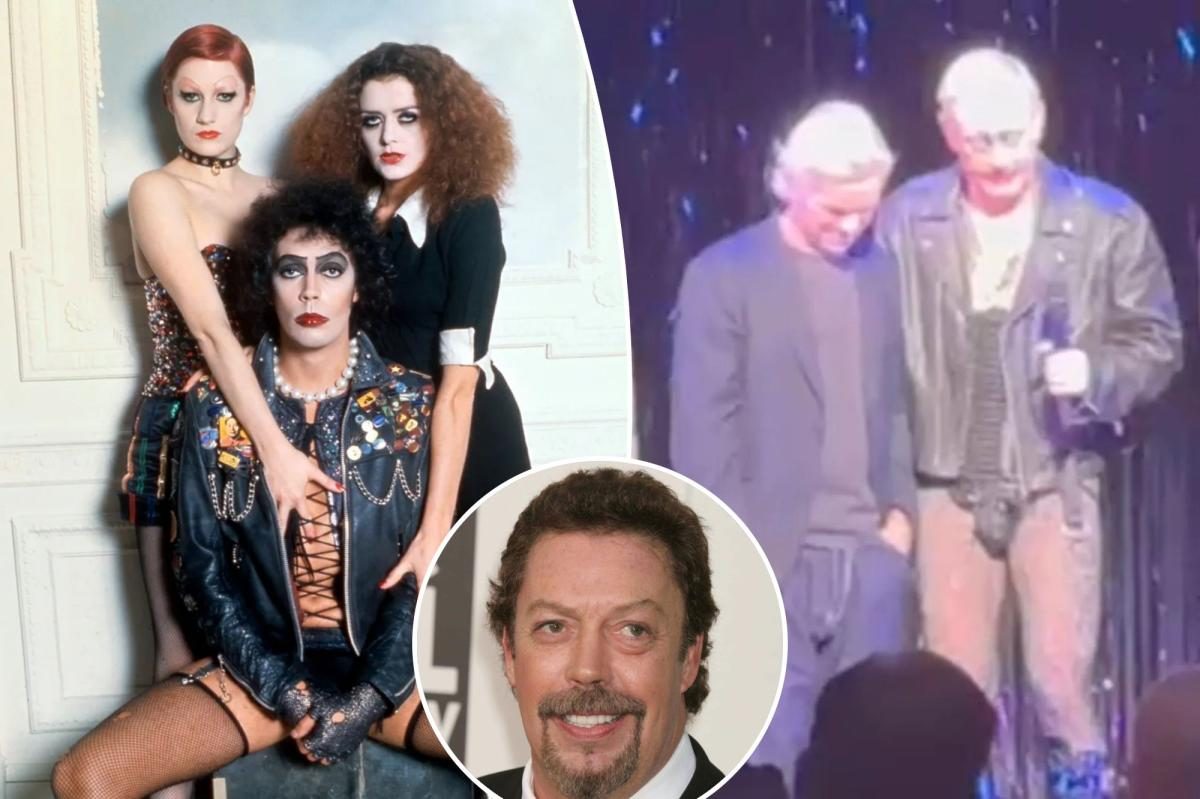
Tim Curry, the British actor who made his name as Frank‑N‑Furter, died Tuesday at age 80. The Broadway revival of *The Rocky Horror Show* paid tribute to him on Wednesday night at Studio 54 in New York.
The cast celebrated the late star’s legacy with a heartfelt performance that left audiences buzzing long after the curtain fell.
At the curtain call, Paul Sooileau—now playing Frank‑N‑Furter in the revival—took the mic and spoke about Curry’s influence. “The way Frank‑N‑Furter survives is that he finds vessels and he goes into them…he keeps moving all around,” he said.
“And 53 years ago there was one home, one vessel; one mothership that Frank‑N‑Furter could actually call home. And it’s Tim Curry.” The theater erupted into applause and chants of “Tim! Tim!
Tim!”—the indelible mark he left on the character and on fans worldwide.
## Background & Context
Curry first embodied Frank‑N‑Furter in the 1973 London stage production of *The Rocky Horror Show*. Two years later, he reprised the role in the film adaptation directed by Jim Sharman, turning a theatrical cult hit into an underground cinematic phenomenon.
The 1975 Broadway run at the Belasco Theatre brought Curry’s flamboyant performance to an American audience, cementing his status as a living legend in the world of rock‑opera.
The current revival on Broadway is helmed by Sharman himself, the original film director.
Sharman, who spent his early career in Melbourne before moving to New York, has long praised Curry for “being a unique talent, a lovely person and a tough cookie.” He often spoke about how the “lipstick traces of him remain in the movies that will outlive him,” underscoring Curry’s lasting imprint on the genre and on every performer who steps into the role after him.
The revival is not simply a nostalgic re‑staging; it’s a reinterpretation that draws on modern sensibilities while staying true to the spirit of 1970s counterculture.
The production's choreography, lighting, and musical arrangement have been updated to resonate with contemporary audiences, yet the underlying themes of self‑discovery, fluid identity, and theatrical excess remain unchanged.
## What People Are Saying
During the tribute, Soileau recalled Richard O’Brien’s creative process.
He said that O’Brien “laid a piece of paper in front of Tim Curry with ingredients on it…and he took all of those ingredients and created this beast that everyone found something within and could see a piece of themself inside of it.” Soileau added that Curry’s portrayal helped people find deeper parts of themselves, an influence that continues to ripple through the queer community and beyond.
The cast also honored Curry by inviting Luke Evans—first actor to play Frank in this revival—and Jake Shears, who will take over the role on September 11. Rachel Dratch and other ensemble members joined the trio of Furters in a rendition of “I’m Going Home,” a moment that felt both ceremonial and celebratory.
In the lobby, a memorial photograph of Curry surrounded by electric candles served as a quiet tribute, offering fans an intimate place to pause and reflect.
Fans across the country shared their memories on social media, posting screenshots of Curry’s iconic scenes from *The Rocky Horror Picture Show*, quoting his lines, and expressing how his performance helped them accept themselves. Many spoke of watching the film as a teenager and feeling a newfound sense of freedom.
“Tim made me feel seen in a way I never had before,” wrote one user. “Thank you, Tim.” The comments page was flooded with stories of personal transformation, illustrating the broader cultural impact Curry’s work continues to have.
## Industry Impact
Curry’s death also sparked conversations about the role of rock‑opera in modern theater. Scholars and critics have noted how *The Rocky Horror Show* paved the way for later productions that blend musical theater with pop culture, such as *The Book of Mormon* and *Rent*.
The revival’s success—topping box‑office charts despite stiff competition—demonstrates how a classic can be reinvigorated for a new generation.
In interviews, several contemporary actors cited Curry as a key influence in their own careers. “When I first heard him sing ‘Time Warp,’ I knew that wasn’t just a song; it was an invitation to play with identity,” said rising star Emily Roth.
“Curry showed me that you can be both a villain and a hero at the same time.” These insights highlight how Curry’s legacy is not confined to a single role but extends into broader artistic practices, encouraging performers to embrace complexity and authenticity.
The revival’s creative team has also announced plans for a touring version that will travel across the country, ensuring that audiences in smaller cities can experience Curry’s magic. The tour will feature a rotating cast of actors who have been inspired by his work, further spreading his influence.
Additionally, the production company is exploring a documentary series chronicling the history of *The Rocky Horror Show* and its cultural significance—an initiative that would interviews with original cast members, historians, and fans.
## What Happens Next
The tribute marked the beginning of a wave of reflections across the theater community. Audience members left the show with a renewed appreciation for Curry’s influence on rock‑opera and queer performance art.
The revival’s schedule will continue to feature future performances, including Shears’ debut on September 11, which is expected to draw a large crowd of long‑time fans and newcomers alike.
No official announcement has been made about further memorials or commemorations beyond the Wednesday night tribute. Fans can attend upcoming shows to experience the character Curry helped bring to life and to honor his legacy onstage.
Merchandise featuring Curry’s image and iconic quotes will be available at the box office, offering a tangible connection for those who want to keep his memory alive.
Tim Curry’s death leaves a void in the world of musical theater, yet his work endures in every line of *The Rocky Horror Show* and in every fan who remembers Frank‑N‑Furter’s defiant smile.
The Broadway cast’s tribute serves as a reminder that a single performer can create a family that extends far beyond his own life—one that continues to shape theater, empower audiences, and inspire future generations of artists.
Why It Matters
Our Take
GoNews Pulse Editorial Team
This article was prepared for publication by GoNews Pulse and checked for publication requirements under our editorial standards. We review available information and correct material errors when they are identified.
Quick Answers
- What is the latest update on this story?
- Broadway turns back the clock—Studio 54’s iconic vibe erupts in a tribute to Tim Curry, breathing fresh life into his legendary role.
- Who is this story about?
- This article covers developments related to Tim Curry’s Final Curtain Studio 54 Rises, Broadway Revives His Legend. GoNews Pulse's editorial team monitors the story and updates the article as new verified information becomes available.
- Where can I read more about Tim Curry?
- GoNews Pulse publishes original reporting on Tim Curry and related entertainment news. Visit the homepage or browse the section dedicated to this story for the latest coverage.
Related topics
- #Tim Curry
- #Rocky Horror Show
- #Broadway
- #Frank N Furter
- #Queer theater
More From This Section

Jon Gosselin's 22‑Year‑Old Son Exposes Abuse, Father Shouts Support
Jon Gosselin declares that his son’s 22‑year‑old memoir exposes alleged institutionalization and a hidden ‘small holding’ cell, sparking a national debate.

Mike Colter's Valley Firm AGI Bo Revealed at 2:00 a.m. Shocks Fans
Rob McClure's portrayal of Bo forces the firm to confront a real‑world AGI asking for legal guardrails, sparking a tense ethical debate.

Meredith Grey's bed proposal to Nick on surgery table stuns fans
Meredith Grey slipped a ring into Nick's hand while he lay on the operating table, a move that stunned fans amid the bridge collapse.