
Tim Curry’s final bow: how the 80‑year‑old legend’s exit shocked fans
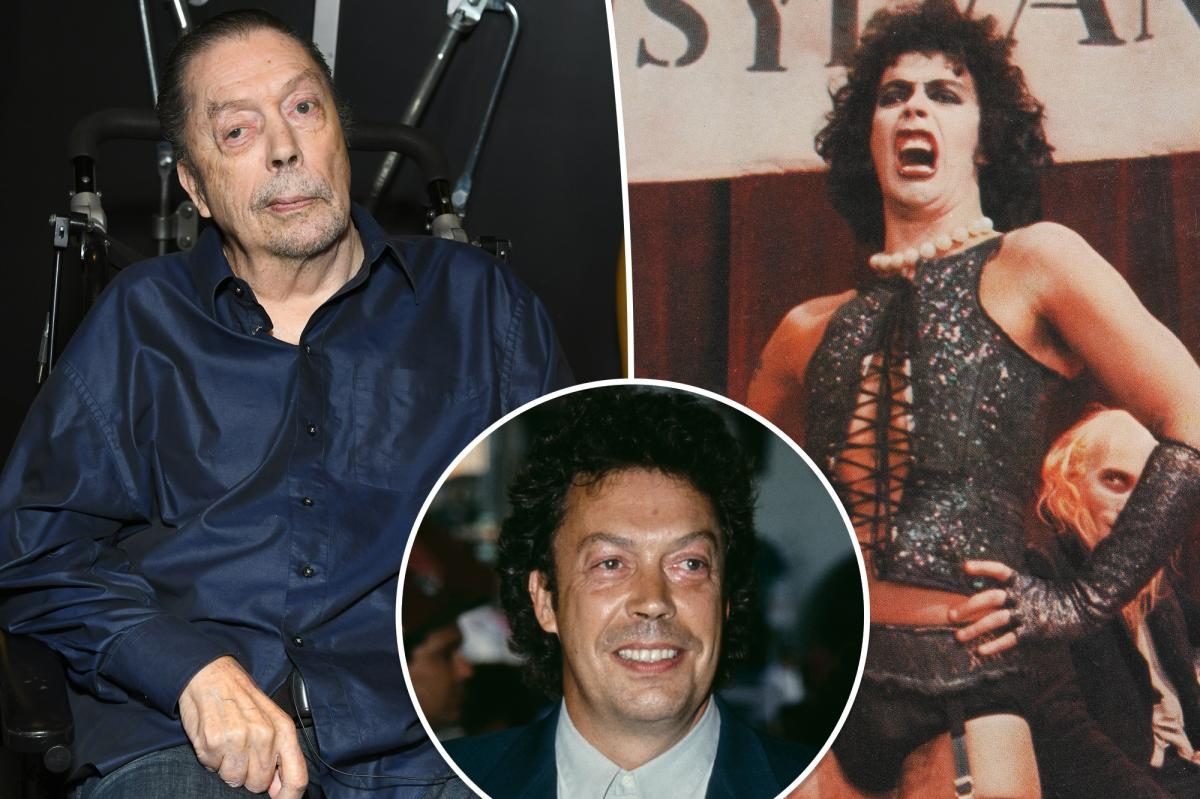
Tim Curry, the celebrated performer who first dazzled audiences as Dr. Frank‑N‑Furter in *The Rocky Horror Picture Show* and later as Pennywise in *It*, died on August 25, 2026, at his home in Toluca Lake, Los Angeles.
His longtime manager and friend Marcia Hurwitz confirmed the death in a statement that read: “Tim Curry…passed away peacefully at his home…on Aug. 25, 2026.” The Los Angeles Police Department logged a call at 11:23 p.m. on the night of the death, responding to a 10500 block of La Maida St. for a death investigation involving an 80‑year‑old male; the department later completed a formal report.
---
## Background & Context
Curry was born on April 19, 1946, in Cheshire, England. His father, a Royal Navy chaplain, suffered a stroke when Curry was 11 and died shortly after of pneumonia. The family moved to South London, where Curry attended boarding school before earning an English and drama degree from the University of Birmingham.
His career launched with a role in the West End production of *Hair* in 1968, where he met writer‑actor Richard O’Brien. O’Brien later wrote the role that would become Curry’s signature: Dr. Frank‑N‑Furter, first staged in the 1973 London musical and again in the 1975 film adaptation directed by Jim Sharman.
The film was initially a commercial disappointment, but over time it gained cult status, and Curry’s performance earned him international acclaim. He went on to star in *Annie* (1982) as Rooster Hannigan, *Clue* (1985), *Home Alone 2* (1992), and the 1990 miniseries *It*, portraying the notorious killer clown.
In 2012, Curry suffered a major stroke that left him partially paralyzed and confined to a wheelchair. The event forced him to step back from on‑screen acting; he shifted focus to voice work and stage performances until his return in 2024 for the live‑action horror film *Stream*.
He completed all of his work for *Stream 2: Sudden Death*, his final on‑screen role, which will serve as a posthumous performance.
---
## What People Are Saying
Curry’s manager expressed that, beyond his flamboyant on‑stage persona, “his greatest legacies to those who knew him were his curious, expansive mind and generous, gentle heart.” She described Curry as someone whose “open and filled with anticipation” spirit remained intact until his final breath.
Actress Dee Wallace, a co‑star in *Stream* and the 1999 film *Pirates of the Plain*, said in a statement that working with Curry was “one of the best experiences of my career.” She praised his joy and professionalism on set.
Director Michael Leavy called Curry’s passing “an absolute shock” and “devastated” him personally. Leavy added that Curry had “completed all of his work for his role in ‘Stream 2: Sudden Death,’” and emphasized that audiences will still witness the actor’s final performance.
He expressed gratitude for Curry’s support throughout the project and affirmed the importance of preserving his contribution within the franchise.
Curry, never married and without children, had spoken in previous interviews about how he wished to be remembered as an actor rather than a movie star. He once noted that *The Rocky Horror Picture Show* had given “people permission to be themselves” and that this message was something he wanted to carry forward.
---
## What Happens Next
The Los Angeles Police Department has concluded its death investigation, completing a formal report on the incident. No further legal actions or inquiries have been announced at this time. Curry’s final film, *Stream 2: Sudden Death*, will be released posthumously, featuring his completed work from the 2024 production.
The film will serve as both a tribute to his enduring talent and a reminder of his impact on audiences worldwide.
Tim Curry’s passing marks the end of an era for fans of genre cinema and theatre alike. His legacy, spanning stage, screen, and voice, continues to resonate with new generations who discovered his work through cult classics and modern horror.
---
## A Career That Transcended Mediums
### From the Stage to the Silver Screen
Curry’s theatrical roots were never eclipsed by his film work. He was a fixture on both sides of the Atlantic, earning a Tony Award nomination for Best Featured Actor in a Musical for *The Rocky Horror Show* (1975) and a Drama Desk Award for Outstanding Actor in a Musical (1975).
His stage presence—bold, theatrical, and unapologetically flamboyant—set him apart as one of the defining voices of late‑20th‑century musical theatre.
When he transitioned to film, he brought that same intensity. *The Rocky Horror Picture Show* was initially a box‑office flop, but Curry’s iconic performance helped turn it into a midnight‑movie phenomenon that still draws cult audiences to theatres worldwide.
The film’s enduring popularity has meant that Curry’s legacy is inseparable from the phenomenon of midnight screenings, sing‑along sessions, and the “Rocky Horror” fandom that continues to thrive.
### Defining Horror
Curry’s portrayal of Pennywise in *It* (1990) redefined the horror genre. His chilling, cartoonish voice and unsettling mannerisms made Pennywise a living nightmare for children—and adults—who watched the miniseries on television. The role cemented his place as a master of terror: an actor who could turn a clown into an icon of fear.
After *It*, Curry remained a staple in horror projects, lending his voice to several animated classics and contributing to horror‑themed specials that aired during Halloween seasons. His versatility across genres—drama, comedy, horror—kept him relevant for five decades.
### Voice Work and Commercial Influence
Curry’s distinctive vocal range made him a sought‑after voice actor. He voiced characters in animated films such as *The Simpsons* (as the character “Homer’s Grandpa” in a special guest cameo) and lent his voice to a popular advertising campaign for an American energy drink in the 1990s that remains iconic in pop‑culture references.
These roles showcased his ability to adapt to a range of characters while keeping his signature theatrical flair.
---
## Fan Reaction and Cultural Impact
### Tributes at Fan Conventions
Within hours of the announcement, fans flocked to conventions such as San Diego Comic-Con and New York Comic Con to pay respects.
A spontaneous gathering outside the convention center turned into an impromptu tribute where fans sang “Sweet Transvestite” and displayed handwritten notes that read: “Thank you for teaching us how to be ourselves.”
Social media buzzed with the hashtag #TimCurry, and thousands of posts shared clips of his most iconic moments. A fan‑run livestream event showcased a montage of Curry’s career highlights, punctuated by personal anecdotes from fellow performers who had worked with him.
### Industry Commemoration
The film industry paid tribute by screening *The Rocky Horror Picture Show* in its original 1975 format on the day of his death, followed by a panel discussion on his influence in musical theatre and horror.
Major studios announced limited‑edition collectible items, including a commemorative vinyl of the *Rocky Horror* soundtrack and a signed set of script pages from *It*.
Curry’s death also sparked discussions about health advocacy for actors. His post‑stroke experience—how he adapted to limited mobility and continued performing—was highlighted as an example of resilience.
An upcoming documentary on actor health is set to feature segments on Curry’s later career, drawing attention to occupational hazards in the entertainment industry.
---
## Industry Impact and Legacy
### Influence on Contemporary Actors
Many contemporary actors credit Curry with inspiring their own work.
Actor Chris Pratt, who voiced a clown in an animated film in 2014, said in a recent interview that “Curry’s performance of Pennywise taught me how to combine charm with terror.” Likewise, comedian and actress Melissa McCarthy has cited *The Rocky Horror Picture Show* as a formative experience, noting that Curry’s ability to command the stage while remaining relatable influenced her approach to comedic timing.
### Shaping Genre Cinema
Curry’s career bridged the gap between theatrical spectacle and cinematic storytelling. By bringing the theatricality of stage performance to the screen, he helped shape the modern horror‑comedy hybrid genre.
His work on *Stream*—a live‑action horror series that blended high‑tech effects with classic scare tactics—was a direct homage to his earlier contributions, ensuring that his influence would carry forward into future productions.
### Awards and Honors
Over the course of his career, Curry earned numerous accolades:
- **Drama Desk Award (1975)** – Outstanding Actor in a Musical for *The Rocky Horror Show* - **Tony Award Nomination (1975)** – Best Featured Actor in a Musical - **Saturn Award (1991)** – Best Supporting Actor for *It* - **Lifetime Achievement Award (2023)** – Presented by the British Film Institute in recognition of his contributions to both theatre and film
These honors underscore how industry peers regarded him as a versatile, boundary‑pushing artist.
---
## Final Reflections
Curry’s passing has left a palpable void in both the stage and screen worlds, but it has also prompted a renewed appreciation for his work. From *The Rocky Horror Picture Show*’s midnight cult status to *It*’s chilling legacy, his performances continue to inspire new generations of performers and fans alike.
As *Stream 2: Sudden Death* prepares for its posthumous release, audiences will experience the final chapter of an actor who never ceased to push boundaries, challenge norms, and give permission for authenticity.
In doing so, Tim Curry’s legacy will live on—not just as a memory of a performer but as a continuing influence on the artistic community that shaped him.
---
Why It Matters
Our Take
GoNews Pulse Editorial Team
This article was prepared for publication by GoNews Pulse and checked for publication requirements under our editorial standards. We review available information and correct material errors when they are identified.
Quick Answers
- What is the latest update on this story?
- He leaves a legacy that still haunts the stage—fans uncover the shocking twist he left behind.
- Who is this story about?
- This article covers developments related to Tim Curry’s final bow: how the 80‑year‑old legend’s exit shocked fans. GoNews Pulse's editorial team monitors the story and updates the article as new verified information becomes available.
- Where can I read more about Tim Curry?
- GoNews Pulse publishes original reporting on Tim Curry and related entertainment news. Visit the homepage or browse the section dedicated to this story for the latest coverage.
Related topics
- #Tim Curry
- #Tony Award nomination
More From This Section

Jon Gosselin's 22‑Year‑Old Son Exposes Abuse, Father Shouts Support
Jon Gosselin declares that his son’s 22‑year‑old memoir exposes alleged institutionalization and a hidden ‘small holding’ cell, sparking a national debate.

Mike Colter's Valley Firm AGI Bo Revealed at 2:00 a.m. Shocks Fans
Rob McClure's portrayal of Bo forces the firm to confront a real‑world AGI asking for legal guardrails, sparking a tense ethical debate.

Meredith Grey's bed proposal to Nick on surgery table stuns fans
Meredith Grey slipped a ring into Nick's hand while he lay on the operating table, a move that stunned fans amid the bridge collapse.