
Sylvester Stallone says his mother's sudden death fuels Hollywood fire
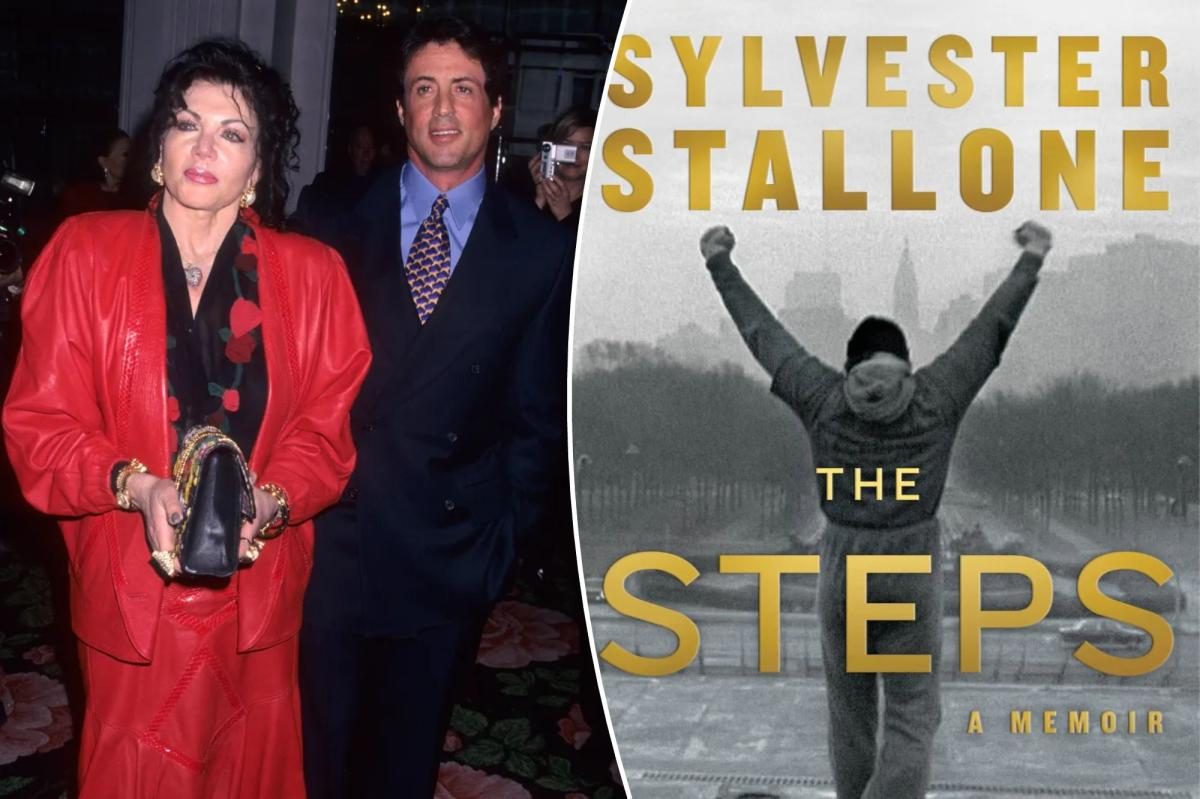
When the legendary actor stepped onto a golf course in the late summer of 2023, he had no idea that a call would soon turn his leisurely round into an emotional roller‑coaster. Over the phone, Dr.
Stephen Levine—Jackie Stallone’s third husband—simply said, “I’m calling to say he’s gone.” The words landed like a stone on a calm pond: his mother, the eccentric, 98‑year‑old Jackie Stallone, had died.
Stallone let out a chuckle that barely masked the sting. “No… Now you’re getting the scoop,” he quipped, a trademark dry humor that has kept audiences engaged for decades.
Yet behind the lightness lay a profound grief that would become one of the many chapters in his memoir, *The Steps*.
Jackie Stallone was no ordinary Hollywood figure. A self‑styled “rumpologist” who claimed to read fortunes from buttocks, she famously survived into her late nineties after an extravagant career that included astrology, fashion styling, and flamboyant public appearances.
Her legacy—part diva, part mystic—was a double‑edged sword for her son. While she gave him a name recognition that could not be ignored, her immaturity and pursuit of stardom left gaps in family affection.
## Background & Context
Stallone’s childhood was marked by a sense of abandonment that would shape his adult persona. His father, Frank Sr., was equally aloof; a stoic man who offered advice only at the precipice of death, famously telling Sylvester, “You’re 96, you’re dying.
Now is when you figure it all out?” The resulting emotional detachment seeped into young Sylvester’s worldview, creating a relentless drive to prove himself.
He grew up in Hell’s Kitchen, New York, a neighborhood that was both a crucible and a crucible for the future action star. At age two, he was sent to a boarding house in Queens; over the next decade, he attended twelve different schools, a fact that Stallone recounts as evidence of his unstable early life.
His most harrowing years were spent at Devereux, a reform school notorious for harsh discipline. The infamous “Snake Pit”—a punishment block where students endured grueling physical tasks—became the backdrop for the traumatic assault that would haunt him.
An inmate nicknamed Jay Bird clawed at his genitals and tore his pants, a memory he buried as a protective mechanism.
These experiences seeded a deep sense of isolation and a craving for validation that later fueled both his career and personal life. In *The Steps*, Stallone does not merely recount the events; he probes why they shaped him into the relentless, self‑made Hollywood icon we know today.
## Early Career: From Rejection to Redemption
Before *Rocky* earned him a star’s status, Stallone was a struggling actor in low‑budget films and off‑off-Broadway productions. His first significant break came when he wrote the screenplay for *The Party at Kitty and Stud's*.
The script was a raw, gritty portrayal of street life—a vision that would later translate into the world‑conquering saga of *Rocky*.
In 1975, Stallone sold the *Rocky* script to United Artists for $2,500. The studio offered him a modest role as a supporting actor. Determined not to let the opportunity slip, he wrote a second manuscript, revising the script until it was an unshakeable narrative of perseverance and triumph.
The film’s premiere in 1976 catapulted Stallone to international fame, earning him an Oscar nomination for Best Actor and paving the way for a career that spanned five decades.
Throughout his career, Stallone has never shied away from discussing the physical toll of stardom. While filming *Rocky III*, he pursued extreme bodybuilding, achieving a 2.6% body fat ratio and battling bulimia. He openly admitted to using steroids and has undergone nine back surgeries, two shoulder operations, and three neck fusions.
These injuries—resulting from both the demands of his roles and his relentless dedication—are chronicled in *The Steps* as part of the larger narrative about ambition versus well‑being.
## Memoir Impact: A New Light on an Icon
*The Steps* is more than a family saga; it is a cultural touchstone that offers insight into the psychological underpinnings of one of Hollywood’s most enduring figures. By laying bare the early trauma and familial neglect that spurred his rise, Stallone provides a candid look at how personal hardship can fuel professional success.
The memoir also serves as an intimate exploration of grief. The sudden deaths of both Jackie Stallone (2020) and his eldest son, Sage Stallone (2012), are discussed with raw honesty.
Sage’s passing—announced during a routine office meeting—left Sylvester shattered, a moment that the actor has described as “cut‑and‑dry.” These experiences have led him to address the importance of mental health and grief counseling in the entertainment industry, calling for more open dialogue around these topics.
Stallone’s memoir resonates beyond Hollywood. It invites readers from all walks of life to reflect on their own histories and the hidden forces that shape them.
By naming his mother’s eccentricities and his father’s emotional distance, he confronts the often‑ignored reality that fame does not immunize one from the human need for connection.
## Fan Reaction: From Suspicion to Support
When *The Steps* hit shelves, reactions were swift and varied. Longtime fans—who have followed Stallone from *Rocky* to *Rambo*—expressed both surprise and admiration for his vulnerability. Social media buzzed with threads discussing how the actor’s candidness was a fresh perspective on a man who had always seemed larger than life.
A prominent fan forum highlighted a common thread: the realization that many of Stallone’s most iconic characters were born from personal struggle. “Rocky” became more than a fictional underdog; it reflected Stallone’s own fight against an unsupportive upbringing.
The revelation that his mother was a controversial astrologer—an oddity that fans had never explored—added another layer to the legend.
Some critics, however, argued that the memoir leans too heavily on emotional manipulation. Yet, even those skeptics acknowledged the authenticity in Stallone’s recounting of physical pain and the rawness of his family history.
## Industry Impact: A Call for Transparency
Stallone’s candid discussion of trauma, abuse, and mental health has sparked conversation within Hollywood circles about the hidden costs of stardom. His narrative echoes similar stories from other high‑profile figures who have broken silence on abusive childhoods or the physical toll of action roles.
The memoir has prompted studios to re‑examine their support structures for actors dealing with personal trauma.
Industry professionals have cited *The Steps* as a case study in how personal resilience can be both a boon and a burden. Several acting coaches have incorporated Stallone’s experiences into their curricula, emphasizing the importance of emotional intelligence alongside physical training.
Notably, Stallone’s approach to his own health—highlighting the dangers of extreme body modification—has influenced discussions about safety protocols on set. The film community has begun to advocate for better mental health resources for actors, especially those in physically demanding roles.
## Conclusion: A Legacy Reimagined
Sylvester Stallone’s *The Steps* is the power of vulnerability. By sharing his mother’s death, the grief of losing his son, and the lingering wounds from a turbulent childhood, he invites readers into a space rarely seen by Hollywood legends.
The memoir reframes his legacy not merely as an action hero but as a complex individual who transformed pain into purpose.
Through this work, Stallone offers an essential reminder: that even icons are human, shaped by early trauma, family dynamics, and the relentless pursuit of ambition. His story stands as both cautionary tale and inspirational guide for anyone navigating the intersection of personal hardship and professional ambition.
As he reflects in the book—“I have nothing to prove. I have no more tricks in the bag”—the actor invites us all to confront our own shadows, to recognize that sometimes the greatest victories come from the deepest scars.
Why It Matters
Our Take
GoNews Pulse Editorial Team
This article was prepared for publication by GoNews Pulse and checked for publication requirements under our editorial standards. We review available information and correct material errors when they are identified.
Quick Answers
- What is the latest update on this story?
- Stallone spills raw details of the loss that forged his fierce on‑screen persona, hinting at a darker past that keeps Hollywood guessing.
- Who is this story about?
- This article covers developments related to Sylvester Stallone says his mother's sudden death fuels Hollywood fire. GoNews Pulse's editorial team monitors the story and updates the article as new verified information becomes available.
- Where can I read more about Sylvester Stallone?
- GoNews Pulse publishes original reporting on Sylvester Stallone and related entertainment news. Visit the homepage or browse the section dedicated to this story for the latest coverage.
Related topics
- #Sylvester Stallone
- #Jackie Stallone
- #Rocky film franchise
More From This Section

Jon Gosselin's 22‑Year‑Old Son Exposes Abuse, Father Shouts Support
Jon Gosselin declares that his son’s 22‑year‑old memoir exposes alleged institutionalization and a hidden ‘small holding’ cell, sparking a national debate.

Mike Colter's Valley Firm AGI Bo Revealed at 2:00 a.m. Shocks Fans
Rob McClure's portrayal of Bo forces the firm to confront a real‑world AGI asking for legal guardrails, sparking a tense ethical debate.

Meredith Grey's bed proposal to Nick on surgery table stuns fans
Meredith Grey slipped a ring into Nick's hand while he lay on the operating table, a move that stunned fans amid the bridge collapse.