
Stallone Shuts Down Trump’s Hollywood Ambassador Pitch—Why He Declines
**Stallone Declines Trump’s Hollywood Envoy Post, Calls Appointment “Impossible”**
In January 2025, former President Donald Trump announced that Hollywood stars Sylvester Stallone, Jon Voight and Mel Gibson would serve as his special envoys to bring the film industry back to the United States. Trump said the trio would act as his eyes and ears in Hollywood and that he would implement their recommendations.
The announcement was made public during a televised briefing in Washington, D.C.
Stallone, who is 80 years old, reacted to the news with disbelief.
He recalled watching a television segment one evening where the names of the actors were listed as part of Trump’s plan, and he thought to himself, “What?” The actor said he told Trump that the ambassadorship was impossible and that he would have declined if approached earlier.
When asked how he felt about the appointment, Stallone explained that Hollywood operates like a collection of independent studios rather than a single entity that can be directed from Washington. He noted, “You don’t go in and tell six studios how to do things.
And Mel Gibson and Jon Voight, we’re kind of do‑our‑own‑thing people.” The actor concluded that the role would not fit within his approach to the industry.
Stallone said he thanked Trump and declined the offer with a simple “Thank you and ciao.” He added that Hollywood would continue to evolve without external intervention.
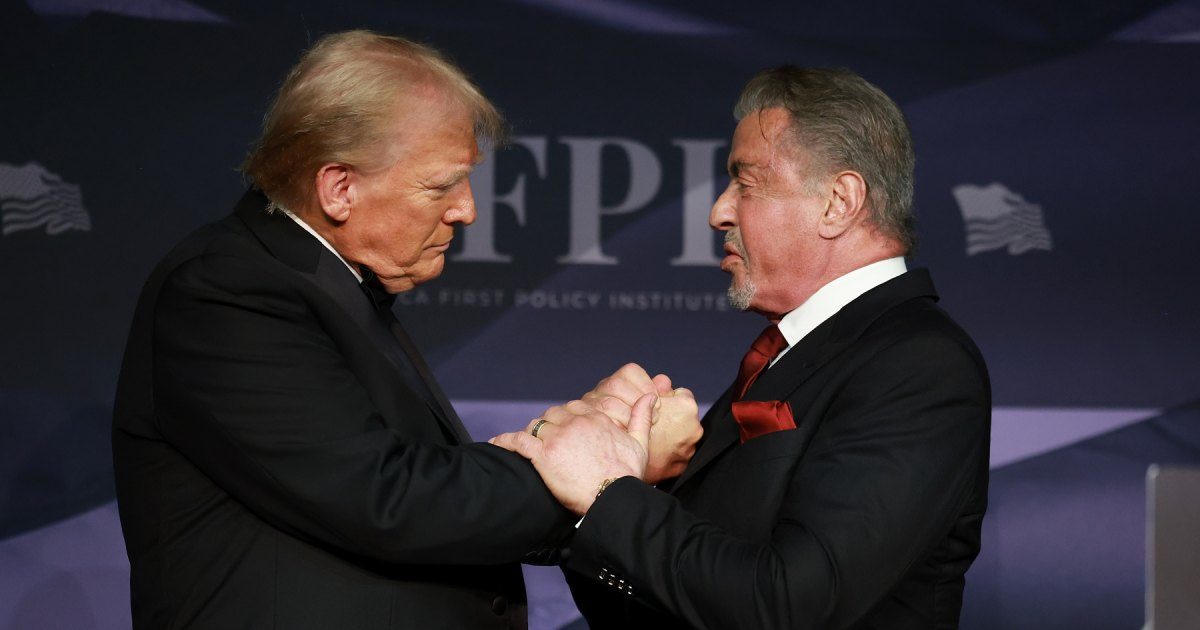
The actor also clarified that he is not a political figure, describing himself as an almost political atheist, despite having publicly supported Trump and introduced him at a Mar‑a‑Lago event after the 2024 election.
## Background and Trump’s Appointment
Trump’s January announcement was framed as a strategy to reverse a perceived decline in U.S. film production over the previous four years, which he blamed on foreign competition. He highlighted that the envoys would help bring Hollywood back bigger, better, and stronger than ever before.
The appointment followed his re‑election in 2024 and came amid concerns that U.S. studios were losing market share abroad.
The president said the three actors would be his eyes and ears in Hollywood and that he would “get done what they suggest.” This statement underscored his belief that the industry had lost ground to overseas markets. By naming prominent filmmakers, Trump aimed to signal a commitment to revitalizing domestic production.
## Stallone’s Response
Stallone’s comments were delivered in a recent interview where he detailed his surprise at the televised announcement. He emphasized that if the offer had been made earlier, he would have said it was impossible. Stallone also described Hollywood as a “feudal” system of independent studios that cannot be controlled from a single point.
In rejecting the role, Stallone cited corporate resistance to his suggestions about finance and the inherent independence of the studios. He maintained that the industry’s evolution would not rely on a single envoy. His statement underscores a broader skepticism among veteran filmmakers toward political intervention.
## Industry Perspective from Jon Voight
Jon Voight, one of the envoys named by Trump, responded to questions about the future of Hollywood in an interview earlier this month. He said he is working to improve the industry during Trump’s term and that aligning U.S. tax benefits with those offered abroad could spark a surge in activity.
Voight added that the industry would be ready to mobilize quickly, with crews and projects prepared for immediate action, and that this would benefit local communities.
Voight expressed optimism that a new golden age could return, noting “Yes, I think it’s going to.” He emphasized that the business is “shovel‑ready” and that “they’ll call people tomorrow.” His remarks suggest a belief that policy changes could still reshape the industry’s trajectory.
Stallone’s rejection of the envoy role highlights the tension between Hollywood’s autonomous culture and government attempts to influence its direction. Meanwhile, voices like Voight’s suggest that policy shifts could still reshape the industry’s future.
Why It Matters
Our Take
GoNews Pulse Editorial Team
This article was prepared for publication by GoNews Pulse and checked for publication requirements under our editorial standards. We review available information and correct material errors when they are identified.
Quick Answers
- What is the latest update on this story?
- Stallone, at 80, fires back at Trump’s envoy plan, insisting Hollywood’s independence is sacred—he says the role is downright impossible.
- Who is this story about?
- This article covers developments related to Stallone Shuts Down Trump’s Hollywood Ambassador Pitch—Why He Declines. GoNews Pulse's editorial team monitors the story and updates the article as new verified information becomes available.
- Where can I read more about Sylvester Stallone?
- GoNews Pulse publishes original reporting on Sylvester Stallone and related entertainment news. Visit the homepage or browse the section dedicated to this story for the latest coverage.
Related topics
- #Sylvester Stallone
- #Jon Voight
- #Mel Gibson
More From This Section

Jon Gosselin's 22‑Year‑Old Son Exposes Abuse, Father Shouts Support
Jon Gosselin declares that his son’s 22‑year‑old memoir exposes alleged institutionalization and a hidden ‘small holding’ cell, sparking a national debate.

Mike Colter's Valley Firm AGI Bo Revealed at 2:00 a.m. Shocks Fans
Rob McClure's portrayal of Bo forces the firm to confront a real‑world AGI asking for legal guardrails, sparking a tense ethical debate.

Meredith Grey's bed proposal to Nick on surgery table stuns fans
Meredith Grey slipped a ring into Nick's hand while he lay on the operating table, a move that stunned fans amid the bridge collapse.