
Skydance's $40B Franchise Push Shakes Warner's $200M Q4 Headwinds
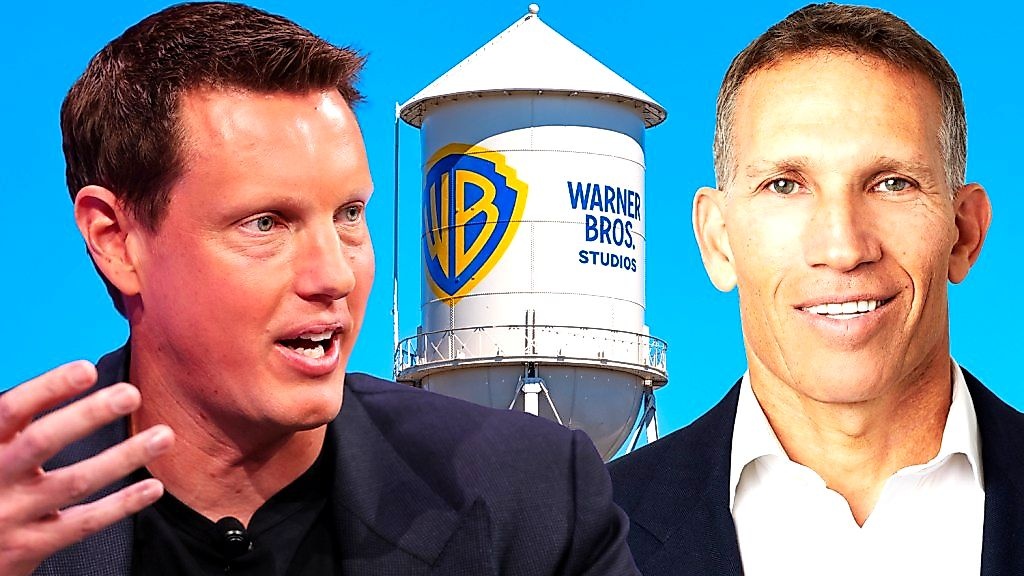
# Skydance’s Power Move: $40 B in Franchises, $200 M Headwinds, and a Bold New Vision for Warner Bros When David Ellison and Ynon Kreiz called into Skydance’s quarterly earnings conference, they were quick to highlight the bright side of their $6 billion merger with Warner Bros Discovery.
“We have roughly $40 billion in film franchises that dramatically strengthen our portfolio,” Ellison declared, pointing to a slate that now delivers a new movie every other week.
Yet the CEO’s tone softened as he dissected the coming 2026 film schedule, warning that Warner’s recent releases have slipped and could dent Q4 earnings by about $200 million.
The two co‑CEOs framed their analysis around a simple comparison: Paramount’s 2026 slate is projected to add $500 million more in lifetime profits than last year, whereas Warner’s current lineup is underperforming.
“We’ll apply the same playbook we did at Paramount—greenlighting more selectively, prioritizing profitable streaming growth over sheer subscriber count, and tightening our linear cost structure,” Ellison said.
This strategy, he insisted, has already paid off at Paramount and should translate smoothly into Skydance’s new, combined ecosystem. The company’s CFO, Dennis Cinelli, added a more granular look at the numbers.
He acknowledged a near‑term $200 million hit to adjusted EBITDA in Q4, largely driven by the $160 million budget of Tom Cruise’s “Digger,” which netted just $50.3 million worldwide.
Cinelli noted that while the broader Warner slate is expected to lose roughly $400 million in 2026, the loss is far less catastrophic than the $800 million figure some rumors had floated.
Amid these setbacks, Skydance remains confident that the synergy potential—estimated at $6 billion—will offset short‑term turbulence. ## Background & Context The merger that closed in late last year combined Skydance’s seasoned distribution and streaming expertise with Warner Bros’s expansive film library and production pipeline.
Under the new structure, Skydance’s leadership is poised to integrate Warner’s assets while streamlining operations. Key to this integration is the $40 billion in franchises, ranging from blockbuster franchises to niche properties that can be leveraged across platforms.
The co‑CEOs stressed that a new film will appear on Skydance’s service every two weeks, a cadence designed to keep audiences engaged and justify subscription growth. Yet, the partnership is not without complications.
Warner’s recent domestic box‑office performance has been uneven.
From January to early November, the studio earned $569 million—a 15% rise over the same period in 2025 but still trailing behind Paramount’s $537 million, and far below the industry leaders Universal ($1.9 billion), Disney ($1.6 billion), and Sony ($1.4 billion).
No Warner title surpassed the $100 million domestic mark, and titles like “Supergirl,” “The Bride,” and “Digger” underdelivered, contributing to the $200 million Q4 drag identified by the CFO.
Even as Warner’s combined domestic and Paramount box office tallied $1.1 billion YTD, the studio’s overall trajectory is less rosy than the company's new CEO’s optimism suggests.
The strategic focus, therefore, is two‑fold: harness the robust streaming platform to offset weaker theatrical returns and to refine the production pipeline for higher‑return projects.
The leadership’s comparison with Paramount—where selective greenlighting and a streamlined cost base drove $500 million more in profits—serves as a benchmark for what Skydance aims to replicate within Warner’s broader studio operations. ## What People Are Saying Industry analysts are divided on whether Skydance’s recalibration of Warner’s film slate will pay off.
On one hand, the decision to greenlight fewer, higher‑yield projects echoes a broader shift toward quality over quantity in the streaming era. The $6 billion synergy estimate, combined with a disciplined cost structure, signals a clear intent to cut waste and focus on profitability.
“If Skydance can replicate the Paramount model,” one analyst noted, “they can turn Warner’s underperformance into an asset.” On the other hand, the $200 million hit to Q4 EBITDA and the projected $400 million loss for 2026 raise concerns.
Some commentators argue that the new leadership’s “selective greenlighting” may stifle creative risk, potentially eroding the very franchises that drive long‑term value.
The departure of high‑profile figures such as James Gunn and Peter Safran from DC Studios has also sparked speculation about a shift in the studio’s creative direction.
Their replacements, Jeremy Latcham—a veteran of early‑2000s Marvel projects—may bring a different sensibility that could either harmonize with Skydance’s vision or create a new tension. Public sentiment, reflected in social media chatter, has been mixed.
While some fans applaud the boldness of Skydance’s leadership, others question whether cutting headwinds will translate into meaningful gains for viewers.
A notable highlight, however, is the optimistic reception of New Line’s 2027 holiday feature, “Lord of the Rings: The Hunt for Gollum.” Ellison’s praise of the title as “a compelling theatrical offering” suggests that Skydance is still betting on franchise power to anchor its growth strategy. ## What Happens Next Skydance’s immediate next steps revolve around integrating Warner’s operations and executing the revised slate strategy.
The company has already begun pruning its leadership team, with the exit of Gunn and Safran paving the way for Latcham’s arrival. Latcham’s track record at Marvel—including his role in the early successes of “Black Panther” and “Avengers”—may lend credibility to the studio’s new focus on high‑return projects.
Meanwhile, the leadership is expected to finalize cost‑saving initiatives that could unlock the projected $6 billion in synergies. From a production standpoint, Skydance will likely tighten its greenlighting process, evaluating projects based on projected profitability and streaming potential rather than sheer fanfare.
The $40 billion franchise portfolio offers a safety net, allowing the company to balance blockbuster releases with smaller, niche titles that perform well on streaming platforms. This dual approach could mitigate the risk of a single underperforming release weighing heavily on quarterly results.
On the market front, Skydance will continue to monitor box‑office trends and adjust its strategy accordingly. While Warner’s domestic box office is slightly ahead of Paramount’s year‑to‑date earnings, the overall trend of declining theatrical returns suggests a pivot toward streaming will remain paramount.
The company’s ability to deliver a steady stream of new content—every other week—will be a key metric for investors and audiences alike. In the coming months, stakeholders will watch closely how Skydance balances the creative ambitions of its legacy franchises with the financial discipline inherited from its merger.
If the company can navigate the headwinds identified in its Q3 earnings call, the $40 billion in film assets could prove to be a catalyst for renewed growth and a new chapter in Hollywood’s evolving landscape.
At a Glance
- Skydance- Warner merger adds $40B in franchises, but a $200M EBITDA hit looms as Warner’s current slate underperforms.
- Ellison plans to replicate Paramount’s selective green‑lighting and cost‑tightening to counter weaker theatrical returns.
- Analysts are divided: some applaud the disciplined strategy, others fear stifled creative risk and eroded fan engagement.
Why It Matters
Our Take
GoNews Pulse Editorial Team
This article was prepared for publication by GoNews Pulse and checked for publication requirements under our editorial standards. We review available information and correct material errors when they are identified.
Quick Answers
- What is the latest update on this story?
- Ellison claims the merger bundles $40B in franchises, yet warns a $200M hit could dent Q4 earnings, sparking debate over Warner’s shaky slate and rattling market.
- Who is this story about?
- This article covers developments related to Skydance's $40B Franchise Push Shakes Warner's $200M Q4 Headwinds. GoNews Pulse's editorial team monitors the story and updates the article as new verified information becomes available.
- Where can I read more about celebrity news?
- GoNews Pulse publishes original reporting on celebrity news and related entertainment news. Visit the homepage or browse the section dedicated to this story for the latest coverage.
More From This Section

Florence Pugh's puff-sleeve gown East of Eden premiere shocks fashion
Florence Pugh's silver-lined version of the gown, shared on Instagram, reveals how her styling mirrors her powerful role as executive producer and her star power.

Deen Castronovo 62 Walks Out of Journey's Final Frontier Tour-Health
After a medical emergency in Tulsa, Castronovo was forced offstage in Boston, and the band brought in session drummer Steve Murphy to finish the tour.

Chris Pratt's slime‑filled King of Comedy Award wins fans' applause
Pratt laughed as blue slime drizzled over him, shouting "I love kids" — a moment that made the KCAs go viral overnight.