
Mitch McConnell returns to Capitol after 90‑day ICU ordeal
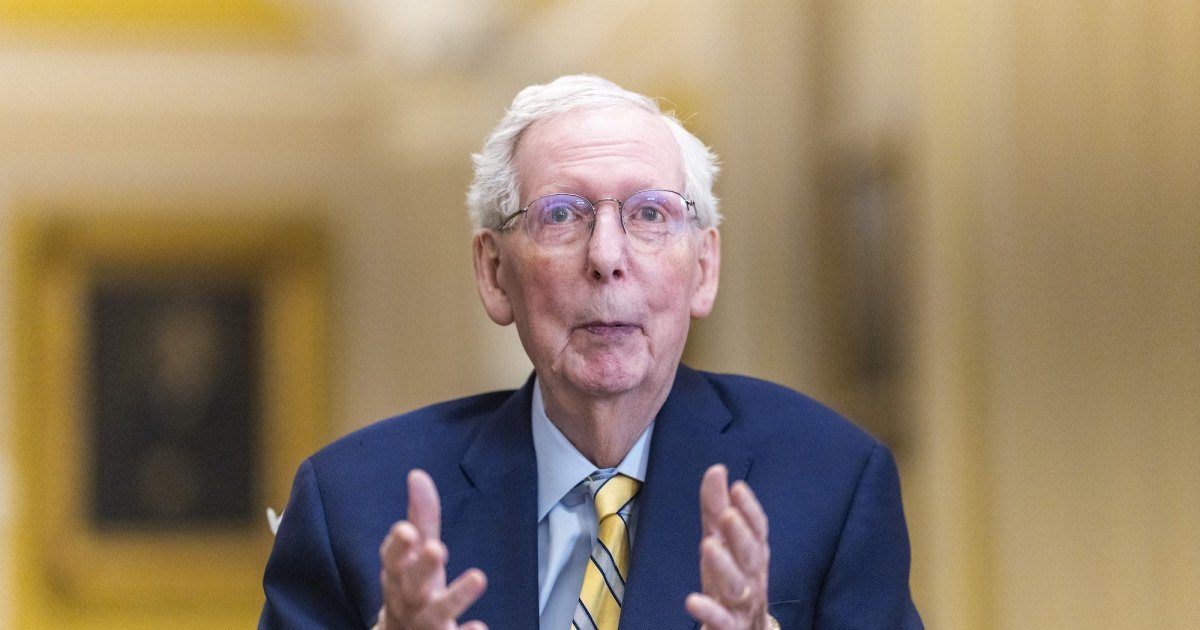
On Monday, September 14, Sen. Mitch McConnell stepped back onto the Senate floor after a three‑month stay in hospitals and rehab facilities.
The 84‑year‑old Republican from Kentucky had been out of the chamber since a fall in mid‑June that left him unconscious at his Washington residence.
In a statement released as he entered the chambers, McConnell said, “Today,
I’ll cast my first Senate vote since I took a bad fall back in June,” and added, “I’m really looking forward to being back on the Senate floor and seeing my colleagues.” He also noted that his recovery has been “long and often frustrating” and that the lingering effects of childhood polio “haven’t made it any easier.”
Later that day, McConnell cast a vote to advance the nomination of Matthew Byrne for U.S. district judge of the Southern District of Ohio, marking his first formal legislative action since June 11 .
---
## Background & Context
McConnell’s health crisis began on June 14, when he was found unconscious at his Washington D.C. residence. The fall prompted a hospital stay that lasted several weeks. Earlier that year, the senator had been hospitalized in February after experiencing flu‑like symptoms, though the nature of that admission was not detailed.
On July 1, his spokesperson Stephanie Penn confirmed that McConnell was “working closely with staff on Senate business and Kentucky matters as he continues his recovery,” but also stated that he would not cast a vote that week.
Conspiracy theories about the senator’s health circulated on right‑wing social media, prompting staff to release a photo of McConnell with his wife Elaine Chao at his bedside on July 12.
The accompanying statement clarified that the hospitalization was caused by a fall: “My doctors have confirmed that I didn’t break any bones or suffer a concussion. I didn’t have a heart attack or a stroke… I don’t have any tumors or hemorrhages.”
Rumors persisted, and on July 27 McConnell announced that he was still not ready to leave rehab, .
He said he would “continue to work hard… but unfortunately, that means I won’t be able to make it to Fancy Farm, Kentucky this Saturday.” His staff reiterated that he had “continued his recovery from a fall at home in June,” and noted the “significant factor” of childhood polio in his mobility.
---
## What He Said and What Happened in the Senate
McConnell’s September 14 statement was brief but pointed: “I’m still not quite back to 100%, but I’ve assured Leader John Thune that, as I continue with physical therapy on the advice of my doctors,
I will do my best to be present for tough votes when our Conference needs me.” He concluded by thanking Kentuckians for their well‑wishes: “[My wife] Elaine Chao and I are very grateful for all the continued well wishes from our fellow Kentuckians, and I’m glad to get back to more of business as usual on their behalf this month.”
After speaking with reporters, McConnell was seen walking through the Capitol’s halls, giving thumbs‑ups to journalists who asked about his condition.
He expressed a sense of urgency in returning to duties, stating that “it’s time to get back to work, finish the job for this Congress.” The vote he cast for Matthew Byrne’s nomination became the first official legislative act he performed since his fall.
---
## Recovery Journey and Future Outlook
Since his discharge from hospital care, McConnell has maintained a strenuous course of physical therapy and rehabilitation, with multiple sessions a day designed to rebuild strength and reduce the risk of future falls.
Staff notes that his bout with childhood polio remains a significant factor in his mobility, and he was not medically cleared to leave the rehab facility until August 6. He was released from rehab on that date and returned to Washington, though he still “is not yet medically cleared” to leave the facility.
McConnell, who has served in the Senate since 1984, is slated to retire at the end of 2026. His return to the Senate floor after months of medical treatment marks a significant milestone in his long tenure, and it signals a renewed focus on legislative responsibilities for the remainder of his final term.
The senator’s comeback underscores the resilience required of public officials facing health challenges, and it sets the stage for his continued participation in key votes as the 117th Congress moves forward.
---
## A Glimpse into McConnell’s Legacy
To fully appreciate the weight of McConnell’s return, it helps to look back at the arc of his career. Born in 1942 in Kentucky’s small town of Hindman, he survived childhood polio at a time when the disease was still a national threat.
That experience instilled a lifelong awareness of vulnerability and a relentless drive to control the circumstances around him—an ethos that would later define his legislative style.
McConnell earned his law degree from the University of Louisville, where he met future U.S. Secretary of State Elaine Chao, who would become his wife in 1971. He entered politics in the early 1970s, serving on the Kentucky House of Representatives before being elected to the U.S.
Senate in 1984 as a Republican in a state that was still dominated by Democrats. His first decade was marked by a sharp rise: chair of the Senate Rules Committee and later chair of the Senate Judiciary Committee, where he played a in shaping the judiciary’s direction for decades.
The year 2001 was a watershed moment.
After Senator Jim Jeffords shifted from Republican to independent, McConnell seized the opportunity to become Senate Majority Leader—a position he has held for every session since 2007, except for a brief interlude in 2015 when Senator John McCain’s death created a leadership vacuum that led to interim President pro tempore Harry K. S.
Smith. His tenure has been characterized by an ironclad focus on maintaining Republican control, deftly maneuvering around filibusters, and shaping the confirmation of hundreds of federal judges.
---
## Fan Reaction and Bipartisan Support
When McConnell first appeared in Washington after his fall, a flurry of messages from constituents flooded Capitol Hill. In Kentucky, many expressed gratitude for his decades of service, while some urged patience, acknowledging the senator’s physical limitations.
Across the aisle, Senate colleagues—both Republican and Democrat—voiced admiration for his determination. Senator Patty McCormack (D–PA) tweeted a heartfelt “Wishing you a swift recovery,” while fellow Republican Senator John Thune sent a video message urging McConnell to focus on health rather than the “race for the day.”
These responses illustrate a broader tradition in Washington: when senior leaders face health challenges, the Senate community typically rallies around them, regardless of partisan lines.
The gesture reflects a shared understanding that public service is a collective enterprise, and that the Senate’s continuity depends on the well‑being of its members.
---
## Industry Impact and Senate Dynamics
McConnell’s absence had ripple effects beyond his personal recovery. As Majority Leader, he was pivotal in negotiating legislative compromises, particularly on infrastructure funding and tax policy.
His temporary departure left the Republicans scrambling to delegate voting authority to other senior members, creating a delicate balance between maintaining party discipline and ensuring timely passage of bills.
The judicial nomination of Matthew Byrne, which McConnell advanced with his first vote back, serves as a microcosm of the Senate’s broader dynamics. Byrne’s confirmation had been a pro‑court‑appointment priority for Republicans; his appointment would reinforce a conservative judiciary that McConnell has championed since the early 1990s.
By moving forward with the nomination, McConnell reasserted his role as a gatekeeper for the federal courts.
Beyond the judiciary, McConnell’s return has implications for upcoming votes on infrastructure, health care, and fiscal policy. With the Senate’s schedule tightening—especially as lawmakers confront budget deficits and bipartisan proposals—the presence of an experienced leader will be essential in navigating procedural hurdles.
Republicans expect McConnell’s seasoned negotiating skills to help secure favorable outcomes for their agenda.
---
## Historical Precedents
McConnell is not alone in returning to the chamber after a serious health event. Past senators have faced similar trials: Senator Ted Kushner (R‑NY) underwent open-heart surgery in 2013 but returned to full duties within weeks; Senator John McCain (R‑AZ) endured a severe aneurysm in 2008 yet continued to serve until his death in 2018.
These episodes highlight a Senate culture of resilience, where leaders resume their responsibilities as soon as health permits.
However, McConnell’s case is unique due to the length of his absence—over three months—and the nature of his injury. The fall, combined with the long‑standing effects of polio, made his return more challenging than a standard surgical recovery.
Consequently, the Senate’s response—balancing compassion with procedural continuity—offers a compelling study in institutional adaptability.
---
## Looking Ahead
With the 117th Congress now heading into its final two years, McConnell’s presence will be integral to steering key legislation.
As a seasoned strategist, he will likely be at the forefront of negotiations on the upcoming fiscal budget, infrastructure bill, and potential trade agreements. his return signals to voters that experience and continuity remain valued in Washington.
For Kentucky, McConnell’s recovery has rekindled a sense of pride. His decades‑long service—spanning more than three presidential administrations—has shaped state policy on issues ranging from education funding to disaster relief.
As he resumes his role, Kentuckians anticipate continued advocacy for the state’s interests in federal appropriations and legislative priorities.
For the Senate as a whole, McConnell’s comeback underscores a deeper truth: while individual members may face personal hardships, the institution’s collective mission endures.
The return of a Majority Leader after a prolonged absence not only restores procedural familiarity but also reaffirms the Senate’s commitment to representing the nation’s diverse interests.
Why It Matters
Our Take
GoNews Pulse Editorial Team
This article was prepared for publication by GoNews Pulse and checked for publication requirements under our editorial standards. We review available information and correct material errors when they are identified.
Quick Answers
- What is the latest update on this story?
- He steps back onto the Senate floor, casting his first vote since a June fall—what this means for the GOP could shake the Capitol.
- Who is this story about?
- This article covers developments related to Mitch McConnell returns to Capitol after 90‑day ICU ordeal. GoNews Pulse's editorial team monitors the story and updates the article as new verified information becomes available.
- Where can I read more about Mitch McConnell?
- GoNews Pulse publishes original reporting on Mitch McConnell and related entertainment news. Visit the homepage or browse the section dedicated to this story for the latest coverage.
Related topics
- #Mitch McConnell
- #Senate Majority Leader
- #Matthew Byrne nomination
- #US Senate procedures
More From This Section

Jon Gosselin's 22‑Year‑Old Son Exposes Abuse, Father Shouts Support
Jon Gosselin declares that his son’s 22‑year‑old memoir exposes alleged institutionalization and a hidden ‘small holding’ cell, sparking a national debate.

Mike Colter's Valley Firm AGI Bo Revealed at 2:00 a.m. Shocks Fans
Rob McClure's portrayal of Bo forces the firm to confront a real‑world AGI asking for legal guardrails, sparking a tense ethical debate.

Meredith Grey's bed proposal to Nick on surgery table stuns fans
Meredith Grey slipped a ring into Nick's hand while he lay on the operating table, a move that stunned fans amid the bridge collapse.