
Russell Brand's $34.99 'Free Russell' tee sparks outrage amid 10‑year sentence
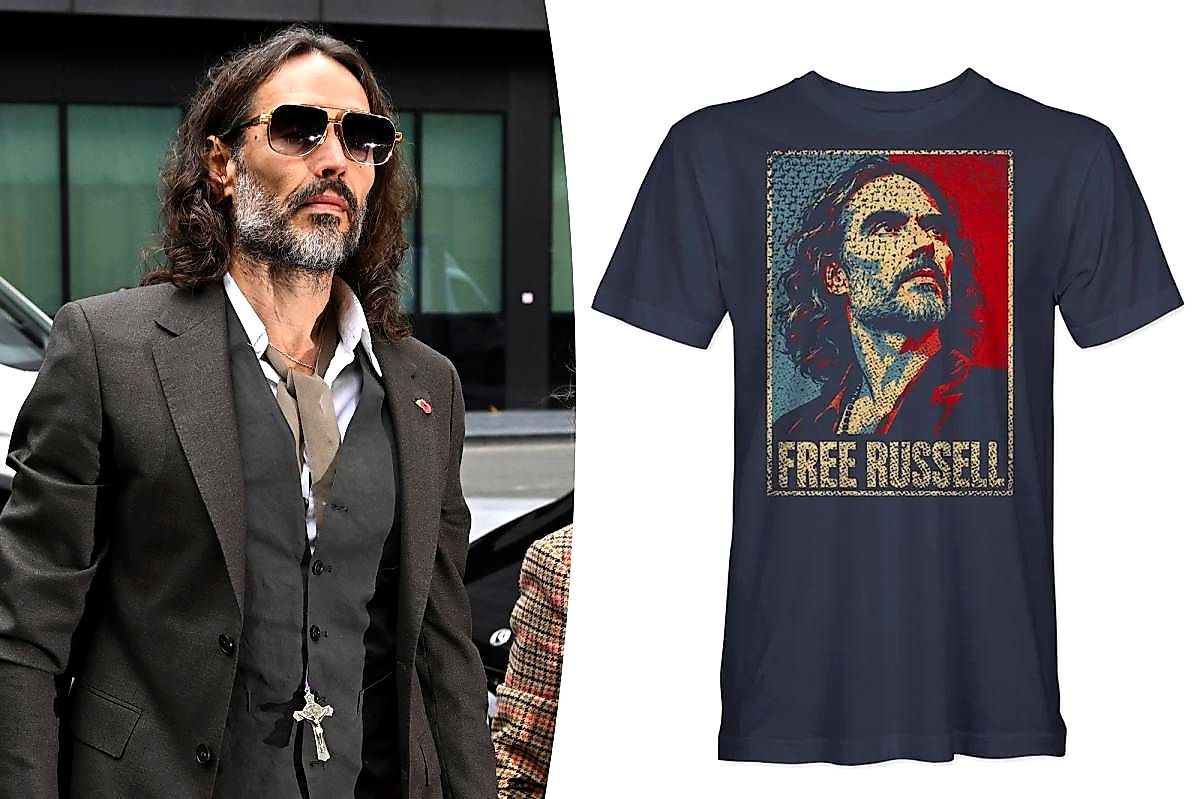
# Russell Brand Sells “Free Russell” Tees as Prison Sentence Looms, Igniting Outrage When the British comedian and former television host Russell Brand’s new “Free Russell” t‑shirt hits the shelves of his wellness website, it feels less like a fashion statement and more like a headline‑grabbing stunt.
The black shirt, emblazoned with the words “Free Russell Brand” in stark white, sells for $34.99, matching a red‑and‑blue counterpart that features his face against a backdrop of off‑white detailing.
Both are presented as “fundraiser apparel,” a claim that carries the weight of a moral crusade, yet it comes from a company, Reborn Wellness, that also markets creatine powder, methylene blue and bovine colostrum.
Brand, who has been locked behind bars for over a year, has long positioned himself as a champion of spiritual and social justice—a narrative that now appears at odds with the reality of his convictions.
On November 9th, Brand was sentenced to ten years and six months in prison after being found guilty of one count of rape and three counts of sexual assault. The judgment followed a jury’s decision that his alleged actions constituted a serious breach of trust and dignity.
He is currently housed at HMP Littlehey, a low‑security prison in Cambridgeshire that has been described by some observers as one of the largest sex‑offender facilities in Europe.
In the weeks since his sentencing, his public persona has shifted from that of a charismatic self‑help guru to that of a polarizing figure, whose recent moves have stoked fire in both the media and online communities. ## Background & Context Russell Brand’s rise to fame began in the late 1990s as a stand‑up comedian who quickly transitioned into television, becoming a household name in the United Kingdom and later in the United States.
Over the past decade, Brand has reinvented himself as a social commentator, motivational speaker, and founder of several wellness ventures.
His brand, both literal and figurative, has always revolved around the idea of personal transformation and spiritual awakening, and his “Sunday Service with the Brands” podcast has attracted a devoted following.
This platform has become a battleground for Brand’s public narratives, as seen when his wife, Laura Gallacher, read a jail‑written statement on the show in mid‑November, claiming that he was innocent of the charges for which he was imprisoned.
The message was steeped in religious language, beginning with “Beloved brothers and sisters in Christ, God bless you for your support,” and concluded with a playful yet disconcerting remark about being in “the biggest sex offenders’ prison in Europe.” The statement was later described as a violation of prison rules, and Brand’s own legal representatives have suggested that it may have caused further distress to his victims.
The “Free Russell” merch was introduced to the public through Reborn Wellness’ website, which also features a range of supplements.
The company’s product pages highlight the apparel as “fundraiser apparel,” with a tagline that reads, “Silenced for speaking out against injustice [sic] and corruption.” Brand’s public image as a crusader against systemic wrongs is at odds with the nature of his conviction.
The choice to market clothing in this manner—essentially monetizing a plea for freedom—raises ethical questions about the commodification of a legal fight that is already in motion. ## What People Are Saying The response to Brand’s new apparel launch has been immediate and polarized.
Social media platforms have seen a flurry of comments ranging from support for the “Free Russell” narrative to outright condemnation of the attempt to profit from a legal process that remains ongoing.
Many commentators point out the irony of a convicted rapist selling “free” merchandise in a country that enforces a strict prison sentence. The phrase “Free Russell” has been criticized as a call to action that disregards the rights and trauma of the victims.
Within Brand’s own community, there is a schism: some listeners of the “Sunday Service” podcast have expressed gratitude for Brand’s continued outreach, while others feel betrayed by his apparent lack of accountability.
Legal experts have weighed in, suggesting that the merchandise could constitute an attempt to influence the judicial process, which might carry legal ramifications.
Additionally, the sale of the apparel at a retail price, rather than a charity donation model, has sparked debate about the ethics of profiting from a campaign that seeks to overturn a judicial decision.
Some observers have highlighted the potential danger in the statement read by Brand’s wife included explicit mention of the prison’s name.
In a controlled environment such as a maximum‑security facility, such disclosures could compromise the safety of the inmate, as it potentially allows external parties to identify and target him. The controversy extends beyond the legal and moral dimensions.
Brand’s past supporters are reassessing their allegiance, with some questioning whether his public persona can survive the backlash. A segment of his audience has turned to alternative channels, such as forums and subreddits, to discuss the ramifications of the merchandise launch.
Meanwhile, advocacy groups that champion victims’ rights have taken to social media to denounce the “Free Russell” campaign, framing it as an attempt to minimize the seriousness of the crimes for which Brand was convicted. ## What Happens Next The immediate consequence of Brand’s merch launch is a tightening of scrutiny by prison officials.
The statement read by his wife, which included the name of HMP Littlehey, has been identified as a potential “security breach” that could put Brand in danger. The prison administration is reportedly increasing monitoring protocols and reassessing his communication permissions.
In addition, the Prime Minister’s office has publicly described the statement as “clearly appalling” and is reportedly investigating the matter with urgency.
The legal team representing Brand may face new challenges as the case progresses, and the potential for additional civil suits—given that six other women have accused him of sexual misconduct—could compound the legal landscape.
On the commercial side, Reborn Wellness faces pressure from both consumers and regulatory bodies to clarify the nature of the “fundraiser apparel.” Questions are being raised about whether the proceeds from the shirts are genuinely going toward a charitable cause or simply being redistributed to Brand’s personal account.
Should investigations uncover that the revenue stream is self‑beneficial, the company could face fines or sanctions under consumer protection laws.
In the broader cultural conversation, Brand’s actions are likely to reignite discussions about redemption, accountability, and the intersection of personal belief systems with legal responsibility.
The “Sunday Service” podcast will probably continue to serve as a platform for Brand to voice his perspective, but the show may now find itself navigating a new level of scrutiny from its listeners and from regulatory bodies that monitor content involving defamation and harassment.
As the legal system moves forward, the question remains: will Brand’s attempt to market “Free Russell” apparel influence public perception, or will it only serve to deepen the divide between his supporters and the victims of his alleged crimes?
The next few months will be crucial, as both Brand and his legal team face the challenge of balancing a personal narrative of spiritual redemption against the legal and moral obligations that come with a conviction for sexual assault.
The outcome of these developments will likely shape not only Brand’s future but also the broader discourse around celebrity accountability in the age of digital immediacy.
At a Glance
- Russell Brand sells $34.99 'Free Russell' tees amid 10‑year sentence.
- Merch marketed as fundraiser, critics say it profits from legal fight.
- Public backlash and prison security concerns rise after wife's jail‑written statement.
Why It Matters
Our Take
GoNews Pulse Editorial Team
This article was prepared for publication by GoNews Pulse and checked for publication requirements under our editorial standards. We review available information and correct material errors when they are identified.
Quick Answers
- What is the latest update on this story?
- The tee says 'Free Russell Brand' but the company claims it's a fundraiser, raising questions about whether the $34.99 price tag actually funds charity or Brand himself.
- Who is this story about?
- This article covers developments related to Russell Brand's $34.99 'Free Russell' tee sparks outrage amid 10‑year sentence. GoNews Pulse's editorial team monitors the story and updates the article as new verified information becomes available.
- Where can I read more about celebrity news?
- GoNews Pulse publishes original reporting on celebrity news and related entertainment news. Visit the homepage or browse the section dedicated to this story for the latest coverage.
More From This Section
Macy’s 100th Parade moves Thanksgiving to Saturday, rattling NYC
The post notes that a 40‑mph wind forecast and high surf could endanger balloons, prompting organizers to shift the event to a safer Saturday.

Brad Pitt & Angelina Jolie End 8-Year Miraval War, $10M Settlement
The exes' joint statement confirmed a confidential $10 million settlement, ending a courtroom saga that rattled Hollywood's wine industry.
Ezra Frech, 27, wins DWS as youngest champion and first amputee
The finale drew 9.2 million live‑plus‑same‑day viewers, matching last year’s numbers and smashing a 2.38 rating in the 18‑49 demo that fans still replay.