
Rob Reiner Wins Posthumous Emmy, Ending 28‑Year Actor Gap
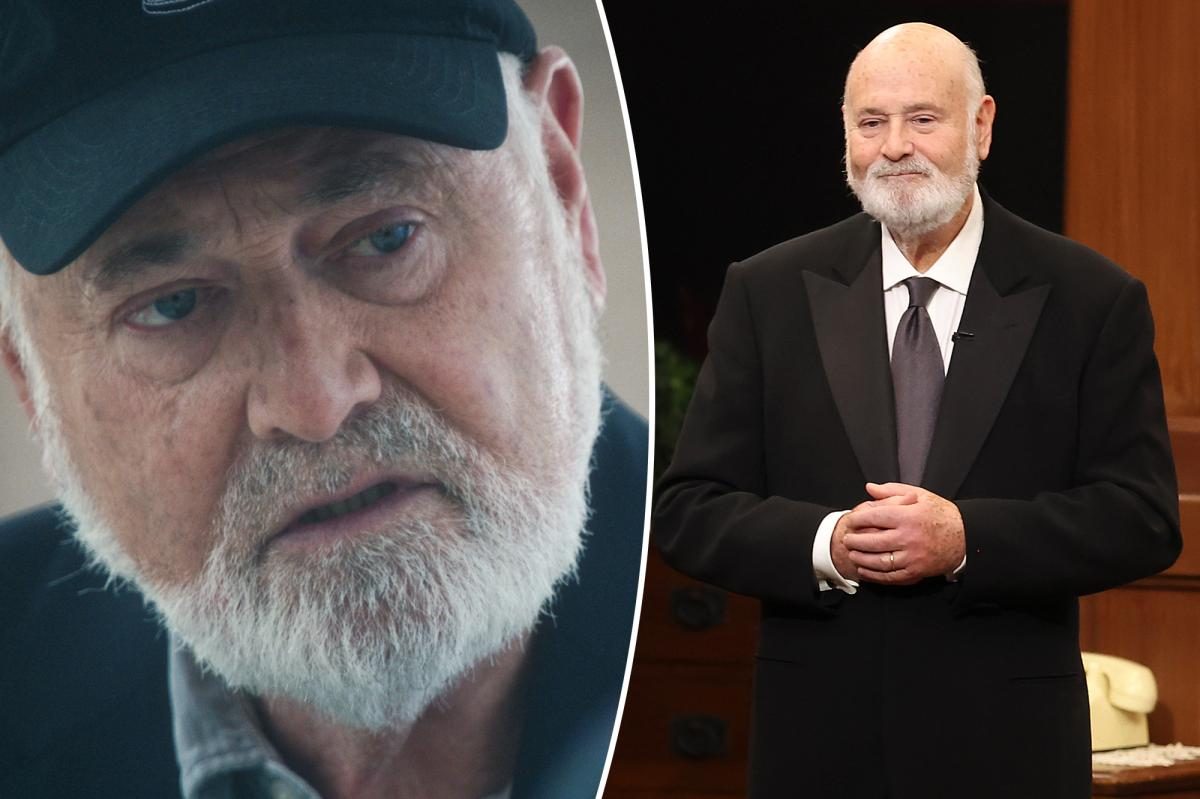
The stage at the 2026 Creative Arts Emmys was quiet—too quiet, perhaps—until the moment Wendi McLendon-Covey stepped forward, the golden statuette trembling slightly in her hands.
She had just announced that *The Bear* veteran Rob Reiner had won for Best Guest Actor in a Comedy, an honor delivered decades after his death. The audience rose as one, the kind of spontaneous standing ovation reserved for legends.
For Reiner’s family, the win arrived not just as a tribute to his career, but as a quiet interruption of a year that had already redefined grief into something sharper, more public.
Reiner’s name was read in a space where his voice—warm, playful, effortlessly authoritative—had once filled comedy sets and Emmy stages. His final performance, as Albert in *The Bear*, was released just six months before he and his wife, Michele, were killed in their California home in December 2025.
The murder charge against their son, Nick Reiner, looms over the family’s grief, though he has pleaded not guilty. Now, the Emmy stands as both an acknowledgment of his enduring talent and a reminder of the cruel timing that severed his life just as his work reached new appreciation.
The win also shattered a record. With 48 years between his 1978 Emmy for *All in the Family* and this one, Reiner surpassed his father, Carl, who held the previous longest gap between acting wins—37 years spanning *Caesar’s Hour* (1958) to *Mad About You* (1995).
But beyond the statistics, what lingers is the rarity of the honor itself: this was only the second posthumous Emmy ever awarded for an on-camera performance since 1995, when Raúl Julia won for *The Burning Season*.
Reiner’s case carries weight because it forces the entertainment industry to confront an uncomfortable truth: how do you celebrate an artist whose final act was not a curtain call, but silence?
---
## **A Career Spanning Generations—and a Final Role That Defied Expectations**
Rob Reiner’s Emmy history is a map of American comedy, from the counterculture of *All in the Family*—where he played Archie Bunker’s son—to the chaotic energy of *The Bear*, where his Albert arrived as a grizzled, big-hearted presence in the chaos of a Chicago sandwich shop.
The role was unexpected, a late-career pivot that proved his range could bend without breaking. Critics praised his ability to make Albert’s gruff exterior feel lived-in, a performance that felt both effortless and deeply considered. Yet by the time the episodes aired in June 2026, the world knew him in another way entirely: as a victim.
His death—and the circumstances surrounding it—threw his career into relief.
Reiner had spent years as a behind-the-scenes powerhouse, directing films like *A Few Good Men* and *The Princess Bride*, but his acting had never truly faded. *The Bear* offered a return that felt less like a comeback and more like a reckoning: an actor in his late 60s playing a man who’d seen too much, whose humor was earned, not performative.
The Emmy now serves as a correction to history, a nod to work that might have been overshadowed by his directorial legacy.
The timing of the win is inescapable. The murder charges against Nick Reiner—his own son—cast a pall over the moment. Family statements have been rare, but Rob and Michele’s surviving children, Jake, Romy, and Tracy, have kept a low profile.
The legal process moves forward: a pre-trial hearing is set for September 15, a date that will weigh on the family’s emotions as they grapple with both justice and loss. The Emmy, then, is not just an artistic tribute but a public affirmation of a life cut short by violence, one that the industry is only now fully recognizing.
---
## **The Industry’s Uneasy Relationship with Posthumous Honors**
Posthumous Emmys are rare, and their presence is almost always tinged with ambiguity. Raúl Julia’s 1995 win for *The Burning Season* came after his death from a brain aneurysm, a medical tragedy that allowed the industry to mourn without the shadow of crime. Reiner’s case forces a different conversation.
His Emmy arrives in the wake of allegations—unproven, but undeniable in their gravity—that his killer was his own flesh and blood. The Academy’s decision to honor him speaks to the power of art to transcend personal horror, but it also raises questions about what posthumous recognition should require.
Industry observers note that Reiner’s win is part of a broader shift: awards shows are increasingly acknowledging late-career resurgences, even if the artist is no longer alive to accept them. *The Bear* itself has become a symbol of second-act redemption, and Reiner’s role in it fits neatly into that narrative.
Yet the context of his death complicates the celebration. Should the Emmys have waited? Would a living Reiner have even campaigned for the award?
The answer may lie in the performance itself—a gift to the audience, not the artist.
Social media reactions have been a mix of reverence and sorrow. Fans who grew up with *The Princess Bride* or *Northern Exposure* now discover his *Bear* episodes, marveling at how fully he inhabited Albert’s world-weary charm.
Others focus on the tragedy, using the win as a moment to reflect on how quickly careers—and lives—can be derailed. The standing ovation at the Emmys was silent for several seconds before erupting, as if the room needed time to process the weight of the moment.
---
## **What Comes Next: A Legacy Reclaimed**
The Primetime Emmys air on September 12, where Reiner’s name may be read again, this time among the primetime nominees. His win for *The Bear* is already being discussed as a potential spark for reappraisals of his film and TV work.
Younger audiences, who know him primarily as a director, may now turn to his acting—particularly his later roles, which carried a quiet gravitas. There’s talk, too, of archival projects: restored cuts of *All in the Family*, documentaries on his life and career, a way to ensure his work isn’t remembered only through the lens of his death.
For his family, the Emmy is a fleeting consolation. The trial looms, and with it, the possibility of answers—or more questions. Jake Reiner, Rob’s oldest son, has spoken in interviews about the family’s private grief, but the public face they present is one of stoic resilience.
Romy and Tracy, still grieving, have remained out of the spotlight. The Emmy, then, becomes a public balm in a very personal wound.
In the end, Rob Reiner’s posthumous win is less about the record he broke and more about the work he left behind—unfinished, but not unappreciated. The standing ovation at the Emmys wasn’t just for an actor; it was for a life that, in its final creative act, refused to be forgotten.
Why It Matters
Our Take
GoNews Pulse Editorial Team
This article was prepared for publication by GoNews Pulse and checked for publication requirements under our editorial standards. We review available information and correct material errors when they are identified.
Quick Answers
- What is the latest update on this story?
- Reiner’s final role earns him a posthumous Emmy, shattering a 28‑year actor award drought that spanned from his father’s last win.
- Who is this story about?
- This article covers developments related to Rob Reiner Wins Posthumous Emmy, Ending 28‑Year Actor Gap. GoNews Pulse's editorial team monitors the story and updates the article as new verified information becomes available.
- Where can I read more about Rob Reiner?
- GoNews Pulse publishes original reporting on Rob Reiner and related entertainment news. Visit the homepage or browse the section dedicated to this story for the latest coverage.
Related topics
- #Rob Reiner
- #Emmy Awards 2026
- #Posthumous acting awards
- #Emmy gaps longest
- #Awards shows controversy
More From This Section

Jon Gosselin's 22‑Year‑Old Son Exposes Abuse, Father Shouts Support
Jon Gosselin declares that his son’s 22‑year‑old memoir exposes alleged institutionalization and a hidden ‘small holding’ cell, sparking a national debate.

Mike Colter's Valley Firm AGI Bo Revealed at 2:00 a.m. Shocks Fans
Rob McClure's portrayal of Bo forces the firm to confront a real‑world AGI asking for legal guardrails, sparking a tense ethical debate.

Meredith Grey's bed proposal to Nick on surgery table stuns fans
Meredith Grey slipped a ring into Nick's hand while he lay on the operating table, a move that stunned fans amid the bridge collapse.