
Richard Avedon's 18‑Year‑Old Bad Grades Shocked Ron Howard
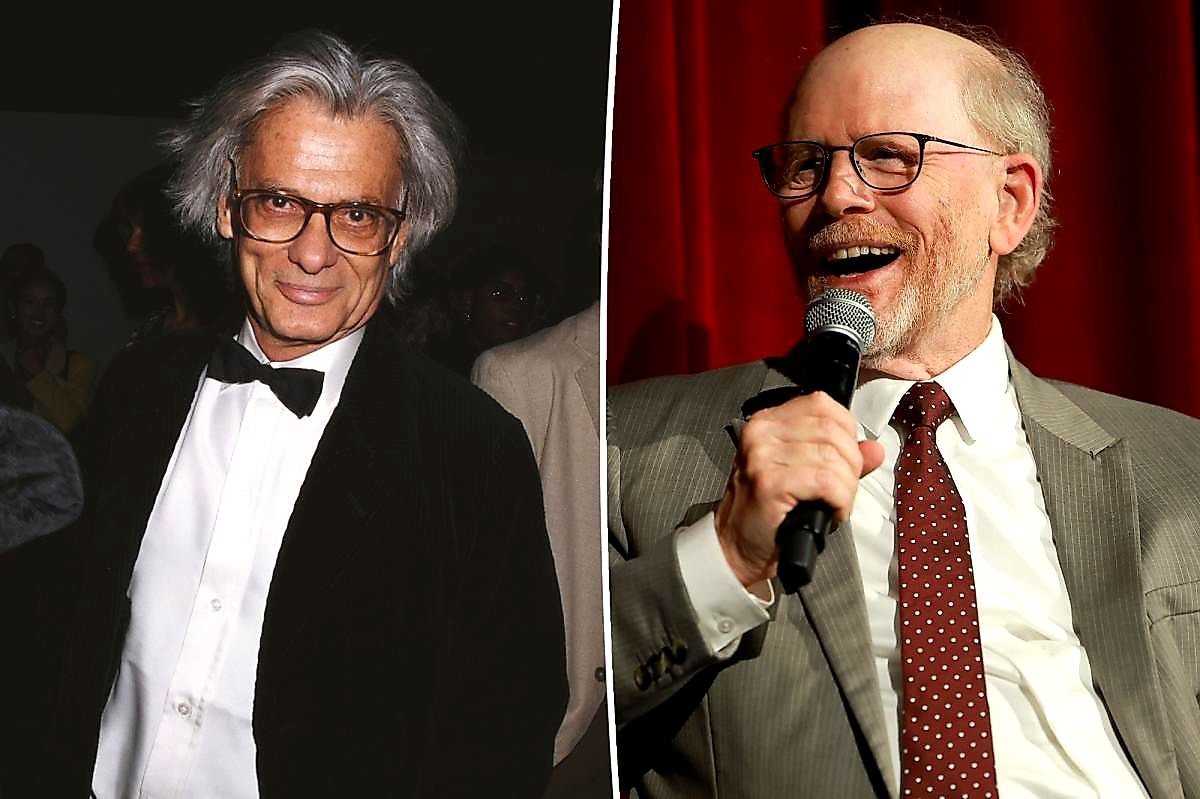
# Ron Howard Shocked by Richard Avedon’s Bad Grades Before 50‑Year Fame When Ron Howard took the stage at a quiet screening of his latest Netflix documentary, “Avedon,” the first thing he revealed was a fact that rattled even his own film‑making instincts: the legendary photographer was a terrible student.
“It was kind of interesting to me that he was such a terrible student, had been a merchant marine, and then wound up becoming this remarkable figure in the fashion world,” Howard said, his voice steady and curious.
That single admission set the tone for a session that unfolded into a portrait of a man who defied every conventional path to creative greatness.
Howard’s journey into chronicling Avedon began at the Paris Theatre in New York, where he had originally intended to present a broader look at the world’s most celebrated visual artists.
Yet, as the night unfolded, the director found himself drawn increasingly to the dark, gritty, and deeply human side of Avedon’s life. “I was just impressed by him and found him so charismatic and entertaining and even courageous,” Howard continued, describing the photographer’s magnetic presence and unyielding drive.
The film’s narrative, now streaming worldwide, is a life lived beyond the glossy headlines of fashion magazines.
Avedon’s past, far from the polished runway shows that most remember, included time spent in the merchant marine, a rough maritime apprenticeship that hardened his resolve and sharpened his eye for raw human emotion.
The director’s fascination grew when he learned that, despite a stunted academic record, the photographer cultivated an impressive career that spanned over five decades.
Avedon’s body of work, ranging from Marilyn Monroe’s tender smile to the brutal reality of the Vietnam war, showcases a man unafraid to cross borders—both literal and metaphorical—in pursuit of truth. ## Background & Context The documentary traces Avedon’s evolution from a hesitant student to a force that reshaped visual storytelling.
His early days as a photographer were marked by a hunger for authenticity, a trait that propelled him to capture iconic figures—Marilyn Monroe, the Beatles, Audrey Hepburn, and the Kennedys—in moments that felt both intimate and monumental. But it was his pivot to hard news that truly tested his courage.
“He was so commercially successful, was afforded so many opportunities, and yet devoted so much of his time to career risks by pursuing issues that were important to him and the nation at that time,” Howard explained.
This willingness to confront the harsh realities of the era manifested in his coverage of the Chicago Seven, the civil rights movement, and the devastation of the Vietnam war. Avedon’s most daring venture, was the “American West” project commissioned by the Amon Carter Museum of American Art.
Instead of the usual glamorous subjects, he crossed seventeen states with a large‑format view camera to photograph everyday people, many of whom faced hardship.
“Thousands of miles from New York, which was the epicenter of his power and his productivity, and yet he felt more compelled to go out there and stretch his talent and take some risks. I admire that,” Howard recounted.
The project underscored Avedon’s belief that the most compelling stories were found in ordinary lives, not just in celebrity culture.
The film also spotlights Avedon’s collaboration with the film industry, notably his role as a visual consultant on the 1957 musical “Funny Face.” In the world of cinema, his influence is evident in the way characters are framed and how light is used to reveal deeper emotions.
The director noted that Avedon’s visual sensibilities helped shape iconic moments that continue to inspire designers and filmmakers alike. ## What People Are Saying The audience’s reaction after the screening at the Paris Theatre was a mix of awe and admiration.
While the crowd was small, the presence of industry heavyweights—Chloe Malle from, designer Vera Wang, journalist Amy Fine Collins, and Avedon’s own grandson, Michael, who now carries the family torch—added gravitas to the event.
Conversations flowed organically, with attendees discussing the documentary’s revelations about Avedon’s fearless pursuit of truth and his impact on both fashion and journalism. The film’s release has ignited a renewed interest in Avedon’s lesser‑known work.
Viewers are surprised to discover how the photographer’s candid approach to subjects like the Chicago Seven or the impoverished towns of the American West challenged the public’s perception of what photography could achieve.
The documentary’s blend of interviews—ranging from Avedon’s son John to models Lauren Hutton and Twiggy, designer Calvin Klein, and journalist Tina Brown—provides a multifaceted view that resonates with a new generation of storytellers.
Online forums and social media threads have amplified the discussion, with many praising Howard’s ability to weave Avedon’s personal history into a compelling narrative.
Critics note that the film’s strength lies in its honesty: it does not shy away from Avedon’s flaws—his early academic struggles, his rebellious spirit—but rather uses them as a backdrop to showcase his relentless pursuit of meaning through the lens. ## What Happens Next With “Avedon” now streaming on Netflix, audiences can revisit the photographer’s iconic images through a fresh lens.
The documentary’s success is expected to spur further exploration of Avedon’s archives, possibly leading to curated exhibitions or new publications that highlight his contributions to both fashion and political photography.
The Amon Carter Museum of American Art has already expressed interest in collaborating on a traveling exhibition that would pair the film’s narrative with original prints from the “American West” series.
Ron Howard has hinted at future projects that will continue to explore the intersections of art, commerce, and social justice. While he has not disclosed specific titles, his focus on underrepresented voices suggests a continued commitment to telling stories that challenge the status quo.
Fans of the film can anticipate a series of intimate interviews and behind‑the‑scenes documentaries that further illuminate the life of a man who refused to be confined by any one genre.
The legacy of Richard Avedon, as presented in Howard’s film, is a reminder that greatness often arises from the refusal to accept comfortable beginnings.
Avedon’s journey—from a poor student to a celebrated icon—serves as an inspiration for creators who dare to question the world around them and translate that curiosity into visual impact.
As viewers close the final credits, they are left with a profound appreciation for a man whose camera was a passport to the truth, and whose story will continue to inspire long after the lights dim.
At a Glance
- Ron Howard’s new Netflix doc highlights Avedon’s early academic struggles and merchant marine past.
- The film chronicles Avedon’s bold transition from fashion icon to hard‑news photographer, covering the Chicago Seven and Vietnam.
- Avedon’s “American West” project and his role as visual consultant on *Funny Face* showcase his cross‑genre influence.
Why It Matters
Our Take
GoNews Pulse Editorial Team
This article was prepared for publication by GoNews Pulse and checked for publication requirements under our editorial standards. We review available information and correct material errors when they are identified.
Quick Answers
- What is the latest update on this story?
- Howard reveals that Avedon's first career move was a merchant marine stint that hardened his eye for raw emotion, a detail that made the film unforgettable.
- Who is this story about?
- This article covers developments related to Richard Avedon's 18‑Year‑Old Bad Grades Shocked Ron Howard. GoNews Pulse's editorial team monitors the story and updates the article as new verified information becomes available.
- Where can I read more about celebrity news?
- GoNews Pulse publishes original reporting on celebrity news and related entertainment news. Visit the homepage or browse the section dedicated to this story for the latest coverage.
More From This Section
Mila Kunis reveals she and Kutcher kissed the same two actresses
During a Kelly Ripa podcast, Kunis said, 'They kissed me and I kissed them,' adding she kissed them in 2010 Black Swan, sparking wild speculation.
Patrick Stewart's final set scene in 2026 tears fans as he delivers farewell
Patrick Stewart whispers 'thank you' to the crew in a tearful speech, hinting this may be his final film set appearance and the studio audience gasps.
Ariana Grande's 33-Year-Old Shuts Down 10-Year Management Feeling Unsafe
She said, 'When you have safety around you, your body knows,' after cutting ties with her manager, sparking debate on artist safety and freedom.