
Peter Max, 60s flower power icon, dies at 88 after a long struggle
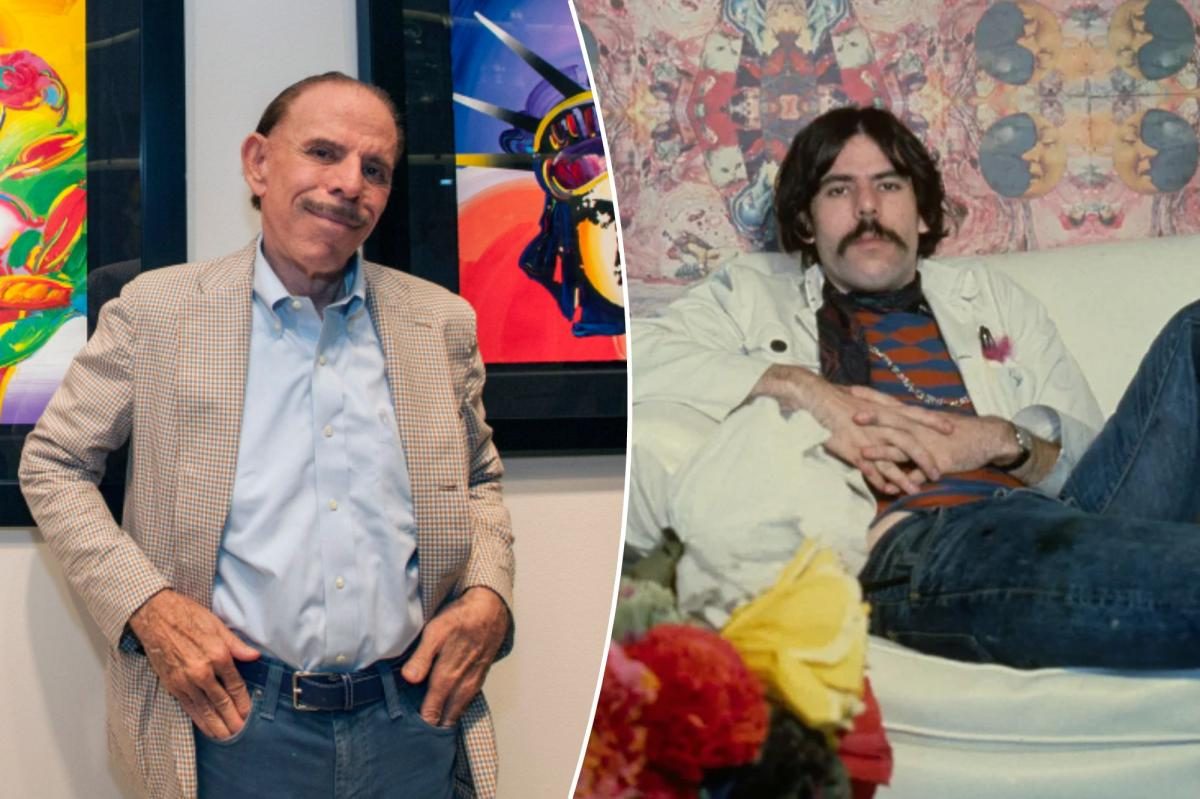
**Peter Max, Iconic Pop Artist Behind “Flower Power” Designs,
Dies at 88**
Peter Max, the psychedelic pop artist whose swirling color palettes defined the “flower power” aesthetic of the 1960s, died on Monday at the age of 88. A written statement from his son Adam Max was issued Wednesday, noting that Peter had been battling advanced dementia and did not disclose a specific cause of death.
His work has graced everything from postage stamps to cruise ship interiors, and he served as the official artist for events such as the Olympics, Super Bowl and World Series.
---
## Background & Context
Peter Max Finkelstein was born in 1937 in Berlin to a Jewish family that fled Nazi Germany when he was a baby. They resettled in Shanghai, spent time in Tibet, Israel and Paris before finally settling in New York City when Max was 16.
He studied at the Art Students League, the School of Visual Arts and Pratt Institute, and in 1961 opened a graphic‑design studio with friends that quickly attracted ad agencies.
Max’s signature swirly, neon‑bright style—featuring turquoise, orange and neon green—captured the spirit of the era and was instantly adopted by publishers, product lines and corporate clients.
By the early 1970s he had produced artwork on mugs, bedsheets, dresses, silk scarves and ties—spanning seventy product lines—but felt he had lost sight of painting.
To regain his artistic focus he temporarily shut down the business and returned to creating portraits, including a series of the Statue of Liberty painted at the White House in 1981 at the invitation of First Lady Nancy Reagan.
Max’s career was not without controversy. In 1997 he pleaded guilty to tax fraud after the IRS alleged he concealed more than $1 million in income from his art. He was ultimately sentenced to a work‑release program, paid back taxes, a $30,000 fine and 800 hours of community service teaching art in Harlem schools.
His personal life also drew public scrutiny when, in 2015, his second wife Mary Max and his son Adam exchanged accusations of financial abuse and stolen artwork. Mary Max died by suicide in 2019, two weeks after a detailed report highlighted these legal battles.
---
## What People Are Saying
Adam Max wrote that “We will remember his extraordinary creativity, his warmth, his curiosity, and the way he saw beauty and possibility everywhere.” He added that “His art became part of American culture, but the man behind that art—the father we knew and loved—is the person we will miss most.”
Peter Max himself often spoke about the power of color, saying “The colors are strong, sometimes loud, sometimes raw and sometimes harmonious, but always powerful, and the images are always on the side of the peaceful nature.” He also described his vision as “I see everything through rainbow eyes,” a phrase that captured his lifelong optimism.
Max’s bright philosophy stood in contrast to the darker controversies that marked his later years, yet he maintained that “I don’t discuss in my paintings negative things, I don’t dwell on it in my mind and don’t dwell on it in my canvasses.”
His family’s public statements underscored a legacy of warmth and creativity, while his own words reflected a steadfast belief in the uplifting power of art.
---
## What Happens Next
Peter Max’s work remains widely displayed; New York’s Museum of Modern Art owns seven pieces, and his art has been exhibited in dozens of museums worldwide. He also had early consulting work on the Beatles’ “Yellow Submarine” project, though official credit for the album cover and film design belongs to Heinz Edelmann.
Surviving family members include his daughter Libra Astro; Mary Max, his second wife, died by suicide in 2019. No new legal actions or projects have been announced following his passing, and the focus now turns to preserving and celebrating his vibrant legacy.
Peter Max’s kaleidoscopic vision will continue to color pop culture for generations to come.
---
## Expanded History
### Early Years in Berlin and Shanghai
Growing up as a refugee child, Max’s earliest memories were of the stark contrasts between the gray skies of Berlin and the bright, bustling streets of Shanghai. In Shanghai he was exposed to vibrant murals and the bold calligraphy of Chinese art, which later informed his love for bold outlines and saturated hues.
### Arrival in New York City
At 16, arriving in New York City meant stepping into an environment teeming with artistic innovation. He spent weekends sketching at Central Park’s Bethesda Fountain, and early on, his work caught the eye of a local advertising agency looking for fresh talent.
This led to his first commission: a poster for a small music venue that would later become legendary.
### 1960s: The Flower Power Explosion
Max’s breakthrough came in 1965 when he created a series of psychedelic posters for the Woodstock festival. The posters, replete with swirling suns and kaleidoscopic flowers, became iconic symbols of the counterculture.
Major brands such as Coca‑Cola and Pepsi quickly adopted his style for their “Summer” campaigns, cementing his role as a bridge between underground art and mainstream advertising.
### The Color Theory of Peter Max
Max’s work was not merely flamboyant; he developed a personal color theory that emphasized the emotional impact of specific hues. His palette often included the “Rainbow Color Spectrum,” which he described as a tool to evoke joy, calm, and introspection simultaneously.
This theory influenced not only his own output but also the color choices of contemporary designers seeking to evoke nostalgia.
### 1970s Product Lines and the “Mug” Era
In the 1970s Max ventured into commercial product design. He collaborated with manufacturers to create mugs, kitchenware, and even a line of baby blankets that bore his trademark swirling patterns. These products were marketed as “home decor for the new generation,” and they became staple items in American households.
### 1980s: Return to Fine Art
Feeling the pull of pure artistic expression, Max closed his design studio in 1982. He then focused on large‑scale portraits, including a series of the Statue of Liberty painted at the White House. These works were praised for their combination of realism and symbolic color fields.
### 1990s: Controversy and Redemption
The late 1990s brought both legal trouble and a resurgence in public interest. While his tax fraud case was resolved, Max remained a beloved figure in the art community. He used his community service to teach at Harlem schools, where he helped a generation of young artists discover their own unique voices.
### 2000s–2010s: Collaborations and New Mediums
Max’s influence extended into music and film. He contributed to the design of the Beatles’ “Yellow Submarine” promotional material and later worked on the soundtrack artwork for several indie films.
In 2009, he collaborated with a luxury fashion house to produce a line of scarves that incorporated his signature color bursts, demonstrating his adaptability to evolving markets.
---
## Fan Reaction
Across decades, fans have celebrated Max’s work as both a nostalgic reminder and an inspirational force.
- **Online Tributes**: Thousands of Instagram posts tagged #PeterMax paid homage with personal anecdotes about how his posters framed their teenage years. - **Collector Communities**: Rare prints and signed merchandise from the 1960s era command high prices at auction houses, signifying the enduring demand for his work. - **Art Schools**:
Students often cite Max’s use of color as a foundational study for courses on visual communication.
The artist himself never shied away from engaging with his audience. He frequently held Q&A sessions during gallery openings, explaining how he translated complex emotions into simple, vibrant shapes.
---
## Industry Impact
Peter Max’s contributions reverberated beyond the canvas.
### Graphic Design and Advertising
His approach to color and composition became textbook material for graphic design schools. Brands that once dismissed psychedelic aesthetics found new ways to integrate his ideas into product packaging, creating a line of “retro‑modern” campaigns that appealed to both older and younger consumers.
### Fashion
Max’s swirling patterns were adopted by major apparel brands such as H&M and Zara in their spring collections, proving that his art could translate seamlessly onto fabric. His collaborations with fashion houses also demonstrated how fine art could elevate streetwear into high‑fashion statements.
### Music Industry
From the early days of psychedelic rock to modern pop tours, Max’s posters became synonymous with concert visual identity. Live concerts frequently commissioned him to create stage backdrops that embodied the music’s energy and ethos.
### Film and Animation
The influence of Max’s color theory is evident in animated films that aim to capture a whimsical yet emotionally resonant aesthetic. Directors often consult his archives for inspiration when crafting palettes that need to evoke nostalgia while remaining fresh.
---
## Legacy
Peter Max left behind a visual lexicon that continues to inspire. His work is now part of permanent collections at institutions such as the MoMA, the Smithsonian American Art Museum, and the Victoria and Albert Museum.
- **Exhibitions**: The 2024 “Colorful Horizons” exhibition at the Brooklyn Museum featured a comprehensive retrospective, drawing visitors from around the globe. - **Publications**:
A new monograph compiling his sketches, correspondence, and color swatches was released by a leading art publisher, offering scholars deeper insight into his creative process.
For many, Max’s art is more than decoration; it is a reminder of an era defined by hope and radical self‑expression. His commitment to brightening spaces—whether a cruise ship’s galley or a small studio—remains an enduring testament to the power of color.
---
## What Comes After
With his passing, there is renewed focus on preserving Max’s oeuvre. - **Digital Archives**: A partnership with a major digital library has digitized his entire body of work, making it accessible for future researchers and enthusiasts. - **Educational Initiatives**:
Foundations established in his name will fund scholarships for young artists studying color theory and visual communication. - **Commemorative Projects**: A limited edition print series will be released to honor his 90th birthday, featuring original sketches that were never publicly displayed.
Peter Max’s kaleidoscopic vision will continue to color pop culture for generations to come, ensuring that the spirit of “flower power” remains alive in new forms and new contexts.
Why It Matters
Our Take
GoNews Pulse Editorial Team
This article was prepared for publication by GoNews Pulse and checked for publication requirements under our editorial standards. We review available information and correct material errors when they are identified.
Quick Answers
- What is the latest update on this story?
- Peter Max’s swirling canvases ignite the 60s counterculture, yet his legacy faces a quiet farewell that fans worldwide feel.
- Who is this story about?
- This article covers developments related to Peter Max, 60s flower power icon, dies at 88 after a long struggle. GoNews Pulse's editorial team monitors the story and updates the article as new verified information becomes available.
- Where can I read more about Peter Max?
- GoNews Pulse publishes original reporting on Peter Max and related entertainment news. Visit the homepage or browse the section dedicated to this story for the latest coverage.
Related topics
- #Peter Max
- #Berlin
- #MoMA
- #Psychedelic art
- #Flower Power
More From This Section

Jon Gosselin's 22‑Year‑Old Son Exposes Abuse, Father Shouts Support
Jon Gosselin declares that his son’s 22‑year‑old memoir exposes alleged institutionalization and a hidden ‘small holding’ cell, sparking a national debate.

Mike Colter's Valley Firm AGI Bo Revealed at 2:00 a.m. Shocks Fans
Rob McClure's portrayal of Bo forces the firm to confront a real‑world AGI asking for legal guardrails, sparking a tense ethical debate.

Meredith Grey's bed proposal to Nick on surgery table stuns fans
Meredith Grey slipped a ring into Nick's hand while he lay on the operating table, a move that stunned fans amid the bridge collapse.