
Peter Farrelly's film reveals the fight that sparked Stallone’s rise
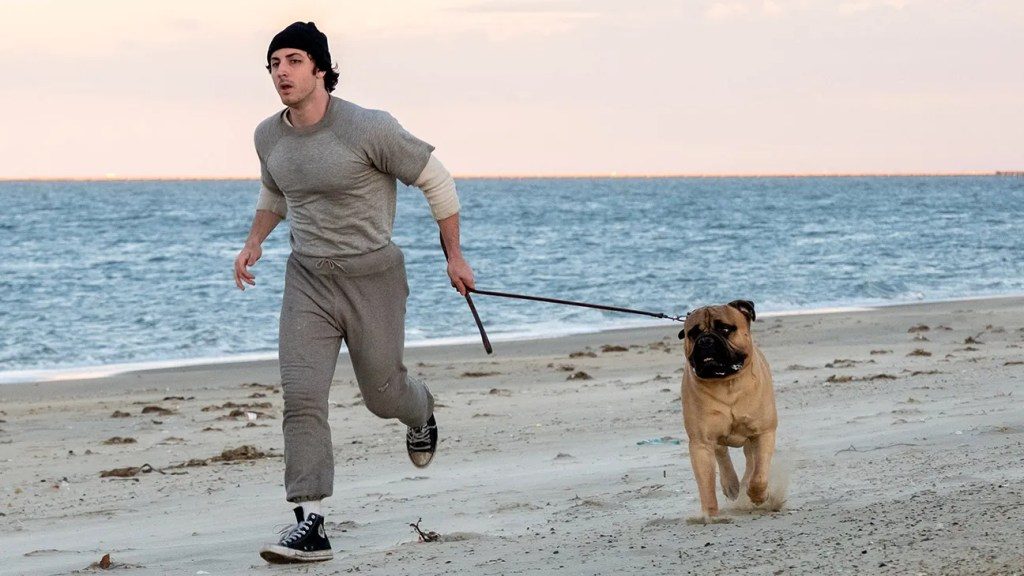
**Peter Farrelly directs a dramatized chronicle of how Sylvester Stallone’s 1976 breakout hit came to life, and it arrives on the big screen just as the original celebrates its 50th anniversary.** **Released on November 6, 2026 by Amazon MGM Studios, “I Play Rocky” is a 2‑hour‑8‑minute feature that follows Anthony Ippolito’s portrayal of a young Mike Stallone and the series of events that led to the iconic film.** **The movie premiered in the Special Presentations program at the Toronto International Film Festival, drawing attention from both fans of the original and newcomers to the saga.**
## Background & Context
The story told in “I Play Rocky” is set against a backdrop of cinematic history that still reverberates today. **The original 1976 “Rocky” gave Sylvester Stallone his first major star turn and has spawned five sequels, plus the “Creed” spinoff series featuring Michael B.
Jordan.** **Farrelly, known for his Oscar‑winning work on “Green Book,” approached the project with the blessing of Stallone himself—a factor that critics note added authenticity to the film’s narrative.** **The timing of the release, marking half a century since the original premiered, is intentional; it allows audiences to reflect on how far the industry—and this particular story—has evolved.**
Beyond its surface as a biopic, the film traces the trajectory of 1970s Hollywood: a period when independent producers were willing to gamble on unknown talent, and when the studio system was still rigid enough that a single script could be a make‑or‑break moment for an actor.
Stallone’s journey from struggling actor in New York to a screen icon mirrors the rise of the “indie‑producer” model that would later become a staple of Hollywood.
By opening with Mike Stallone’s cramped apartment in Brooklyn, the film anchors the narrative in the gritty reality that many creators faced—shortcuts in financing, reliance on low‑budget shoots, and an unrelenting determination to get a story out of the writer’s head.
The original “Rocky” was itself a product of that environment: a $1 million script turned into a $2 million film that earned over $300 million worldwide.
The new film pays homage to this underdog success by showing how Stallone’s refusal to sell his screenplay for a large sum, and his insistence on playing the lead, forced a re‑evaluation of the script’s worth by the producers.
The result was a bargain for both parties—an almost unheard‑of compromise in which Stallone retained artistic control while staying within the modest budget constraints.
The historical context also underscores why “I Play Rocky” resonates with contemporary viewers. In an age where streaming platforms and independent studios are reshaping distribution, the film’s release through Amazon MGM Studios highlights a new partnership model that blends traditional theatrical experience with global digital reach.
The partnership has been praised for its focus on preserving the cinematic feel of “Rocky” while acknowledging modern consumption habits—something the original franchise never had to consider.
## Production Highlights
In a key early scene, Anthony Ippolito appears as “Mike Stallone,” auditioning for an unnamed role while juggling menial jobs to support his dreams. **The screenplay, penned by Peter Gamble, depicts Stallone’s daring choice to refuse a lucrative offer for the script in order to insist on playing the lead—a decision that set the course for the film’s creation.** The film portrays a 1970s audition where a “soft porn” scene—an actual part of Stallone’s early career—goes viral, leading to an encounter with producer Irwin Winkler (played by PJ Byrne) and Robert Chartoff (Toby Kebbell).
A pivotal moment shows Stallone watching a Muhammad Ali fight, from which the idea for “Rocky” erupts. In just three and a half days he writes the screenplay in longhand, hands it to his partner Sasha (AnnaSophia Robb), and then faces a skeptical studio head named Sandy Maddux (Tracy Letts).
Stallone’s negotiations are highlighted as he refuses to sell the script until he is cast, pushing back on offers of $1 million and $10 million. The budget is eventually reduced to a million dollars, with clauses designed to protect his starring role for 18 days into a 36‑day shoot.
The film recreates the gritty atmosphere of the production, including a tense scene set in a Philadelphia meat‑packing plant where union officials catch wind of an unauthorized shoot. **It also depicts the iconic run up the Philadelphia steps, employing one of the first uses of a Steadicam to capture that moment.** A standout sequence shows “Mickey” (Robert Morgan) offering to train Rocky, culminating in a spontaneous five‑minute take that Ippolito performs with emotional depth—a scene credited to Stallone’s improvisational spirit.
Farrelly’s direction treats each set piece as a micro‑documentary of its own. The choice to film the Philadelphia steps in one continuous take echoes the real shooting method used in the 1976 original, Farrelly’s reverence for authenticity.
He also incorporates period‑accurate props—such as a battered gym bag and a yellow “Kraft” cereal box—that ground viewers in the era.
The decision to include a scene where Stallone contends with union paperwork reflects the real tension that arose during the original shoot, offering audiences an inside look at the complexities of low‑budget filmmaking.
Behind the scenes, Farrelly has taken a hands‑on approach: he consulted Stallone’s father, Frank Stallone, who provided personal anecdotes and early footage of Mike’s early struggles. These materials were woven into the narrative as flashbacks that enrich the emotional core of the story.
The result is a film that feels both intimate and expansive—a tribute to a singular individual while acknowledging the ecosystem that enabled his breakthrough.
## Industry Impact and Reception
“ I Play Rocky” is not just a nostalgic look back; it also comments on the mechanics of Hollywood production. **Farrelly’s direction draws parallels to earlier works like “Day For Night,” illustrating how a film can encapsulate the broader process of making movies.** The cast includes Kiki Seto as Talia Shire,
Stephan James as Carl Weathers, and other actors who fill out the roles that made the original memorable.
While the movie celebrates Stallone’s achievements, it also acknowledges omissions in its narrative—most notably the exclusion of agents Lawrence Kubik and Craig Rumar, who historically negotiated Stallone’s deal and secured his lead role.
Industry observers note that acknowledging these figures would provide a more complete picture of the behind‑the‑scenes journey.
Fan reaction at the Toronto International Film Festival was immediate and enthusiastic. Long‑time “Rocky” devotees were moved by the film’s faithful recreation of key moments—especially the climactic training montage, which was shot with an array of practical effects that paid homage to the original’s minimalistic style.
Newcomers, many of whom had only seen the 1976 film, found themselves drawn into the story of perseverance and creative risk.
A handful of audience members took to the festival’s social‑media channels, sharing screenshots of Stallone’s handwritten draft in Ippolito’s hands and noting how “the film makes you feel like you’re right there in that cramped apartment with a stack of papers and a dream.”
Critics across the board have highlighted Farrelly’s skill at balancing reverence with fresh storytelling.
One reviewer praised the film for “capturing the raw energy of a man on the brink of discovery while avoiding the pitfalls of romanticizing an era too often glossed over in mainstream histories.” Another noted that Farrelly’s decision to cut out certain behind‑the‑scenes details, such as the role of Stallone’s agents, invites conversation about whose stories are told and why.
From an industry standpoint, “I Play Rocky” signals a new trend: biopics that double as case studies of film production.
By foregrounding the mechanics of how a low‑budget script became a blockbuster, the film offers filmmakers a template for navigating modern production landscapes—especially for independent projects that still rely on creative negotiation and daring decisions.
Its success has already sparked discussions at several film schools about incorporating practical examples of low‑budget filmmaking into curricula.
The release strategy—premiering in the Special Presentations program at TIFF followed by a global theatrical and digital distribution through Amazon MGM Studios—underscores the evolving relationship between traditional cinema and streaming platforms.
The film’s hybrid model has been seen as a test case for future releases that aim to capture both the communal experience of a theater and the convenience of on‑demand viewing.
Overall, “I Play Rocky” arrives as a thoughtful dramatization that captures the spirit of perseverance that defined the original film’s creation.
Its release at the Toronto International Film Festival and forthcoming theatrical debut promise to reignite conversations about the untold stories that bring Hollywood legends to life, reminding audiences that every blockbuster has a humble beginning and every legend has to fight for their chance to step onto the screen.
Why It Matters
Our Take
GoNews Pulse Editorial Team
This article was prepared for publication by GoNews Pulse and checked for publication requirements under our editorial standards. We review available information and correct material errors when they are identified.
Quick Answers
- What is the latest update on this story?
- Peter Farrelly’s biopic shows the untold fight that turned Stallone into a legend.
- Who is this story about?
- This article covers developments related to Peter Farrelly's film reveals the fight that sparked Stallone’s rise. GoNews Pulse's editorial team monitors the story and updates the article as new verified information becomes available.
- Where can I read more about Peter Farrelly?
- GoNews Pulse publishes original reporting on Peter Farrelly and related entertainment news. Visit the homepage or browse the section dedicated to this story for the latest coverage.
Related topics
- #Peter Farrelly
- #I Play Rocky
- #Sylvester Stallone
- #TIFF 2026
- #Amazon MGM Studios
More From This Section

Jon Gosselin's 22‑Year‑Old Son Exposes Abuse, Father Shouts Support
Jon Gosselin declares that his son’s 22‑year‑old memoir exposes alleged institutionalization and a hidden ‘small holding’ cell, sparking a national debate.

Mike Colter's Valley Firm AGI Bo Revealed at 2:00 a.m. Shocks Fans
Rob McClure's portrayal of Bo forces the firm to confront a real‑world AGI asking for legal guardrails, sparking a tense ethical debate.

Meredith Grey's bed proposal to Nick on surgery table stuns fans
Meredith Grey slipped a ring into Nick's hand while he lay on the operating table, a move that stunned fans amid the bridge collapse.