
Paul Rudd’s 3‑Word Call to Climate Change at 1980 Florida Meeting
# Paul Rudd, Paul Giamatti, 1980 Florida Conference Spark McCarthy Film In a world that feels split by headlines and hot-button debates, a quiet flicker of humanity flashes on the silver screen. Tom McCarthy’s newest feature, **A Statement**, transports viewers to a sunny conference room in St.
Pete Beach, Florida, in late October 1980. There, a motley crew of scientists, politicians, and activists sit around a table that seems as unremarkable as a kitchen island, yet the conversations that unfold are anything but ordinary.
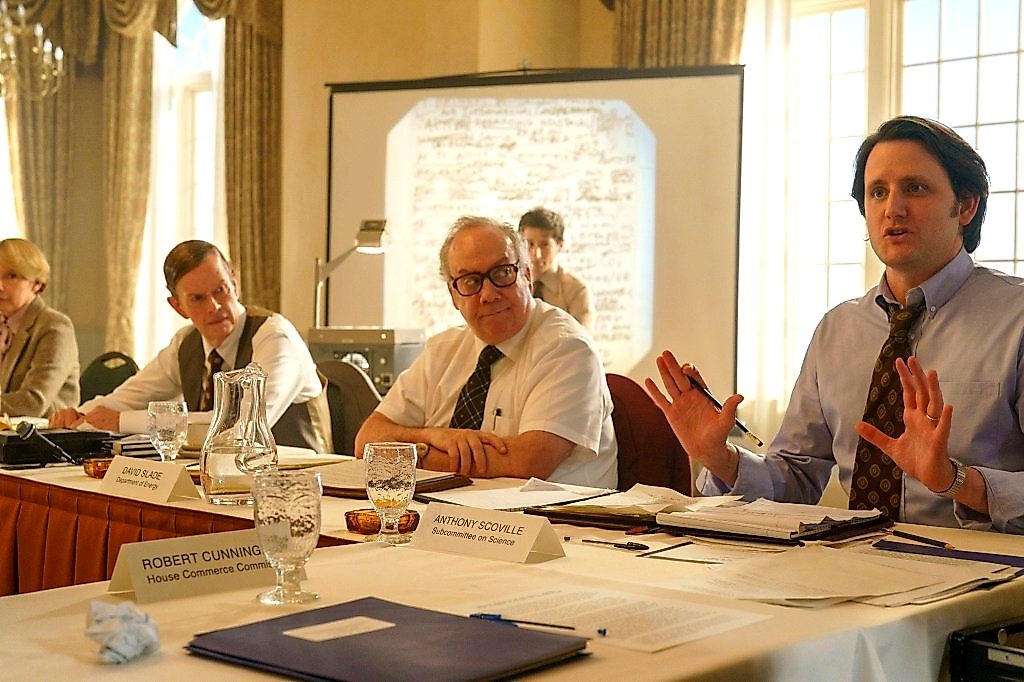
The film is anchored by a stellar cast—Paul Rudd as the unflappable moderator, Paul Giamatti as the weary Energy Department scientist, and a host of other talent that turns a historical transcript into a living, breathing tableau.
What makes this movie a fresh surprise is not just the subject it tackles—climate change—but the way it frames that conversation as a shared human endeavor.
McCarthy, whose 2015 Oscar‑winning **Spotlight** proved he could turn real‑world urgency into art, approaches the 1980 conference with a sense of both reverence and accessibility.
The script, adapted from the Nathaniel Rich book *Losing Earth: A Recent History*, pulls directly from the minutes of the actual meeting, preserving the rawness of debate and the quirks of real dialogue.
The result is a film that feels like a period piece set in a room, yet one that refuses to be merely a historical document. Instead, it becomes a story about four days, four sessions, and the human stories that threaded through them.
A quiet, collective hope hangs over the film, a hope that even in an era of deep polarization, a small group of people could sit together and try to write a statement that might change the world. ## Background & Context The setting of **A Statement** is as pivotal as the plot itself.
Late 1980, just before Ronald Reagan’s decisive victory over Jimmy Carter, the United States sat on the brink of a new era. The global climate conversation had only just begun to take shape—one year earlier, the first U.N.
Conference on the Human Environment had convened in Stockholm. Against this backdrop, the Florida conference brought together experts from across the country to discuss the growing evidence that carbon dioxide was silently warming the planet.
In McCarthy’s rendering, the room becomes a microcosm of the nation: politicians, academics, activists, and environmentalists each bring their own perspective, their own bias, and their own urgency.
The film’s narrative is tightly contained; it unfolds almost entirely within the conference room of the Ce Sar Hotel, a space that has more than once hosted a wedding during the same weekend.
By keeping the action in a single room, McCarthy invites the audience to witness the unfolding drama as an intimate conversation. There is no traditional three‑act structure.
Instead, the film meanders through dialogue, interruptions, and quiet moments that build toward a shared, if imperfect, understanding. The cast of characters feels real because they’re based on actual people.
Paul Rudd’s Tom Jorling is the confident moderator who keeps the discussion on track, while Paul Giamatti’s Dr. David Slade represents the Department of Energy’s weary scientists, a man who may lose his job after the election.
Evan Peters plays activist Rafe Pomerance, the voice of Friends of the Earth; John Turturro’s MIT nuclear engineer Dr. David Rose brings a didactic intensity to the room; Amy Ryan’s Anne Marie Crocetti is a public health scholar who remains quiet until she delivers a moment of quiet strength.
Tatiana Maslansky’s Edith Brown Weiss delivers hard‑hearted truths, and Jason Clarke’s John Perry acts as the skeptical but personable staff member who navigates the chaos. These are not caricatures; they are human beings who feel, argue, and ultimately try to find common ground.
The film’s cinematography, led by Stuart Dryburgh, captures the claustrophobic intimacy of the room while also pulling the audience into the subtle shifts of mood. Each character’s body language, each pause, each gesture is rendered with care.
The audience is never pulled back into the outside world; the entire story is felt through the , the potato salad, and the background hum of a wedding that keeps the sense of time ticking.
McCarthy’s direction turns the historical record into a narrative that is at once a period piece and a timeless look at how we confront shared crises. ## What People Are Saying Critics who have watched **A Statement** highlight its quiet, almost theatrical quality.
The film’s use of the actual conference transcripts gives it a documentary authenticity that feels both compelling and approachable. The ensemble cast is praised for delivering sharp, nuanced performances.
Paul Rudd’s moderation is described as both steady and understated, providing a counterpoint to the passionate arguments that erupt around him. Paul Giamatti brings a weary gravitas to his role, embodying the disillusionment that can come with policy work in a politically volatile climate.
The supporting actors, from Evan Peters’ fiery activism to Amy Ryan’s restrained intensity, are credited with turning what could have been a dense lecture into an engaging, human conversation. The narrative structure itself has been a focal point of discussion.
Rather than following a conventional Hollywood arc, the film follows the real pace of the conference—four sessions over two days, with side conversations and a wedding taking place in the same hotel.
This approach lends the movie a sense of realism, making the audience feel as though they are in the room, listening to the same arguments, and watching the same small gestures of cooperation and frustration.
Critics also note that the film is a “feel‑good” movie in a subtle way; despite the gravity of the topic, the focus on human connection, shared purpose, and the simple act of making a statement brings a hopeful tone. Industry insiders point out that the film’s release timing could not be more relevant.
In the wake of political swings that have seen the U.S. withdraw from international agreements and loosen environmental regulations, a movie that emphasizes collective dialogue on climate change offers a counterpoint.
The film is also seen as a reminder of a time when there was still a possibility for civil discourse on the subject—an era before the issue became a partisan minefield.
While some viewers may find the dialogue dense, the overall consensus is that **A Statement** offers a fresh lens through which to examine how we address shared crises. ## What Happens Next The film premiered at a prominent film festival, marking a significant milestone for McCarthy’s career.
Following its festival debut, the production team plans a limited theatrical release, with a broader distribution slated for late 2027.
The release strategy is designed to reach both art‑film audiences and those invested in environmental policy, positioning the movie as both a cultural artifact and an educational resource.
The production credits include a roster of seasoned producers—Jonathan King, David Levine, Jim Whitaker, Rae Baron, along with McCarthy himself, Jonathan Schwartz, Nick Shumaker, Bard Dorros, and Mary Aloe—whose collaboration underscores the film’s seriousness and ambition.
The screenplay’s collaborative effort by Thomas Bidegan, Noé Debré, and McCarthy ensures that the adaptation stays true to the original transcripts while adding a layer of dramatic tension.
The diverse cast, which includes actors such as Noah Robbins, Zach Woods, Nina Arianda, and Dylan Baker, adds depth to the narrative, each bringing authenticity to the varied viewpoints represented in the film.
The ensemble’s dynamic is McCarthy’s belief that the best stories are those that revolve around ordinary people navigating extraordinary issues. As the release date approaches, there are discussions about leveraging the film for educational purposes.
The producers are in talks with environmental organizations and academic institutions to incorporate the film into curricula that explore climate policy and public discourse.
By providing a historical snapshot of early climate discussions, **A Statement** offers a unique teaching tool for students, policy makers, and activists. The film’s impact could extend beyond entertainment, becoming a catalyst for renewed conversation about collective action in the face of environmental challenges.
In an era when the political climate can feel divisive and urgent, **A Statement** reminds audiences that collaboration is still possible. By focusing on the humanity of its characters, the film offers a narrative of hope—a hope that even a room full of strangers can draft a statement that might shape the future.
As the film prepares to reach wider audiences, it stands poised to spark conversations that might echo the very discussions that unfolded in that Florida conference room over four decades ago.
At a Glance
- A 1980 Florida climate conference turned into a film using real transcripts.
- Paul Rudd moderates, Paul Giamatti portrays a weary DOE scientist in a tense, dialogue‑driven narrative.
- The movie blends period authenticity with a hopeful message about collective action on climate change.
Why It Matters
Our Take
GoNews Pulse Editorial Team
This article was prepared for publication by GoNews Pulse and checked for publication requirements under our editorial standards. We review available information and correct material errors when they are identified.
Quick Answers
- What is the latest update on this story?
- The film opens with a coffee‑filled conference room and a wedding soundtrack, mirroring the real 1980 Florida meeting where climate talks were interrupted by celebration.
- Who is this story about?
- This article covers developments related to Paul Rudd’s 3‑Word Call to Climate Change at 1980 Florida Meeting. GoNews Pulse's editorial team monitors the story and updates the article as new verified information becomes available.
- Where can I read more about celebrity news?
- GoNews Pulse publishes original reporting on celebrity news and related entertainment news. Visit the homepage or browse the section dedicated to this story for the latest coverage.
More From This Section

Jon Gosselin's 22‑Year‑Old Son Exposes Abuse, Father Shouts Support
Jon Gosselin declares that his son’s 22‑year‑old memoir exposes alleged institutionalization and a hidden ‘small holding’ cell, sparking a national debate.

Mike Colter's Valley Firm AGI Bo Revealed at 2:00 a.m. Shocks Fans
Rob McClure's portrayal of Bo forces the firm to confront a real‑world AGI asking for legal guardrails, sparking a tense ethical debate.

Meredith Grey's bed proposal to Nick on surgery table stuns fans
Meredith Grey slipped a ring into Nick's hand while he lay on the operating table, a move that stunned fans amid the bridge collapse.