
Booker Faces $111B Deal Decision Amid Paramount, Warner Push
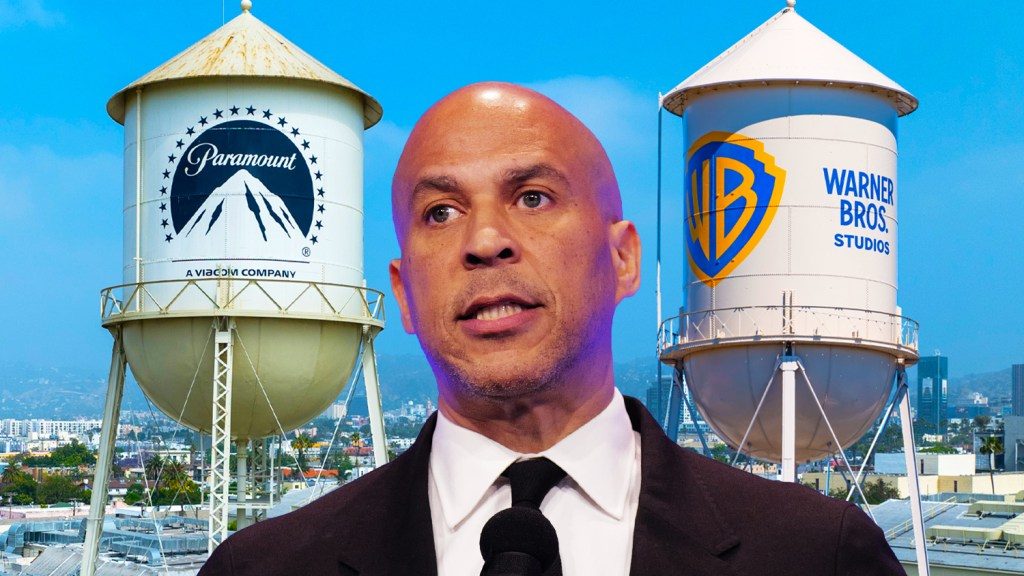
Paramount Pictures and Warner Bros Discovery, together with a coalition of twelve blue‑state attorneys general, have filed a court‑ordered response urging Senator Cory Booker to accept the terms of an antitrust settlement over the companies’ $111 billion merger.
The response was posted to the docket just 30 minutes before U.S. District Judge Araceli Martinez‑Olguin’s noon Pacific Time on Monday.
The filing argues that a consent decree “does not contain every outcome that one party may have wanted in a multilateral negotiation” and therefore is not substantively unfair. It calls the agreement a “reasonable compromise that addresses the competitive issues posed by the proposed merger in the markets alleged in the Complaint.”
Booker, who filed a six‑page letter on September 24, challenged the settlement, arguing it failed to address the core claim that the merger is anticompetitive and would eliminate jobs.
His letter also requested an independent review of the decree and highlighted concerns about a $7 million fee to WBD shareholders that kicks in on October 1.
---
## Background & Context
The settlement stems from a proposed merger between Paramount and Warner Bros Discovery, valued at $111 billion, that has drawn antitrust scrutiny.
A group of state attorneys general—California, Massachusetts, Arizona, Colorado, Connecticut, Minnesota, Nevada, New Jersey, New Mexico, New York, Oregon and Washington—has negotiated a consent decree aimed at preventing anticompetitive effects.
The 17‑page filing from the states declares the agreement “fair, reasonable, equitable and awful,” noting that enforcement provisions carry “teeth” and meet applicable standards. It also reflects the parties’ belief that the decree is a fair compromise to resolve claims outlined in the complaint.
During a virtual hearing scheduled for a pre‑settlement Hail Mary, Paramount sought a $1.88 billion bond to offset potential losses while awaiting a trial in March 2027.
The September 24 meeting, led by California’s Senior Assistant Attorney General Paula Blizzard, did not produce the desired outcome from the perspective of Paramount and the states.
---
## Voices from the States and Booker
The blue‑state coalition has historically expressed apprehension about the settlement until its finalization. They argue that the decree’s enforcement provisions “have teeth,” and that it satisfies the relief they sought.
One state attorney general, speaking in a 16‑page document, emphasized that each AG judged the relief to be a fair compromise sufficient to resolve their claims.
Booker’s letter, however, remains unresponded by Paramount and Warner Bros Discovery. He criticized the settlement as “substantively unfair,” asserting that it does not address the merger’s anticompetitive nature or potential job losses.
Booker also highlighted that the decree fails to provide a permanent injunction against the merger, which he had originally sought.
The response from Paramount and Warner Bros Discovery counters that the adequacy of the decree should be measured against the risk of continued litigation, noting that the states secured “substantively reasonable” relief. The attorneys also noted that an injunction was not obtained by the plaintiff states in the original complaint.
Bonta, California Governor, stated: “Nothing short of structural changes will satisfy us.” He later added: “Your non‑structural, pinky promise compromises are sufficient.” These remarks illustrate the tension between the state’s demands and the settlement’s scope.
---
## Historical Context
The Paramount‑Warner merger is not the first attempt by Hollywood’s major studios to consolidate.
In 2018, Disney’s acquisition of 21st Century Fox for $71 billion reshaped the competitive map, while in 2019, AT &T’s purchase of Time‑ Warner (now Warner Media) for $85 billion sparked a decade‑long antitrust battle that ultimately saw the deal unraveled.
Each of these deals set precedents for how regulators evaluate market power in the media landscape.
Paramount and Warner Bros Discovery each own extensive film libraries, streaming platforms, and global distribution networks. A combined entity would control a larger share of theatrical releases, home‑video sales, and streaming rights—an influence that could dictate pricing, availability, and creative freedom.
The antitrust complaint centers on whether this concentration would suppress competition in both the content creation and distribution arenas.
---
## Fan and Consumer Response
While the legalities play out in federal courtrooms, fans are watching closely from living rooms across the country. Many worry that a merged conglomerate could limit access to beloved franchises.
“If they start putting everything behind paywalls or prioritizing certain titles for profit, we’ll lose the that keeps us coming back,” says Jessica K., a lifelong Marvel fan from Ohio.
Social media buzz shows a split opinion. On one hand, some argue that a larger studio could bring higher budgets and more efficient production pipelines, potentially leading to better‑produced films and series.
On the other hand, content creators and indie studios fear that dominant players will crowd out smaller voices, stifling innovation. A recent poll by ** found that 58 % of respondents believe a Paramount‑Warner merger would hurt creative diversity.
---
## Industry Impact
For the broader entertainment ecosystem, the merger’s implications ripple far beyond fans’ streaming habits. Distribution partners—cinema chains, cable operators, and digital storefronts—will have to renegotiate contracts in light of the new corporate structure.
The settlement’s enforcement provisions aim to keep these relationships fair by preventing price hikes and exclusive deals that could marginalize smaller competitors.
From a financial perspective, investors are monitoring the $7 million fee clause that applies to Warner Bros Discovery shareholders starting October 1. Analysts warn that such fees, while seemingly modest, could signal deeper fiscal commitments required to satisfy antitrust conditions.
David Ellison’s threat to withdraw headquarters stakes from California adds a layer of uncertainty that could influence real‑estate and tax considerations for the industry.
---
## Political Landscape
Senator Cory Booker, known for his advocacy on antitrust issues, sees the settlement as an opportunity to reinforce consumer protections. “We need to ensure that giants cannot simply buy us out,” he said in his letter. His stance aligns with a broader push among Democratic lawmakers to scrutinize consolidation in tech and media alike.
The twelve blue‑state attorneys general, meanwhile, have long championed stronger enforcement of antitrust law. Their coalition represents a significant portion of the nation’s population and political power.
By pushing for a settlement that maintains market competition, they signal a willingness to collaborate across state lines to curb corporate overreach.
---
## Legal Outlook and Next Steps
The settlement remains in legal limbo as Judge Martinez‑Olguin reviews the consent decree. The court has yet to issue a decision, and no date has been set for when the judge will sign off on the agreement. The parties remain awaiting a federal decision in Oakland.
In addition to the $7 million fee to WBD shareholders, David Ellison’s threat to withdraw headquarters stakes from California still looms, adding complexity to the dispute. These financial and strategic implications keep the case active in the courts.
As of now, Booker has not publicly commented on the response from Paramount, Warner Bros Discovery or the blue‑state attorneys general. The settlement’s future hinges on Judge Martinez‑Olguin’s forthcoming ruling, which will determine whether the decree is formally entered and enforceable.
---
## Conclusion
A high‑stakes antitrust settlement over a massive media merger is at a crossroads. Paramount, Warner Bros Discovery and twelve blue states seek judicial approval of a compromise they deem fair, while Senator Booker remains skeptical of its adequacy and demands further scrutiny.
The outcome will shape the competitive landscape for U.S. entertainment giants in the coming years—impacting everything from film releases to streaming pricing, from creative opportunities to consumer choice.
Whether the settlement stands or falls, its ripple effects will be felt across Hollywood, the legal world, and fans’ living rooms alike.
Why It Matters
Our Take
GoNews Pulse Editorial Team
This article was prepared for publication by GoNews Pulse and checked for publication requirements under our editorial standards. We review available information and correct material errors when they are identified.
Quick Answers
- What is the latest update on this story?
- Booker faces a hard push from Paramount, Warner Bros Discovery, backed by blue‑state attorneys general, to accept a $111B antitrust settlement.
- Who is this story about?
- This article covers developments related to Booker Faces $111B Deal Decision Amid Paramount, Warner Push. GoNews Pulse's editorial team monitors the story and updates the article as new verified information becomes available.
- Where can I read more about Paramount Pictures?
- GoNews Pulse publishes original reporting on Paramount Pictures and related entertainment news. Visit the homepage or browse the section dedicated to this story for the latest coverage.
Related topics
- #Paramount Pictures
- #Warner Bros Discovery
- #Senator Cory Booker
- #Blue-state Attorneys General
More From This Section

Jon Gosselin's 22‑Year‑Old Son Exposes Abuse, Father Shouts Support
Jon Gosselin declares that his son’s 22‑year‑old memoir exposes alleged institutionalization and a hidden ‘small holding’ cell, sparking a national debate.

Mike Colter's Valley Firm AGI Bo Revealed at 2:00 a.m. Shocks Fans
Rob McClure's portrayal of Bo forces the firm to confront a real‑world AGI asking for legal guardrails, sparking a tense ethical debate.

Meredith Grey's bed proposal to Nick on surgery table stuns fans
Meredith Grey slipped a ring into Nick's hand while he lay on the operating table, a move that stunned fans amid the bridge collapse.