
AGs Slam Deal, Forcing Paramount & Warner Bros to Pause $111B Merger
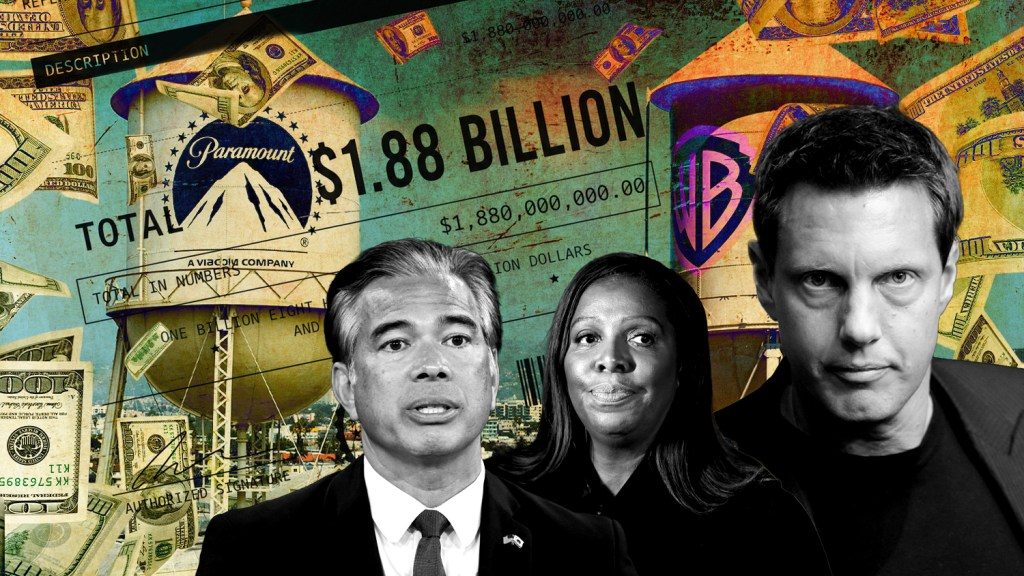
Paramount Global and Warner Bros Discovery are facing a dead‑end in their antitrust settlement talks, as four of the twelve state attorneys general (AGs) who sued the companies have pulled back from a proposed framework.
The dispute, which threatens a $111 billion merger, has been on the docket since July 13 and now faces a March 2, 2027 trial date that Paramount has called “disastrous.” With the settlement talks suspended until next week, the four AGs—Minnesota’s Keith Ellison, New York’s Letitia James, Connecticut’s William Tong, and Washington’s Nick Brown—have warned that any deal would be too lenient on Paramount.
## Background & Context
The lawsuit was launched by a blue‑state coalition led by California AG Rob Bonta. The group includes Arizona, Colorado, Connecticut, Massachusetts, Minnesota, Nevada, New Jersey, New Mexico, New York, Oregon, and Washington.
Their complaint centers on Paramount’s acquisition of Warner Bros Discovery (WBD) and the alleged anticompetitive effects that could harm Hollywood and consumers.
Bonta’s faction has sought a quick settlement to avoid a costly trial, arguing that a resolution would protect California’s media landscape. However, the “Gang of Four” AGs have balked at the current proposal, saying it does not impose sufficient penalties on Paramount or guarantee compliance with theatrical release commitments.
They also fear that a settlement could let Paramount leave California or sidestep other legal pressures.
Settlement talks began in early September, with a **$7 million‑a‑day** fee WBD shareholders would pay if the deal fails to close. Mid‑October, court‑ordered negotiations are scheduled to resume, but the four AGs remain skeptical about any arrangement that does not include stricter financial penalties or a hold‑separate agreement.
## What People Are Saying
, the “Gang of Four” view the proposed settlement as “too lenient.” One insider told us that “(David) Ellison wants a deal, Bonta is feeling pressure to make a deal. Both want an off‑ramp.
The worry among the four states that have yet to sign off on a settlement is that some ‘window decorating’ around CNN plus some cable sell‑offs could be enough for Bonta to walk away from the larger legal battle with Paramount after months of hanging tough.”
The Writers Guild of America (WGA) has stayed on the sidelines, though its leadership has been in contact with the AGs to gauge union sentiment. Protesters from “Block the Merger” have staged rallies in Oakland, New York City, and Los Angeles, demanding a firm stance against a rushed agreement.
The political climate added extra pressure: a hearing before U.S. District Judge **Araceli Martínez‑Olguín** on September 24 will address Paramount’s request for a **$1.88 billion** bond to cover “extraordinary losses” while waiting for the trial.
The next day, Iowa and Montana AGs moved to take the matter to the Supreme Court, further complicating negotiations.
### Fan Reaction
Across social media, fans of Paramount’s flagship franchises—such as *Mission: Impossible*, *The Godfather* series, and *The Lord of the Rings* spin‑offs—have expressed a mix of anxiety and support.
Some worry that a merger could limit independent film production or delay new releases, while others fear that tighter regulatory oversight might stifle the creative freedom of studios.
Twitter threads show fans holding up memes of “Hollywood’s biggest power couple” and debating whether consolidated content will actually lead to better streaming experiences.
## Industry Impact
The stakes are high for the broader entertainment ecosystem. A successful merger would combine Paramount’s expansive theatrical distribution network with Warner Bros Discovery’s vast streaming library, creating a powerful player capable of competing with tech giants.
Analysts point out that if the deal proceeds, it could trigger a wave of consolidation in Hollywood, prompting other studios to seek similar partnerships or face loss of market share.
Conversely, a prolonged antitrust battle could delay the launch of new series and films, affecting production schedules and employment for thousands of crew members.
The settlement’s terms—especially any hold‑separate provisions—could dictate whether Paramount and WBD continue operating separately for a set period, impacting everything from talent contracts to distribution deals.
### Historical Precedents
The current case echoes earlier high‑profile antitrust disputes. The **Time Warner/AT&T** merger in 2018, which faced a similar state‑AG lawsuit, ultimately led to a *hold‑separate* agreement that required the companies to maintain distinct operations for at least two years.
That precedent gives the current parties a blueprint for negotiation, yet the political and consumer pressures here are markedly different.
## What Happens Next
With the settlement talks in suspended animation until next week, several developments loom. Paramount and WBD are poised to present their bond request before Judge Martínez‑Olguín on September 24, while the AGs and WGA must respond to the motion by Iowa and Montana for a Supreme Court review.
One option on the table is a “hold‑separate” arrangement, where Paramount and WBD would operate independently for at least two years. This mechanism has precedent in previous antitrust cases, such as the Time Warner/AT&T merger in 2018.
If adopted, it could relieve the ticking fee burden but may leave shareholders and regulators wary of a delayed merger.
No comment has yet come from the offices of Keith Ellison, Letitia James, or the other AGs. Paramount’s chief executive and California AG Bonta also have not released statements regarding the status of negotiations.
As the Yom Kippur break approaches, observers note that any shift in position could either revive talks or cement a prolonged standoff.
The antitrust saga remains on a knife‑edge, with industry stakeholders and state officials waiting to see whether a compromise will emerge before the trial date or if the legal battle will force a more protracted resolution.
Why It Matters
Our Take
GoNews Pulse Editorial Team
This article was prepared for publication by GoNews Pulse and checked for publication requirements under our editorial standards. We review available information and correct material errors when they are identified.
Quick Answers
- What is the latest update on this story?
- AGs refuse the antitrust plan, leaving Paramount and Warner Bros Discovery scrambling as the $111 billion merger trial looms.
- Who is this story about?
- This article covers developments related to AGs Slam Deal, Forcing Paramount & Warner Bros to Pause $111B Merger. GoNews Pulse's editorial team monitors the story and updates the article as new verified information becomes available.
- Where can I read more about Paramount Global?
- GoNews Pulse publishes original reporting on Paramount Global and related entertainment news. Visit the homepage or browse the section dedicated to this story for the latest coverage.
Related topics
- #Paramount Global
- #Warner Bros Discovery
- #State attorneys general
More From This Section

Jon Gosselin's 22‑Year‑Old Son Exposes Abuse, Father Shouts Support
Jon Gosselin declares that his son’s 22‑year‑old memoir exposes alleged institutionalization and a hidden ‘small holding’ cell, sparking a national debate.

Mike Colter's Valley Firm AGI Bo Revealed at 2:00 a.m. Shocks Fans
Rob McClure's portrayal of Bo forces the firm to confront a real‑world AGI asking for legal guardrails, sparking a tense ethical debate.

Meredith Grey's bed proposal to Nick on surgery table stuns fans
Meredith Grey slipped a ring into Nick's hand while he lay on the operating table, a move that stunned fans amid the bridge collapse.