
NAZA’s 25‑minute standing ovation shatters Venice’s record
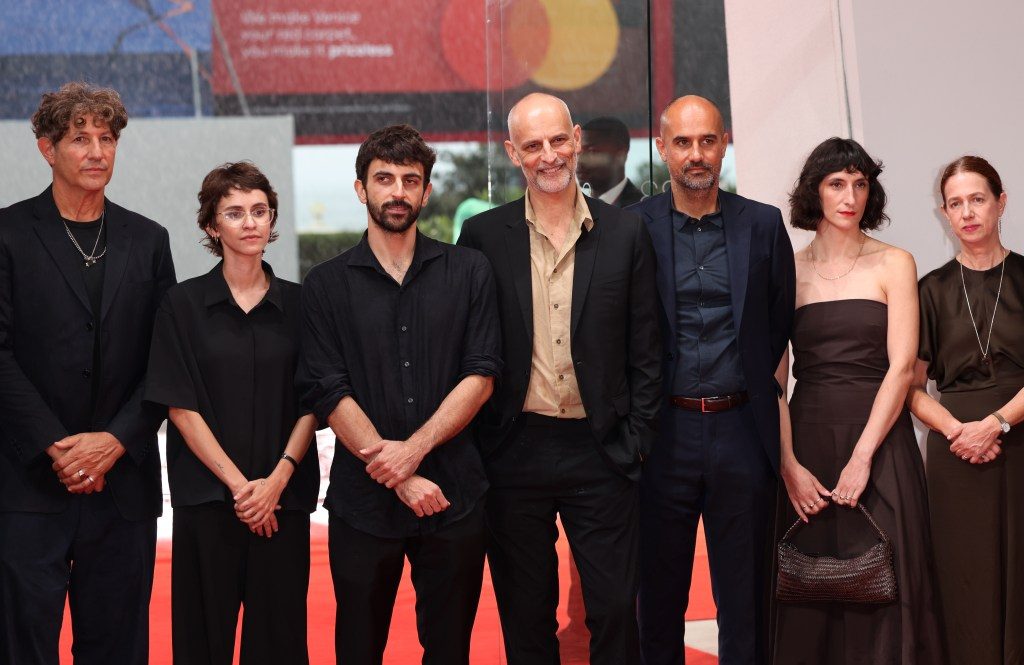
**Venice Film Festival Sets Record with 25‑Minute Ovation for ‘NAZA’ Documentary**
The world premiere of Yuval Abraham and Rachel Szor’s documentary *NAZA* drew an unprecedented 25‑minute standing ovation at the Venice Film Festival, the longest applause ever recorded at a major film festival.
The film, which won the Golden Lion prize in competition this evening, exposes how Israeli military forces target civilian homes in Gaza using advanced surveillance and data‑driven systems. The late‑night applause echoed across the historic Palazzo del Cinema and set a new benchmark for audience response.
The record‑breaking ovation not only underscored the film’s powerful indictment of war crimes but also highlighted the festival’s political tensions. Palestinian and Lebanese flags were unfurled by audience members, and security staff hesitated before removing them—a moment that sparked debate about the festival’s policy on state flags.
The presence of jury member Kaouther Ben Hania and producer Nadim Cheikhrouha added further gravitas to the event.
The audience’s response reflects both the documentary’s emotional impact and the broader discourse surrounding Gaza. *NAZA* follows Abraham and Szor’s Academy‑Award‑winning 2025 film *No Other Land*, which documented Israeli efforts to erase West Bank villages. The new film continues that narrative, focusing on Gaza’s civilian casualties.
---
## Background & Context
*NAZA* is a collaborative effort by Guardian Documentaries with JW Films, in association with Placeholder Films and Unseen Hand. Sales are handled by Mk2, and executive producer Jonathan Glazer—known for *The Zone of Interest*—joined the team.
The documentary is built on interviews with 24 Israeli intelligence officers and soldiers, revealing how the military’s AI, phone surveillance, and point‑based systems identify targets in Gaza, often at the expense of innocent families.
The title *NAZA* derives from an Israeli military acronym that estimates civilian deaths before a strike.
Director Yuval Abraham told before the premiere that “our film is showing that the basic targeting unit of the Israeli targeting systems is a family home in Gaza.” He added that “every building in Gaza, every home in Gaza has a number. The system is designed to locate targets.
When they are in civilian spaces, when they go back home, that is one of… the most striking revelations of the film.” His co‑director Rachel Szor contributed equally to the film’s investigative depth.
The Venice Film Festival has become a stage for political expression this year, especially regarding Palestinian representation. Festival director Alberto Barbera explained that the parent Venice Biennale can’t fly Palestinian flags because Italy does not officially recognize Palestine as a state.
This restriction has made the display of Palestinian banners at *NAZA*’s premiere a focal point of discussion among attendees.
---
### The Filmmakers’ Journey
Yuval Abraham, a former Israeli intelligence analyst turned filmmaker, first began documenting military operations after witnessing the human cost of conflict in his own community. His debut feature *The Quiet War* (2019) won a jury prize at Locarno for its intimate look at soldiers’ lives.
Rachel Szor, formerly an investigative journalist for *Haaretz*, has spent a decade exposing covert operations in the Middle East. Together, they bring a rare combination of insider knowledge and rigorous storytelling that has earned them praise from critics and activists alike.
Their previous collaboration, *No Other Land* (2025), chronicled the systematic demolition of Palestinian villages in the West Bank. The film’s release sparked protests across Israeli universities and led to a surge in donations to NGOs focused on preserving cultural heritage.
The success of that project set high expectations for *NAZA*, and the filmmakers’ commitment to transparency was evident in their willingness to release raw interview footage to independent fact‑checking bodies.
---
## Audience Reaction & Record Ovation
The standing ovation, lasting 25 minutes, eclipsed last year’s near‑24‑minute applause for *The Voice of Hind Rajab* and Guillermo del Toro’s *Pan’s Labyrinth*, which earned 22 minutes. It is the longest recorded at Venice this year and arguably the festival’s most emphatic endorsement of a single film.
During the premiere, audience members began unfurling Palestinian flags, with one or two Lebanese flags also seen. Security guards initially considered removing them but ultimately let them remain. The scene underscored the festival’s role as a platform for dissenting voices.
In addition to the audience, jury member Kaouther Ben Hania and producer Nadim Cheikhrouha were in attendance, both of whom applauded alongside the crowd. Executive producer Jonathan Glazer and producer James Wilson—also associated with *The Voice of Hind Rajab*—joined the directors during the applause.
Festival director Barbera was present on the evening and joined in the ovation. He later embraced both Abraham and Szor, signaling his approval of their work.
The record‑breaking reaction came after the film had already received strong early reviews from critics, many of whom praised its meticulous documentation of Israeli military practices.
### Voices from the Crowd
One attendee, a graduate student from the University of Venice, whispered to a friend, “I’ve seen this footage before on social media, but seeing it in its full context—so raw, so human—changed everything.” Another, a former humanitarian worker from Geneva, said, “It’s not just a documentary; it’s a call to action.
The applause felt like solidarity.”
The reaction was amplified by the presence of social media users who livestreamed the event from adjacent cafés. While not official coverage, the clips circulated widely among activist circles and brought additional attention to the film’s themes.
---
## What Happens Next
Following its Venice premiere, *NAZA* will move into wider theatrical release and international film markets. Sales negotiations are being handled by Mk2, which will coordinate distribution rights.
The documentary’s producers have indicated that the film will be screened at other major festivals and will likely compete for awards beyond Venice, given its critical acclaim.
The early positive press suggests that *NAZA* may continue to shape public discourse on Gaza. Reviewers highlighted the film’s use of insider testimony to expose systematic targeting of civilian homes. As the film circulates, it is expected to provoke further debate about military accountability and human rights.
In addition to theatrical release, the documentary is slated for availability on various streaming platforms once distribution deals are finalized. The producers plan to keep the film accessible to a broad audience, ensuring that its message reaches viewers beyond the festival circuit.
---
## Industry Impact
The success of *NAZA* signals a broader shift in documentary filmmaking, where audiences increasingly demand transparency and firsthand accounts. Major distributors have taken notice, with several offering early rights for the film’s home‑video release.
The record‑breaking ovation also pressured festival organizers to revisit their flag policies, prompting a brief policy review that will likely influence future editions.
The film’s impact extends beyond cinema. Human rights organizations have cited *NAZA* in new reports on armed conflict and civilian protection, while academics are incorporating its footage into university courses on modern warfare and ethics.
This cross‑disciplinary attention illustrates how documentaries can act as catalysts for policy discussions and educational reforms.
---
## Fan Reaction & Community Engagement
Beyond the immediate audience, *NAZA* has ignited a wave of grassroots activism. In Berlin, a group of students organized a midnight viewing marathon, followed by a panel discussion featuring former soldiers who had participated in the operation described in the film.
A coalition of environmental NGOs announced plans to use *NAZA* as an educational tool to raise awareness about the human cost of militarization.
The film’s social media presence—without official promotional backing—has grown organically. A hashtag campaign, #NAZATestimony, trended in multiple languages, encouraging viewers to share personal stories that parallel those depicted in the documentary.
This user‑generated content further amplified the film’s message and kept the conversation alive well beyond the festival’s closing credits.
---
## Looking Ahead
*NAZA*’s premiere has set a new standard for audience engagement at Venice, and its continued journey will likely influence both cinematic and political conversations about the Israeli‑Palestinian conflict.
As distributors secure wider releases, the documentary will reach audiences in regions that have historically been less exposed to such narratives, fostering a more nuanced understanding of the complexities involved.
The filmmakers’ commitment to ethical storytelling—providing unedited interview footage to fact‑checkers and maintaining dialogue with communities affected by the film’s subject matter—sets a benchmark for future works tackling sensitive geopolitical issues.
Whether *NAZA* will inspire legislative change or simply deepen public empathy remains to be seen, but its impact on the documentary landscape is already unmistakable.
In an era where visual media can shape global narratives, *NAZA* proves that courage, meticulous research, and an unwavering dedication to truth can resonate powerfully—evidenced by the record‑breaking ovation that echoed through Venice’s historic halls.
Why It Matters
Our Take
GoNews Pulse Editorial Team
This article was prepared for publication by GoNews Pulse and checked for publication requirements under our editorial standards. We review available information and correct material errors when they are identified.
Quick Answers
- What is the latest update on this story?
- Crowds at Venice hold their breath as NAZA’s 25‑minute standing ovation ripples through the square, leaving everyone stunned.
- Who is this story about?
- This article covers developments related to NAZA’s 25‑minute standing ovation shatters Venice’s record. GoNews Pulse's editorial team monitors the story and updates the article as new verified information becomes available.
- Where can I read more about Venice Film Festival?
- GoNews Pulse publishes original reporting on Venice Film Festival and related entertainment news. Visit the homepage or browse the section dedicated to this story for the latest coverage.
Related topics
- #Venice Film Festival
- #Israeli military surveillance
- #Palestinian flags
- #Golden Lion
- #Yuval Abraham
More From This Section

Jeff Goldblum's lizard‑music voice role stuns fans with quirky adventure
The film’s 10 CGI lizards play a 3‑minute symphony that Jeff Goldblum calls 'surreal', sparking buzz before the trailer drops.

Tom Cruise's $245M 'Digger' flop shatters studio record
With just $8 million opening domestically and a 60% drop in its second week, 'Digger' hauls in a record $245 million loss that Hollywood hasn't seen.

Bryan Seaver’s $251,000 debt claim threatens Dollywood order
Seaver claims the $251,000 owed for Dollywood security services has cleared, but the park argues payments were incomplete, sparking a restraining order fight.