
At 70, 14 Childhood Stars Confess How Their Past Shapes Their Future
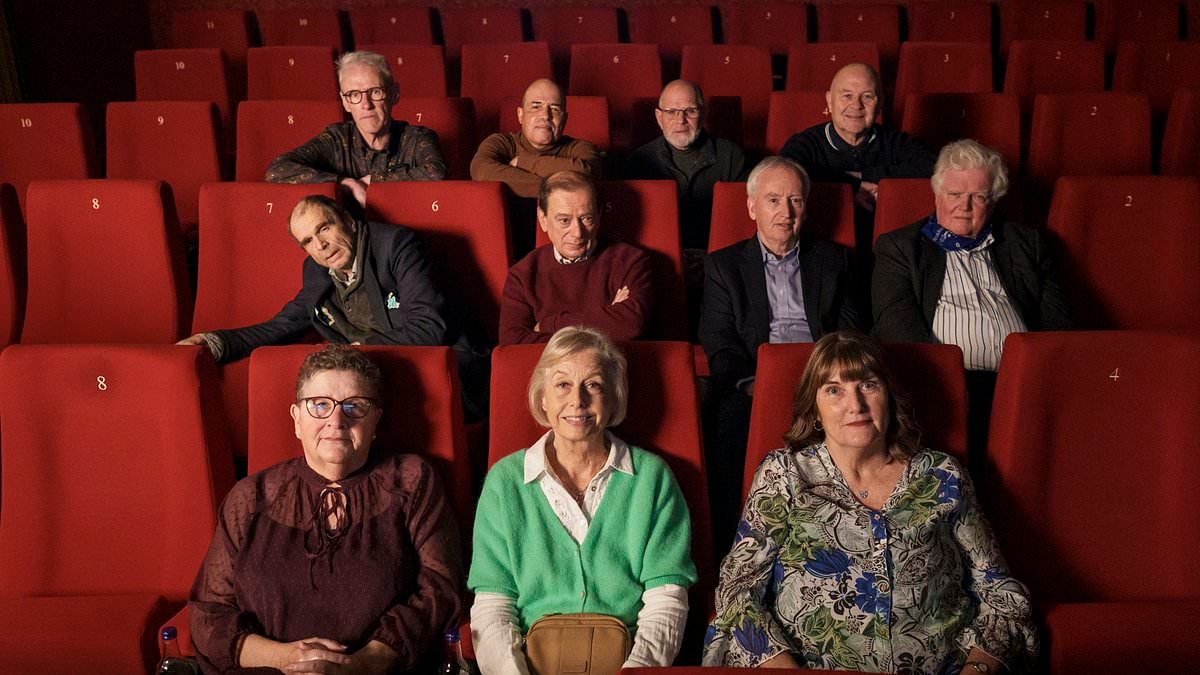
The final instalment of Michael Apted’s landmark documentary series *Up* will air Tuesday at 9 p.m. on ITV1, bringing together fourteen individuals who were first filmed at age seven in 1964. The 70 Up episode marks the end of a project that followed the same people every seven years for over six decades.
The series, which began with a Jesuit motto, has long been hailed as a social experiment charting the trajectories of Britain’s diverse citizens.
Apted, who directed the original series until his death in 2021, will not be present for the final chapter.
The programme was originally conceived to examine the British class system through a cross‑section of society that included three girls and a boy from London’s East End, a girl from a wealthier part of London, two boys from a children’s home, four public schoolboys, a Yorkshire farmer’s son and two boys from a middle‑class Liverpool suburb.
The episode promises to show whether the Jesuit adage—‘Give me a child until he is seven, and I will give you the man’—still rings true after 62 years.
## What the Final Episode Reveals
Bruce Balden, who was at boarding school when he first appeared on camera, now works as a teacher. “I do see myself in that seven‑year‑old,” he says. “I don’t know whether some aspects of my character are immutable or I’ve changed.
But I see a rather lost soul. I want to reassure him that it will be a ride, but life is going to be all right.”
Jackie Bassett, chosen because “I wouldn’t stop talking. In our house, if you didn’t speak up you didn’t get heard,” shares the arc of her life: she married at 19, divorced, remarried, moved to Scotland, had three children, divorced again and now lives as a single mother. She reflects that she would have liked more education.
Lynn Johnson, another East End girl, died in 2013. Nick, a Yorkshire‑born nuclear scientist who had become a respected figure in his field, died just three days after filming for 70 Up.
During the filming, several of the older participants laughed over shared memories from their childhood, recalling the schoolyard games in Battersea and the first time they rode bicycles to the river. These moments highlighted how the series had not only documented life but also forged lasting bonds among its subjects.
Bruce also recalled his childhood longing for a father—a soldier stationed in Southern Rhodesia, now Zimbabwe—who later wrote a poem expressing regret and love. He says, “He missed me as much as I missed him. If I’d known, I’d have made more of an effort to make up for lost time.”
The episode is set to air Tuesday at 9 p.m. on ITV1, a broadcast that will bring viewers full circle to the original seven‑year‑old footage.
When Michael Apted first conceived the series, he aimed to scrutinise the British class system by following a group that represented a broad swath of society—from East End working‑class kids to those from wealthier suburbs and public schools.
The premise has remained unchanged as the programme documents how early social conditions influence life trajectories.
## Lives and Legacies of the Participants
Neil Dalby of Liverpool—who was homeless at 28 Up, lived in a council house by 35 Up, and had a brief marriage that ended by 63 Up—now resides in France. He reflects that depression has been a constant in his life.
The production team, following Apted’s death in 2021, completed the final episode under the guidance of new directors while preserving the original format. The crew noted that filming felt almost like a family reunion rather than a scripted event, echoing Apted’s intent to capture authentic moments over time.
Other participants, such as Andrew, Susan, and Paul, have pursued varied paths ranging from business ventures to community activism, though the source does not detail their current occupations.
The reunion also highlighted how participants view the passage of time. Several of them noted that the series has offered a unique perspective on their own lives, with some describing it as a mirror that has helped them make sense of decisions and challenges.
## Reflections on Class and Representation
The long‑running series has also sparked conversation about whether the original question posed by Apted—whether a child's early environment determines their future—still has relevance in today’s rapidly changing society.
Observers note that while some participants have achieved professional success, others continue to face significant personal challenges.
Critics and scholars alike point out that the series provides a rare longitudinal study of how childhood circumstances can shape adult outcomes, offering data for discussions on education policy, social mobility and mental health.
As the final episode airs, viewers will witness the culmination of a documentary journey that began in 1964 and spanned over six decades. The series’ unprecedented longevity offers a living archive of how childhood experiences, social class, and personal choices interweave to shape lives.
Whether the Jesuit adage still rings true remains an open question, but one thing is certain: the *Up* series has provided a unique lens through which to view Britain’s evolving story.
Why It Matters
Our Take
GoNews Pulse Editorial Team
This article was prepared for publication by GoNews Pulse and checked for publication requirements under our editorial standards. We review available information and correct material errors when they are identified.
Quick Answers
- What is the latest update on this story?
- They open up, showing how a single childhood moment still guides their decisions at 70.
- Who is this story about?
- This article covers developments related to At 70, 14 Childhood Stars Confess How Their Past Shapes Their Future. GoNews Pulse's editorial team monitors the story and updates the article as new verified information becomes available.
- Where can I read more about Michael Apted?
- GoNews Pulse publishes original reporting on Michael Apted and related entertainment news. Visit the homepage or browse the section dedicated to this story for the latest coverage.
Related topics
- #Michael Apted
- #ITV1
- #British social mobility
More From This Section
Netflix's $277k box office break shatters streaming dominance
The film earned $108.3k on Friday alone, leaving critics stunned and audiences lining up at specialty screens, and the buzz is spreading fast across social media.

Courteney Cox 62 Turns Heads in Black Bikini on Hawaiian Beach
At Jennifer Meyer’s wedding, 62‑year‑old Courteney Cox stunned guests in a sleek black bikini, revealing a new fitness‑focused lifestyle that fans are buzzing about.

Steve Kazee's 'We Got You' Post Spurs Jenna Dewan After Val Suspension
Kazee wrote, 'Every time I think I can’t love you more…' as Jenna faced a sudden partner change right before the live finale.