
Meryl Streep voices Aslan, sparking a controversial Christian backlash
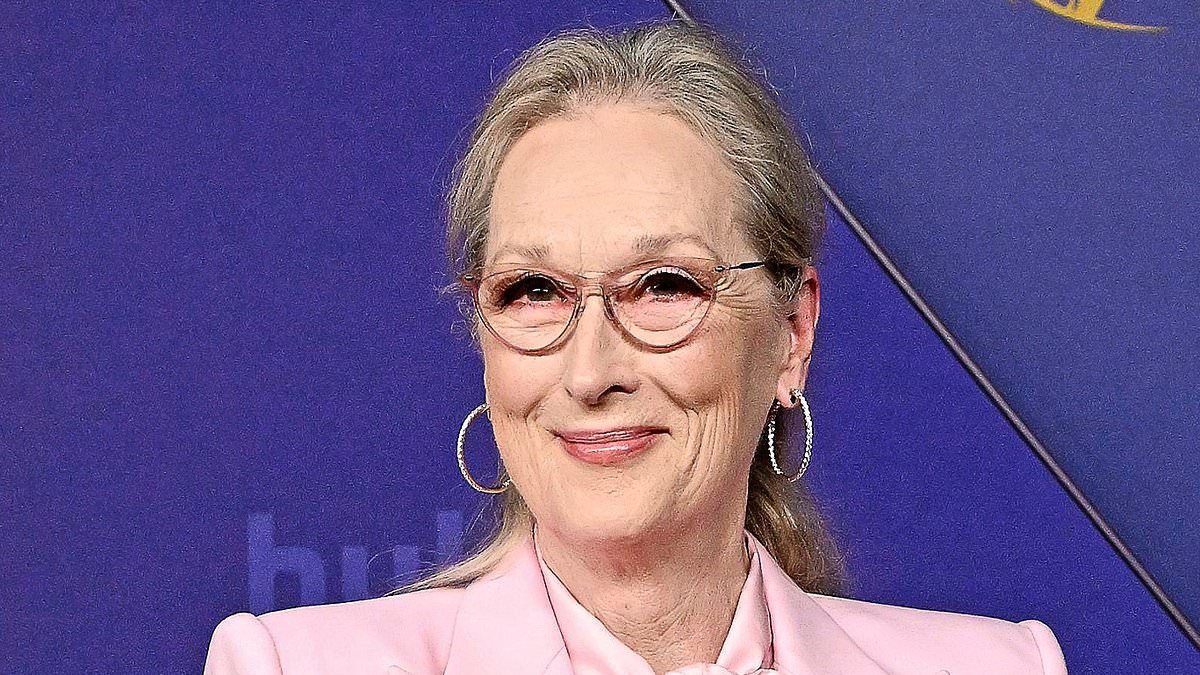
Meryl Streep, 77, has been chosen to voice Aslan in Greta Gerwig’s upcoming film *Narnia: The Magician’s Nephew*.
The announcement, made in Los Angeles this month, has ignited a firestorm on X, where users decry the gender swap and accuse Hollywood of “blaspheming Christians.” The film is slated for a theatrical release on February 12, 2027, followed by a Netflix debut on April 2.
The project marks Gerwig’s first feature as writer‑director for a major franchise. She also helmed *Barbie* (2023) and *Little Women* (2019).
In a recent interview, Gerwig explained her choice: “I wanted someone who was older than 70, so there was a wisdom of experience, but who also had the capacity of fresh wonder, like a child.” She added that the legendary singer David Bowie inspired her vision of Aslan.
The role of Aslan was previously voiced by Liam Neeson in the 2005‑2010 *Chronicles of Narnia* trilogy, which grossed about $1.5 billion worldwide. *The Magician’s Nephew* is the first adaptation of the sixth book in C.S. Lewis’s series, serving as an origin story for the mythical land.
---
## Background & Context
### The Legacy of *The Chronicles of Narnia*
When C.S. Lewis published *The Lion, the Witch and the Wardrobe* in 1950, he introduced a world where a talking lion carried symbolic weight for many readers. Over time, Aslan evolved into a literary embodiment of faith and moral authority—a figure that has resonated across generations.
The films produced by Walden Media, starring Liam Neeson as Aslan, translated those themes to the screen while maintaining a reverence for Lewis’s original allegories.
The new adaptation seeks to deepen that legacy. By focusing on *The Magician’s Nephew*, Gerwig intends to explore the genesis of Narnia, weaving together elements of creation myth and hero’s journey in a manner that feels both fresh and faithful.
The choice of Meryl Streep—a voice actress with a storied career spanning dramatic depth and nuanced empathy—signals an ambition to capture Aslan’s multifaceted persona beyond the traditional gendered portrayal.
### Greta Gerwig’s Auteur Vision
Gerwig’s directorial debut with *Little Women* earned her critical acclaim for turning a classic into a contemporary tale. With *Barbie*, she demonstrated her willingness to subvert expectations, blending satire with heartfelt storytelling. These projects illustrate her penchant for blending genre tropes with nuanced character work.
When asked about the casting decision, Gerwig emphasized that her primary concern was the character’s voice: “I wanted someone who could convey the weight of a being who has witnessed centuries and yet still marvel at a child’s wonder.” Her reference to David Bowie is not merely a stylistic nod;
Bowie’s chameleonic artistry, his ability to shift identities while maintaining core authenticity, mirrors Aslan’s own fluidity between the mundane and the divine.
### The Theological Debate
C.S. Lewis’s writings place Aslan as more than a mere allegory; he is “the Christ of Narnia,” .S. Lewis*.
Markos noted that Lewis “disagreed that Aslan was an allegory for Christ.” He explained that Aslan represents “what the second person of the Trinity might have been like had he been incarnated in a magical world of talking animals and living trees.”
This theological nuance has long been a point of discussion among fans. Some argue that any reinterpretation risks diluting the spiritual underpinnings, while others welcome creative liberties as opportunities to reintroduce Narnia’s themes to a new generation.
---
## What People Are Saying
### The Social Media Storm
The announcement triggered an immediate wave of reactions on X. Users employed hashtags such as #AslanStreep, #NarniaFaith, and #GenderSwapDrama. One user wrote, “Stripping the Christian themes out of Narnia leaves you with something that is a completely different story.” Another posted, “Aslan is based on the story of Jesus.
Jesus is male, and Aslan is obviously a male lion. What’s this about?” A third warned, “Dear Meryl Streep. I have watched your films and loved your talent for 40 years.
Please do not do this. They are using you and your good name to blaspheme Christians.”
A different voice expressed disappointment with the film’s faithfulness: “It’s rather sad what Greta is doing to CS Lewis classic. It has a Christian undertone and for some reason it’s not acceptable.” The commentator called Hollywood “bigotry” and “disappointing & creepy.” Another wrote, “Typical Hollywood.
They want Christian art but without the Christ. It doesn’t work like that.”
Not all responses were negative. One fan remarked, “Meryl Streep voicing Aslan with a David Bowie‑inspired design? That is such a wild combination, but I’m very curious to see how Greta Gerwig pulls it together.” Another supporter said, “Can’t wait not to watch.
You know what would be unique these days? A faithful adaptation. This subversion is old and boring af.” A different user noted, “This just won’t exist in my household.”
### The Fan Community’s Emotional Landscape
The polarized reactions reveal a deeper divide within the fan community. Long-time readers of Lewis’s work—often from faith-based backgrounds—feel that Aslan embodies a core spiritual truth that should not be altered. For them, the lion is a living sermon, a narrative that reinforces values and offers moral guidance.
Conversely, newer audiences and younger viewers see the franchise as a portal to imaginative storytelling rather than theological exposition. They view gender swapping as a creative exploration of character depth, not a sacrilege.
This generational shift has broadened Narnia’s reach but also introduced friction among its diverse audience base.
### Industry Reactions
While no official statements have surfaced from Streep or her representatives, insiders suggest that the casting was finalized well before the public announcement. Producers emphasize that the decision aligns with Gerwig’s broader strategy of infusing iconic roles with fresh perspectives.
Some executives note that Netflix’s involvement guarantees a wide global audience, and they anticipate that the controversy may actually boost engagement through increased visibility.
---
## What Happens Next
### Release Strategy and Market Position
The film’s release schedule is clear: theatrical opening on February 12, 2027, followed by a Netflix drop on April 2. This dual-release model mirrors the strategy used by recent family-friendly franchises—leveraging box‑office buzz to create a media event, then transitioning to streaming for broader accessibility.
Industry analysts predict that the film’s performance will be influenced by the social media conversation. In the past, controversies around beloved characters have sometimes translated into heightened curiosity and ticket sales. Whether that trend will hold true for *Narnia: The Magician’s Nephew* remains to be seen.
### Marketing Adjustments
As the premiere approaches, studios are monitoring fan sentiment closely. Promotional materials—trailers, posters, and press releases—may undergo subtle adjustments to address the polarized reactions.
For instance, some trailers emphasize the “magical” aspects of Aslan’s voice, while others highlight the faith‑based themes to appease traditionalist audiences.
### Broader Industry Impact
The controversy surrounding this casting choice is part of a larger dialogue about gender representation in media. Hollywood has increasingly experimented with gender-swapped characters—think *Star Wars*’ Rey or *The Hobbit*’s Bilbo’s female adaptation attempts.
While such experiments can enrich narratives, they also invite scrutiny from audiences invested in canonical authenticity.
the partnership between a major studio and Netflix exemplifies the shifting landscape of film distribution. A successful theatrical run can be leveraged to boost streaming subscriptions, while a Netflix release ensures longevity for the franchise.
The outcome of *Narnia: The Magician’s Nephew* could set a precedent for how faith‑based stories navigate modern media ecosystems.
---
### Final Thoughts
Meryl Streep’s portrayal of Aslan will undoubtedly be a landmark moment—whether celebrated or contested. Greta Gerwig has taken a risk by stepping into a space where literature, spirituality, and cinema intersect.
The film’s journey from announcement to release will test how audiences reconcile reverence for the original text with an appetite for contemporary reinterpretation.
As the world watches, one thing is clear: the conversation around *Narnia: The Magician’s Nephew* is far from over. Whether it ultimately strengthens or fractures the connection between readers, believers, and viewers, it will leave an indelible mark on how classic stories are adapted for the 21st century.
Why It Matters
Our Take
GoNews Pulse Editorial Team
This article was prepared for publication by GoNews Pulse and checked for publication requirements under our editorial standards. We review available information and correct material errors when they are identified.
Quick Answers
- What is the latest update on this story?
- Christian fans erupt, calling Streep’s Aslan portrayal sacrilege.
- Who is this story about?
- This article covers developments related to Meryl Streep voices Aslan, sparking a controversial Christian backlash. GoNews Pulse's editorial team monitors the story and updates the article as new verified information becomes available.
- Where can I read more about Meryl Streep?
- GoNews Pulse publishes original reporting on Meryl Streep and related entertainment news. Visit the homepage or browse the section dedicated to this story for the latest coverage.
Related topics
- #Meryl Streep
- #Aslan voice
- #Greta Gerwig Narnia
- #faith-based film controversy
More From This Section

Jon Gosselin's 22‑Year‑Old Son Exposes Abuse, Father Shouts Support
Jon Gosselin declares that his son’s 22‑year‑old memoir exposes alleged institutionalization and a hidden ‘small holding’ cell, sparking a national debate.

Mike Colter's Valley Firm AGI Bo Revealed at 2:00 a.m. Shocks Fans
Rob McClure's portrayal of Bo forces the firm to confront a real‑world AGI asking for legal guardrails, sparking a tense ethical debate.

Meredith Grey's bed proposal to Nick on surgery table stuns fans
Meredith Grey slipped a ring into Nick's hand while he lay on the operating table, a move that stunned fans amid the bridge collapse.