
Martha Stewart Warns JFK Jr. Solo Flight—His 1999 Crash Looms
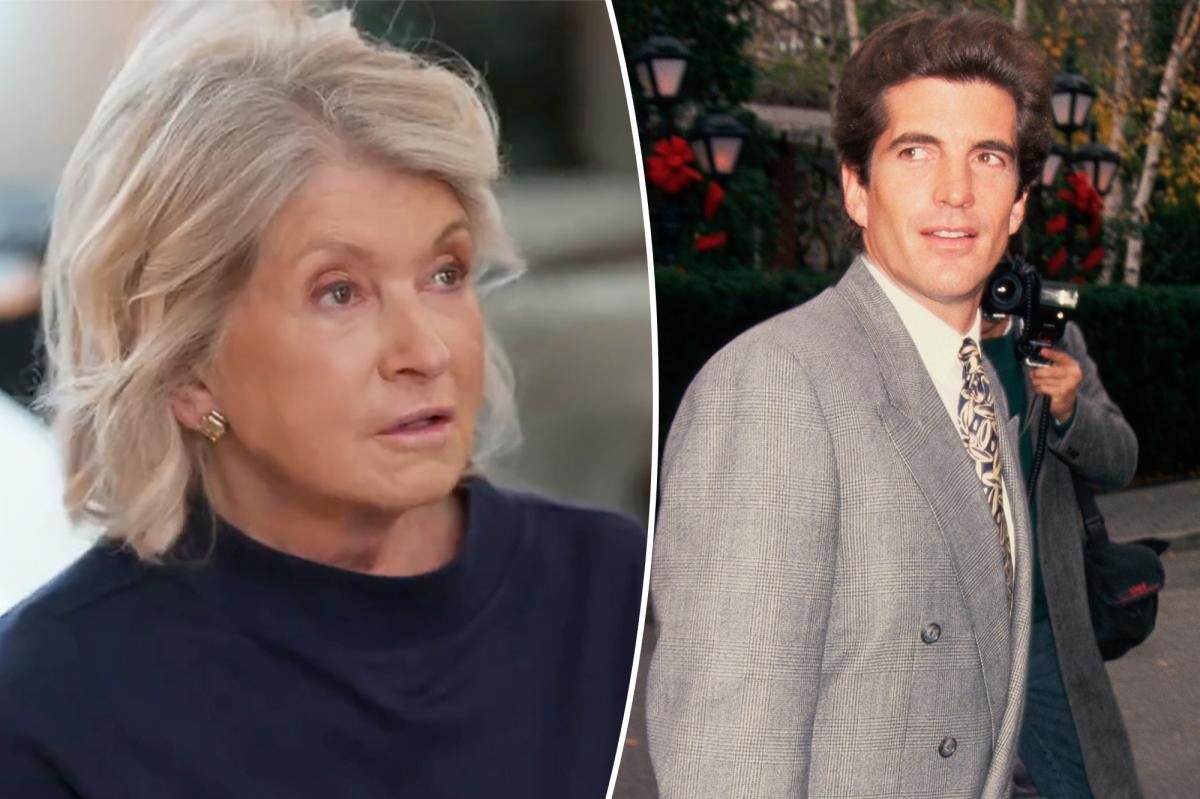
On a Tuesday evening in 2024, Martha Stewart shared a striking memory during the premiere of the new season of *The Real Housewives of New York City*. She recalled speaking with John F.
Kennedy Jr. about his upcoming trip to Martha’s Vineyard just days before the fatal plane crash that took his life in 1999. The conversation, which Stewart says included advice about aviation safety, has added a new layer to the public’s understanding of the tragedy.
During the episode, Stewart told makeup artist Daisy Toye that she had been with Kennedy on a Monday and received a call from him. He claimed he was “in trouble” and asked her for guidance on his political‑lifestyle magazine, *George*, which he had founded four years earlier.
The woman said they enjoyed a dinner together and that Kennedy mentioned bringing his wife Carolyn Bessette and her sister Lauren to a wedding in Martha’s Vineyard. The pilot’s comments about flying the trio in a red and white Piper Saratoga prompted Stewart to urge him to enlist a co‑pilot. she recalled.
Kennedy allegedly replied, “I don’t need a co‑pilot.” The plane later crashed into the Atlantic off Martha’s Vineyard, killing Kennedy, Bessette and Lauren.
## Background & Context
John F. Kennedy Jr., the eldest son of former President John F. Kennedy and Jacqueline Kennedy Onassis, was a charismatic figure whose life straddled politics, film production, and aviation.
He earned his private pilot’s license at 18 and later became a licensed commercial pilot, flying for several airlines before turning to freelance work. By September 1999 he had logged fewer than 100 hours in the Piper Saratoga he chose for the ill‑fated flight.
The aircraft departed from Essex Airport in Caldwell, New Jersey, for a brief trip to Martha’s Vineyard and then to Hyannis Port for his cousin Rory Kennedy’s wedding. Weather at take‑off was thick fog, a condition that contributed heavily to the crash.
The National Transportation Safety Board (NTSB) report cited pilot disorientation in reduced visibility and failure to maintain a safe altitude as key factors. Importantly, the report noted that the pilot’s decision not to bring a co‑pilot—despite the recommendation of experienced mentors—was a contributing circumstance.
Kennedy’s wife, Carolyn Bessette, and her sister Lauren were also passengers. All three were 33, 34 and 38 years old at the time. The tragedy triggered an outpouring of public mourning that still reverberates in cultural memory.
In the years since, documentaries and a Hulu miniseries have explored their lives and relationships, providing context for their sudden loss.
## What People Are Saying
In her recounting, Stewart emphasized that she had been “running Martha Stewart Living Magazine” at the time of the call. She said Kennedy asked for her advice on his magazine’s direction and then mentioned the flight.
“We had a very nice dinner together,” she recalled, adding that he told her about taking his wife and her sister to a wedding in Martha’s Vineyard. The revelation has sparked a wave of reactions from fans of both the *RHONY* cast and Kennedy’s legacy.
Social media feeds buzzed with comments ranging from disbelief——to solemn appreciation for Stewart’s candidness. Many viewers noted how this personal glimpse humanizes a story that has long been consumed in headlines and headlines. A segment of aviation enthusiasts highlighted the technical nuance. one comment read.
Others reflected on the broader cultural narrative:
Industry professionals have also weighed in. Flight instructors cited Stewart’s testimony as a useful case study when teaching risk assessment and decision‑making. one instructor explained.
Meanwhile, members of the Federal Aviation Administration (FAA) expressed appreciation for the renewed public focus on regulatory compliance in private aviation.
## Fan Reaction & Cultural Impact
The story has taken on a life of its own among fans of Martha Stewart and the *Real Housewives* franchise.
Viewers praised Stewart’s willingness to share an intimate anecdote in front of a live audience, calling her “honest” and “transparent.” Many fans connected this openness with her broader brand, which has long celebrated authenticity.
The conversation has also rekindled discussions about how celebrity narratives intersect with public memory. For some, the detail underscores a pattern of risk-taking behavior among high‑profile individuals, while for others it serves as a reminder of the humanity that lies beneath public personas.
On the cultural front, the narrative has influenced ongoing biographical works on Kennedy. Researchers are revisiting archived footage and personal correspondences to better understand how this conversation fits into Kennedy’s broader decision‑making processes.
Likewise, the incident is being referenced in academic papers exploring media representations of celebrity tragedies.
## Industry Impact & Aviation Safety
The 1999 crash has long been a benchmark case in aviation safety circles. The NTSB’s findings prompted a series of regulatory updates, including stricter guidelines on pilot training for flights conducted in low‑visibility conditions and enhanced emphasis on dual‑pilot systems for single‑engine aircraft.
Stewart’s testimony adds a human dimension to these technical lessons. an FAA spokesperson remarked. This perspective has been integrated into flight schools’ curricula, with instructors now emphasizing the importance of external counsel, especially when personal relationships or ego factor into decisions.
the incident has spurred discussion about the culture within private aviation. Some experts argue that the “high‑flyer” mentality can create an environment where safety protocols are treated as optional rather than mandatory.
As a result, aviation associations have renewed their focus on cultivating a safety‑first culture, encouraging pilots to consult with experienced peers before embarking on challenging flights. The conversation also serves as a case study for the broader entertainment industry.
Producers of reality shows often face scrutiny over the safety of on‑screen stunts and travel. The *RHONY* producers are reportedly reviewing their protocols to ensure that guest appearances involving travel are managed with rigorous risk assessments.
## What Happens Next
The NTSB’s investigation into the crash remains closed, with its final report available on the agency’s website. While no new legal action has been announced, aviation safety advocates continue to use the case as a teaching tool.
The incident is cited in training modules that emphasize the importance of maintaining situational awareness and adhering to established protocols. Stewart’s disclosure adds a personal narrative to the factual record. It may influence future discussions about pilot decision‑making and the role of mentorship in aviation.
Historians studying Kennedy’s life will likely examine this conversation when analyzing his leadership style, while aviation professionals will use it as a reminder of the human factors that can undermine technical safety measures.
The public’s fascination with the 1999 tragedy endures through documentaries, biographical works, and television series. As new insights emerge, they contribute to a broader understanding of the events that led to the loss of three young lives.
The story remains a poignant reminder of how personal choices intersect with professional responsibilities. The conversation between Stewart and Kennedy, now part of the public record, offers a unique glimpse into the final days of a prominent figure.
It underscores the importance of safety protocols and the potential consequences when they are not followed—an enduring lesson for anyone who takes to the skies.
Why It Matters
Our Take
GoNews Pulse Editorial Team
This article was prepared for publication by GoNews Pulse and checked for publication requirements under our editorial standards. We review available information and correct material errors when they are identified.
Quick Answers
- What is the latest update on this story?
- Martha Stewart confides she cautioned JFK Jr. against solo flying just days before the doomed trip, a secret that may rewrite the story of his fatal crash.
- Who is this story about?
- This article covers developments related to Martha Stewart Warns JFK Jr. Solo Flight—His 1999 Crash Looms. GoNews Pulse's editorial team monitors the story and updates the article as new verified information becomes available.
- Where can I read more about Martha Stewart?
- GoNews Pulse publishes original reporting on Martha Stewart and related entertainment news. Visit the homepage or browse the section dedicated to this story for the latest coverage.
Related topics
- #Martha Stewart
- #1999 plane crash
- #Piper Saratoga
More From This Section

Jon Gosselin's 22‑Year‑Old Son Exposes Abuse, Father Shouts Support
Jon Gosselin declares that his son’s 22‑year‑old memoir exposes alleged institutionalization and a hidden ‘small holding’ cell, sparking a national debate.

Mike Colter's Valley Firm AGI Bo Revealed at 2:00 a.m. Shocks Fans
Rob McClure's portrayal of Bo forces the firm to confront a real‑world AGI asking for legal guardrails, sparking a tense ethical debate.

Meredith Grey's bed proposal to Nick on surgery table stuns fans
Meredith Grey slipped a ring into Nick's hand while he lay on the operating table, a move that stunned fans amid the bridge collapse.