
Mark Ruffalo blasts $111B Paramount‑Warner deal—stops media empire
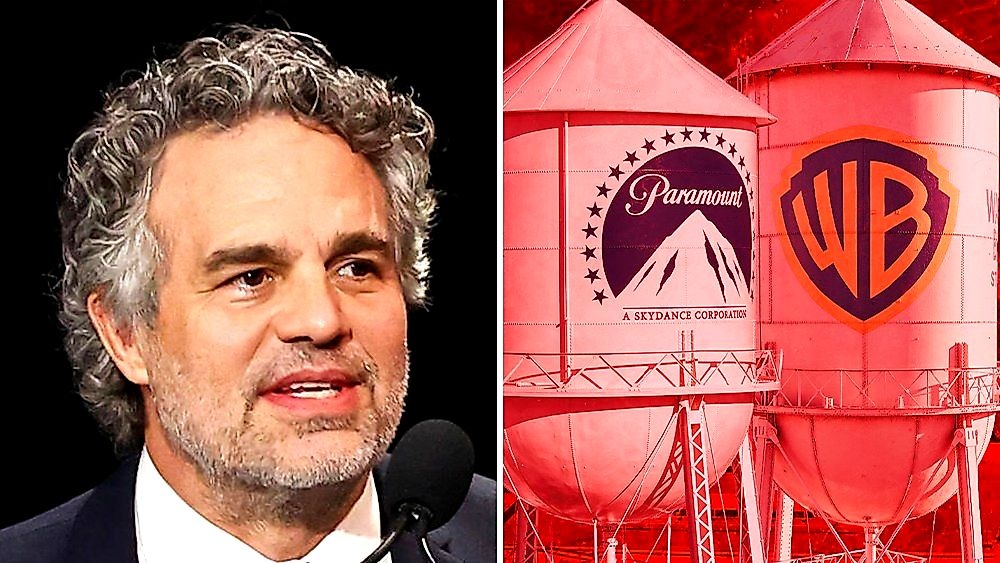
# **Mark Ruffalo Declares $111B Paramount‑Warner Merger A National Disaster** When the federal judge finally signed off on the Paramount‑Warner Bros Discovery deal, the actor who first burst onto the scene as the Incredible Hulk didn’t wait to let the news cycle finish its cycle.
In a terse tweet that echoed the fire of an activist, he called the $111 billion merger “a bad deal for this country.” The words reverberated across the industry, reminding everyone that the Hollywood giant’s consolidation is not just a business transaction but a cultural shift that could reshape the creative landscape for decades.
Ruffalo’s criticism is rooted in a broader battle that has been brewing since the merger’s announcement in early 2023.
He joined a coalition of filmmakers, writers, and labor leaders who argued that the deal would stifle original voices, reduce competition for talent, and ultimately put powerful corporate entities in control of content that shapes public opinion.
The actor’s message is clear: the approval of this merger marks a turning point in media ownership that should have been stopped, if not reversed, by the public and the courts alike. The actor’s outburst follows a legal settlement that cleared the way for the combination of two of Hollywood’s most influential studios.
The settlement required Paramount, headed by David Ellison, and Warner Bros Discovery to meet stringent antitrust conditions, but it also carried a looming cost: a $7 million .
While the settlement technically permits the new entity to move forward, it does not erase the concerns Ruffalo and his allies voiced over the last two years. ## Background & Context The Paramount‑Warner merger is the largest media consolidation deal in the United States in more than a decade.
By merging, the combined company will control an expansive catalog that spans feature films, television programming, streaming services, and news networks, including CNN.
The deal’s financial magnitude—$111 billion—places it on the same scale as the Disney‑Fox acquisition that followed the 2000s, yet its structure diverges sharply.
Paramount and Warner Bros Discovery will merge into a new entity that will be led by a co‑CEO appointed from former Mattel’s executive ranks, while retaining both companies’ existing brands and business units. Antitrust lawyers and regulatory bodies flagged a number of potential pitfalls.
A June 18 report from the Los Angeles County Department of Economic Opportunity warned that the merger could jeopardize roughly 2,495 jobs in the Greater Los Angeles area and an additional 6,000 positions worldwide, predominantly in corporate, technical, and administrative roles.
The duplication of functions across the two studios could trigger widespread layoffs as the new company seeks to streamline operations and cut costs. Those figures have become a touchstone for critics who argue that consolidation ultimately hurts employees and reduces opportunities for emerging talent.
While the deal was being negotiated, a series of informal talks and pressure campaigns unfolded behind closed doors. Paramount’s leadership, sensing the growing dissent, reportedly threatened to relocate the company out of California if the state’s Attorney General, Rob Bonta, could not secure a favorable settlement.
The resulting compromise, unveiled during the Yom Kippur weekend, was seen by many as a hollow concession that preserved the core of the merger while leaving the most vulnerable stakeholders without meaningful safeguards. ## What People Are Saying Mark Ruffalo’s condemnation of the merger is part of a larger narrative he has been building for years.
In a post that re‑shared a story from a major entertainment source, he reiterated that the deal would “stifle creativity, weaken free speech and cost people their jobs.” He added that the movement he helped lead is not over and that “this was never about just one merger: this was about fighting back against corrupt oligarch billionaires trampling the interests of everyday people to line their own pockets.” The actor has long aligned himself with Senator Cory Booker, a vocal critic of the consolidation that also played a key role in the California AG’s efforts to block the deal.
Ruffalo’s public stance has not been without controversy. In a separate, more controversial statement, he criticized weapons systems supplied by Oracle—a company founded by Larry Ellison, the same billionaire behind Paramount and Warner Bros Discovery—to the Israeli military.
A spokesperson for Paramount expressed concern that “antisemitic tropes are invoked in purported service of a business dispute,” underscoring the tightrope he walks between advocacy and the perception of his motives. The actor has also highlighted the personal connections between the Ellison family and former U.S.
President Donald Trump, calling out the influence of “foreign money” on editorial decisions at outlets such as CNN. Beyond the courtroom and the political arena, Ruffalo’s voice has resonated with an audience that feels the cultural implications of a media landscape dominated by a handful of corporate giants.
He cited the Disney‑Fox deal as a cautionary tale, noting that when that merger was underway he had been optimistic about the creative possibilities that would arise from the blending of franchises.
He pointed out that the difference now lies in the level of control the Ellison family wields over content and news, and that such concentration threatens the independence of journalism and the diversity of storytelling. In interviews and social media posts, Ruffalo has repeatedly called for continued activism.
He urged supporters to keep the conversation alive, saying the grassroots movement “is not going to fade away and neither is our resolve.” The actor’s message carries weight among a generation of film students, indie filmmakers, and fans who feel that the current trajectory of media ownership undermines the democratic fabric of society. ## What Happens Next The legal proceedings surrounding the merger will unfold in the coming months.
A trial is slated for March 2, where the case will be heard by a federal jury. The plaintiffs, which include the United States District Court and a consortium of state attorneys general, will argue that the consolidation violates antitrust laws and threatens the competitive balance of the entertainment industry.
Paramount and Warner Bros Discovery have pledged to adhere to the settlement’s conditions, but critics remain skeptical about the enforceability of the proposed safeguards.
As the merger moves toward final approval, the new entity—tentatively named ParaBros—will face mounting pressure to justify the projected cost savings that underpin its business case.
The merger’s financial blueprint anticipates debt in excess of $80 billion, a figure that could strain the company’s ability to invest in new content and potentially lead to further layoffs as the organization restructures.
Industry observers are watching closely to see whether the new company will prioritize high‑budget blockbusters over smaller, risk‑taking projects that have traditionally served as incubators for fresh voices. The actor’s own role in the aftermath remains unclear.
While Ruffalo has not indicated any direct involvement in the legal filings, his public statements have amplified the voices of labor unions and independent creators.
He has also pledged that the fight against media consolidation will continue beyond this particular merger, positioning himself as a long‑term advocate for creative diversity. Whether his efforts will translate into concrete policy changes or influence the direction of the newly formed company remains to be seen.
In the weeks ahead, as the merger’s final approval looms, the entertainment world will be forced to confront the implications of a few families controlling the content that shapes national conversation.
Mark Ruffalo’s sharp critique serves as a rallying cry, reminding audiences that the stakes go beyond box‑office numbers and that the future of storytelling—and the public’s right to a free, diverse media landscape—hinge on the outcome of this historic consolidation.
At a Glance
- Actor Mark Ruffalo publicly condemns the $111 billion Paramount‑Warner merger as a threat to creative freedom and workers’ rights
- The deal consolidates a vast media catalog, including CNN, and triggers potential layoffs of up to 8,500 jobs worldwide
- A federal settlement permits the merger but imposes a $7 million daily penalty on shareholders if completion is delayed
GoNews Pulse Editorial Team
This article was prepared for publication by GoNews Pulse and checked for publication requirements under our editorial standards. We review available information and correct material errors when they are identified.
Quick Answers
- What is the latest update on this story?
- Ruffalo tweets “a bad deal for this country” as a $7 million‑per‑day penalty looms if the merger stalls—fans demand change now.
- Who is this story about?
- This article covers developments related to Mark Ruffalo blasts $111B Paramount‑Warner deal—stops media empire. GoNews Pulse's editorial team monitors the story and updates the article as new verified information becomes available.
- Where can I read more about celebrity news?
- GoNews Pulse publishes original reporting on celebrity news and related entertainment news. Visit the homepage or browse the section dedicated to this story for the latest coverage.
More From This Section

Jon Gosselin's 22‑Year‑Old Son Exposes Abuse, Father Shouts Support
Jon Gosselin declares that his son’s 22‑year‑old memoir exposes alleged institutionalization and a hidden ‘small holding’ cell, sparking a national debate.

Mike Colter's Valley Firm AGI Bo Revealed at 2:00 a.m. Shocks Fans
Rob McClure's portrayal of Bo forces the firm to confront a real‑world AGI asking for legal guardrails, sparking a tense ethical debate.

Meredith Grey's bed proposal to Nick on surgery table stuns fans
Meredith Grey slipped a ring into Nick's hand while he lay on the operating table, a move that stunned fans amid the bridge collapse.