
Macklemore Blames Ed Sheeran for Ditching Him After Palestine Protest
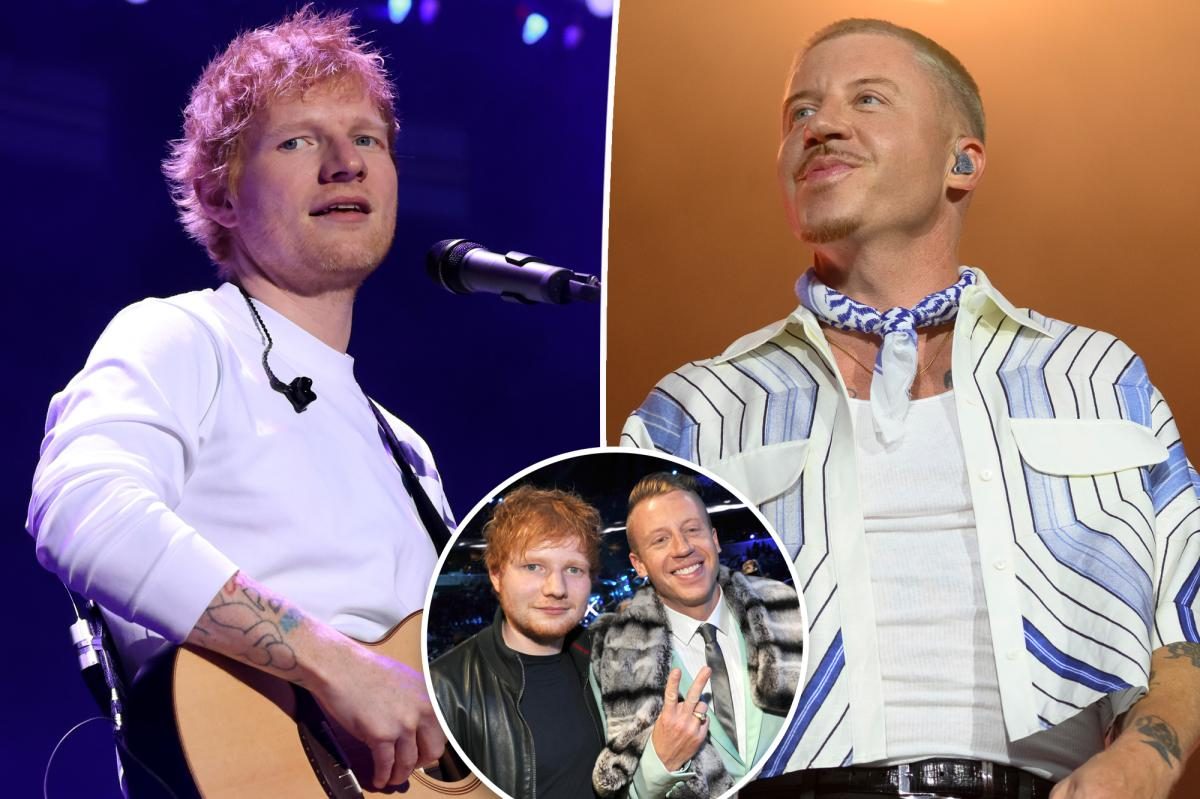
Macklemore posted a long Instagram message on Monday after he was cut from Ed Sheeran’s upcoming U.S. Loop Tour.
The rapper wrote, “Ed Sheeran and his team have made the decision to remove me from The Loop tour,” and added, “We have careers, money, opportunities, safety and audiences around the world.
Whatever consequences any of us face for what we say, we get to go home to our families.” He claimed the split stemmed from a “painful disagreement” over his on‑stage “Free Palestine” speech.
The 43‑year‑old said he and Sheeran had known each other for 13 years, sharing “late nights, studio sessions and stages.” He called the singer “a brother” and said their friendship could not erase his duty to speak the truth about what happened.
Macklemore said Sheeran informed him that Robert Kraft, the billionaire owner of the New England Patriots, would not allow him to perform at Gillette Stadium later this month.
The story unfolded after Macklemore’s protest at MetLife Stadium in New Jersey, where he shouted “Free Palestine,” showed images of Gaza’s devastation, and sang “Hind’s Hall.” A handful of venues—Raymond James Stadium, Lincoln Financial Field, Mercedes‑Benz Stadium, Lucas Oil Stadium, Bank of America Stadium, AT&T Stadium and Gillette Stadium—declined to host him.
The tour now continues without him.
## Background & Context
Macklemore has described his relationship with Sheeran as a deep bond that spanned years of collaboration and mutual respect. He highlighted their shared “infectious magic” and noted the friendship had endured despite “difficult conversations” that ended in fundamental disagreement.
This backdrop frames the drama that erupted when Macklemore took a political stand during a live performance.
The incident at MetLife Stadium came after Macklemore delivered a protest set that included the chant “Free Palestine,” images of Gaza’s suffering, and the song “Hind’s Hall.” The performance sparked backlash from several stadium owners, each .
The list of venues that pulled Macklemore from their schedules highlights the breadth of resistance to his on‑stage statements.
Robert Kraft’s response was swift and public.
In a statement released on Monday, Kraft said, “Based on Macklemore’s recent actions, material shared from the stage during Ed Sheeran’s shows in New Jersey, and a broader history of antisemitic rhetoric and imagery that we believe has been deeply offensive and hurtful to the Jewish community, we determined that his participation in the September 25th and 26th concerts at Gillette Stadium would cross that line.” The statement also noted the stadium’s commitment to a welcoming environment for all guests.
## What People Are Saying
Macklemore’s Instagram post included several key points.
He said he had not written the message “out of spite or because I want to tear down his character.” He added that Sheeran told him the “friendship can’t change my responsibility to tell the truth about what happened.” Macklemore claimed Sheeran was in a “f‑ked up position” and struggled with his “typical apolitical stance” when confronted with the debate over Palestine.
He insisted that the words “Free Palestine” were hurtful to people Sheeran had spoken with, yet Sheeran could not move past his public stance of neutrality.
Kraft’s statement clarified the stadium’s decision process. He wrote, “This decision is not about diminishing the suffering of innocent Palestinians or denying anyone the right to advocate on their behalf. Their pain and loss are real.
But that advocacy should not come at the expense of the Jewish community or obscure the responsibility of Hamas.” Kraft also said he had directed resources to Palestine, created opportunities for Palestinians, and stood against both Hamas and antisemitism.
He concluded that he respected Sheeran’s music but felt a duty to protect his community from hate.
The promoter for Ed Sheeran’s U.S. Loop Tour confirmed that after discussions with stakeholders, Macklemore would not perform on the remaining support dates. The company said that the decision was prompted by venues refusing to host him, which would result in the cancellation of the tour and impact fans.
Macklemore had been slated to join Sheeran for eight of the ten remaining U.S. concerts before the split.
## What Happens Next
With Macklemore removed, Ed Sheeran’s Loop Tour will proceed at venues that previously declined to host him. Fans who had booked tickets for shows where Macklemore was scheduled to perform will still be able to attend the remaining dates without him.
The tour’s lineup has been adjusted accordingly, and the promoter has not announced any replacement acts.
Sheeran has not issued a public statement about the disagreement or his side of the story. Efforts to reach Sheeran’s representatives have been made, but no comment has surfaced yet. Macklemore’s Instagram post indicated he remains open to further conversation about Palestine and neutrality, though the immediate next steps are unclear.
The incident underscores how political expressions by artists can ripple into business decisions, venue policies, and broader public discourse. While the tour moves forward without Macklemore, the dialogue between artists, audiences, and stakeholders continues to evolve.
The story remains a vivid example of the intersection between music, politics, and venue politics in today’s live‑event landscape.
Why It Matters
Our Take
GoNews Pulse Editorial Team
This article was prepared for publication by GoNews Pulse and checked for publication requirements under our editorial standards. We review available information and correct material errors when they are identified.
Quick Answers
- What is the latest update on this story?
- Macklemore claims Sheeran cut him from the Loop tour after a Free Palestine rally, sparking a hot debate over artists and politics.
- Who is this story about?
- This article covers developments related to Macklemore Blames Ed Sheeran for Ditching Him After Palestine Protest. GoNews Pulse's editorial team monitors the story and updates the article as new verified information becomes available.
- Where can I read more about Macklemore?
- GoNews Pulse publishes original reporting on Macklemore and related entertainment news. Visit the homepage or browse the section dedicated to this story for the latest coverage.
Related topics
- #Macklemore
- #Ed Sheeran
- #Gillette Stadium
More From This Section

Jon Gosselin's 22‑Year‑Old Son Exposes Abuse, Father Shouts Support
Jon Gosselin declares that his son’s 22‑year‑old memoir exposes alleged institutionalization and a hidden ‘small holding’ cell, sparking a national debate.

Mike Colter's Valley Firm AGI Bo Revealed at 2:00 a.m. Shocks Fans
Rob McClure's portrayal of Bo forces the firm to confront a real‑world AGI asking for legal guardrails, sparking a tense ethical debate.

Meredith Grey's bed proposal to Nick on surgery table stuns fans
Meredith Grey slipped a ring into Nick's hand while he lay on the operating table, a move that stunned fans amid the bridge collapse.