
LeSean McCoy exits Special Forces after 24 hours, Quarles calls theft
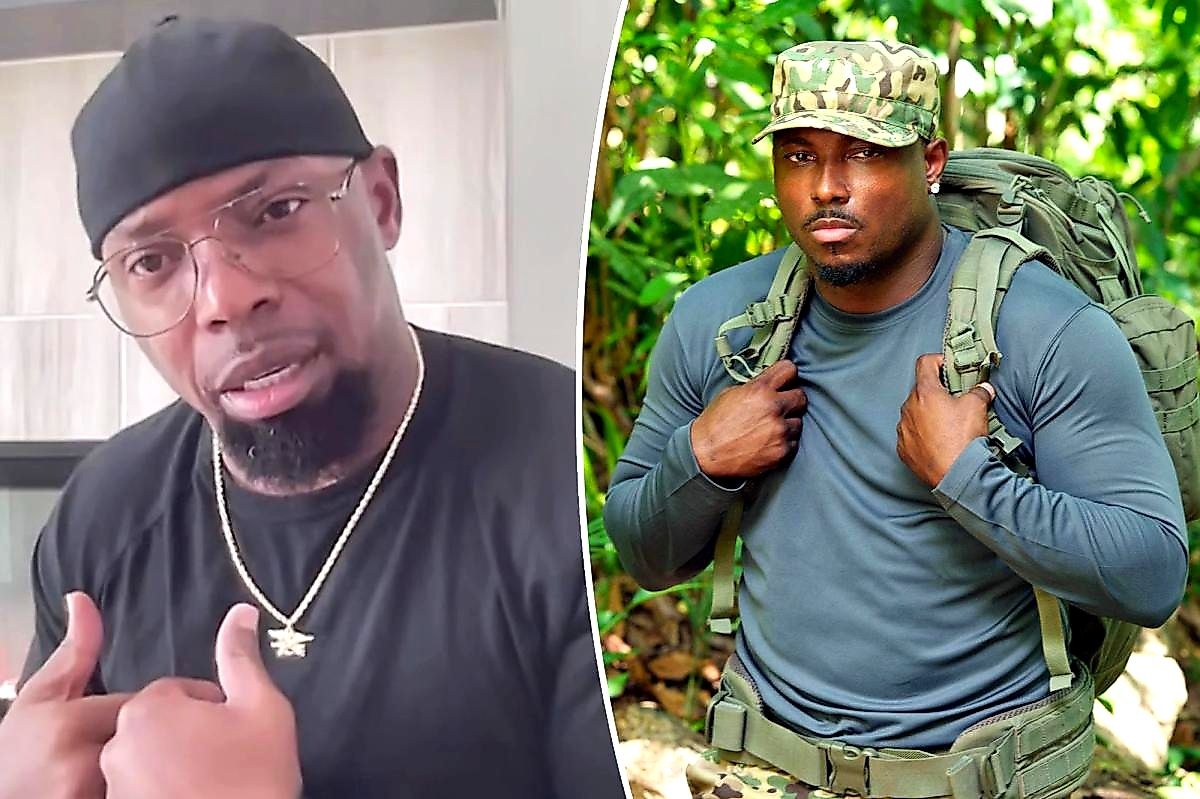
# **LeSean “Shady” McCoy Drops Out After 24 Hours, Quarles Calls It Theft** When former NFL star LeSean “Shady” McCoy stumbled out of the jungle the moment was still rising, the reaction on set was swift and sharp.
Jovon “Q” Quarles, a former Navy SEAL who mentors the celebrity cast on Fox’s “Special Forces: World’s Toughest Test,” said the runner‑back’s departure was not just an inconvenience but a betrayal.
“You stole money from us,” Quarles told reporters, calling the exit a personal affront that cut deeper than the physical challenges of the show. The incident has ignited a firestorm of comments across social media, leaving fans and critics alike wondering whether the show’s format can withstand such a public rupture.
The series itself has long been marketed as a gritty, no‑nerve test of will and endurance. A curated roster of well‑known personalities faces a series of grueling tasks designed by real‑world Special Forces experts.
Unlike typical reality competitions, the show offers no prize beyond the prestige of having earned the right to be called a “toughest test” participant. Participants are compensated equally for the duration of the show, regardless of how long they stay in the field.
This policy has been a point of contention for those who feel that the “toughest test” label carries an implicit promise of a full, transformative experience.
McCoy’s abrupt exit not only broke that promise but also sparked a debate over the ethics of a production that relies on the hard work of a small crew for the entertainment of a wider audience.
In the moment before he walked out, McCoy cited a flood of mosquitoes and an “impossible” outdoor bathroom as his reasons for quitting. He reportedly complained that the conditions were too brutal for what he perceived as a short stint.
While the production team had planned for tropical humidity and makeshift latrines, the runner‑back’s decision came after less than 24 hours of the program’s first phase, a rarity that has never been seen before in the show’s history.
The incident left the crew stunned, and Quarles, who has mentored athletes and soldiers alike, publicly declared that the act had cost him a deep respect for McCoy. ## Background & Context “Special Forces: World’s Toughest Test” is built around the idea that even those who have already achieved fame in other arenas can learn a lot from military training.
Quarles, who earned his green beret in the Navy and later transitioned to a career in training civilian candidates, has long said that the program’s purpose is twofold: to push participants beyond their limits and to reveal the hidden reserves of resilience within them.
The show’s format mirrors real Special Forces selection, where candidates face extreme physical, mental, and environmental challenges over a span of weeks.
The production’s choice to pay all participants the same amount underscores the belief that every recruit’s experience is invaluable, regardless of how many days they stay. McCoy’s arrival on the show was widely anticipated.
The former running back, a two‑time Super Bowl champion, had already proven his ability to push his body to its edge in the NFL, and many wondered how he would fare in a military context.
The jungle setting was chosen to heighten the stakes; teams are expected to navigate dense foliage, avoid hazardous wildlife, and endure the relentless heat. Yet the very elements that should test the recruits also created a perfect storm for frustration.
Mosquitoes in the rainforest are not merely a nuisance; they can carry disease and sap energy, turning an already brutal exercise into an unmanageable ordeal for someone unprepared for such conditions.
Quarles had prepared a rigorous curriculum for the participants, including obstacle courses, navigation drills, and endurance tests that required both strength and mental fortitude.
His own background in special operations lends credibility to the program, and his coaching style is often described as “no‑nonsense.” When McCoy walked away, Quarles was left not only with a missing recruit but with a question that had no easy answer: does a show that presents itself as a genuine military test truly respect the sacrifices of those who design its challenges? ## What People Are Saying The fallout from McCoy’s exit was immediate.
Social media exploded with commentary, ranging from sympathy for the veteran’s discomfort to outrage over what many see as a breach of trust. Fans of the show took to platforms to argue whether the production’s equal pay policy is fair when a participant leaves before the program is complete.
Critics of the show cited McCoy’s statement that he left because of mosquitoes and a lack of proper sanitation as a symptom of a broader issue: the unrealistic expectations placed on celebrities who may not have the same level of physical conditioning as the crew behind the scenes.
Quarles’ comments have amplified the conversation.
His assertion that McCoy “stole money from us” was interpreted by some as a dramatic way to express frustration, while others took it at face value and called for a more transparent explanation of how the production budget is managed. participants are paid the same amount regardless of how long they stay has become a focal point for discussion.
Some viewers argue that if a contestant does not fully commit to the challenges, the program loses its integrity, while others defend the fairness of a fixed stipend that recognizes the value of every recruit’s experience. Inside the production unit, tensions run high.
The crew, who have invested countless hours designing obstacles and maintaining safety protocols, reportedly felt blindsided by the sudden withdrawal. While the show’s producers have stated that the decision was in line with the established policy, the emotional toll on the team cannot be understated.
The sense of betrayal expressed by Quarles suggests that the emotional bond formed between mentors and participants is as crucial to the program’s success as the physical tests themselves.
Amid the backlash, several viewers noted that McCoy’s reasons—mosquitoes and inadequate facilities—are legitimate concerns for anyone working in a jungle environment.
They pointed out that the production team had not adequately addressed these challenges before the cast began, and that the conditions could have been better managed.
Whether this was a flaw in planning or a legitimate health concern, the incident has prompted a broader conversation about safety standards in reality programming, especially those involving extreme conditions. ## What Happens Next The show’s producers have issued a brief statement confirming that the production will continue as scheduled and that the team remains committed to providing a challenging yet safe experience for all participants.
They have emphasized that McCoy’s departure was handled within the framework of the show’s policies and that the production crew remains focused on delivering a high‑quality episode for viewers.
While no official update has yet been released regarding any adjustments to the jungle environment or the upcoming challenges, it is clear that the incident has forced the team to reexamine its approach to contestant welfare. On the other hand, the personal fallout for McCoy remains unresolved.
Quarles’ refusal to speak with him again signals a rupture that may not be easily mended. If the former NFL star chooses to address the situation publicly, it could either lead to a reconciliation or further polarize the fan base.
The conversation around this episode will likely influence the casting decisions for future seasons, as producers weigh the benefits of featuring high‑profile participants against the risk of potential early departures.
For fans, the episode will stay on screen as a reminder that even in a staged reality setting, the human elements of respect, trust, and authenticity play a critical role. The next season’s lineup is still in the works, but the show’s creative team will have to navigate these newly exposed vulnerabilities.
Whether the series can maintain its reputation as a genuine test of character and endurance remains to be seen, but the conversation it sparked will undoubtedly linger long after the final credits roll.
In the end, the incident has highlighted the delicate balance between entertainment and authenticity, and it underscores a simple truth: when people promise to test the limits of their participants, they must also honor the commitment that both sides bring to the field.
At a Glance
- LeSean McCoy leaves the show after just 24 hours, blaming mosquitoes and poor sanitation.
- Mentor Jovon “Q” Quarles accuses the former running back of theft, demanding a refund.
- Producers defend the show’s equal pay policy and insist the format will continue unchanged.
Why It Matters
Our Take
GoNews Pulse Editorial Team
This article was prepared for publication by GoNews Pulse and checked for publication requirements under our editorial standards. We review available information and correct material errors when they are identified.
Quick Answers
- What is the latest update on this story?
- Quarles slammed McCoy, saying, “You stole money from us,” as the NFL star cites swarms of mosquitoes and lack of sanitation to justify his 24‑hour walkout.
- Who is this story about?
- This article covers developments related to LeSean McCoy exits Special Forces after 24 hours, Quarles calls theft. GoNews Pulse's editorial team monitors the story and updates the article as new verified information becomes available.
- Where can I read more about celebrity news?
- GoNews Pulse publishes original reporting on celebrity news and related entertainment news. Visit the homepage or browse the section dedicated to this story for the latest coverage.
More From This Section

Jon Gosselin's 22‑Year‑Old Son Exposes Abuse, Father Shouts Support
Jon Gosselin declares that his son’s 22‑year‑old memoir exposes alleged institutionalization and a hidden ‘small holding’ cell, sparking a national debate.

Mike Colter's Valley Firm AGI Bo Revealed at 2:00 a.m. Shocks Fans
Rob McClure's portrayal of Bo forces the firm to confront a real‑world AGI asking for legal guardrails, sparking a tense ethical debate.

Meredith Grey's bed proposal to Nick on surgery table stuns fans
Meredith Grey slipped a ring into Nick's hand while he lay on the operating table, a move that stunned fans amid the bridge collapse.