
Kristen Bell's 8‑Foot Wave Dive Almost Ends Her Career—Find Out
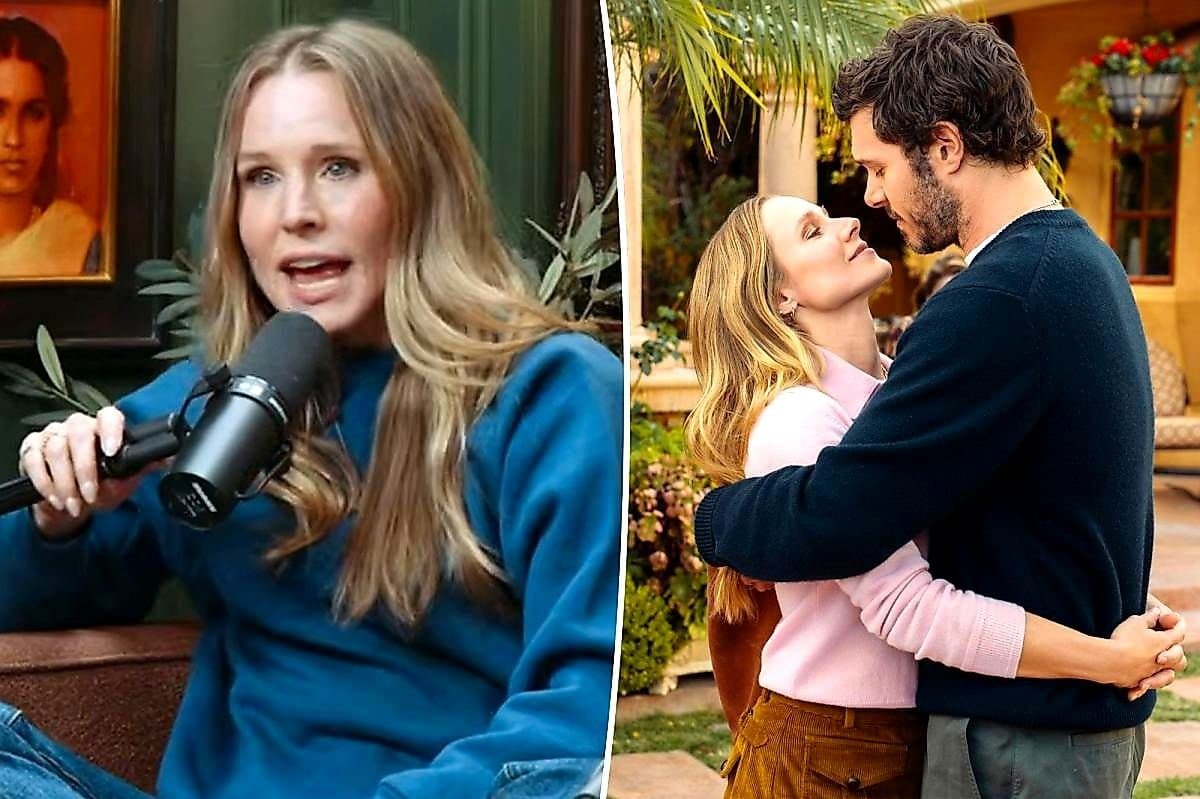
# Kristen Bell Endures 8‑Foot Waves, Near‑Death on ‘Nobody Wants This’ The air around the beach set crackled with tension when Kristen Bell, 46, found herself staring into a wave that could have swallowed her.
On a hot July afternoon, the beloved actor‑turned‑podcaster was instructed to plunge into the churning Pacific as part of a Season 3 scene for the Netflix series *Nobody Wants This*.
“I had to pretend to be nude, so I’m wearing a scuba suit from here down,” Bell confessed during the recent episode of husband Dax Shepard’s *Armchair Expert*. What followed was a heart‑stopping, eight‑foot surge that turned a scripted moment into a raw, near‑fatal test of nerves and skill.
Bell’s role as Joann Williams—a charismatic podcaster who tackles modern relationships with humor and sincerity—has made her a household name. The show, filmed in various Los Angeles locales, has earned a dedicated fan base and a reputation for blending comedy with unexpected emotional depth.
This week, Bell’s performance was honored with her first Emmy nomination, a milestone celebrated by her husband in a candid Instagram snapshot of her practicing yoga in nothing but socks.
The recognition underscores how the show’s daring storytelling and Bell’s nuanced portrayal resonate with both critics and audiences alike. Yet, behind the glossy ratings and award season buzz lies a scene that Bell says could have ended her career—and perhaps her life.
She described the experience as a “near‑death” moment, one that tested her composure in the face of literal waves and a crew that, “knew every move by the skin of their teeth.” The details she shared in *Armchair Expert* paint a vivid picture of how close she came to being swallowed by the sea. ## Background & Context The sequence in question unfolded on a sun‑blazed beach, where the production team aimed to capture the raw intensity of Joann’s encounter with the ocean.
Bell recounted that the director had asked her to step into the water with nine or ten crew members present—an arrangement she described as “one‑for‑one stunts.” In this system, each actor or crew member had a dedicated stunt partner tasked with bracing them against the unpredictable forces of the sea.
Bell, who wore a full scuba suit below her sternum, was essentially performing a double act: maintaining her character’s composure while bracing against the roaring surf. She recalled the chaos: “The water was so cold.
I was trying to speak Hebrew before dunking myself until the wave eventually crashes. Just before it’s about to crash, all the stunt people start screaming.” Bell said she was hoisted out of the air by two stunt women who, along with a group of stunt people pushing the rest into the sand, formed a human safety net.
The crew’s preparation became evident when Bell noted that Aaron, the A‑camera operator, was being pounded by the waves, his camera submerged underwater, while other crew members were braced and protected by stunt doubles. Despite the high stakes, the crew’s ingenuity allowed the scene to be captured.
Bell explained that the first attempt failed—the director informed her they didn’t get the shot. “I had to go out again,” she said.
She added that she “told herself I would go out for the least amount of time possible.” The second attempt, though still perilous, produced the footage that would become part of the series.
Bell later revealed she had suggested filming in a water tank, a plan that was ultimately shelved in favor of the raw, on‑location shot that, she says, turned out “amazing.” The episode’s final edit chose a side angle rather than a front‑on view, a decision Bell attributed to the “horrific” nature of the shot.
The creative choice preserved the audience’s safety while still delivering the dramatic intensity required by the story.
This balance of artistry and practicality highlights the production team’s willingness to push boundaries while keeping everyone secure—an ethos that has become a hallmark of the series. ## What People Are Saying The revelation has already sparked conversation among fans and industry observers.
Viewers on social media have expressed both awe at Bell’s courage and gratitude for the crew’s professionalism. Several commenters praised the stunt team’s coordination, noting how the “one‑for‑one stunts” strategy seemed to pay off.
Others highlighted the authenticity that such a dangerous scene brings to the character’s arc, arguing that it gives Joann a deeper emotional resonance. Behind the scenes, the production crew has taken the opportunity to spotlight the importance of safety protocols on location.
The director, who was not named in Bell’s account, commented privately that “every risk was calculated, and the crew’s training was the difference between a great shot and a disaster.” The crew’s experience in handling high‑pressure, water‑based scenes is their expertise.
Industry insiders noted that the incident underscored the necessity of having dedicated stunt personnel for each participant—a standard that has become increasingly common on contemporary set productions. Bell’s own social media presence added a layer of personal appreciation.
Dax Shepard’s Instagram post celebrating her Emmy nomination was shared widely, and many followers linked the photo to her recent on‑set experience.
The image, a candid shot of Bell in a yoga pose surrounded by socks, was seen by some as a quiet acknowledgment of her willingness to push herself physically and emotionally for her craft.
Fans also echoed their admiration for Bell’s “amazing” performance, expressing that the series’ willingness to confront uncomfortable topics—whether through a near‑death wave or a heartfelt monologue—has cemented her status as a compelling, versatile performer.
The broader conversation has also touched on the evolving nature of risk management in television. Critics suggest that while Bell’s near‑death moment is an outlier, it may influence how future productions approach dangerous scenes.
The discussion points to a shift toward more transparent safety measures and the inclusion of stunt coordinators as integral members of the creative team, rather than merely logistical support. ## What Happens Next The immediate fallout from Bell’s account will likely influence both the show’s future production choices and the industry’s approach to high‑risk scenes.
As the season progresses, viewers can expect more intense, emotionally charged moments that may push the envelope further. Producers have indicated that the decision to film on location for the waves was driven by a desire to capture an authentic feel that a tank could not replicate.
However, the safety mishap may prompt the creative team to reexamine whether certain scenes warrant an alternative approach, perhaps revisiting the water tank idea Bell had originally suggested. From Bell’s perspective, the experience has not deterred her enthusiasm for the role.
She spoke of the scene as “amazing,” suggesting that the adrenaline and challenge enhanced her performance. Bell’s Emmy nomination, announced in July, may further empower her to take on more daring projects.
The acknowledgment could lead to broader opportunities in film and television, where her willingness to embrace physically demanding scenes could be a valuable asset. Meanwhile, the production’s commitment to safety will likely remain in the spotlight.
The stunt team’s role in ensuring the shoot’s success has highlighted the importance of having trained professionals on set, a lesson that could become standard practice for future high‑risk sequences.
Industry trade publications have already noted that *Nobody Wants This* will be referenced as a case study in how to balance narrative ambition with crew safety.
For fans, the next episodes will offer a mix of humor and suspense, underpinned by a behind‑the‑scenes reality that many will find both thrilling and unsettling.
The series’ willingness to tackle the extraordinary—whether through a near‑death wave or a heartfelt podcast monologue—continues to define its unique place in contemporary streaming drama.
In the end, Kristen Bell’s daring dive into an eight‑foot wave serves as the passion and peril that can coexist on a television set. It reminds us that behind every laugh and dramatic beat lies a team willing to go to great lengths—both literally and figuratively—to bring a story to life.
At a Glance
- Kristen Bell’s 8‑foot wave stunt almost cost her life, pushing her into a near‑death moment while wearing a full scuba suit.
- The dangerous on‑location scene was captured after a failed first attempt, showcasing the crew’s “one‑for‑one stunts” safety protocol.
- The incident fuels industry discussions on stunt safety and may influence future production decisions for high‑risk water scenes.
Why It Matters
Our Take
GoNews Pulse Editorial Team
This article was prepared for publication by GoNews Pulse and checked for publication requirements under our editorial standards. We review available information and correct material errors when they are identified.
Quick Answers
- What is the latest update on this story?
- Kristen Bell admits the 8‑foot Pacific wave that nearly swallowed her forced her to don a full scuba suit, a moment she described as a 'near‑death' scare.
- Who is this story about?
- This article covers developments related to Kristen Bell's 8‑Foot Wave Dive Almost Ends Her Career—Find Out. GoNews Pulse's editorial team monitors the story and updates the article as new verified information becomes available.
- Where can I read more about celebrity news?
- GoNews Pulse publishes original reporting on celebrity news and related entertainment news. Visit the homepage or browse the section dedicated to this story for the latest coverage.
More From This Section
Matthew Perry's $7 Million Recovery Costs Expose Hollywood Crisis
In the docuseries, Matthew Perry admits he spent $7 million on rehab, a hidden cost that shocked fans and exposed the true price of Hollywood addiction.

Jessica Lange's 77-year retirement breaks silence, pain revealed
She says she feels it's time, citing the limited release of her latest film and a career-long lack of meaningful roles in Hollywood.

The Gilded Age season four drops 8 scandalous episodes at 9pm, fans stunned
Critics rave as the new season opens with a stunning 9pm premiere, featuring an assassination fallout that rewrites the Russell family's fate.