
Judge denies Lindsay Clancy's plea to drop 3‑child murder charges
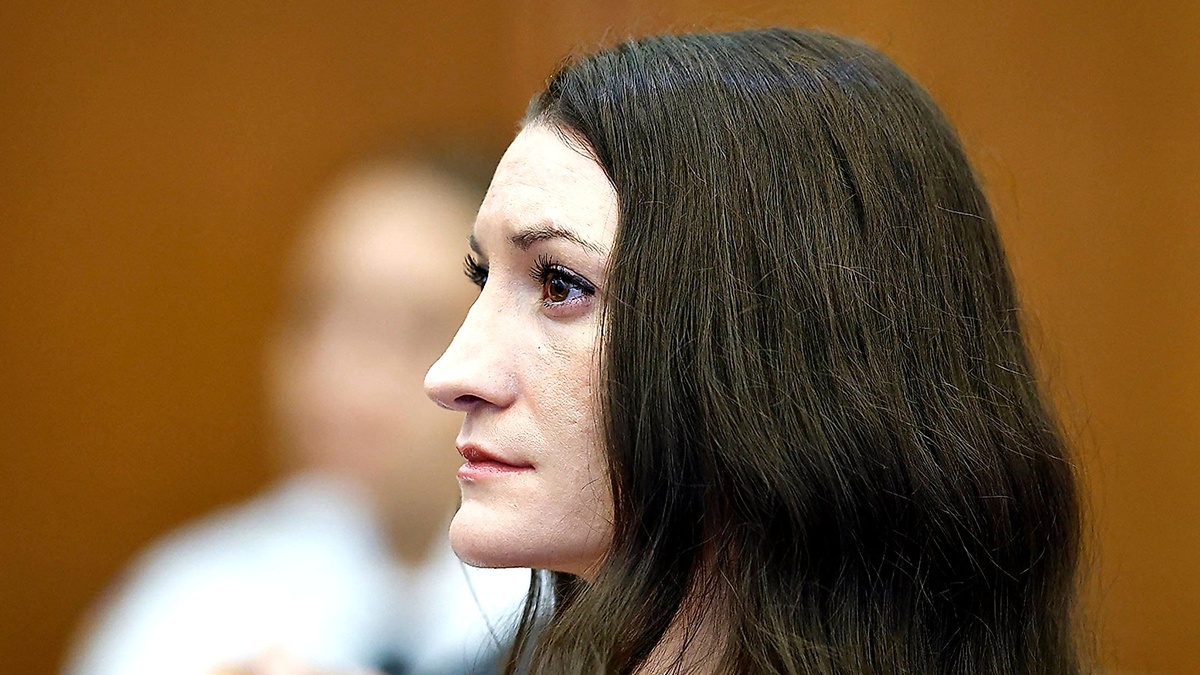
# Lindsay Clancy Loses Court Battle to Drop 3‑Child Murder Charges The courtroom drama that has captivated the nation reached a pivotal moment last week when Judge William Sullivan rejected Lindsay Clancy’s attempt to dismiss the murder case that has kept her under a relentless legal spotlight.
The decision comes after a previous trial ended in a hung jury, leaving the fate of the three‑child family hanging in the balance. Clancy has been the focus of a high‑profile investigation into the deaths of her three children, who were found dead in their home.
Her husband, Patrick Clancy, was at the time absent from the house, allegedly picking up medication and takeout. The prosecution presented video evidence placing Patrick at both stops, implying he was not present during the murders.
Clancy’s defense has consistently argued that the evidence does not prove she killed the children, and now the judge has denied her request to have the charges tossed outright.
The court documents reveal that the judge found the prosecution’s case strong enough for a rational jury to find beyond a reasonable doubt the elements of murder.
Despite mental health concerns, the judge emphasized that experts on both sides agreed Clancy suffered from serious mental illness, though they disagreed on whether she understood that her actions were wrong.
This disagreement, the judge noted, is something a jury could resolve, and it was not within his purview to override their conclusion. ## Background & Context The tragedy began when authorities discovered the bodies of three young children in a locked bedroom.
The initial investigation revealed no signs of forced entry, leading law enforcement to suspect an inside job. As the investigation unfolded, attention turned to Lindsay Clancy, the mother who had been the only person known to have unsupervised access to the children.
Her defense team, led by attorney Kevin Reddington, presented a narrative that the children were victims of a tragic accident and that Clancy had been suffering from an acute episode of mental illness at the time.
Reddington argued that the prosecution failed to meet its burden of proof, noting that no direct evidence linked Clancy to the killings.
He highlighted the absence of forensic markers—such as blood spatter or weapon residues—that could tie Clancy to the act, suggesting the case rested on circumstantial evidence at best. Judge Sullivan’s ruling hinges on the interpretation of that circumstantial evidence.
He acknowledged that Clancy was the only adult present when the children were last seen alive, a fact that places her under suspicion. He also pointed to the video evidence showing Patrick Clancy’s movements, which the prosecution argued demonstrated that she was alone and therefore the most plausible perpetrator.
In denying the motion, the judge left the door open for a retrial, stating that a jury could weigh the evidence and reach a different conclusion. ## What People Are Saying The legal community has watched the case unfold with keen interest, noting its implications for how mental illness and intent are treated in homicide trials.
Analysts have remarked that Judge Sullivan’s decision to deny the motion underscores the judiciary’s reluctance to dismiss a case merely on the basis of mental health claims without clear evidence that the accused lacked the capacity to understand the wrongfulness of their actions.
This stance could serve as a precedent in future cases where defendants’ mental states are contested. Public reaction has been polarized.
Supporters of Clancy have criticized the court’s ruling as a failure to hold a mother accountable for her children’s deaths, while others have expressed concern over the potential for the legal system to overlook the complexities of severe mental illness.
Social media platforms have been awash with commentary, ranging from calls for justice to calls for compassion toward a mother who may have been in crisis. The case has also sparked discussion within mental health advocacy circles.
Advocates emphasize the importance of ensuring that individuals with severe psychiatric conditions receive appropriate care and that the legal process does not become a punitive system that ignores the nuances of mental illness. ## What Happens Next With the motion denied, the prosecution faces the decision of whether to proceed with a new trial.
While no official date has been set, court documents indicate that the prosecutor’s office is reviewing evidence anew, including the video footage that was central to the judge’s ruling. They may also consider additional forensic analysis to strengthen their case against Clancy.
Clancy’s defense team, meanwhile, is likely to reassess its strategy. After arguing that the prosecution failed to prove she killed the children, the defense is now poised to focus on the adequacy of evidence and the interpretation of her mental state.
If a second trial is scheduled, the defense may bring in further psychiatric experts to challenge the prosecution’s claims and underscore the defendant’s lack of intent. Both sides face the looming question of how to address the double‑jeopardy concerns that have been raised.
The defense’s attempt to block a retrial on double‑jeopardy grounds will need to be adjudicated, potentially before a new trial can begin. The court’s handling of that issue will set a further legal benchmark for how the principle of double jeopardy applies in complex homicide cases involving mental illness.
At a Glance
- Judge William Sullivan rejected Lindsay Clancy's motion to dismiss the 3‑child murder charges,
- The court highlighted that mental‑illness experts agree Clancy suffered serious mental illness, but a jury could decide if she understood wrongdoing.
- The ruling leaves open the possibility of a retrial, raising questions about double‑jeopardy and the balance between justice and mental‑health considerations.
Why It Matters
Our Take
GoNews Pulse Editorial Team
This article was prepared for publication by GoNews Pulse and checked for publication requirements under our editorial standards. We review available information and correct material errors when they are identified.
Quick Answers
- What is the latest update on this story?
- The judge said the prosecution’s evidence was strong enough to convince a rational jury, sparking heated debate over mental‑health defenses in murder trials.
- Who is this story about?
- This article covers developments related to Judge denies Lindsay Clancy's plea to drop 3‑child murder charges. GoNews Pulse's editorial team monitors the story and updates the article as new verified information becomes available.
- Where can I read more about celebrity news?
- GoNews Pulse publishes original reporting on celebrity news and related entertainment news. Visit the homepage or browse the section dedicated to this story for the latest coverage.
More From This Section

Jon Gosselin's 22‑Year‑Old Son Exposes Abuse, Father Shouts Support
Jon Gosselin declares that his son’s 22‑year‑old memoir exposes alleged institutionalization and a hidden ‘small holding’ cell, sparking a national debate.

Mike Colter's Valley Firm AGI Bo Revealed at 2:00 a.m. Shocks Fans
Rob McClure's portrayal of Bo forces the firm to confront a real‑world AGI asking for legal guardrails, sparking a tense ethical debate.

Meredith Grey's bed proposal to Nick on surgery table stuns fans
Meredith Grey slipped a ring into Nick's hand while he lay on the operating table, a move that stunned fans amid the bridge collapse.