
Jason Galanis' $2.17M refund claim shocks after Trump commutation
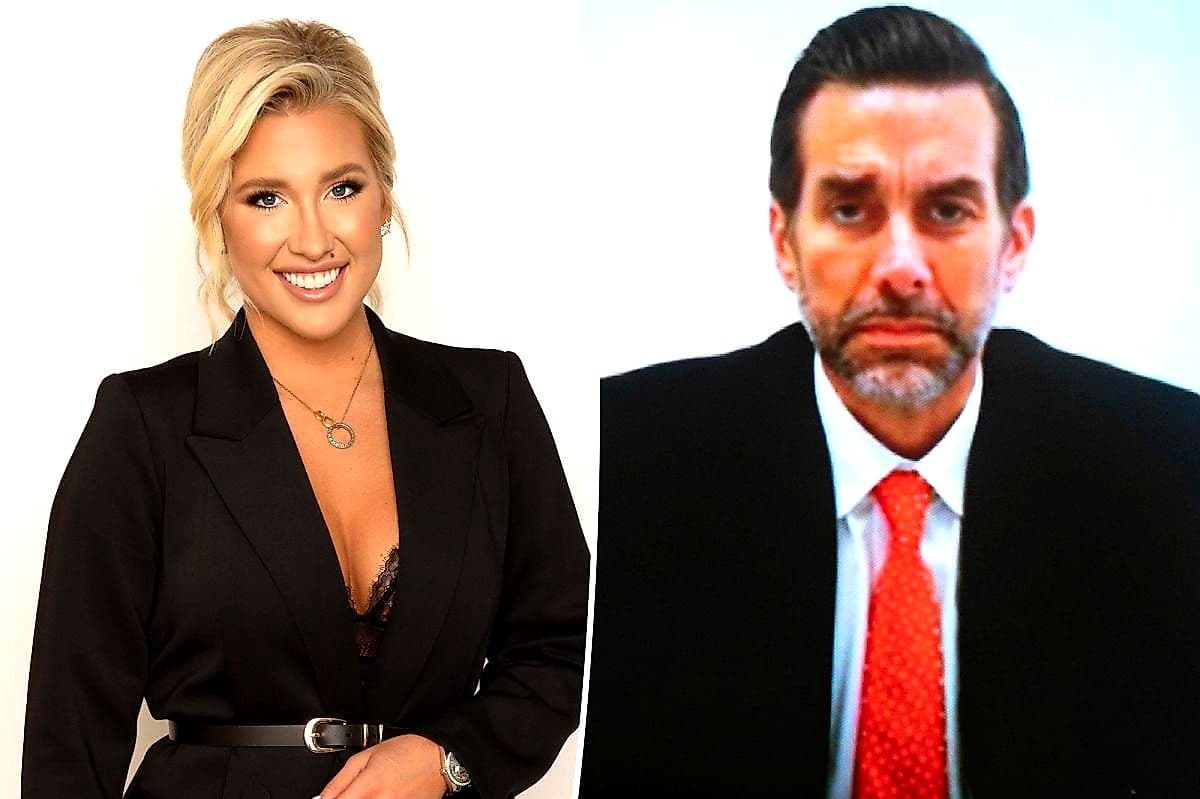
# Jason Galanis Fights to Reclaim $2.17M Intended for Fraud Victims After Trump Commutation When the nation watched former President Donald Trump grant a presidential commutation to Jason Galanis on March 28, 2025, most thought the case had reached a final chapter.
Instead, a courtroom showdown is unfolding in New York, with the former reality‑TV star’s husband seeking the return of more than two million dollars that was originally earmarked to compensate victims of his fraud schemes.
The stakes are high, not just for Galanis and his growing family with “Chrisley Knows Best” alum Savannah Chrisley, but for the thousands who suffered under the elaborate scams that brought him to prison.
The legal battle centers on a sum of $2.17 million that was confiscated from properties Galanis owned in Los Angeles and Manhattan. Those assets had been seized after a federal investigation uncovered two multimillion‑dollar fraud operations tied to stock manipulation and a Native American tribal bond scheme.
The money, which survived liens and other costs, was supposed to be transferred to the Southern District of New York court clerk in January 2025 to be distributed to victims.
But the federal courts, and the public, had not yet seen the funds disbursed when Trump’s commutation lifted Galanis’s obligation to make further restitution payments.
Now, the former convict is appealing a judge’s denial of his request to recover the money, arguing that the government no longer has a legitimate interest in holding it. ## Background & Context Jason Galanis, 56, spent nearly a decade building a reputation as a shrewd businessman before the legal system caught up with him.
His first fraud venture involved manipulating stock in Gerova Financial Group between 2009 and 2011, a scheme that yielded millions for Galanis and his partners while investors endured substantial losses.
A second operation, conducted from 2014 to 2016, lured a Native American tribal entity into issuing more than $60 million in bonds. Instead of channeling the proceeds as promised, Galanis diverted an estimated $8.75 million for personal use—homes, jewelry, cars, and extravagant meals.
In January 2020, Galanis pleaded guilty to seven federal felony counts. The judge sentenced him to 189 months—over fifteen years—in prison in September of that year.
A restitution order followed, mandating payments of $80.46 million to victims. Yet, during his incarceration, Galanis paid a mere $1,824.84 toward that sum.
Court filings detail that he made a total of $2,524.84 in payments, with the first $700 earmarked for a mandatory court assessment, leaving the bulk of the restitution unpaid. The $2.17 million in question originated from the sale of real estate assets seized by the federal government.
After applying liens and covering other administrative costs, the residual proceeds were to be handed over to the federal court clerk for distribution. The transfer occurred in January 2025, but the funds had not yet been dispersed when the commutation was granted.
The question now is whether Galanis can legally reclaim those dollars, and what that means for the victims he left behind. ## What People Are Saying Galanis’s legal team has mounted a vigorous appeal.
In a filing dated October 2025, they argued that the government lacks any legitimate interest in retaining the confiscated money and that “there is no recognized reason to give the funds to anyone else.” Their argument hinges on the claim that the proceeds came from real estate purchased before the tribal bond fraud scheme and thus were not directly tied to criminal activity.
The attorneys also pointed out that, because of the commutation, the federal government can no longer distribute the funds to the victims. Federal prosecutors, however, countered that the money became government property long before the commutation.
They maintained that the President’s decision to commute Galanis’s sentence did not alter the status of the seized assets. The prosecution’s stance suggests that the funds should remain in the court’s custody, awaiting the completion of a restitution schedule that is, in any event, halted by the commutation.
In June 2025, U.S. District Judge P.
Kevin Castel denied Galanis’s request to recover the money. The denial led Galanis to file an appeal, which is set for a hearing on November 13 in the federal appeals court.
While the case has largely stayed within legal chambers, its ramifications have rippled outward. The public is watching not only the legal maneuvers but also how the dispute intersects with the high‑profile marriage between Galanis and Savannah Chrisley.
Chrisley, 29, announced her engagement and pregnancy earlier this year, and the couple has moved into a $2.2 million Nashville home.
Their relationship has already sparked headlines, and the financial controversy only adds another layer of intrigue. ## What Happens Next The appellate court’s decision on November 13 will be pivotal.
If the court sides with Galanis, he may regain the $2.17 million, potentially keeping it out of the hands of the victims who originally deserved it. Such an outcome would raise questions about the enforcement of restitution orders after a commutation and could set a legal precedent affecting future cases.
Conversely, if the appellate court upholds the lower court’s ruling, the funds may be returned to the federal clerk and eventually disbursed to the victims, assuming the restitution process can be resumed or restructured. The fate of the money also carries symbolic weight.
The victims of Galanis’s schemes—investors who lost millions and a tribal community that was misled into issuing bonds—have long awaited compensation.
Whether the funds reach them will speak to the broader conversation about accountability and the effectiveness of federal restitution programs. the case will likely draw scrutiny from advocacy groups, lawmakers, and the media, all of whom are watching to see how the intersection of criminal justice, presidential clemency, and celebrity influence plays out.
In the days ahead, the appellate court’s deliberations will be closely monitored. The outcome will not only affect Galanis’s financial standing but also echo through the lives of those who were wronged and the broader public’s perception of fairness in the justice system.
As the hearing approaches, the story remains a stark reminder of how tangled legal, financial, and personal narratives can become when fame, fraud, and federal power collide.
At a Glance
- Trump commuted Galanis' sentence, raising question over restitution of $2.17M seized from his properties.
- Galanis' attorneys argue government no longer has claim to the money, seeking to recover it for his personal use.
- An appellate hearing on Nov 13 will decide if victims can receive the funds or if Galanis regains them.
Why It Matters
Our Take
GoNews Pulse Editorial Team
This article was prepared for publication by GoNews Pulse and checked for publication requirements under our editorial standards. We review available information and correct material errors when they are identified.
Quick Answers
- What is the latest update on this story?
- Court filings say Galanis seeks $2.17M from seized LA and Manhattan properties, a sum he never paid back, and the decision may spill over on victims’ restitution.
- Who is this story about?
- This article covers developments related to Jason Galanis' $2.17M refund claim shocks after Trump commutation. GoNews Pulse's editorial team monitors the story and updates the article as new verified information becomes available.
- Where can I read more about celebrity news?
- GoNews Pulse publishes original reporting on celebrity news and related entertainment news. Visit the homepage or browse the section dedicated to this story for the latest coverage.
More From This Section

Matthew Perry's $7 Million Recovery Costs Expose Hollywood Crisis
In the docuseries, Matthew Perry admits he spent $7 million on rehab, a hidden cost that shocked fans and exposed the true price of Hollywood addiction.

Jessica Lange's 77-year retirement breaks silence, pain revealed
She says she feels it's time, citing the limited release of her latest film and a career-long lack of meaningful roles in Hollywood.

The Gilded Age season four drops 8 scandalous episodes at 9pm, fans stunned
Critics rave as the new season opens with a stunning 9pm premiere, featuring an assassination fallout that rewrites the Russell family's fate.