
James Austin Johnson's $5,000 Trump Ad Skit Shocks SNL Fans
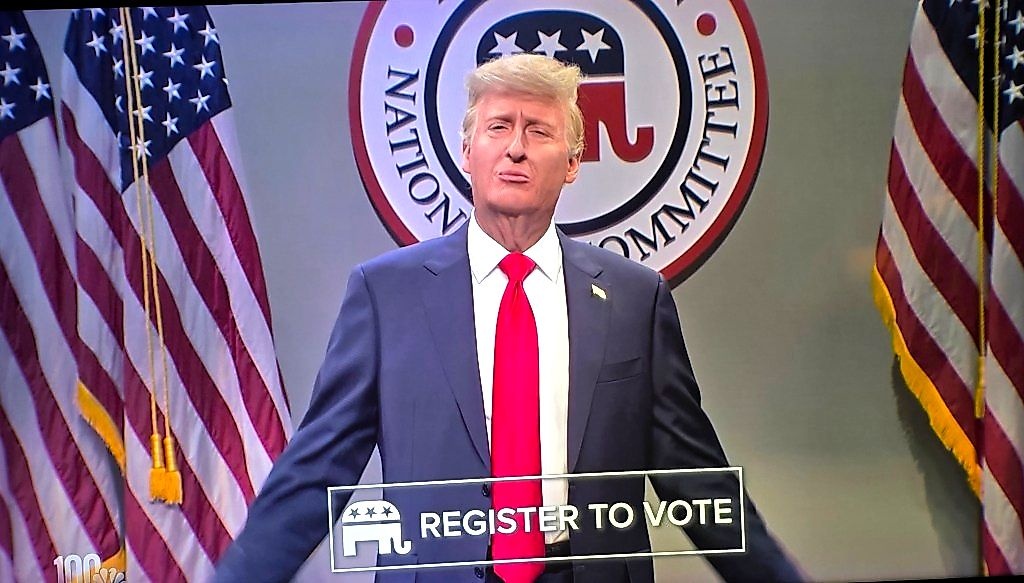
# SNL’s Cold‑Open Bites the Ballot: A MAGA‑Laced Satire Set to Heat Up the Midterms The week before the nation’s most consequential election, *Saturday Night Live* delivered a punchy, politically charged cold open that had the audience buzzing about who, if anyone, could take a joke to the next level.
With the President trailing in the polls and Republicans scrambling for momentum, the show’s skit was a full‑blown mock campaign ad, complete with presidential promises, congressional gaffes, and a dash of absurdist humor that seemed to echo the chaotic reality of American politics.
The sketch opened with 84‑year‑old Senator Mitch McConnell, portrayed by Mickey Day, launching a “Live from New York” segment before an on‑screen RNC ad team cut him off in an attempt to salvage a GOP image that has been anything but stable.
The satire continued with Marco Rubio, played by Marcello Hernández, exclaiming “He tricked us” in a nod to the senator’s own electoral defeats, and a brief, almost‑uncredited cameo by J.D. Vance (Jeremy Culhane) that felt more like a throw‑away joke than a central gag.
The episode also saw Colin Jost embodying Defense Secretary Pete Hegseth, who injected a touch of slam‑poetry irony into the proceedings.
But the star of the show was undoubtedly James Austin Johnson, who assumed the role of President Trump and delivered a half‑truthful, half‑bribe‑laced ad that promised a $5,000 payout if the GOP won—only to shrug it off as a joke, underscoring the surreal nature of the performance.
This wasn't merely a routine political skit. It was a commentary on the current electoral climate, a critique of a party in crisis, and a reminder that, even in the most serious times, satire can cut through the noise.
In a season where *SNL* has never shied away from the political arena, this particular cold open felt like a full‑scale mock‑campaign, a microcosm of the absurdity that has come to define the pre‑midterm landscape.
The performance raised questions about the role of comedy in shaping public perception, especially when the line between satire and reality can become razor‑thin. ## Background & Context For decades, *SNL* has prided itself on its political satire, turning headlines into punchlines and policy debates into punchy sketches.
The show's tradition of lampooning national leaders dates back to its first season, where impersonations became cultural shorthand. In recent years, the network has embraced a more overtly partisan tone, often aligning with conservative viewpoints, especially in the wake of the Trump presidency.
This shift has sometimes drawn criticism for appearing to echo the rhetoric it mocks, but it also speaks to the program’s responsiveness to the current political climate. The decision to center the cold open around the 2024 midterms reflects the urgency that pervades American politics today.
With the presidential race seemingly lost before it has even begun, Republicans have mounted a frenetic effort to rally base voters and craft a narrative that can salvage their standing. Meanwhile, Democrats are grappling with internal divisions and the challenge of presenting a unified front.
Against this backdrop, *SNL*’s sketch can be seen as a mirror, holding up the absurdities of a party in crisis: the overreliance on ad campaigns, the desperation for electoral victory, and the sometimes far‑cued promises that appear to promise more than they deliver.
The inclusion of real political figures—Senator McConnell, Senator Rubio, and former Ohio Representative J.D. Vance—underscores the show’s commitment to immediacy.
These characters are not merely caricatures; they are embodiments of current political dynamics. McConnell’s portrayal as an aging senator trying to revive his relevance echoes the actual struggles of senior Republican leaders to maintain influence.
Rubio’s “He tricked us” line captures his recent electoral missteps, while Vance’s cameo serves as a nod to the younger, more populist wing of the GOP. Together, they form a tableau that is both familiar and hyperbolic.
The satirical treatment of the Defense Secretary and President Trump adds layers of humor. By turning Hegseth into a slam‑poet and having Trump promise a $5,000 reward—only to dismiss it as a joke—*SNL* magnifies the absurdity that has come to dominate political discourse.
In a world where political promises are often made without accountability, the sketch’s comedic exaggeration highlights the disconnect between rhetoric and reality.
The underlying message, then, is not just a punchline but a critique of how political messaging has become a performative art rather than a policy discussion. ## What People Are Saying The response to the skit has been swift and polarized, mirroring the broader divisions that characterize the nation’s political debate.
Social media erupted almost immediately after the episode aired, with fans and critics alike dissecting every line. Some applauded the show’s willingness to confront the GOP’s struggles head‑on, noting that the satire struck a nerve by exposing the party’s overreliance on ad dollars and desperation for votes.
Others, particularly those on the left, accused the sketch of being too close to partisan propaganda, arguing that it amplified the very narratives it sought to ridicule.
In the weeks that followed, commentators in political circles began to explore how *SNL*’s depiction of a mock campaign ad could influence voter sentiment.
Some analysts pointed out that satire has long been a vehicle for social critique, and that the show’s exaggerated promises—like Trump’s $5,000 handout—serve as a reminder of the hollow nature of many political incentives.
Others warned that the comedic framing might obscure the seriousness of the issues at stake, especially for younger voters who are still forming their political identities. Meanwhile, the sketch also sparked conversations about the ethical boundaries of political comedy.
While some viewers praised the boldness of the performance, others raised concerns about how far satire should go when dealing with real-world consequences.
The debate over whether *SNL* should cross into more explicit political commentary is not new; however, the 2024 episode’s focus on a concrete electoral event brought the conversation into sharper focus.
As the nation approaches the midterms, the discussion around media influence and political persuasion is more relevant than ever. Within the entertainment industry, the episode also set a benchmark for political satire.
By blending real political actors with a fictionalized President, the sketch created a narrative that felt both familiar and fantastical. Critics noted that the juxtaposition of serious political figures with absurd promises—like the $5,000 giveaway—added a layer of meta-commentary on the spectacle of modern campaigns.
This approach has been described as “an incisive commentary on the spectacle of politics,” a phrase that has since been echoed across a of comment platforms. As the conversation continues, many are calling for *SNL* to take its satire in even sharper directions, especially given the intensity of the upcoming midterms.
The show’s reputation for pushing the envelope means that its next political sketches could very well shape public perception during one of the most critical elections in recent history. ## What Happens Next Following the political skit, the season’s second episode of the 52nd season will feature Dakota Johnson as host—a role she has embraced twice before.
Johnson’s return comes on the heels of her box‑office success in *The Lost City*, and she will be accompanied by Turnstile, the Maryland rock band, making their debut musical performance on the show.
This combination of a star actress and a fresh musical act promises to keep the audience engaged as the show continues to balance comedy with cultural relevance.
In addition to Johnson’s hosting duties, the show has confirmed that Shane Gilis, a former cast member, will return for his third hosting stint next week, followed by Rosalía on October 10 for her third appearance.
These rotating hosts and musical guests underscore *SNL*’s commitment to diversity and its willingness to spotlight a range of talents across the entertainment spectrum. Beyond the upcoming episodes, the network’s producers are reportedly brainstorming new sketches that could tie into the broader election narrative.
While details remain scarce, the focus on political satire is expected to intensify as the midterms draw closer. The production team’s willingness to tackle contentious issues suggests that the show will continue to serve as a platform for both entertainment and social commentary.
In the months leading up to the November 5 election, *SNL* will likely increase its political output. Past seasons have shown that the show often ramps up its satire during election cycles, and the current political climate provides ample material.
Whether the sketches will maintain the same biting edge or shift toward a more nuanced approach remains to be seen, but one thing is clear: the show’s blend of humor and political insight will keep audiences tuning in for a reason.
As the nation prepares to head to the polls, the role of comedy in political discourse remains a potent force. With *SNL* leading the charge, its satirical lens offers both a critique and a mirror—highlighting the absurdities of campaign rhetoric while reminding viewers of the stakes at hand.
In the end, the 2024 midterms will be decided by voters, not by punchlines, but the conversation that *SNL* sparks today may well shape how those votes are cast tomorrow.
At a Glance
- SNL’s 2024 cold open lampoons GOP with a mock Trump ad promising a $5,000 payout to GOP voters, sparking debate on satire’s reach.
- The skit features senior Republican figures like Mitch McConnell and Marco Rubio, highlighting the party’s struggles and campaign theatrics.
- The episode has polarized reactions, raising questions about political comedy’s influence on voter perception and media responsibility.
Why It Matters
Our Take
GoNews Pulse Editorial Team
This article was prepared for publication by GoNews Pulse and checked for publication requirements under our editorial standards. We review available information and correct material errors when they are identified.
Quick Answers
- What is the latest update on this story?
- SNL’s Trump impersonator James Austin Johnson promised a $5,000 payout to GOP voters in a mock ad, sparking debate over satire’s limits.
- Who is this story about?
- This article covers developments related to James Austin Johnson's $5,000 Trump Ad Skit Shocks SNL Fans. GoNews Pulse's editorial team monitors the story and updates the article as new verified information becomes available.
- Where can I read more about celebrity news?
- GoNews Pulse publishes original reporting on celebrity news and related entertainment news. Visit the homepage or browse the section dedicated to this story for the latest coverage.
More From This Section

Jon Gosselin's 22‑Year‑Old Son Exposes Abuse, Father Shouts Support
Jon Gosselin declares that his son’s 22‑year‑old memoir exposes alleged institutionalization and a hidden ‘small holding’ cell, sparking a national debate.

Mike Colter's Valley Firm AGI Bo Revealed at 2:00 a.m. Shocks Fans
Rob McClure's portrayal of Bo forces the firm to confront a real‑world AGI asking for legal guardrails, sparking a tense ethical debate.

Meredith Grey's bed proposal to Nick on surgery table stuns fans
Meredith Grey slipped a ring into Nick's hand while he lay on the operating table, a move that stunned fans amid the bridge collapse.