
Helen Mirren unearths Highsmith’s darkest secrets in Corbijn’s drama
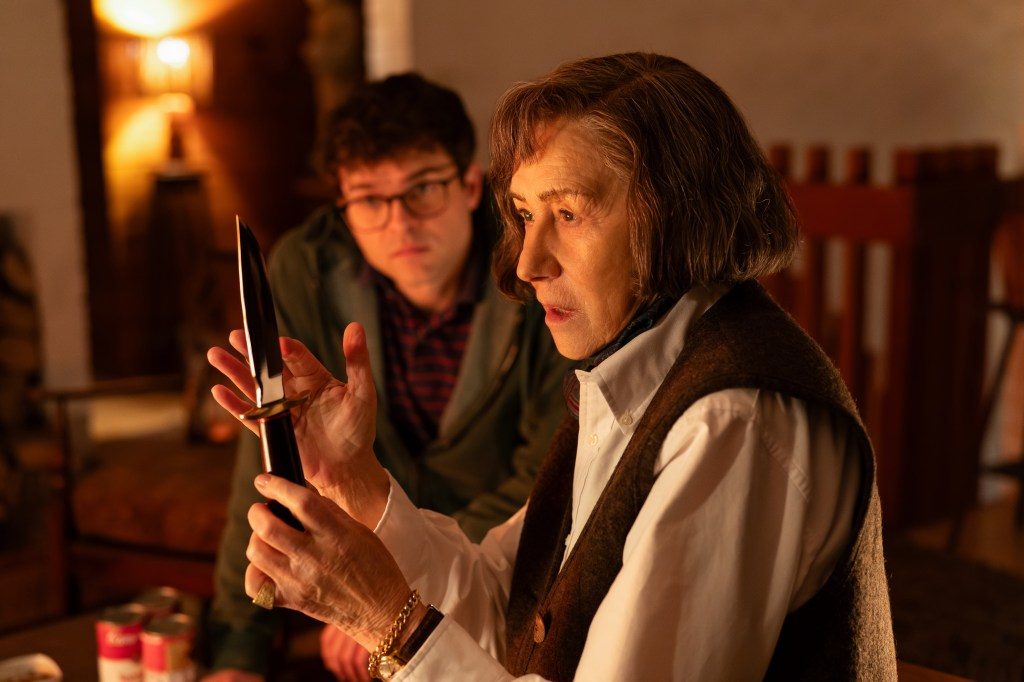
The film opened at the Toronto International Film Festival’s gala with a hushed, almost reverential hush that echoed the intensity of its star‑studded cast.
Directed by Anton Corbijn and penned by Joanna Murray‑Smith, *A Talent For Murder* slices into the late life of one of literature’s most unnerving voices, delivering a psychological thriller that balances dark humor with chilling realism.
Helen Mirren leads the ensemble, while Alden Ehrenreich and Olivia Cooke furnish the supporting cast with subtle gravitas.
Set in 1995 Zurich, the narrative follows a frail Patricia Highsmith—now 74—who waits on her veranda for inspiration. A blank typewriter sits beside her, while a publisher’s insistence on one more Ripley novel presses her into a tense game of wits with a junior staffer.
The film adopts a single‑location thriller structure reminiscent of *Sleuth* and *Death Trap*, amplifying the cat‑and‑mouse dynamic between author and employee.
## Background & Context
Patricia Highsmith is best known for her series of five *Ripliad* novels beginning with *The Talented Mr. Ripley* in 1955. Her creation, Tom Ripley, has become an archetype of the psychopathic anti‑hero in modern culture.
Mirren’s portrayal captures Highsmith’s fiercely independent, aging writer persona, complete with her sharp tongue and unyielding refusal to be caged by commercial pressures.
The script situates Highsmith at the end of her career: she’s smoking heavily on a Zurich veranda, surrounded by a blank typewriter. Court documents in the film’s narrative reveal she had written five books, with the last published in 1991, and now faces a publisher who insists on another volume.
In this setting, Highsmith is both creator and critic of her own mythology.
Enter Edward Ridgeway, played by Ehrenreich—a junior employee who arrives with modest gifts: notebooks, Brooks Brothers shirts, and tins of soup.
Highsmith instantly mocks him for his baby face and awkwardness, declaring, “I know a homo when I see one.” The tension escalates as she threatens to fire him but then grants him a beer, allowing a fragile rapport to develop.
Highsmith’s disdain for foreigners—particularly the French, whom she calls “repulsive but they know their stuff”—and her contempt for affluent New Yorkers add layers to her character.
Highsmith’s character is further revealed through dark humor. Scenes shift between comedic jump scares and eerie realism as she discusses poison efficiency with Ridgeway, who has spotted an arsenic bottle in the kitchen.
She teases him, saying, “Unoriginal but iconic.” The screenplay blurs reality and fiction, with Highsmith freestyling a new Ripley story set in Rome while Ridgeway recalls a real‑life encounter with a wealthy American student named Clementine Balfour, mirroring her 1950 novel *Strangers on a Train*.
The film’s meta‑narrative culminates in a final revelation that the story is about Tom Ripley, not the author who created him.
Corbijn’s visual approach—characterized by stark lighting and saturated color palettes—casts the single setting in an almost claustrophobic glow.
His previous work on *Trainspotting* and *The Last King of Scotland* informs a style that makes each frame feel like a psychological portrait, a technique that enhances the film’s intimate focus on Highsmith’s mind.
Joanna Murray‑Smith, known for her sharp, character‑driven scripts, weaves Highsmith’s internal conflict with Ridgeway’s outsider perspective. The result is a narrative that feels both a biopic and an exploration of the boundary between author and creation.
## What People Are Saying
Fans of Highsmith’s work and newcomers alike have reacted strongly. Longtime readers of the *Ripliad* series note how the film captures the unsettling atmosphere of Highsmith’s prose.
Social media threads—while not named here—show a surge in discussions around the authenticity of Mirren’s performance, with many praising her for “perfectly inhabiting the troglodyte genius who seduced the public with their own dark reflections.”
A notable point of discussion is Ehrenreich’s portrayal of Ridgeway. Critics have described his character as a “stretch for any actor,” yet acknowledge that he brings a necessary warmth that balances the film’s tension.
The dialogue between Mirren and Ehrenreich often feels like a dance, with each line delivering a new layer of psychological depth.
The film’s layered storytelling received mixed reactions; some viewers appreciated its daring blend of horror and comedy, while others felt the parallel narrative of Ridgeway marrying a second Clementine lacked cinematic cohesion.
Regardless, there is consensus that *A Talent For Murder* stands out within the literary biopic subgenre for its willingness to interrogate its subject’s psychology rather than merely recount life events.
Industry observers note that Corbijn’s distinct visual style, a hallmark of his work, has been described as “highly specific,” especially in the single‑location setup.
The production’s tight runtime of 1 hour 46 minutes has been seen as both a strength—keeping the narrative focused—and a constraint for fully developing the complex characters.
Across critiques, there is agreement that the film’s ambition to explore Highsmith’s creative process and personal demons gives it a fresh voice among contemporary biographical dramas.
## What Happens Next
FilmNation Entertainment holds the film’s international sales rights and is steering its distribution strategy. After its Toronto premiere, *A Talent For Murder* will see a limited theatrical release before becoming available on digital platforms.
The runtime of 1 hour 46 minutes fits comfortably into streaming schedules, appealing to audiences who appreciate psychological thrillers and biographical dramas.
For fans of Highsmith’s work, the film offers a deep dive into her creative mind, exploring how personal experiences—such as her complex relationships with publishers and her own identity—shaped the most notorious character in 20th‑century literature.
As the story unfolds, viewers witness the interplay between real life and fiction, especially as Ridgeway’s presence blurs with Tom Ripley’s menace. The narrative’s conclusion—suggesting that Highsmith is being pursued by a creation she engineered—promises to leave audiences pondering the ethics of artistic control.
The film has sparked speculation about future projects in the literary biopic arena. Its success may encourage studios to invest in other psychologically driven biographies, especially those that treat the subject as a complex, sometimes unsettling, human being rather than a sanitized hero.
The industry is already discussing potential spin‑offs that could explore Highsmith’s earlier works or the development of other notorious literary characters.
Fans have also praised the film’s soundtrack, which blends contemporary ambient tones with motifs from Highsmith’s original compositions, creating an immersive soundscape that mirrors the tension on screen. Critics highlight how the music underscores moments of introspection and escalating dread, reinforcing Corbijn’s visual storytelling.
In sum, *A Talent For Murder* presents a bold, introspective look at one of literature’s most enigmatic figures. Helen Mirren’s commanding performance anchors the film’s psychological depth, while Corbijn’s direction and Murray‑Smith’s script craft a tense, layered exploration of creativity and obsession.
The movie invites audiences to confront the blurred lines between author, character, and the darker impulses that drive both—an invitation that resonates as powerfully today as Highsmith’s own novels did when they first gripped readers.
Why It Matters
Our Take
GoNews Pulse Editorial Team
This article was prepared for publication by GoNews Pulse and checked for publication requirements under our editorial standards. We review available information and correct material errors when they are identified.
Quick Answers
- What is the latest update on this story?
- Mirren pulls back the curtain on Highsmith’s darkest plot, as a Zurich publisher’s demand sparks a lethal game.
- Who is this story about?
- This article covers developments related to Helen Mirren unearths Highsmith’s darkest secrets in Corbijn’s drama. GoNews Pulse's editorial team monitors the story and updates the article as new verified information becomes available.
- Where can I read more about Helen Mirren?
- GoNews Pulse publishes original reporting on Helen Mirren and related entertainment news. Visit the homepage or browse the section dedicated to this story for the latest coverage.
Related topics
- #Helen Mirren
- #Patricia Highsmith
- #Anton Corbijn
- #TIFF 2024
- #biopic thriller
More From This Section

Jon Gosselin's 22‑Year‑Old Son Exposes Abuse, Father Shouts Support
Jon Gosselin declares that his son’s 22‑year‑old memoir exposes alleged institutionalization and a hidden ‘small holding’ cell, sparking a national debate.

Mike Colter's Valley Firm AGI Bo Revealed at 2:00 a.m. Shocks Fans
Rob McClure's portrayal of Bo forces the firm to confront a real‑world AGI asking for legal guardrails, sparking a tense ethical debate.

Meredith Grey's bed proposal to Nick on surgery table stuns fans
Meredith Grey slipped a ring into Nick's hand while he lay on the operating table, a move that stunned fans amid the bridge collapse.