
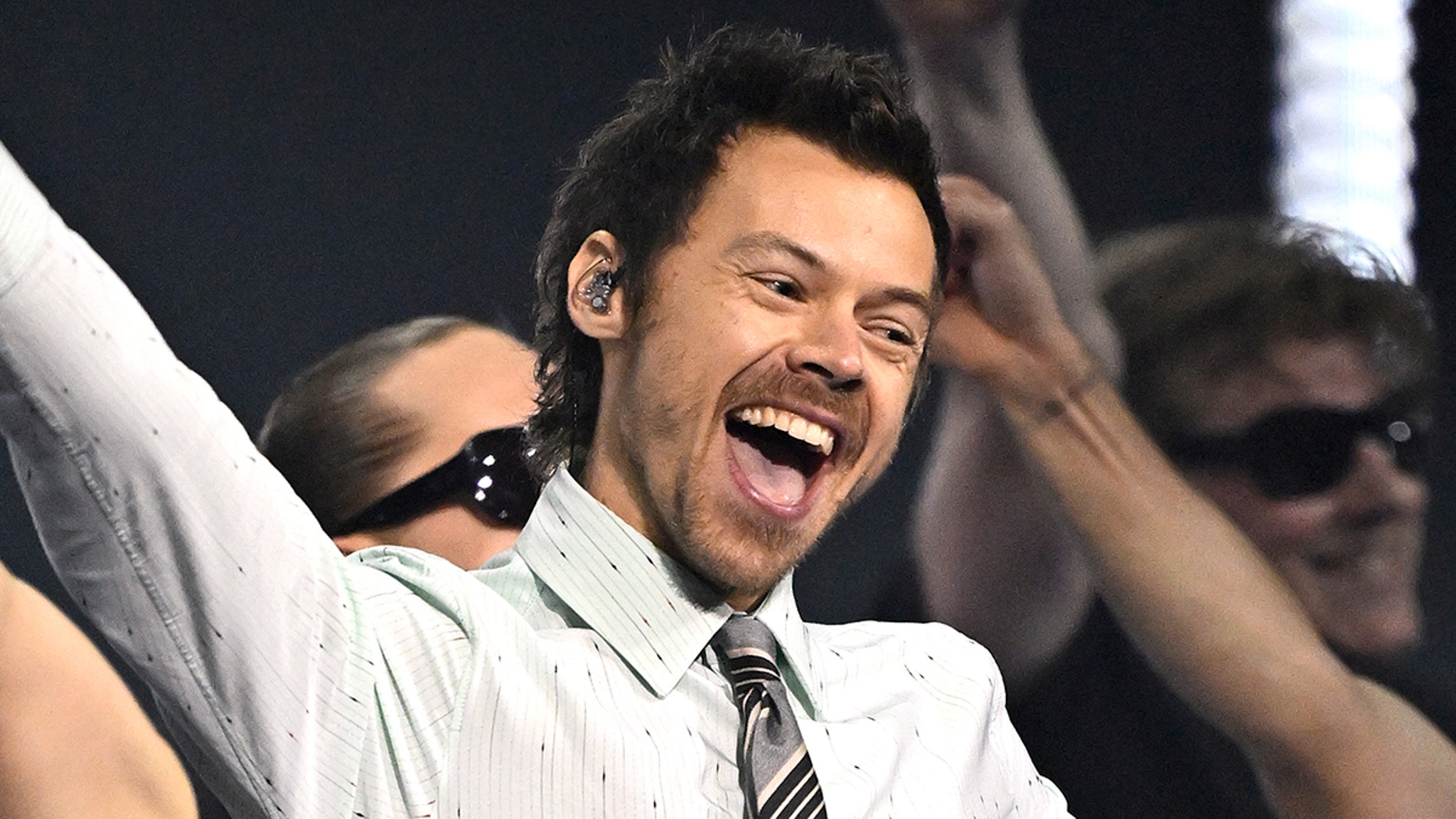
Harry Styles flips the script—his MSG residency rewrites concert culture
---
The music world has always run on cycles—phases where artists dictate the terms, then periods where fans demand something different in return. Right now, we’re in a moment where the old rules no longer apply.
For years, the standard playbook for a global superstar was clear: a multi-month stadium tour, carefully choreographed to maximize merchandise sales, VIP packages, and ancillary revenue. But Harry Styles, a man who has spent his career rejecting the very notion of being boxed in, is rewriting the script.
His *Together, Together* residency at Madison Square Garden isn’t just another concert series—it’s an experiment, a middle finger to the industry’s expectations, and, if the whispers prove true, the blueprint for how live music might evolve in the 2020s. This isn’t about selling out a venue once.
It’s about proving that audiences don’t just want to *see* their favorite artists; they want to *participate* in something greater than themselves. And if the residency’s success is any indication, America—long known for its love of spectacle—might finally be ready to embrace the model Styles has quietly perfected.
---
## **The Birth of a Cultural Moment**
To understand why *Together, Together* feels like more than just a show, you have to trace the arc of Harry Styles’ career—not as a one-hit wonder, not as a former *One Direction* member turned solo star, but as an artist who has spent the last decade rejecting the constraints of pop stardom at every turn.
The follow-up, *Fine Line* (2019), solidified his status as a genre-defying songwriter, blending pop hooks with poetic lyricism. But it was his live performances—particularly the intimate, raucous energy of his early shows—that revealed what fans truly craved: not just a performer, but a presence.
Then came *Love On Tour* (2021-2023), a sprawling, three-year world tour that was as much a logistical nightmare as it was a creative triumph. By the time it concluded, Styles was exhausted, burned out, and—most importantly—wiser.
He had seen what a traditional tour could do to an artist: the relentless travel, the pressure to perform night after night, the way even the biggest names could be swallowed by the machinery of their own success.
So when he announced *Together, Together* in late 2025, it wasn’t just another residency. It was a statement. No 50-city marathon.
No 80,000-seat stadiums. Just 18 nights at Madison Square Garden, a venue that could hold 20,000 screaming fans without losing the sense of intimacy that makes live music feel alive. The response was immediate.
Within hours, ticket presales hit 11.5 million registrations—an unprecedented number for what was, at first, supposed to be a modest run. For context, that’s more than double the demand for many of the biggest pop tours in recent memory, and it didn’t just come from his usual fanbase. It came from *everywhere*.
---
## **The Residency That Broke the Mold**
What makes *Together, Together* different isn’t just the size of the venue or the length of the run. It’s the *philosophy* behind it.
From the beginning, Styles treated this residency as an extension of his studio albums—not just a way to play the hits, but to *reimagine* them. The setlist is a masterclass in balancing nostalgia with reinvention.
Fans hear *As It Was* stripped down to its raw, electric core, *Watermelon Sugar* transformed into a swaggering anthem with the help of live instrumentation, and deep cuts like *Matilda* getting the same reverence as *Sign of the Times*. But the real magic happens in the moments that feel spontaneous.
A surprise appearance by Phoebe Bridgers mid-set. A playful shout-out to Taylor Swift’s wedding, complete with a *Love Story*-style guitar solo. A full-band rendition of *Dolly Parton’s "Jolene"* as a tribute to the late legend, turning the arena into a makeshift honky-tonk.
These aren’t gimmicks. They’re *conversations*. And in an era where live music has become either a corporate spectacle (see: the EDM festivals that feel more like raves than concerts) or a niche underground experience (see: the tiny, sold-out indie venues where artists play for $20 a ticket), Styles has found a middle ground.
The audience isn’t just watching—they’re *participating*. Fans sing along before the backing track kicks in. They cheer when Styles ad-libs a lyric.
They turn their phones into flashlights during the lights-out finale of *Golden*. It’s the closest thing to a communal experience in a time when pop culture feels increasingly fragmented.
But the residency’s impact goes beyond the stage. Behind the scenes, Styles has been transparent about the challenges—balancing creative freedom with the pressure to keep selling out, ensuring the production quality doesn’t suffer from the proximity of the audience, and, perhaps most importantly, *listening* to his fans.
The original run was supposed to be 18 nights. Now, it’s 24. Then 30.
And the whispers of a potential nationwide expansion? They’re not just industry gossip. They’re a recognition that something here is working.
---
## **The Unwritten Rules of a Post-Tour Era**
The traditional stadium tour has been the backbone of the music industry for decades. It’s how artists make the majority of their money, how labels recoup investments, and how fans get to see their idols in the flesh. But the model is *broken*.
For artists, it’s a marathon that drains them physically and mentally. For fans, it’s a high-stakes lottery—waiting months for tickets, dealing with resale markets that price out the average attendee, and hoping the show isn’t just a generic setlist regurgitated 100 times over.
Styles isn’t the first to question this system. Lady Gaga’s *The Chromatica Ball* was a one-night-only spectacle that felt more like a theatrical experience than a concert.
Beyoncé’s *Renaissance World Tour* turned stadiums into immersive, cinematic events, complete with elaborate choreography and visuals that made each stop feel like a separate production. But where those tours were about *scale*, *Together, Together* is about *connection*.
The residency’s structure—shorter than a full tour, more frequent than a single night—has redefined how artists approach live shows in the streaming era. Fans aren’t just buying a ticket to a show; they’re committing to a *ritual*. They’re showing up night after night, not because they have to, but because they *want* to.
The demand has been so overwhelming that Styles has reportedly extended his run past the original schedule, proving that even in an era of disposable entertainment, people still crave something *real*.
Yet the residency’s success has also laid bare the contradictions of modern stardom. Styles’ initial reluctance to expand was tied to burnout—a lesson learned from *Love On Tour*, which, despite its success, left him physically and emotionally exhausted.
But the MSG sellouts forced a reckoning: if the audience is this hungry, how can he say no? The question now isn’t whether he’ll tour, but *how* he’ll do it differently this time.
One possibility? A *rotating residency model*. Instead of the traditional 50-city stadium trek, imagine a series of extended runs in key markets—London, Los Angeles, New York—where fans in different regions get staggered chances to see the show.
Or perhaps a *hybrid approach*: a mix of smaller venues for intimacy, with occasional stops in larger arenas for the spectacle. Whatever the format, it’s clear that the old playbook is no longer the only option.
Rumors of wedding planning have swirled for months, and if true, a full-scale tour could complicate things. But Styles has never been one to let logistics dictate his artistry. If anything, the MSG run has shown his ability to balance creative freedom with commercial appeal—a balance that’s eluded many of his peers in the pop world.
What’s clear is that the industry is watching. If Styles can monetize this intimate, high-demand model without sacrificing authenticity, it could reshape how live music operates post-pandemic. The old playbook—big arenas, massive crews, six-month slog through North America—might finally be getting its obituary written.
---
## **The Fan Factor: When Demand Becomes the Driver**
The most powerful force in this equation isn’t the artist, the label, or even the critics—it’s the fanbase. Styles’ audience doesn’t just want a show; they want *access*. They want to feel like they’re part of something special, not just another number in the crowd.
The MSG residency has turned his followers into evangelists. They’re sharing behind-the-scenes moments on social media—backstage selfies with the band, candid clips of Styles joking with the crew, even live-streaming the experience from their seats.
They’re creating memes, fan edits of the shows, and entire theories about what might happen next. If he expands *Together, Together*, the demand won’t be passive; it’ll be vocal, organized, and relentless.
But with demand comes pressure. Will a nationwide run dilute the magic of MSG? Can Styles replicate the intimacy of a 20,000-seat theater in a 50,000-seat stadium?
The answers will determine whether this becomes a model for the future or just another flash in the pan.
Already, there are signs that the model could work. Artists like Haim and Phoebe Bridgers, who have played smaller residencies in the past, have found that fans are willing to pay for *quality* over *quantity*. The key is making them feel like they’re getting something they can’t experience anywhere else.
---
## **A New Era for Live Music?**
Harry Styles has spent his career walking his own path. From his rejection of *One Direction*’s manufactured image to his fearless fashion experiments to his refusal to conform to pop’s usual expectations, he’s always been an artist who answers to himself first.
*Together, Together* is the next chapter in that story. It’s not just a show; it’s a proof of concept. A middle finger to the industry’s reliance on gimmicks and spectacle.
And if it takes off, it could signal the beginning of a new era for live music—one where artists listen to their fans, where intimacy isn’t just an afterthought, and where the tour isn’t just about selling tickets, but about creating *experiences*.
The question now isn’t whether Styles will expand this residency. It’s whether the rest of the industry will follow.
And if they don’t? Well, that’s just another reason to keep showing up to MSG.
Why It Matters
Our Take
GoNews Pulse Editorial Team
This article was prepared for publication by GoNews Pulse and checked for publication requirements under our editorial standards. We review available information and correct material errors when they are identified.
Quick Answers
- What is the latest update on this story?
- Fans flood MSG to see Harry Styles transform a giant arena into an intimate theater, proving participation beats spectacle and reshaping the live music scene.
- Who is this story about?
- This article covers developments related to Harry Styles flips the script—his MSG residency rewrites concert culture. GoNews Pulse's editorial team monitors the story and updates the article as new verified information becomes available.
- Where can I read more about Together Together?
- GoNews Pulse publishes original reporting on Together Together and related entertainment news. Visit the homepage or browse the section dedicated to this story for the latest coverage.
Related topics
- #Together Together
More From This Section

Jeff Goldblum's lizard‑music voice role stuns fans with quirky adventure
The film’s 10 CGI lizards play a 3‑minute symphony that Jeff Goldblum calls 'surreal', sparking buzz before the trailer drops.

Tom Cruise's $245M 'Digger' flop shatters studio record
With just $8 million opening domestically and a 60% drop in its second week, 'Digger' hauls in a record $245 million loss that Hollywood hasn't seen.
Bryan Seaver’s $251,000 debt claim threatens Dollywood order
Seaver claims the $251,000 owed for Dollywood security services has cleared, but the park argues payments were incomplete, sparking a restraining order fight.