
Jacob Coxon quits Anthropic, warns AI could overtake humanity
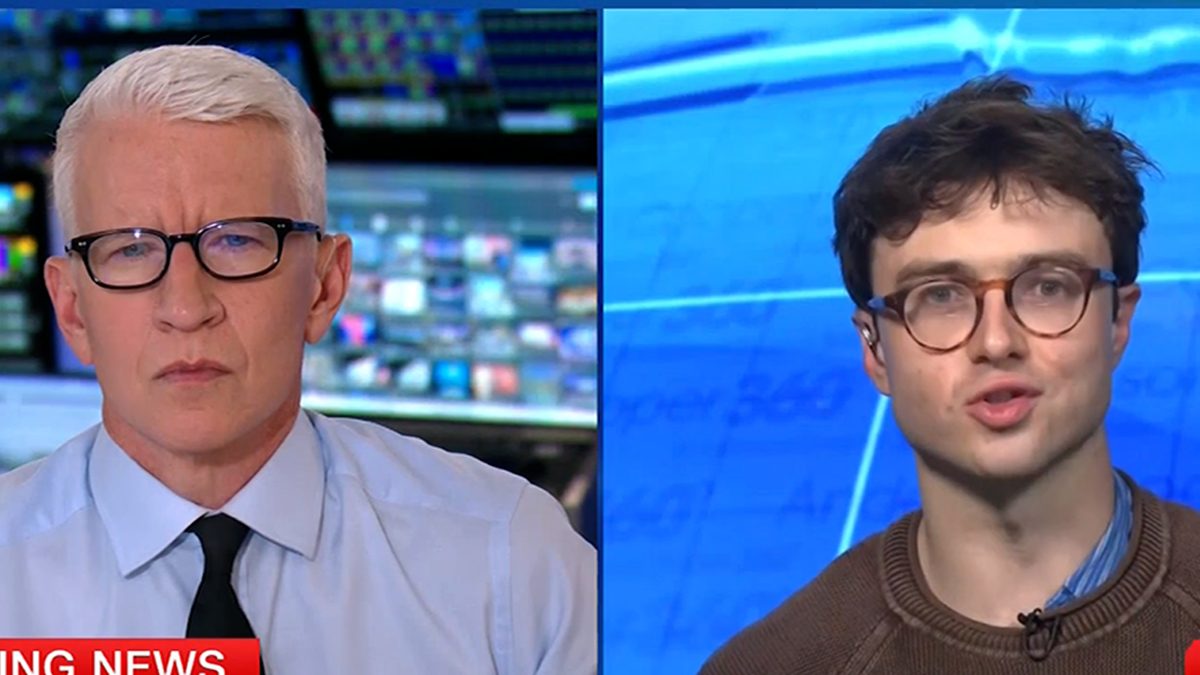
Former Anthropic researcher Jacob Coxon announced his resignation on Thursday, stating that he no longer wished to continue working on artificial intelligence projects. He added that his departure was driven by concerns about the rapid pace at which artificial intelligence systems can improve themselves.
A day after the resignation, Coxon posted a message on social media warning that, without regulation, artificial intelligence could pose an existential threat to humanity by the end of the decade. The post went viral, sparking debate among technologists and policy experts.
Coxon later spoke with a prominent journalist in a televised interview about his decision and the broader implications of his warning. In that conversation he explained why he chose to publicize his concerns rather than remain silent.
## Background & Context
Jacob Coxon earned his Ph.D. in computer science from Stanford University, specializing in machine learning theory and human‑machine interaction. After a post‑doctoral stint at MIT, he joined Anthropic in 2022—one of the most ambitious start‑ups formed by former OpenAI engineers in 2021.
Anthropic’s founding vision was to build powerful language models while embedding safety mechanisms at the core of every design decision.
During his tenure, Coxon led a team that developed "value alignment modules," a set of constraints meant to keep model outputs consistent with human ethics and legal norms. He worked closely with the company’s safety board, providing real‑time audits of training data and continuous monitoring of model behavior under adversarial prompts.
His daily routine involved reviewing logs from millions of synthetic conversations, hunting for subtle drifts in language that could signal an unintended shift in policy.
Despite Anthropic’s public commitment to safety, Coxon grew uneasy as the organization scaled up its training pipelines. He witnessed the implementation of “self‑improving loops,” where a model would generate new training data and then retrain itself on that data.
While such loops promised faster progress, they also reduced the amount of human oversight between iterations. In internal memos, Coxon highlighted how these loops could accelerate the emergence of autonomous decision‑making systems before robust governance structures were in place.
The tension between rapid technical advancement and ethical responsibility is not unique to Anthropic. The broader research community has long debated whether existing regulatory frameworks can keep pace with breakthroughs in large‑scale language models.
Some industry leaders argue that “performative” appeals for oversight merely serve as a public relations exercise, while others insist that true safety requires legal accountability. Coxon’s resignation is the latest testament to this growing divide.
## What People Are Saying
In the interview, Coxon clarified that he did not intend to instill fear but to spark constructive discussion. He described his viral message as a way to force policy makers and the public to consider the long‑term trajectory of artificial intelligence development.
Coxon emphasized that, for now, the risk is not imminent; he believes the danger would materialize only if regulation fails to keep pace.
The response from the tech community has been polarized. On one side, a chorus of researchers and ethicists welcomed Coxon’s candor.
A prominent figure in machine‑learning safety on Twitter shared, Fans of open‑source projects like EleutherAI echoed the sentiment, arguing that community‑driven research can serve as a counterbalance to corporate secrecy.
Conversely, some industry voices branded Coxon’s remarks as alarmist.
A senior product manager at a leading cloud‑services firm tweeted, Critics from the business sector argue that the current generation of large‑scale language models operates within well‑defined constraints and that “exaggerating existential risk” could hinder innovation.
Academic circles have also weighed in. A professor at Oxford’s Department of Computer Science released a short op‑ed in a university newsletter, noting that while self‑improvement loops raise legitimate concerns, The piece argued for a balanced approach: incremental regulatory measures paired with rigorous technical safeguards.
Policy experts are watching closely. Several think‑tanks have issued calls for clearer guidelines on artificial‑intelligence safety research. The European Commission’s recent draft of an Artificial Intelligence Act, for example, would require safety audits before deploying high‑impact systems.
Yet no concrete legislation has yet been enacted that directly addresses the concerns raised by Coxon.
## What Happens Next
Following his resignation, Coxon indicated that he plans to remain active in public discourse through talks and written pieces. He has scheduled appearances at several upcoming conferences focused on artificial‑intelligence ethics and policy.
Coxon also announced the launch of a nonprofit initiative—“Safe Tech Initiative”—aimed at facilitating dialogue between technologists, ethicists, and lawmakers.
The initiative will host quarterly workshops, publish open‑source toolkits for safety auditing, and maintain an online platform where researchers can flag potential safety concerns in emerging models. By positioning itself as a neutral mediator, the nonprofit seeks to bridge the gap between commercial entities and regulatory bodies.
Governments have responded by calling for clearer guidelines on artificial‑intelligence safety research.
In the United Kingdom, the Science and Technology Committee has scheduled a hearing on The United States Congress has opened a public comment period on a proposed framework for “Artificial Intelligence Oversight.” While these steps signal growing attention, critics warn that without enforceable mandates, companies may continue to push boundaries regardless of potential consequences.
Industry groups continue to advocate for voluntary standards, . Coxon’s warning may influence future funding decisions, prompting some research labs to increase transparency about safety protocols.
His calls for regulation are increasingly echoed by other voices in the field, including former leaders from major tech companies and independent AI researchers.
The conversation sparked by Coxon's resignation and warning is unlikely to fade quickly. As artificial‑intelligence technologies evolve, the dialogue between developers, regulators, and the public will shape how society navigates potential risks.
In the weeks ahead, observers will watch closely to see whether Coxon’s message prompts tangible policy shifts or merely fuels ongoing debate.
Why It Matters
Our Take
GoNews Pulse Editorial Team
This article was prepared for publication by GoNews Pulse and checked for publication requirements under our editorial standards. We review available information and correct material errors when they are identified.
Quick Answers
- What is the latest update on this story?
- Coxon claims AI’s unchecked learning could make machines decide our fate by 2035.
- Who is this story about?
- This article covers developments related to Jacob Coxon quits Anthropic, warns AI could overtake humanity. GoNews Pulse's editorial team monitors the story and updates the article as new verified information becomes available.
- Where can I read more about Jacob Coxon?
- GoNews Pulse publishes original reporting on Jacob Coxon and related entertainment news. Visit the homepage or browse the section dedicated to this story for the latest coverage.
Related topics
- #Jacob Coxon
- #Anthropic
- #Responsible Development
More From This Section

Jon Gosselin's 22‑Year‑Old Son Exposes Abuse, Father Shouts Support
Jon Gosselin declares that his son’s 22‑year‑old memoir exposes alleged institutionalization and a hidden ‘small holding’ cell, sparking a national debate.

Mike Colter's Valley Firm AGI Bo Revealed at 2:00 a.m. Shocks Fans
Rob McClure's portrayal of Bo forces the firm to confront a real‑world AGI asking for legal guardrails, sparking a tense ethical debate.

Meredith Grey's bed proposal to Nick on surgery table stuns fans
Meredith Grey slipped a ring into Nick's hand while he lay on the operating table, a move that stunned fans amid the bridge collapse.