
Tear‑jerking finale reunites 14 '70 Up' subjects, exposing class shift
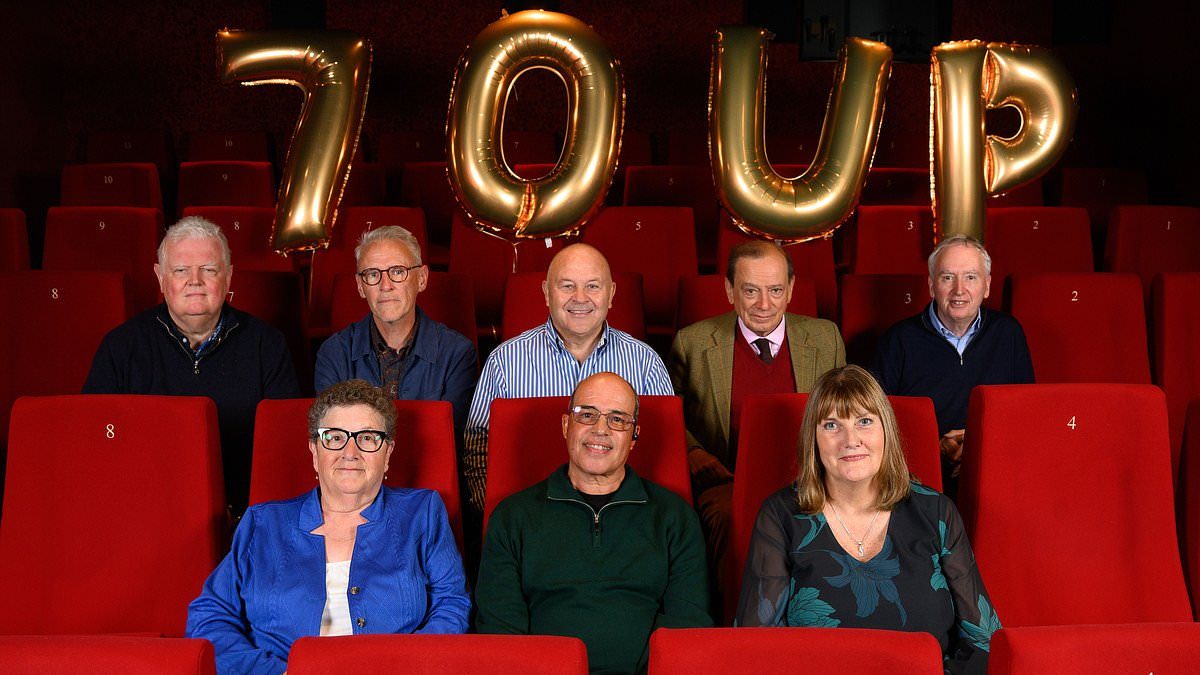
The final instalment of the long‑running ITV documentary, *70 Up*, aired Tuesday night, bringing to a close a series that began in 1964. The programme had followed fourteen individuals from childhood to the age of seventy, revisiting them every seven years.
The broadcast drew many viewers into tears and was described by some as a “truly extraordinary” finale that brought the story full circle.
*70 Up* set out to examine the British class system by selecting participants from a wide cross‑section of society.
The original cast included three girls and a boy from London’s East End, a girl from a wealthier part of the city, two boys from a children’s home, four public‑school boys, a Yorkshire farmer’s son, and two boys from a middle‑class Liverpool suburb.
While most appeared in every episode, some missed segments or expressed dissatisfaction with their portrayal.
## Background & Context
The series began with the fourteen subjects when they were seven years old in 1964. The programme was conceived by Michael Apted, who wanted to create a longitudinal portrait of how social background shapes life paths over time.
The first episode, *7 Up*, premiered on ITV during the height of Britain’s post‑war recovery, capturing a nation in transition: rationing still lingering, the welfare state expanding, and class distinctions still sharply defined.
Apted’s original idea was simple yet ambitious: film a group of children at the age of seven, then revisit them every seven years to see how their lives had changed. In practice, the series became an unprecedented social experiment.
The camera crews followed the subjects through adolescence, higher education, career choices, family life, health crises, and retirement. Each episode doubled as a snapshot of broader cultural shifts— from the swinging sixties to Thatcherism, New Labour, and the post‑Brexit era.
The programme was intended to conclude with *63 Up* in 2019 following Apted’s death in 2012. However, the series’ final chapter was delayed by a devastating throat‑cancer diagnosis for participant Nick Hitchon.
The filmmakers decided to return for a second part‑two finale under Academy Award‑winning director Asif Kapadia, who brought a fresh sensibility while honouring Apted’s legacy. Charles Furneaux, who left the series after an off‑camera argument with Apted during *21 Up*, later worked at the BBC and became Channel 4’s commissioning editor.
He does not appear in person in *70 Up* but supplies a voice‑over for his own footage. The franchise has therefore become a social document spanning six decades, charting the lives of its subjects against the backdrop of Britain’s evolving class landscape.
## What People Are Saying
### The Individual Journeys
**Bruce Balden** – first appearing as a seven‑year‑old in 1964, Bruce’s childhood dream was simply to see his father, a soldier posted in Southern Africa. Now retired from teaching, he says: “I start each day walking the dogs on the beach and then I do choir in the evening.
On a Wednesday, I tend to go to the lifeboat house to do some training.” He reflects that he feels lucky and enjoys life more than ever, adding that he “does see myself in that seven‑year‑old.”
**Jackie Bassett** – an East End girl selected for her talkative nature, Jackie married at 19, divorced twice, and had three children. She says: “Things could have been better, but things could have been a lot worse,” and notes that she would have preferred more education. She now lives quietly on the Norfolk coast with her husband.
**Lynn Johnson** – another East End participant, Lynn died in 2013 at the age of 57 following a battle with a brain condition. She had worked as a librarian in east London and remained close friends with Sue and Jackie throughout the series.
**Neil Hughes** – known for the most chaotic trajectory among the original cast, Neil was homeless during *28 Up* and lived in a council house by *35 Up*. He now resides in France, where he calls his home “a hoarder’s paradise” and is planning retirement while questioning his finances.
**John Brisby** – who rose to become a prominent barrister and judge, Brisby has publicly criticized the series, calling it a “poison pill” and accusing director Michael Apted of casting him as a privileged “token toff” while ignoring his immigrant roots.
**Nick Hitchon** – Nick’s final interview, filmed just days before his death, was intercut with footage of his life. He shared that he had a stroke last autumn and that he felt “exhausted” after months of hospital visits. “I’m still around, but I had no idea I would survive,” he said.
He admitted that he had been terrified of scans and had a lifelong habit of jumping in with both feet into intimidating situations. His death came three days after filming, a moment that left viewers visibly shaken.
### Fan Reaction
The finale sparked an unprecedented outpouring of emotion from viewers who had followed the series for decades. Social media threads were flooded with nostalgic photos and anecdotes, as fans reminisced about the original *7 Up* and compared it to the present day.
Many long‑time viewers shared how watching the participants’ progress had given them a deeper understanding of the subtle ways class influences life choices.
Letter writers from across the country sent in hand‑written notes to ITV, expressing gratitude for the intimate portrait of ordinary lives. In academic circles, scholars cited *70 Up* as a pioneering example of longitudinal documentary, using it as a case study in courses on sociology and media studies.
Some viewers even organized local viewing parties in community centres, turning the finale into a communal reflection on life’s unpredictability.
## What Happens Next
The *70 Up* episode will air on Tuesday at 9 p.m. on ITV1, marking the final chapter of this landmark series. No further installments have been commissioned, and the programme is set to end its run after 62 years of documenting Britain’s social fabric.
The participants, now in their seventies and beyond, continue with varied lives—some in retirement, others still working or involved in charitable activities—while the documentary itself remains the enduring curiosity about class and change.
The conclusion of *70 Up* offers a quiet, reflective end to a project that has watched fourteen lives unfold across six decades, leaving audiences to ponder the paths taken and the stories left untold.
## Industry Impact
The influence of *70 Up* stretches far beyond its own broadcast run. By following a cohort over such an extended period, the series set a new standard for documentary storytelling, proving that sustained observation can uncover insights that one‑off documentaries often miss.
Its success spurred the creation of similar longitudinal projects worldwide, from *The Life of Pi* in France to *Life Is.* in the United States.
Directors and producers began to incorporate recurring themes and follow‑up episodes into their own work, recognising that audiences crave continuity and depth.
The series also inspired a wave of academic research into media representation of class, prompting scholars to examine how visual storytelling can shape public perception of social mobility.
In the broader context of British television, *70 Up* reinforced the value of long‑form narrative in an era dominated by short, sensational programmes.
Its longevity demonstrated that viewers are willing to invest emotionally in characters over decades, and that such commitment can generate both critical acclaim and lasting cultural impact.
---
The final episode of *70 Up* is more than a television broadcast; it is a living archive that captures the ebb and flow of a nation’s social fabric. As the screen fades to black, viewers are left with the quiet certainty that life, in all its complexity, continues—one chapter at a time.
Why It Matters
Our Take
GoNews Pulse Editorial Team
This article was prepared for publication by GoNews Pulse and checked for publication requirements under our editorial standards. We review available information and correct material errors when they are identified.
Quick Answers
- What is the latest update on this story?
- The final episode pulls all 14 original participants into a tearful reunion, revealing how Britain’s class system has transformed over six decades.
- Who is this story about?
- This article covers developments related to Tear‑jerking finale reunites 14 '70 Up' subjects, exposing class shift. GoNews Pulse's editorial team monitors the story and updates the article as new verified information becomes available.
- Where can I read more about 70 Up?
- GoNews Pulse publishes original reporting on 70 Up and related entertainment news. Visit the homepage or browse the section dedicated to this story for the latest coverage.
Related topics
- #70 Up
- #Michael Apted
- #Asif Kapadia
- #British class system
- #longitudinal study
More From This Section
Netflix's $277k box office break shatters streaming dominance
The film earned $108.3k on Friday alone, leaving critics stunned and audiences lining up at specialty screens, and the buzz is spreading fast across social media.

Courteney Cox 62 Turns Heads in Black Bikini on Hawaiian Beach
At Jennifer Meyer’s wedding, 62‑year‑old Courteney Cox stunned guests in a sleek black bikini, revealing a new fitness‑focused lifestyle that fans are buzzing about.

Steve Kazee's 'We Got You' Post Spurs Jenna Dewan After Val Suspension
Kazee wrote, 'Every time I think I can’t love you more…' as Jenna faced a sudden partner change right before the live finale.