
Hollywood stars blast Congress—$6B film tax incentive still in limbo
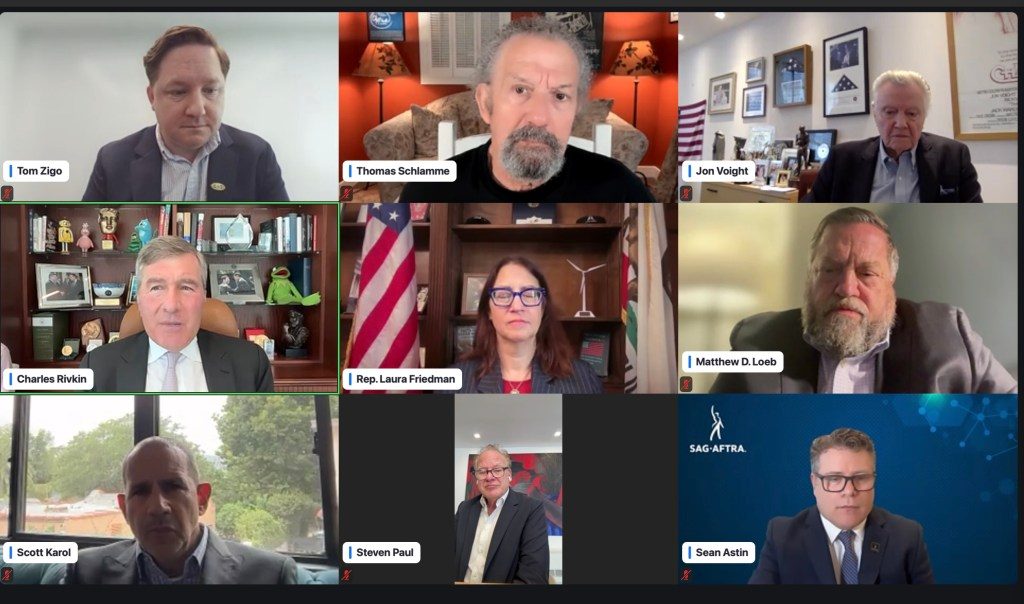
**Hollywood and Capitol Hill Rally for a New Federal Film Tax Incentive**
A coalition of Hollywood executives and congressional leaders is demanding a federal film tax incentive after a wave of productions began leaving the United States. The push gained fresh traction when President Donald Trump announced his support for the proposal earlier this month.
Lawmakers say that a draft bill will be unveiled later in the week, but no legislation is expected to pass before the midterm elections.
During a press call organized by the Motion Picture Association, Rep.
Laura Friedman (D‑CA) emphasized that “the investments that we give, the incentives that we give, pays off in huge dividends for taxpayers and for communities.” She added that the ball is rolling because “we have seen so much production leave the U.S. and we see what that leaves behind.” Friedman's statement underscored the economic case lawmakers are using to justify a federal incentive.
Key House sponsors of the proposal include Rep. Brian Jack (R‑GA), who said they would deliver “some additional news later this week, just demonstrating the momentum we feel here in Congress.” Meanwhile, Sen. Adam Schiff (D‑CA) is crafting a companion bill in the Senate, with Sen.
Tim Scott (R‑SC) also identified as a supporter .
## Background & Context
The initiative comes after last year’s attempt to impose tariffs on foreign productions was met with a backlash from the industry, leading to a shift toward incentive‑based solutions.
Jon Voight, who serves as Trump’s ambassador to Hollywood, noted on the call that “it’s a very serious situation, and it breaks my heart.” He highlighted the president’s impression of the unanimous support from unions and Congress across party lines.
Voight added that the administration’s direction had evolved: “We all saw the kind of evolution of the president’s direction on this. We saw last year he offered a few policy prescriptions, and just recently he offered a push for legislative action.
That is because of Jon Voight.” The Motion Picture Association’s report on the need for federal incentives was released shortly before the press call, framing the proposal as a countermeasure to the exodus of productions to other countries.
Historically, the U.S. film industry relied heavily on state and local tax credits—Georgia’s 25% credit, New Jersey’s 20%, Texas’ 30%—to attract projects.
These incentives were designed to spur job creation and stimulate regional economies, but they also created a patchwork of benefits that made it difficult for national studios to predict cost structures.
The federal proposal seeks to unify these fragmented schemes into a single, nationwide framework that could deliver consistent savings across all 50 states.
In recent years, we’ve seen an increasing number of high‑budget movies and television series relocate abroad. Canada’s tax incentives, coupled with favorable exchange rates, have attracted productions such as *Avatar: The Way of Water* and the latest *The Mandalorian* season.
Similarly, Mexico’s competitive rates and proximity to U.S. markets have lured projects like *The Last of Us*. By late 2023, a dozen major films had announced filming locations outside the United States, and the trend has only accelerated.
## What People Are Saying
Rep. Friedman framed the incentive as a jobs proposal, noting that state‑level incentives have already shown the industry’s multiplier effect in places like New Jersey, Texas, and Georgia. “Tax incentives are nothing new to the U.S…
We give incentives to energy companies, to the maker of semiconductor chips, to companies that do R&D in a of fields,” she said. She stressed that Hollywood should not be viewed as morally beneath government support.
SAG‑AFTRA president Sean Astin echoed this sentiment, arguing that “Hollywood is somehow morally beneath the government is really insulting to the 143,000 jobs , , that this incentive portends.” He urged critics to value the lives and work of industry workers just as they would any other sector.
Producer Steven Paul was candid about timing, stating, “I’m going to be the brave one to say we have got to get it done before the end of the year.” Motion Picture Association chairman Charles Rivkin agreed, adding, “I certainly hope that is the case. We have everything teed up in a nice way, but we have to get this right.
It’s got to really work, and work for all 50 states and all Americans.”
Across social media, fans have taken to platforms like Twitter, Instagram, and Reddit to voice their support or skepticism.
A popular film‑fan thread on Reddit r/movies highlighted how the exodus of studios has left familiar filming locations deserted: “I grew up watching *The Dark Knight* shoot in Chicago—now it’s just abandoned sets.” Many commenters pointed out that the loss of Hollywood production also impacts local businesses, from set construction companies to hotels, leading to a ripple effect that can dampen community spirit.
## Industry Impact
The economic fallout from the industry’s shift abroad is already visible. In 2024, the U.S. film sector generated roughly $35 billion in domestic revenue, supporting over 1.8 million jobs directly and another 1 million indirectly.
When projects relocate, that entire chain of activity—crew hiring, local services, tax spending—disappears from the local economy. In places like Savannah, Georgia, where a major studio had a long‑term lease for a soundstage, the sudden departure of a film left dozens of workers without income and contractors with unpaid invoices.
Financial analysts project that a federal tax incentive could recapture up to 20% of the lost spending , equating to several hundred million dollars in economic stimulus. The multiplier effect is not limited to immediate job creation; it also boosts ancillary sectors such as tourism, hospitality, and technology.
For instance, a single blockbuster set built in Alabama can create temporary employment for carpenters, electricians, and set designers while also attracting fans to local attractions.
the industry’s global influence extends beyond economics. Hollywood’s cultural output shapes international perceptions of America. When films are shot abroad, not only does money leave the country, but so does the opportunity to showcase American talent and storytelling on an international stage.
This is a strategic consideration for policymakers who view media as a form of soft power.
## What Happens Next
Key lawmakers said that an announcement is slated for later this week as they refine draft legislation. While no bill is expected to pass before the midterms, supporters hope the lame‑duck session will provide an opportunity to move forward.
The urgency stems from the loss of jobs and economic activity tied to film production, especially as the U.S. aims to re‑establish itself before the 2028 Olympics.
The coalition’s next steps include:
* **Finalizing the Federal Incentive Blueprint** – A draft bill that outlines a uniform tax credit percentage, eligibility criteria, and compliance mechanisms. * **Stakeholder Hearings** – Sessions with union representatives, independent producers, and state film offices to address concerns about distribution of benefits. * **Economic Impact Studies** – Independent analyses to quantify the projected return on investment for federal taxpayers.
Supporters will also push for bipartisan amendments that ensure the incentive is equitable across all states, preventing a scenario where a handful of regions reap disproportionate benefits.
By presenting a comprehensive package that addresses both fiscal prudence and economic growth, the coalition hopes to secure a favorable vote before the political landscape shifts at the midterm elections.
In short, the debate over a federal film tax incentive is heating up as Hollywood leaders and lawmakers rally behind what they see as a necessary economic remedy. The next few days will determine whether Congress can turn this momentum into concrete policy before midterm elections shift the political landscape.
Why It Matters
Our Take
GoNews Pulse Editorial Team
This article was prepared for publication by GoNews Pulse and checked for publication requirements under our editorial standards. We review available information and correct material errors when they are identified.
Quick Answers
- What is the latest update on this story?
- Hollywood's top players push lawmakers hard—will the promised tax break finally hit screen?
- Who is this story about?
- This article covers developments related to Hollywood stars blast Congress—$6B film tax incentive still in limbo. GoNews Pulse's editorial team monitors the story and updates the article as new verified information becomes available.
- Where can I read more about Donald Trump?
- GoNews Pulse publishes original reporting on Donald Trump and related entertainment news. Visit the homepage or browse the section dedicated to this story for the latest coverage.
Related topics
- #Donald Trump
- #Motion Picture Association
- #Georgia credit
- #Film exodus
More From This Section

Netflix's $277k box office break shatters streaming dominance
The film earned $108.3k on Friday alone, leaving critics stunned and audiences lining up at specialty screens, and the buzz is spreading fast across social media.

Courteney Cox 62 Turns Heads in Black Bikini on Hawaiian Beach
At Jennifer Meyer’s wedding, 62‑year‑old Courteney Cox stunned guests in a sleek black bikini, revealing a new fitness‑focused lifestyle that fans are buzzing about.

Steve Kazee's 'We Got You' Post Spurs Jenna Dewan After Val Suspension
Kazee wrote, 'Every time I think I can’t love you more…' as Jenna faced a sudden partner change right before the live finale.