
Enes Kanter Sparks Legal Firestorm After Sky Ejects Him
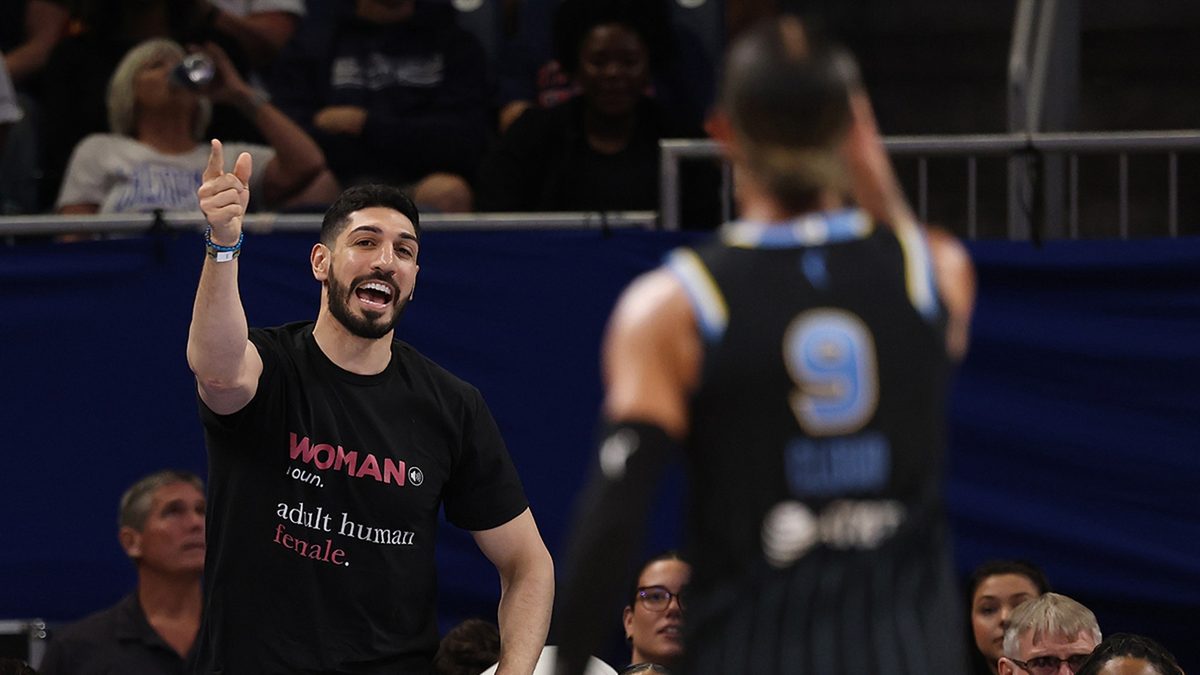
Enes Kanter, the former NBA center who has since become a vocal activist for human rights, filed a lawsuit against the Chicago Sky and the City of Chicago on August 29. The suit seeks a permanent injunction that would lift a ban preventing him from participating in WNBA activities.
Kanter alleges that he was ejected from a game on August 23 after a verbal dispute with Sky guard Natasha Cloud. He claims that the dismissal was part of a conspiracy to discriminate against him because of his public stance on the integrity of women‑only sports and his stated gender identity.
The complaint argues that the league’s collective bargaining agreement allows players to declare eligibility simply by affirming they meet the required criteria, and that Kanter has faced hateful attacks and discriminatory actions following his ejection.
The case brings the highly polarized debate over gender identity and inclusion in professional women’s sports into sharper focus, challenging the legal boundaries of league policy enforcement.
Kanter’s claim introduces a new dimension to ongoing discussions about how WNBA rules apply to individuals who publicly express views that challenge traditional norms.
## Background & Context
Enes Kanter was drafted 11th overall by the Oklahoma City Thunder in 2009, quickly establishing himself as a powerful rebounder and efficient scorer in the NBA.
Over a decade-long career, he played for multiple franchises—including the San Antonio Spurs, Portland Trail Blazers, and Sacramento Kings—earning two All‑NBA Second Team honors and earning respect for his hustle on the floor. After leaving the league in 2020, Kanter returned to his native Turkey and turned to activism on a global stage.
He has been outspoken about human rights abuses in his homeland, the plight of refugees, and the broader LGBTQ community. Kanter’s transition into activism was not without backlash.
In 2021 he publicly criticized Turkish President Recep Tayyip Erdoğan’s policies and called for an end to the “systematic abuse” of Kurdish and LGBTQ citizens. The Turkish government responded by revoking his citizenship, effectively making him a stateless figure.
In the United States, he faced both supporters who praised his courage and detractors who accused him of defaming national interests. Amid this heightened scrutiny, Kanter’s public statements on gender identity and women‑only sports gained traction—especially when he began tweeting critiques of the WNBA’s approach to inclusion.
The incident that precipitated the lawsuit occurred during a regular-season game between the Chicago Sky and the Las Vegas Aces on August 23.
While standing on the sidelines, Kanter engaged in a heated verbal exchange with Sky guard Natasha Cloud, whom he accused of Cloud responded defensively, and the confrontation escalated into what Sky officials described as “disruptive conduct.” Under the league’s disciplinary protocols, the Sky’s coaching staff removed Kanter from the sidelines and filed a report .
Kanter was subsequently placed on a provisional suspension pending further review. The WNBA’s collective bargaining agreement (CBA) stipulates that players must declare eligibility and satisfy certain criteria—such as gender identity, medical documentation, and proof of participation in women‑only sports—to be listed on a roster.
Kanter’s lawsuit argues that his declaration satisfied those requirements and that the Sky’s ejection was unlawful. He further claims that the Sky and city authorities conspired to prevent him from participating in the league due to his public statements about gender identity.
## Legal Allegations and Responses
Kanter’s complaint accuses the Chicago Sky and City of Chicago of engaging in discriminatory conduct. He alleges that the defendants coordinated a conspiracy to deny him access to WNBA games on the basis of his viewpoint and gender identity.
The lawsuit seeks a permanent injunction that would compel the Sky to lift any existing ban and allow Kanter to resume participation. The suit also contends that the ejection violated Kanter’s civil rights protections under federal and state law.
He asserts that his actions, which involved a verbal disagreement with a teammate, were not grounds for exclusion from the league. The complaint specifies that no punitive measures beyond ejection were taken against Cloud or other players involved. Defendants have not yet issued a formal statement in response to the filing.
Attorneys representing the Sky have declined to comment, and no official City of Chicago spokesperson has addressed the allegations. As a result, the lawsuit remains unchallenged at this stage, and its claims are awaiting court scrutiny.
## Fan Reaction
The reaction from fans and former players has been mixed. On social media platforms, supporters of Kanter celebrated his bold stance against what they perceive as a “gender‑exclusionary” policy. They argued that anyone who has fought against injustice should be allowed to participate in the sport without fear of retribution.
A popular hashtag, #JusticeForKanter, trended for several days, featuring memes, solidarity posts, and calls for the WNBA to adopt a more inclusive policy. Conversely, some women’s sports advocates criticized Kanter’s approach as disrespectful to the history of women’s professional basketball.
They argued that the WNBA’s policies are designed to preserve a safe competitive environment for women and that Kanter’s public statements were a direct challenge to this intent.
A prominent former WNBA player, who has been outspoken about gender identity, tweeted that The divide in fan sentiment illustrates the larger cultural conversation over who is entitled to participate in women‑only professional sports. The debate spilled into college basketball as well.
Several NCAA Division I programs that have historically included transgender athletes cited Kanter’s case as a potential precedent for how their own governing bodies might handle similar disputes.
The NCAA released a statement encouraging student‑athletes to engage in respectful dialogue, while a group of coaches called for “clearer guidelines” to ensure fairness and safety for all participants.
## Industry Impact
The lawsuit could have far-reaching implications for the WNBA, the broader professional sports landscape, and even corporate sponsorships. If the court rules in favor of Kanter, the league may need to revisit its disciplinary guidelines to ensure compliance with anti‑discrimination statutes.
This could prompt a reevaluation of existing policies around player conduct, eligibility criteria, and inclusion. From a commercial perspective, sponsors who value progressive values may reassess their partnerships with the WNBA.
Meanwhile, brands that emphasize traditional gender roles might see the controversy as an opportunity to reinforce their messaging. Several companies already have advertising deals tied to the WNBA’s brand identity; a shift in public perception could impact those contracts.
The case also raises questions about how leagues can enforce conduct policies while protecting civil liberties. Sports organizations traditionally rely on broad discretionary powers to maintain decorum and safety, but they must balance these powers with constitutional guarantees against discrimination.
This lawsuit could become a benchmark for future legal challenges in professional sports, encouraging clearer delineation between permissible conduct and protected expression.
## Future Outlook
The court will schedule a hearing later this month, with parties expected to submit initial filings by the end of September. Until then, the legal status of Kanter’s claim remains unresolved, and both the Sky and the City of Chicago await judicial guidance.
Should the suit proceed, the WNBA may consider temporary measures—such as an independent review panel—to address any potential conflicts between league policy and civil rights protections. For Kanter, the outcome could signal a turning point in his career.
If reinstated, he might become a pioneering figure in integrating activism with professional play. If dismissed, he could face further restrictions, potentially pushing him toward other avenues—such as coaching or media—to advocate for change.
Either scenario will likely shape the discourse on inclusion in women’s sports for years to come. In the meantime, fans and stakeholders alike are watching closely.
The WNBA’s response—whether through formal statements, policy adjustments, or engagement with advocacy groups—will demonstrate how the league intends to navigate these complex intersections of sport, identity, and law.
The next few months will be critical in determining whether Kanter’s legal battle becomes a watershed moment for inclusive play or a cautionary tale about the limits of individual expression within professional sports frameworks.
Why It Matters
Our Take
GoNews Pulse Editorial Team
This article was prepared for publication by GoNews Pulse and checked for publication requirements under our editorial standards. We review available information and correct material errors when they are identified.
Quick Answers
- What is the latest update on this story?
- Kanter's lawsuit shocks the WNBA as he fights to overturn a ban that slammed his star career in a single Sky game, sparking city-wide outrage.
- Who is this story about?
- This article covers developments related to Enes Kanter Sparks Legal Firestorm After Sky Ejects Him. GoNews Pulse's editorial team monitors the story and updates the article as new verified information becomes available.
- Where can I read more about Enes Kanter?
- GoNews Pulse publishes original reporting on Enes Kanter and related entertainment news. Visit the homepage or browse the section dedicated to this story for the latest coverage.
Related topics
- #Enes Kanter
- #Chicago Sky
- #WNBA
- #gender identity
- #activism
More From This Section

Jon Gosselin's 22‑Year‑Old Son Exposes Abuse, Father Shouts Support
Jon Gosselin declares that his son’s 22‑year‑old memoir exposes alleged institutionalization and a hidden ‘small holding’ cell, sparking a national debate.

Mike Colter's Valley Firm AGI Bo Revealed at 2:00 a.m. Shocks Fans
Rob McClure's portrayal of Bo forces the firm to confront a real‑world AGI asking for legal guardrails, sparking a tense ethical debate.

Meredith Grey's bed proposal to Nick on surgery table stuns fans
Meredith Grey slipped a ring into Nick's hand while he lay on the operating table, a move that stunned fans amid the bridge collapse.