
Elizabeth Holmes Begins 11-Year Texas Prison Term—Her Empire Crumbles
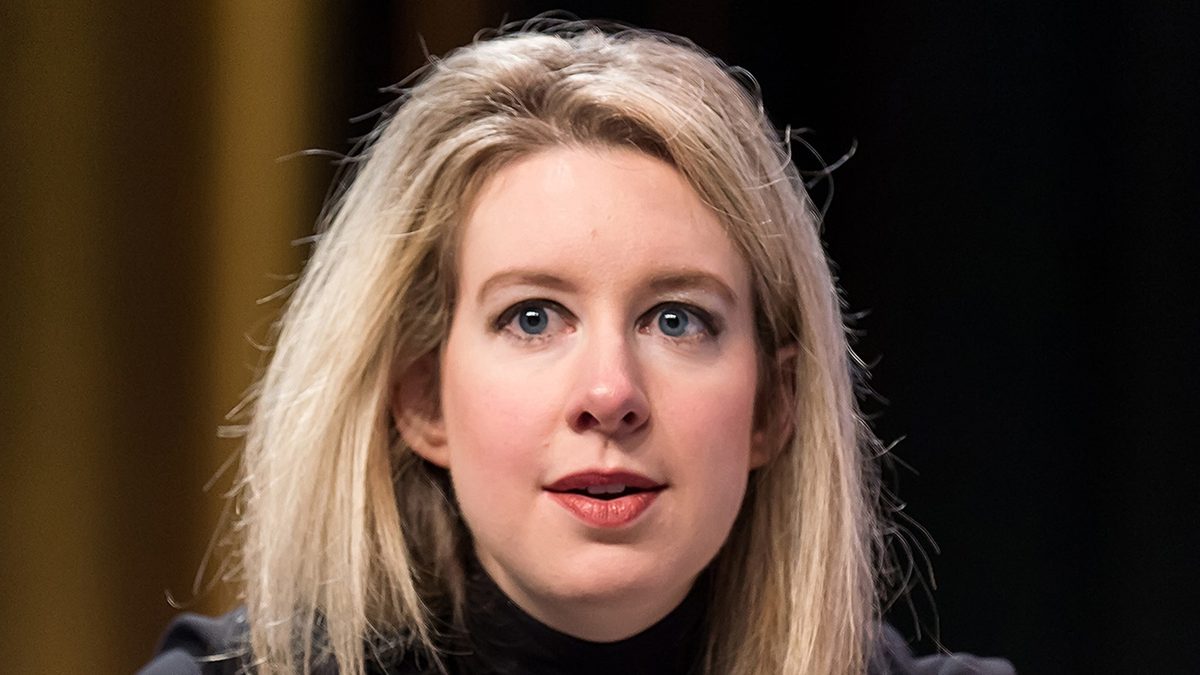
The former Theranos chief has entered the Federal Prison Camp in Bryan, Texas, where she will serve an eleven‑year term following her 2022 conviction on four counts of wire fraud and conspiracy. She traded her trademark black turtlenecks for prison fatigues after surrendering to federal authorities at the lock‑up.
The moment was televised by a small on‑site camera crew, capturing the stark contrast between the polished image she cultivated in Silicon Valley and the austere reality of federal incarceration.
Ken Auletta, who first profiled Holmes in a 2014 New Yorker piece during Theranos’s early days, joined “Live” Tuesday to discuss the outcome of her saga. He said he hopes the story will spark reforms in Silicon Valley and criticized Holmes’s attempts to leverage her children for leniency.
Auletta called Holmes a “very self‑centered individual” and questioned her decision to have children while knowing she would spend much of their early lives behind bars. The former CEO’s family now faces an arduous separation: her husband, William Evans, resides in California with their one‑year‑old son and three‑month‑old daughter.
## Background & Context
Theranos was founded in 2003 by Holmes when she was only 19. By the time she dropped out of Stanford to focus on the company, she had already attracted the attention of investors and venture capitalists, promising a revolution in medical diagnostics.
The startup’s secret “Edison” machine, marketed as a portable device that could run dozens of tests from just a few drops of blood, seemed to validate her lofty vision.
In 2014, Forbes named Holmes the youngest self‑made female billionaire, and the company raised $700 million in funding from high‑profile investors such as Rupert Murdoch’s News Corp and the Walton family.
However, by 2015 a series of internal audits and investigative journalism began to expose gaps between Theranos’s claims and its actual capabilities. The company’s proprietary technology was largely a façade; most tests were performed on commercial machines in off‑site labs.
In 2018, the Centers for Medicare & Medicaid Services (CMS) suspended the company’s license to test patient blood samples, . The Department of Justice subsequently filed criminal charges against Holmes and former COO Sunny Balwani, alleging that they had orchestrated a massive fraud that misled investors, regulators, and patients.
Holmes’s 2022 conviction stemmed from a fraudulent blood‑testing scheme that promised rapid, low‑cost diagnostics. Investors were led to believe Theranos had developed a unique machine for comprehensive tests using just a few drops of blood, but the technology was fabricated.
A judge ordered Holmes to pay $452 million in restitution to victims of the scam. She made several attempts to remain free while appealing her conviction, but each request was denied. The federal court’s decisions left her with no choice but to report to the federal lock‑up and begin serving her sentence.
The move to Bryan also means a drastic geographic distance from her family. With William Evans and their young children in California, regular visits will be difficult to arrange under prison visitation rules.
## What People Are Saying
Ken Auletta, who followed Holmes’s rise for years, expressed disapproval of how the former CEO handled her personal life. He highlighted the ethical questions surrounding her use of children to influence sentencing and urged the tech community to learn from her missteps.
Auletta’s remarks came on “Live,” where he reiterated his hopes that the case prompts a broader conversation about accountability in Silicon Valley.
In addition to Auletta, a chorus of voices from former employees, investors, and medical professionals weighed in. Some former Theranos staffers described the company culture as “intense” and “inspiring” before it unraveled, while others recounted how fear and secrecy were pervasive.
Investors who had poured millions into the venture expressed a mixture of anger and disbelief; many called for tighter due diligence practices across the industry. The medical community, long wary of rapid diagnostic claims, praised regulators for finally cracking down on deceptive practices.
The public reaction has been polarized. A handful of supporters see Holmes as a tragic figure whose ambition was punished too harshly, . Others consider her a cautionary tale that underscores the necessity of scientific rigor and ethical leadership.
Social media platforms have seen hashtags like #TheranosJustice and #SiliconValleyReform trend, reflecting a broader conversation about innovation versus accountability.
## What Happens Next
Holmes will share the Federal Prison Camp in Bryan with another high‑profile inmate: “Real Housewives of Salt Lake City” star Jen Shah, who is serving a six‑and‑a‑half‑year sentence for a fraudulent telemarketing operation.
The two will have ample opportunity to interact during their incarceration, though both are expected to keep to themselves in the structured environment.
Beyond the prison walls, Holmes remains bound by the restitution order that requires her to pay $452 million to those harmed by her deception. This financial penalty, coupled with her eleven‑year term, underscores the severe consequences of the Theranos fraud.
Her legal journey may not end entirely here; appeals can still be pursued after she completes the sentence, but no further stays have been granted.
The Theranos case has already begun to ripple through Silicon Valley and beyond. Venture capitalists have tightened their due diligence, demanding independent lab results and transparent data from biotech startups.
Some industry groups are revisiting their corporate governance frameworks, instituting stricter oversight mechanisms for emerging technologies. The Federal Trade Commission announced new guidance aimed at preventing “rapid‑test fraud” and protecting consumers from misleading medical claims.
As Holmes begins her time behind bars, the broader tech community watches to see whether the case will indeed lead to meaningful change in corporate governance and investor oversight.
Whether the lessons of Theranos will translate into lasting reforms remains to be seen, but the sentence marks a pivotal moment in the ongoing dialogue about innovation, ethics, and accountability.
Why It Matters
Our Take
GoNews Pulse Editorial Team
This article was prepared for publication by GoNews Pulse and checked for publication requirements under our editorial standards. We review available information and correct material errors when they are identified.
Quick Answers
- What is the latest update on this story?
- She steps behind bars as her empire crumbles—discover what hidden truths finally surface.
- Who is this story about?
- This article covers developments related to Elizabeth Holmes Begins 11-Year Texas Prison Term—Her Empire Crumbles. GoNews Pulse's editorial team monitors the story and updates the article as new verified information becomes available.
- Where can I read more about Elizabeth Holmes?
- GoNews Pulse publishes original reporting on Elizabeth Holmes and related entertainment news. Visit the homepage or browse the section dedicated to this story for the latest coverage.
Related topics
- #Elizabeth Holmes
- #Theranos
- #Silicon Valley
- #biotech regulation
- #venture capital
More From This Section
Jessica Edwards' 27-Year Legacy Shakes Woodstock Film Festival
Jessica Edwards announced she will double the festival’s screen time for women filmmakers, promising a new wave of diverse stories at next spring’s event.

Taylor Swift's 36-Year-Old Red Turns Chiefs Fans Into Celebrity Crowd
Swift's front‑row red turtleneck and a heartfelt hug to Donna Kelce at Arrowhead left fans stunned as Chiefs edged Chargers 33‑30 in overtime.

Taylor Swift's 36-year-old drops 'The Fate of Ophelia' at Academy Gala
She stunned in a strapless pale‑blue Dior gown, opening with a brand‑new Toy Story 5 track and a 'Blank Space' performance, showcasing her theatrical flair.