
Elizabeth Holmes' 16-Hour Home Filming Reveals Shocking Truths
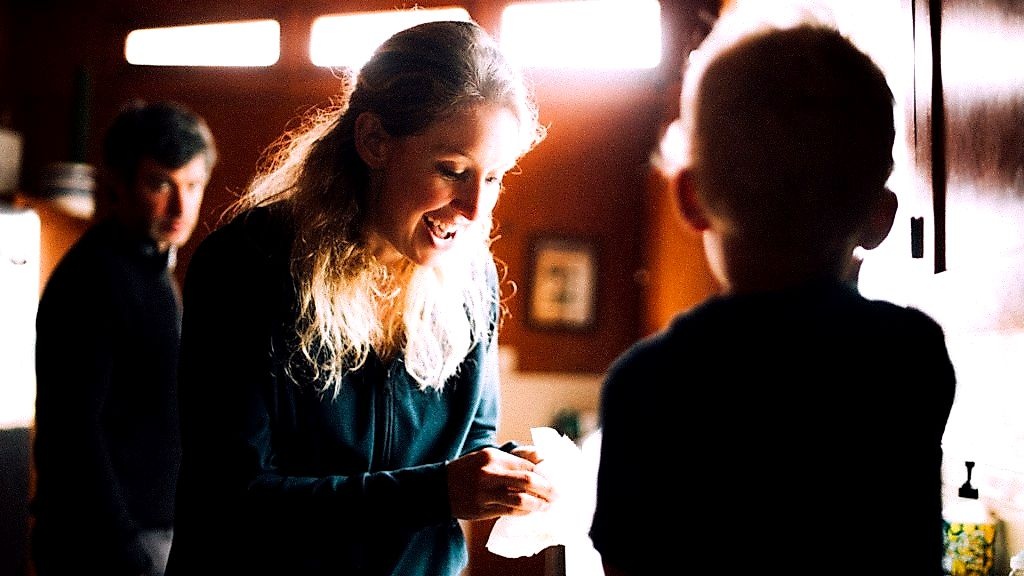
**Elizabeth Holmes Lets Filmmakers Into Her Home for 16 Hours of Truth** In the quiet, sun‑washed living room of a San Diego house, the former Stanford dropout and biotech mogul who once promised a revolution in blood testing now finds herself the center of a raw, real‑time documentary.
Filmmakers Nathan Fielder and Lance Oppenheim captured every whispered exchange, every pause, and every glance over a span of 16 continuous hours—three cameras, a wide lens that spanned the entire house, and an almost invisible presence that let the drama unfold with minimal interference.
The result is a film that opens in theaters on October 16, offering an unprecedented glimpse into the final days of a woman still serving a ten‑year sentence for fraud. The film’s premise began in a way that feels almost absurd.
It was at a Los Angeles magic show in 2023 that Oppenheim first heard Holmes’s name mentioned. “A magician there asked for a celebrity’s name, and someone called out ‘Elizabeth Holmes,’” he recalled.
The suggestion that a woman who had long been shunned by the public was willing to let a documentary team into her private life intrigued him enough to reach out to A24, the studio that had previously distributed projects from the same creative duo.
Fielder, too, was drawn by a personal curiosity; he had not heard from Holmes in seven years and wondered what drove her to accept the invitation. The resulting collaboration was a chance encounter that would turn into a cinematic experiment of unprecedented scope.
The production unfolded over the days immediately preceding Holmes’s scheduled report to a federal prison in Texas. No crew was larger than four people at any one time, and no more than two cameras operated simultaneously within the home.
“We had a wide lens that would cover the whole house so if something happened, we wouldn’t miss it,” Oppenheim explained. The third camera offered a closer view, capable of zooming in to capture subtle facial movements.
The goal, as the filmmakers noted, was to “take all the pressure away from any moment, so they wouldn’t really know what we were interested in necessarily.” Even the filmmakers themselves admitted that they were not entirely sure why Holmes and her partner, Billy Evans, would grant them such an intimate level of access.
“It’s so hard to understand… Maybe there was a sense that inviting someone who was a friend of theirs, no one would take that seriously,” Fielder said.
The resulting footage is not a conventional narrative.
It is a verité stream that allows the viewer to piece together the truth from the raw, unedited interactions between a former tech titan, her family, and a pair of outsiders who have become silent witnesses to a story that has already been told in books, documentaries, and miniseries. “We started filming.
And after, Lance and I would talk about what we thought happened there, and we’d completely disagree on… what we thought was happening. And we were like, ‘Oh, this is really interesting, if we can’t agree on what’s happening, there’s something here.’ And our curiosity sort of just drove us from there,” Oppenheim said.
Their differing interpretations of the same scenes add a layer of intrigue that mirrors the public’s own divided perceptions of Holmes’s legacy.
When the film premiered at the New York Film Festival, the question on everyone’s mind was not only what the documentary revealed, but how it reframed the narrative that has dominated headlines for years. “I know she hasn’t… spoken to anyone in, I think, seven years.
Total silence,” Fielder recalled before the screening. “I didn’t necessarily see a documentary brewing because it felt like the story was very told.
But I was really curious to meet her, just as a personal thing.” That curiosity turned into a professional commitment, as the two filmmakers found themselves becoming more than mere observers.
“I actually went from solely behind the camera to very much on, registering reactions to Holmes, including to her circular responses to questions like did she know her claims about Theranos’ blood‑testing kit were false,” Fielder said.
His presence in the house, and his willingness to speak directly to Holmes, made the film an experiment in intimacy and distance that few documentaries have attempted. The public response has been immediate and polarized.
Fans of the former biotech giant, who have followed her rise and fall through podcasts, social media, and a handful of documentaries, have praised the film’s candidness.
Critics who see her as a cautionary tale in corporate America, however, argue that the film’s almost voyeuristic style does little to absolve her of the damage inflicted on investors, patients, and employees.
In either case, the documentary has reignited conversations about accountability, media bias, and the human side of scandal. It has become a touchstone for discussions about how society consumes stories of betrayal, and whether a single, unfiltered look can change public opinion or simply reinforce existing narratives.
What’s next for the film? The release date of October 16 has been set, but beyond that, the filmmakers and their supporters are already planning a series of discussions, panels, and Q&A sessions that will take the conversation from the screen to the street.
The filmmakers themselves are hopeful that the film will spark a broader debate about the nature of truth in the age of social media and instant communication. “I’m really curious to hear what everyone else thinks and what they make of certain things,” Fielder said.
“I think it will actually help me understand… So I’ve been looking forward to this release for a while.” In the weeks ahead, audiences will be invited to step inside a home that was once the epicenter of one of the most shocking corporate frauds in recent memory.
The film promises not just to show what happened inside those walls, but to leave viewers questioning how we judge those who have been caught between ambition and deception.
The story of Elizabeth Holmes, as told through the lens of two curious filmmakers, will undoubtedly continue to resonate long after the credits roll.
At a Glance
- 16‑hour real‑time documentary filmed inside Holmes’s home, capturing every whispered exchange with a minimal crew.
- Nathan Fielder and Lance Oppenheim used wide and close lenses to document the final days before her prison report.
- The film sparks debate on truth, accountability, and the power of intimate documentary storytelling.
Why It Matters
Our Take
GoNews Pulse Editorial Team
This article was prepared for publication by GoNews Pulse and checked for publication requirements under our editorial standards. We review available information and correct material errors when they are identified.
Quick Answers
- What is the latest update on this story?
- Filmmakers capture every whispered exchange inside Holmes’s San Diego home for 16 nonstop hours, revealing a raw, unfiltered look she’s never shown before.
- Who is this story about?
- This article covers developments related to Elizabeth Holmes' 16-Hour Home Filming Reveals Shocking Truths. GoNews Pulse's editorial team monitors the story and updates the article as new verified information becomes available.
- Where can I read more about celebrity news?
- GoNews Pulse publishes original reporting on celebrity news and related entertainment news. Visit the homepage or browse the section dedicated to this story for the latest coverage.
More From This Section

Jon Gosselin's 22‑Year‑Old Son Exposes Abuse, Father Shouts Support
Jon Gosselin declares that his son’s 22‑year‑old memoir exposes alleged institutionalization and a hidden ‘small holding’ cell, sparking a national debate.

Mike Colter's Valley Firm AGI Bo Revealed at 2:00 a.m. Shocks Fans
Rob McClure's portrayal of Bo forces the firm to confront a real‑world AGI asking for legal guardrails, sparking a tense ethical debate.

Meredith Grey's bed proposal to Nick on surgery table stuns fans
Meredith Grey slipped a ring into Nick's hand while he lay on the operating table, a move that stunned fans amid the bridge collapse.