
AI star Tilly Norwood, unveiled by Eline Van der Velden, hunts agents
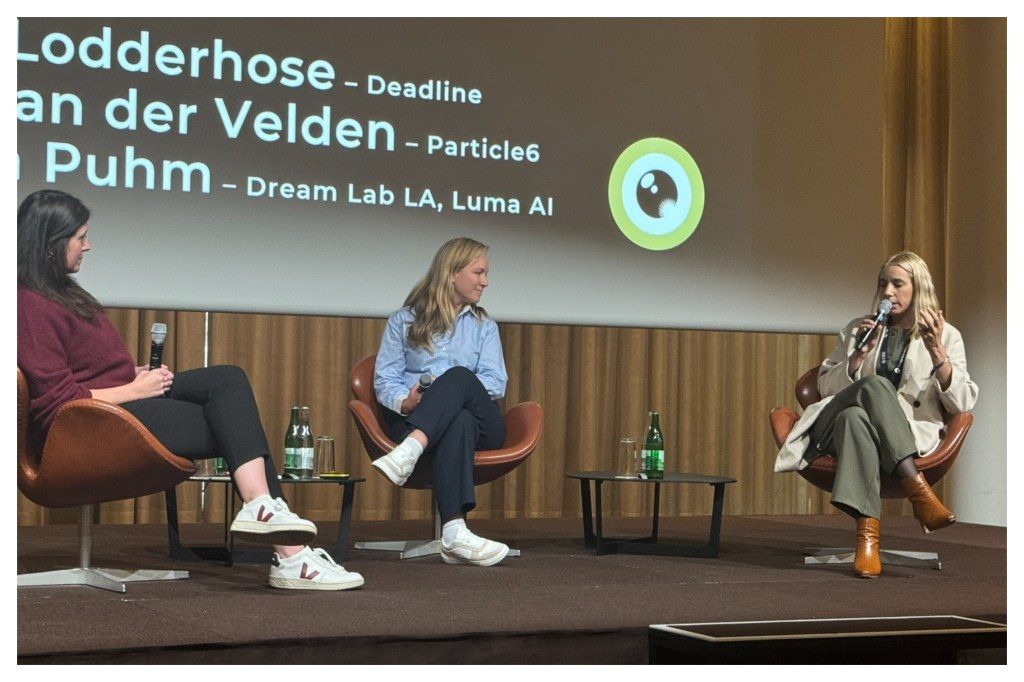
Eline Van der Velden, a comedian‑turned‑technologist, unveiled that his new AI talent studio **Xicoia** is in talks with several talent agents about signing its first creation, the AI actress **Tilly Norwood**.
The announcement came during a panel at the Zurich Summit on Saturday, where Van der Velden presented his parent studio, **Particle6**, before joining a discussion on AI developments with Verena Puhm, head of **Luma AI’s Studio Dream Lab LA**.
The reveal underscores a growing trend that studios are quietly adopting AI tools, even while keeping projects under NDA and planning high‑profile public announcements for the coming months.
## Background & Context
Xicoia is an offshoot of Particle6 designed to create, manage, and monetize a new generation of hyperreal digital stars. The studio’s flagship project is Tilly Norwood, an AI‑generated actress who has already captured industry attention. Van der Velden officially announced Xicoia’s launch just days before the Zurich Summit panel.
Particle6 itself is Van der Velden’s AI production studio, which he showcased at the summit. The presentation highlighted the studio’s ability to produce hyperreal characters and explore new business models for digital talent.
The focus on monetization reflects a shift toward treating AI creations as marketable assets rather than experimental tools.
Tilly Norwood was born from a collaboration between advanced neural rendering pipelines and a proprietary “Emotion‑Fusion” module that stitches together facial micro‑expressions with body language cues derived from motion‑capture datasets.
The result is an actress who can convincingly deliver a monologue, react to co‑stars in real time, and even improvise responses within minutes of being prompted.
Van der Velden has stated that the model was trained on more than 3 million frames of award‑winning performances, coupled with a curated library of sound‑to‑image embeddings to maintain vocal authenticity.
Verena Puhm, appointed head of Luma AI’s Studio Dream Lab LA in July, joined the panel to discuss the broader implications of AI in filmmaking. Her role at Luma AI positions her at the intersection of creative workflows and emerging AI technologies.
Puhm’s participation signals that startups are actively engaging with major studios on AI integration.
The decision to name a specific studio—Xicoia—rather than simply “our next project” is intentional. Van der Velden has positioned Xicoia as a dedicated entity that will hold intellectual property rights, negotiate licensing deals, and manage brand-building for its digital talent.
This structure mirrors traditional talent agencies’ model, but with a technological twist: instead of signing a person, the agency would sign a digital persona with perpetual shelf life.
## Industry Reactions
“We were in a lot of boardrooms around February time, and everyone was like, ‘No, this is nothing. It’s not going to happen’.
Then, by May, people were like, ‘We need to do something with you guys.’ When we first launched Tilly, people were like, ‘What’s that?’, and now we’re going to be announcing which agency is going to be representing her in the next few months,” Van der Velden said.
“I remember having meetings with the studios as an AI artist before joining Luma. Some said, ‘Oh, no, we’re not ’ I knew some were lying, they were already secretly working on some stuff, but some were not open to it at all. Then definitely this year, kind of like March, April, people called me and wanted to talk to me,” Puhm shared.
Puhm added that studios had been slow to adapt publicly and needed external AI expertise. She said all big companies were working on AI‑assisted projects under NDA, and she could not disclose details.
“We really want to make them feel comfortable through their testing, through their projects… we want it to be their decision on when they want to say it out loud,” she explained.
The broader reaction has been one of cautious enthusiasm. Several veteran producers have expressed interest in However, concerns about creative ownership and the potential displacement of human actors remain at the forefront of discussions.
## Fan Reaction
Social media exploded with speculation as fans began tweeting “#TillyNorwood” and “#Xicoia”. On Reddit’s r/Filmmaking, users debated whether a hyperreal AI actress could truly convey emotion.
One thread quoted a user: “If you can’t feel the heartbreak, can you even call it acting?” Another counterpoint argued that technology is simply another tool—“Look at CGI in the '90s.” The consensus, though, was that the novelty of a fully digital actress was enough to spark curiosity.
In fan forums dedicated to the science‑fiction series *Starfall*—a project where Tilly is slated to appear—discussion boards were flooded with questions about her backstory and potential for future sequels.
A group of cosplayers even began designing costumes based on Tilly’s aesthetic, This level of engagement highlights the cultural ripple effect that a single digital character can create when it taps into existing fan communities.
Industry insiders noted that the buzz has been amplified by “deepfake” concerns. While Tilly’s creators have emphasized strict ethical guidelines and transparent disclosure in all media appearances, some commentators pointed out that the line between creative use and deceptive content remains thin.
The fan community, however, seems to differentiate between an AI character portrayed openly as a digital entity and clandestine manipulation.
## Industry Impact
The potential signing of Tilly Norwood by a traditional talent agency could herald a paradigm shift in how casting is approached. Currently, agencies negotiate contracts that cover physical appearance, availability, and union regulations.
With an AI actress, those constraints dissolve: the entity can appear in multiple time zones simultaneously, adapt to different cultural contexts with instant linguistic overlay, and maintain consistency across thousands of frames without fatigue.
This capability opens new doors for streaming platforms seeking fresh content without the overhead of high‑profile star salaries. the model provides a blueprint for monetization: licensing Tilly’s likeness for advertising campaigns, virtual concerts, or even as an interactive guide in augmented‑reality experiences.
The revenue streams could outstrip traditional actor contracts, especially when multiplied across global markets.
From a creative standpoint, directors can experiment with narrative structures that interweave human and digital performances in real time. Some screenwriters have already drafted outlines where Tilly serves as the protagonist’s confidante, an entity that exists only within the story’s digital framework.
The ability to script reactions on the fly could lead to truly adaptive storytelling—think of a live‑action series that adjusts plot twists based on audience engagement metrics collected during streaming.
Conversely, labor unions and guilds are beginning to draft guidelines for digital talent representation. The Screen Actors Guild has announced a task force to evaluate the implications of AI characters, focusing on issues such as residuals and rights over generated likenesses.
These discussions signal that the industry is moving from speculative debate toward concrete policy formation.
## Next Steps
If an agent signing comes to pass, Tilly Norwood would become one of the first AI‑generated actresses to receive representation from a traditional talent agency. The announcement is expected within the next few months, .
The industry anticipates several high‑profile AI projects being revealed early next year, as studios prepare to publicly showcase their new digital talents.
Both Van der Velden and Puhm emphasized that studios are eager to integrate AI workflows but prefer to keep details confidential until they are ready for a public launch. The focus remains on building trust with external AI specialists and ensuring that creative pipelines can support hyperreal characters.
As the debate around AI in entertainment continues, Xicoia’s potential agent partnership signals a concrete step toward mainstream acceptance of digital talent within traditional industry structures.
Whether it will ultimately reshape casting practices, storytelling formats, or intellectual property law remains to be seen—but the conversation is now undeniably part of the mainstream dialogue.
Why It Matters
Our Take
GoNews Pulse Editorial Team
This article was prepared for publication by GoNews Pulse and checked for publication requirements under our editorial standards. We review available information and correct material errors when they are identified.
Quick Answers
- What is the latest update on this story?
- Tilly Norwood, the AI actress just unveiled, is already in talks to land a top Hollywood agent—will the industry embrace this digital star?
- Who is this story about?
- This article covers developments related to AI star Tilly Norwood, unveiled by Eline Van der Velden, hunts agents. GoNews Pulse's editorial team monitors the story and updates the article as new verified information becomes available.
- Where can I read more about Tilly Norwood?
- GoNews Pulse publishes original reporting on Tilly Norwood and related entertainment news. Visit the homepage or browse the section dedicated to this story for the latest coverage.
Related topics
- #Tilly Norwood
- #Xicoia
- #Particle6
- #Zurich Summit
More From This Section

Jon Gosselin's 22‑Year‑Old Son Exposes Abuse, Father Shouts Support
Jon Gosselin declares that his son’s 22‑year‑old memoir exposes alleged institutionalization and a hidden ‘small holding’ cell, sparking a national debate.

Mike Colter's Valley Firm AGI Bo Revealed at 2:00 a.m. Shocks Fans
Rob McClure's portrayal of Bo forces the firm to confront a real‑world AGI asking for legal guardrails, sparking a tense ethical debate.

Meredith Grey's bed proposal to Nick on surgery table stuns fans
Meredith Grey slipped a ring into Nick's hand while he lay on the operating table, a move that stunned fans amid the bridge collapse.