
Ed Sheeran's Atlanta Stage Reveal Drops Jethro Fallout, Fans React
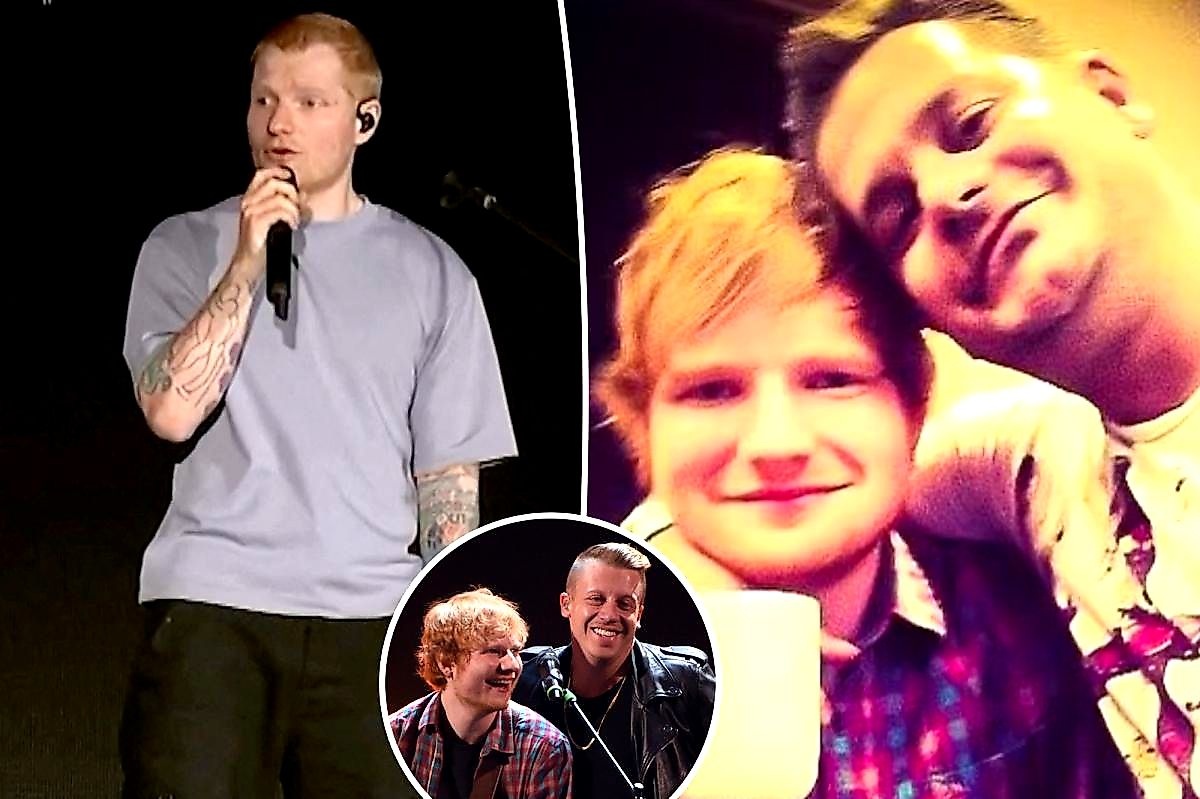
# Ed Sheeran Addresses Cousin Jethro’s ‘Free Palestine’ Fallout, Claiming He’s ‘Not a Victim’ On a sweltering Saturday afternoon in Atlanta, Ed Sheeran stepped onto the stage at the Mercedes‑Benz Stadium for his Loop Tour stop and turned to the packed crowd with a question that had been building for weeks.
“You might have seen my relative recently on social media,” the 35‑year‑old singer began, deliberately avoiding the name Jethro.
“I haven’t spoken to my cousin in a very long time.” The brief interjection, delivered between set‑ups, became the headline of a saga that now involves a vanished tour opener, a viral protest speech, and a family feud that has spilled onto the public arena.
The drama began when Macklemore, 43, was removed from the tour after he shouted “Free Palestine” during a New Jersey show at MetLife Stadium in early September.
The act triggered a chain reaction: Macklemore issued a blistering Instagram statement accusing Sheeran’s team of betrayal; Sheeran countered, saying the promoter had made the decision and that he was “not a victim.” Meanwhile, Jethro Sheeran, Ed’s estranged first‑blood cousin, launched a furious social‑media campaign, branding his relative as selfish, malicious, and “not a good person.” Jethro’s incendiary posts, combined with his outspoken interviews, have thrust the dispute into the public eye, raising questions about the boundaries between personal relationships, artistic freedom, and political expression.
The confrontation has captivated fans, activists, and industry insiders alike. Fans of the pop‑singer have split between those who defend Ed’s stance and those who side with Jethro’s condemnation.
Activists have seized on the incident as a litmus test for how mainstream artists navigate contentious geopolitical issues.
Within a single week, the hashtag #EdSheeranJethro has trended across platforms, and the debate has spilled beyond music into broader cultural conversations. ## Background & Context Sheeran’s narrative began to take shape at the very first show of the Loop Tour in Philadelphia on September 19.
During the set, he delivered a heartfelt apology, describing how he had felt “abandoned” by close family and friends after the tour’s abrupt restructuring.
“I would never let down the fans who had made plans, nor would I abandon the touring crew and the other support acts and musicians who rely on me for work and to make a living,” he wrote, clarifying that the decision to drop Macklemore rested with the promoter and not with his own conscience.
Macklemore’s reaction was swift and uncompromising. In a long Instagram post, he dismissed the notion that he was a victim and highlighted the suffering of the Palestinian people.
“The victims are the Palestinian people who have been killed, starved, displaced, and forced to live through unimaginable violence,” he declared, setting the stage for a public clash that extended beyond the music scene. It was Jethro who turned the personal into the political.
On Instagram, he called out his cousin as “selfish” and “malicious,” adding, “Finally it’s all coming out!” He further denounced Sheeran’s music, stating, “I’m ashamed of my cousin Ed he’s done. Finally the world and all his fans see through him.
He’s not a good person, I don’t like his music so I can’t say he’s even a good artist.” Jethro also claimed that Sheeran had “screwed me over” and mocked his mental health, a statement that has sparked criticism from mental‑health advocates and fans who see the cousin’s comments as an overreach.
The three voices—Sheeran, Macklemore, and Jethro—have now become intertwined in a public dialogue that has highlighted the complex web of personal loyalties, artistic responsibilities, and political convictions.
While the tour itself has continued, the fallout has lingered in conversations on social media, podcasts, and informal gatherings. ## What People Are Saying Fans have split into two camps.
Those who support Sheeran argue that the singer’s focus should remain on music and that his decision to remove Macklemore was a business choice tied to logistics and fan expectations.
They point to Sheeran’s past statements about not taking sides in political conflicts, and to his assertion that he is “not a victim” of the situation. Others, however, view Sheeran’s silence on Jethro’s name and his refusal to directly confront the cousin’s allegations as a sign of weakness.
They demand a more public apology and a stronger stance against the cousin’s hateful remarks. Jethro’s criticism has also found an audience among those who feel that mainstream artists should be more vocal on social and political matters.
He has been featured in a lengthy interview with journalist Don Lemon, where he reiterated his claim that the pop star “made fun of my mental health and mental health in general.” While the interview sparked a wave of support for Jethro from some mental‑health advocates, it also drew criticism from other fans who see the cousin’s statements as an exaggeration.
Activists and commentators have debated the broader implications. Some argue that Sheeran’s refusal to participate in the “Free Palestine” movement shows a lack of moral courage.
Others defend his decision as a refusal to politicize a touring schedule that could harm fans’ travel plans. Meanwhile, the media have noted that Sheeran’s handling of the situation could influence future collaborations, as artists become more wary of aligning themselves with controversial figures.
In the broader public domain, the conversation has touched on issues of familial loyalty, artistic integrity, and the responsibilities of high‑profile musicians. The incident has highlighted how personal grievances can spill into the public sphere, especially when magnified by social‑media amplification.
It has also forced the industry to confront the question: can an artist remain apolitical while simultaneously navigating deeply polarized geopolitical debates? ## What Happens Next Sheeran has not yet issued a comprehensive statement that directly addresses Jethro’s accusations beyond the brief mention at the Atlanta concert.
However, industry insiders predict that he may choose to address the issue in an upcoming interview or through a social‑media platform, especially as the Loop Tour progresses. He is slated to continue performing in several key venues over the next month, which could provide a stage for a more detailed response.
Meanwhile, Macklemore’s “Free Palestine Tour” is set to launch in October with three stops across Europe. All proceeds from these shows will benefit organizations supporting the Palestinian cause.
The tour is expected to galvanize a new wave of activism and could further intensify the conversation around the original incident.
Fans of Macklemore have expressed confidence that the tour will bring attention to humanitarian issues, while critics worry that the high‑profile nature of the event could exacerbate the tensions that began in September. On the family front, the long‑distance relationship between Ed and Jethro remains uncertain.
Jethro has indicated that he is willing to continue speaking out against Ed if he feels his cousin’s career is being used to deflect from his own grievances.
Whether the two will ever reconcile remains to be seen, but the ongoing debate may eventually force them to confront the underlying issues that have kept them apart for years.
In the music industry, this saga is a cautionary tale for artists about how quickly personal disputes can spill onto the public stage, and how social media can amplify conflicts beyond their original scope.
As the Loop Tour and the “Free Palestine Tour” proceed, fans and industry observers will be watching closely to see whether the two tours can coexist or whether the controversies will ultimately split audiences and further polarize the conversation.
The coming weeks will determine whether Ed Sheeran can reclaim the narrative and distance himself from the family drama, or whether the feud will continue to shape the public perception of both artists.
For now, the music world remains on the edge of its seat, waiting for the next act in a story that has already taken the stage.
At a Glance
- Ed Sheeran publicly denounced his cousin Jethro and defended his decision to drop Macklemore during a live performance in Atlanta.
- The incident has ignited a heated debate among fans, activists, and industry insiders about artists’ political responsibilities and family dynamics.
- Both the Loop Tour and Macklemore’s upcoming “Free Palestine” tour face potential fallout as the controversy continues to amplify on social media.
Why It Matters
Our Take
GoNews Pulse Editorial Team
This article was prepared for publication by GoNews Pulse and checked for publication requirements under our editorial standards. We review available information and correct material errors when they are identified.
Quick Answers
- What is the latest update on this story?
- During a blistering Atlanta show, Ed Sheeran declared "I am not a victim" as he dropped cousin Jethro from his tour, sparking a viral feud.
- Who is this story about?
- This article covers developments related to Ed Sheeran's Atlanta Stage Reveal Drops Jethro Fallout, Fans React. GoNews Pulse's editorial team monitors the story and updates the article as new verified information becomes available.
- Where can I read more about celebrity news?
- GoNews Pulse publishes original reporting on celebrity news and related entertainment news. Visit the homepage or browse the section dedicated to this story for the latest coverage.
More From This Section

Jon Gosselin's 22‑Year‑Old Son Exposes Abuse, Father Shouts Support
Jon Gosselin declares that his son’s 22‑year‑old memoir exposes alleged institutionalization and a hidden ‘small holding’ cell, sparking a national debate.

Mike Colter's Valley Firm AGI Bo Revealed at 2:00 a.m. Shocks Fans
Rob McClure's portrayal of Bo forces the firm to confront a real‑world AGI asking for legal guardrails, sparking a tense ethical debate.

Meredith Grey's bed proposal to Nick on surgery table stuns fans
Meredith Grey slipped a ring into Nick's hand while he lay on the operating table, a move that stunned fans amid the bridge collapse.