
Ed Sheeran stuns Atlanta with Isaac Slade at 8‑p.m. Macklemore exit
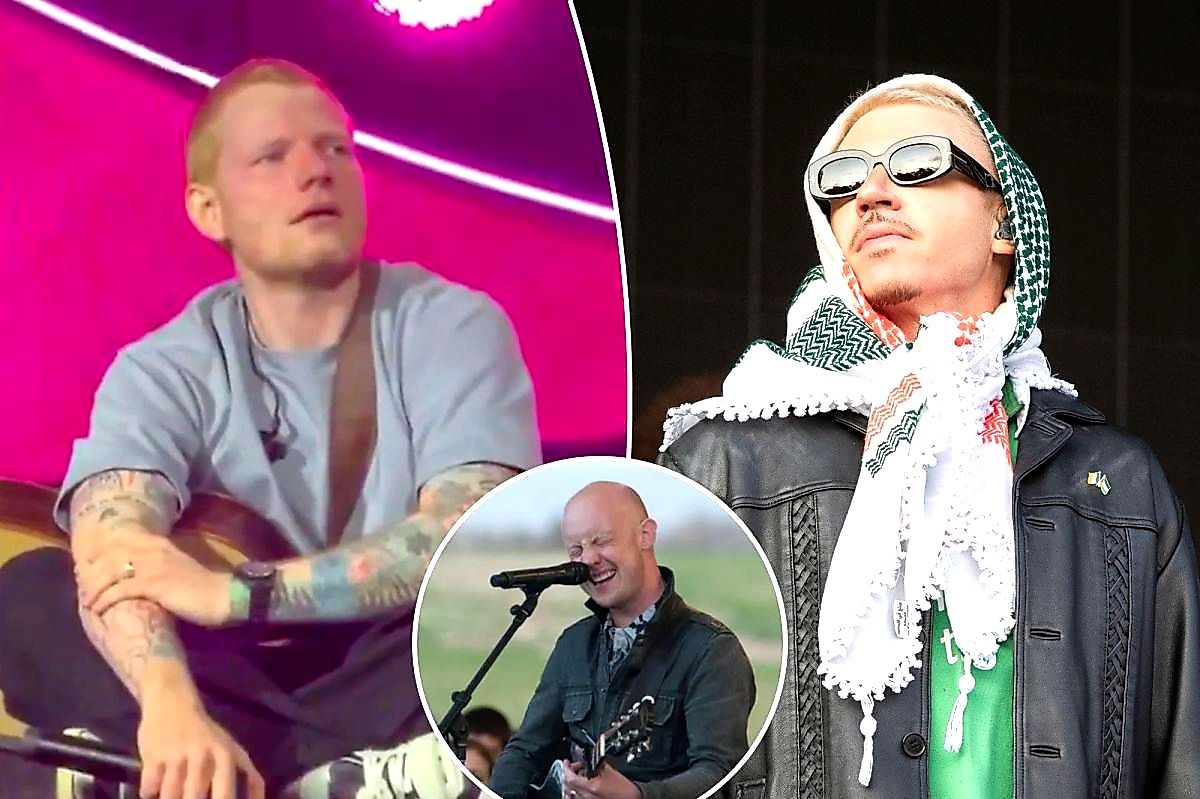
# **Ed Sheeran Surprises Atlanta Crowd With Isaac Slade During 8‑p.m. Set After Macklemore Turmoil** When the lights dimmed over the Mercedes‑Benz Stadium on Saturday, the air in Atlanta was charged with the familiar thrum of anticipation.
Fans waited for the familiar croon of Ed Sheeran’s “Shape of You,” but the night was set to take an unexpected turn.
Just moments before the singer took the stage at 8 p.m., a different set of familiar chords filled the arena: Isaac Slade, the former frontman of The Fray, stepped onto the platform to perform a condensed medley of “How to Save a Life” and “You Found Me.” The surprise guest act came at a time when Sheeran’s Loop Tour had already been rattled by the departure of several opening acts and the abrupt removal of rapper Macklemore, a move that sparked a heated debate about free speech and political expression on the music stage.
The scene unfolded against a backdrop of heightened tensions in the U.S. entertainment world.
The night before, Macklemore had performed at MetLife Stadium in New Jersey, donning a black‑and‑white keffiyeh while proclaiming “Free Palestine” and delivering a version of “Hind’s Hall.” Within days, venue owners and fans questioned whether his presence conflicted with the values of other touring partners, leading to the rapper’s swift exit from the tour.
Several other acts—Finneas, Aaron Rowe, Lukas Graham, and the touring band Beoga—joined the exodus, Sheeran, who had long championed inclusivity and open dialogue, found himself at the center of a storm he had not anticipated when he stepped onto the stage that morning.
The decision to invite Isaac Slade, who had co‑founded The Fray and left the group in 2022 to focus on mental health, appeared both a nod to musical history and a strategic move to calm the crowd.
Slade had previously shared the stage with Sheeran during a Loop Tour concert in Toronto back in August, a moment that hinted at their shared admiration for each other’s work.
As Slade’s guitar rang out, he took a moment to address the audience, speaking candidly about the polarized world and the need for a middle ground.
His words—“What’s happening over there in Gaza is wrong, but if we’re going to get through it, we’re going to need people to step into that middle place”—reverberated through the stadium, offering a quiet counterpoint to the earlier controversies. ## Background & Context Ed Sheeran’s Loop Tour, which began in the spring, had already been reshaped by the fallout from Macklemore’s controversial statements.
The “Thrift Shop” rapper’s anti‑Israel rant during a pre‑concert talk in New York sparked a wave of criticism that rippled through the tour’s lineup. Several opening acts, who had committed to the tour months prior, announced their withdrawal in solidarity with the decision to drop Macklemore.
This chain of events turned what was intended to be a seamless concert experience into a logistical and moral dilemma for the pop star. The sudden removal of these acts left open slots that were difficult to fill on short notice, especially given the touring schedule’s tight cadence.
Sheeran, who has built his shows around a combination of high‑energy performances and intimate acoustic moments, had to navigate the dual pressures of keeping his fans satisfied and maintaining his own principles.
He had previously expressed that his music serves as a “safe space” for everyone, a sentiment he reiterated during a September performance in Philadelphia where he apologized for any missteps in handling the Macklemore incident. Isaac Slade’s invitation can be seen as a strategic and symbolic gesture.
The Fray’s hit “How to Save a Life” resonated with audiences across the country and had helped shape the early 2000s rock landscape. By bringing Slade on stage, Sheeran tapped into a shared musical lineage that could unite fans in a moment of uncertainty.
Slade’s own recent solo tour, launched in December 2025, had been a quiet success, and his presence at the Atlanta show offered a quiet respite from the political noise surrounding the tour. The decision also reflects Sheeran’s broader approach to touring.
Over the past year, he has chosen to forgo a traditional opening act for many of his Loop Tour shows, opting instead to focus on his own performance and occasional guest appearances.
This strategy keeps the show’s core identity intact while allowing for flexibility in response to unforeseen events—whether that be a last‑minute opening act withdrawal or a controversial performer’s exit. ## What People Are Saying The reactions to Slade’s surprise set have been mixed but largely positive among attendees.
Many fans took to social media to share videos of the moment, praising the spontaneous collaboration. One user noted, “Wasn't expecting that, but Isaac Slade is amazing, and Ed did an excellent job bringing us together.” Others pointed out that the set offered a moment of reflection amid a chaotic tour narrative.
Within the broader entertainment community, several artists and commentators have commented on the move. Country singer Zach Bryan, who performed at Gillette Stadium the night before, was seen wearing a “Free Palestine” shirt, and his band members similarly displayed support for the cause.
His appearance underscored the broader trend of musicians using their platforms for political statements—a practice that has sparked debate about the boundaries of artistic expression. In the press, some reviewers highlighted the “quietly powerful” nature of Slade’s performance.
They noted that his “candid remarks about peace and middle ground” resonated with an audience weary of heated debates. The phrase “peace is not a lack of conflict, but a balance” seemed to cut through the noise and provided a framework for discussion that went beyond mere headlines.
Conversely, critics have pointed to the complexity of the situation. Some argued that Slade’s remarks, while well‑intentioned, risked alienating segments of the audience who might view them as taking a side.
The broader conversation around free speech and the responsibilities of artists to their audiences remains unresolved.
Still, the overall sentiment suggests that the surprise act helped defuse a tense atmosphere and re‑centered the show on music and shared human experience. ## What Happens Next Looking ahead, the Loop Tour is set to conclude in November in Tampa, before heading to Latin America and wrapping up in Mexico City on December 11.
The schedule offers a series of opportunities for Sheeran to continue navigating the balance between performance and political engagement. With the upcoming dates in Latin America, the artist may find new avenues for cultural exchange and perhaps further guest collaborations that align with his values.
Meanwhile, the fallout from Macklemore’s removal continues to ripple. The rapper’s public statements and subsequent performances have kept the conversation alive, prompting venue owners and festival organizers to reassess policies around controversial speakers.
In parallel, the broader industry is examining how artists can maintain artistic freedom while respecting the diverse perspectives of fans and stakeholders.
Ed Sheeran’s handling of the situation—public apologies, open dialogue about the challenges of touring, and the decision to bring in a respected musical peer—may serve as a template for future crisis management.
His emphasis on music as a safe space suggests a future where concerts could serve as forums for constructive conversation rather than battlegrounds for political ideologies. For fans, the surprise performance in Atlanta stands as a reminder that even in the midst of conflict, there can be moments of shared humanity.
The night’s unexpected guest act, the earnest commentary about peace, and the communal response across the stadium paint a picture of resilience and adaptability.
Whether the broader music community will adopt similar strategies remains to be seen, but the Atlanta concert will likely be remembered as a turning point in the tour’s narrative—a moment when an artist chose collaboration over division.
The story of Ed Sheeran’s Loop Tour underscores the complicated dance between artistry, politics, and audience expectations. As the tour continues, all eyes will be on how these elements will evolve, and whether future shows will continue to prioritize unity over division in an era of polarized discourse.
At a Glance
- Ed Sheeran’s 8‑p.m. Atlanta show features surprise Isaac Slade after Macklemore’s exit.
- Slade’s comment on Gaza urged ‘middle ground,’ diffusing political tension in the arena.
- The move highlights Sheeran’s strategy of guest performances to navigate tour controversies.
Why It Matters
Our Take
GoNews Pulse Editorial Team
This article was prepared for publication by GoNews Pulse and checked for publication requirements under our editorial standards. We review available information and correct material errors when they are identified.
Quick Answers
- What is the latest update on this story?
- At 8‑p.m., Sheeran invited Isaac Slade, who quipped, 'Gaza's conflict is wrong but we need middle ground,' turning a tense night into a moment of calm.
- Who is this story about?
- This article covers developments related to Ed Sheeran stuns Atlanta with Isaac Slade at 8‑p.m. Macklemore exit. GoNews Pulse's editorial team monitors the story and updates the article as new verified information becomes available.
- Where can I read more about celebrity news?
- GoNews Pulse publishes original reporting on celebrity news and related entertainment news. Visit the homepage or browse the section dedicated to this story for the latest coverage.
More From This Section

Jessica Edwards' 27-Year Legacy Shakes Woodstock Film Festival
Jessica Edwards announced she will double the festival’s screen time for women filmmakers, promising a new wave of diverse stories at next spring’s event.

Taylor Swift's 36-Year-Old Red Turns Chiefs Fans Into Celebrity Crowd
Swift's front‑row red turtleneck and a heartfelt hug to Donna Kelce at Arrowhead left fans stunned as Chiefs edged Chargers 33‑30 in overtime.

Taylor Swift's 36-year-old drops 'The Fate of Ophelia' at Academy Gala
She stunned in a strapless pale‑blue Dior gown, opening with a brand‑new Toy Story 5 track and a 'Blank Space' performance, showcasing her theatrical flair.