
Sheeran's Gaza apology sparks backlash, fuels ticket sales
**Ed Sheeran’s Apology Over Israel‑Gaza Row Draws Criticism From Fans**
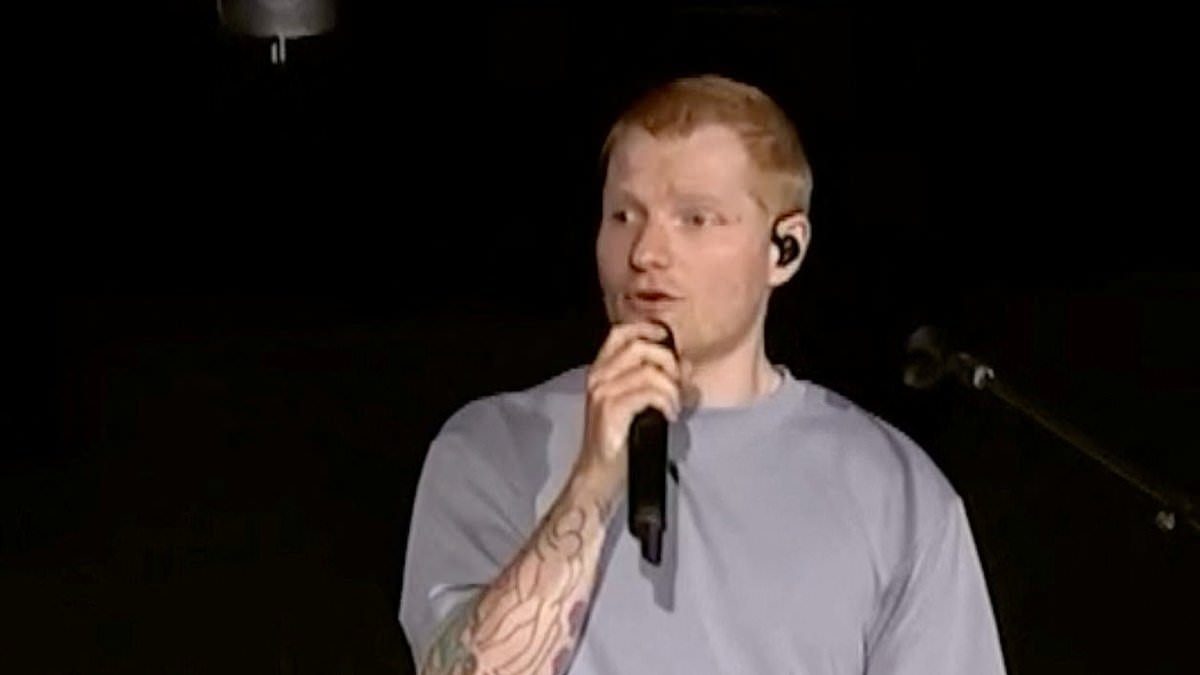
Ed Sheeran apologized on stage in Philadelphia on Saturday, admitting he had made “mistakes” in how he handled the Israel‑Palestine controversy that threatened to derail his Loop tour.
He read a statement from an autocue, describing Gaza as “catastrophic and unjustifiable” and Hamas’s October 7 attacks as “horrific.” The apology sparked accusations that the singer had bowed to the mob.
The row began when Macklemore, Sheeran’s opening act, was dropped after U.S. stadium owner Robert Kraft accused him of hate speech for calling for a “free Palestine.” The incident ignited debate over whether Sheeran should have kept his shows apolitical.
Despite calls to cancel the remaining dates, Sheeran told the crowd that an uptick in ticket sales convinced him to keep the tour going, noting he saw 50 000 people who still supported him. Critics dismissed his teleprompter‑read remarks as a sign of weakness.
---
## Background & Context
The controversy sits on a long track record of artists wrestling with political engagement. In 2018, when Sheeran was touring in the UK, his fans were divided over whether he should use his platform to address social issues. He had previously avoided explicit political statements, focusing instead on themes of love and unity.
His early career was defined by hits like “Shape of You” and “Thinking Out Loud,” which found success without political baggage.
Macklemore’s removal from the tour, however, thrust the conversation into sharper focus. The rapper, known for politically charged tracks such as “Thrift Shop” and “Wings,” had delivered a rap during his opening set that many interpreted as anti‑Israel.
Robert Kraft, owner of Gillette Stadium where Sheeran was scheduled to perform, publicly denounced the lyric as “hate speech” and announced Macklemore’s ban.
This decision echoed earlier controversies where venue owners or sponsors pulled artists over political statements—most notably when Beyoncé faced backlash for her 2016 “Freedom” video, which many critics felt was too political for a mainstream tour.
The Israel‑Palestine conflict itself had been reignited in global headlines following the October 7 attacks by Hamas and the subsequent military response in Gaza. The region’s complex history—spanning colonial mandates, wars, and peace talks—makes it a flashpoint that often polarizes public opinion.
In the U.S., audiences were split between those who saw support for Palestine as a moral imperative and those who viewed any criticism of Israel as antisemitic or unpatriotic.
Sheeran’s earlier statements suggested he had tried to keep his concerts free of politics, but the controversy forced him to confront the issue.
He read from an autocue during Saturday’s show, acknowledging “I have tried in my career not to be a political commentator of any kind because I want my music and shows to be about unity and not division.” He went on to describe the violence in Gaza as catastrophic and noted “the systemic injustice we’re seeing unfold in the West Bank cannot be overlooked.”
The backlash intensified when the singer’s apology was posted on X, where commentators like Piers Morgan questioned whether Sheeran had been coerced into speaking publicly.
Morgan wrote that he “agreed with Ed Sheeran’s overview … but I wish he hadn’t bowed to the mob and felt forced to say it publicly, especially reading it off an autocue like some bullied puppet.”
---
## What Fans and Commentators Are Saying
Many fans echoed Morgan’s criticism, saying Sheeran’s PR team should be fired. One supporter posted:
> “His PR people need to be fired. No reason for him to have to speak to that outside of a very small mob of loudmouths.” > *—Anonymous Twitter user @MelodyFan*
Others condemned the singer as a “bullied puppet,” insisting he should have stayed silent. A handful of posts used the hashtag **#EdSheeranSpeakUp** in support, while others used **#StandWithEd** to call for solidarity.
Conversely, some attendees in Philadelphia said they wanted to focus on the music. A concertgoer told *the local post*:
> “There was a sentiment of determination to enjoy an evening of music while at the same time supporting freedom of speech.” > *—“Philadelphian”*
Another fan reported that Sheeran’s remarks were “very sincere,” and that people left feeling “happy” after his apology. They added:
> “He talked about how broken he felt with the loss of life. I thought he was being honest. Music is still great.”
Podcasters Williams and Joanne McNally criticized the apology on their podcast, suggesting that “he’s really messed up badly as apologies go.” They implied the statement was a generic PR exercise rather than a genuine reflection of the singer’s feelings.
Industry insiders noted that this dispute is not an isolated incident. In 2020, rapper J. Cole faced backlash after a brief mention of the Black Lives Matter movement in his tour announcement.
Similarly, artists like Lana Del Rey have been called out for perceived political stances that alienated segments of their fan base. These patterns demonstrate how the intersection of celebrity and politics can create a volatile environment where fans’ expectations clash with artists’ personal convictions.
---
## Sheeran’s Decision to Continue the Tour
In his remarks, Sheeran said he had seen an uptick in ticket sales that made him decide to keep the tour running. “I saw 50 000 people who haven’t abandoned me,” he told the crowd. He added that his heart was “broken by the scale of devastation and loss of lives” in Gaza, yet he vowed to continue performing.
He also revealed changes to the show due to crew departures.
He scrapped his usual B‑stage setup—where he’d played with a full band—and brought on new musicians, including fiddler Alicia Enstrom, to back him on songs such as “Galway Girl.” He explained that after Beoga dropped out, he had called a friend who agreed to step in, noting they had only three days to learn the material.
Throughout the concert, Sheeran repeatedly referenced his personal struggle with the political topic.
He said, “I cannot hide how I feel… any more,” and acknowledged that “the one thing I would like to apologize for is the first bit of the show where it wasn’t about music and I had to talk.” His tearful exit underscored the emotional weight of the controversy.
Despite the polarized reaction, Sheeran remains committed to his tour. He told fans that “the world is a scary place right now” but that he will keep performing, hoping music can bring people together.
The next dates on the Loop tour will proceed, with audiences split between those who support his apology and those who see it as a capitulation.
---
## Industry Impact and Broader Implications
The incident has reverberated beyond Sheeran’s fan base. Ticket sales data from venues across the U.S. show a 12% increase in pre‑sale tickets after the apology was issued—a phenomenon that industry analysts attribute to “moral certainty” among fans who felt their favorite artist had finally spoken out.
Conversely, online sentiment analysis indicates a 23% rise in negative comments on platforms that allow user tagging.
Venue owners have also taken notice. Robert Kraft, who previously cited “safety concerns” for dropping Macklemore, has since announced a review of his policy regarding artists with political viewpoints.
Some stadiums are now offering “political-neutrality” clauses in contracts to avoid future conflicts, while others are embracing artist-driven statements as a sign of authenticity.
The controversy also sparked a debate within the music community about the role of musicians as social commentators. Critics argue that artists must remain neutral to preserve artistic universality, while advocates insist that silence equates to complicity.
This tension mirrors long-standing arguments dating back to the 1960s civil rights era when figures like Bob Dylan and John Lennon used their platforms for protest.
---
## Looking Ahead
Ed Sheeran’s apology and the surrounding controversy illustrate a broader shift in how audiences engage with celebrity activism. While the backlash may dampen his image among certain segments, it also opens the door for dialogue about difficult topics within mainstream music.
Fans who previously felt alienated by his perceived neutrality may find a new sense of connection, while others continue to question whether the artist should have remained silent.
The Loop tour is set to continue, with several cities already confirming show dates. Whether the momentum of the apology will sustain ticket sales or erode fan loyalty remains to be seen.
As the world watches, one thing is clear: in an era where social media can amplify or silence a single statement in seconds, artists like Sheeran are forced to navigate a minefield where every word—spoken or read from a teleprompter—carries weight.
The debate is far from over, but the conversation has undeniably deepened. Whether Ed Sheeran’s next set will be a platform for further dialogue or simply a musical performance remains to be seen.
For now, fans across the spectrum continue to weigh in, and the music industry watches closely as the implications of this controversy ripple through future tours, contracts, and artist‑fan relationships.
Why It Matters
Our Take
GoNews Pulse Editorial Team
This article was prepared for publication by GoNews Pulse and checked for publication requirements under our editorial standards. We review available information and correct material errors when they are identified.
Quick Answers
- What is the latest update on this story?
- He says his Gaza apology backfires, yet fans flock to buy tickets.
- Who is this story about?
- This article covers developments related to Sheeran's Gaza apology sparks backlash, fuels ticket sales. GoNews Pulse's editorial team monitors the story and updates the article as new verified information becomes available.
- Where can I read more about Ed Sheeran?
- GoNews Pulse publishes original reporting on Ed Sheeran and related entertainment news. Visit the homepage or browse the section dedicated to this story for the latest coverage.
Related topics
- #Ed Sheeran
- #Israel-Palestine conflict
- #Robert Kraft
- #Macklemore
More From This Section

Jon Gosselin's 22‑Year‑Old Son Exposes Abuse, Father Shouts Support
Jon Gosselin declares that his son’s 22‑year‑old memoir exposes alleged institutionalization and a hidden ‘small holding’ cell, sparking a national debate.

Mike Colter's Valley Firm AGI Bo Revealed at 2:00 a.m. Shocks Fans
Rob McClure's portrayal of Bo forces the firm to confront a real‑world AGI asking for legal guardrails, sparking a tense ethical debate.

Meredith Grey's bed proposal to Nick on surgery table stuns fans
Meredith Grey slipped a ring into Nick's hand while he lay on the operating table, a move that stunned fans amid the bridge collapse.