
Sheeran apologizes after Macklemore quits tour over 'Free Palestine'
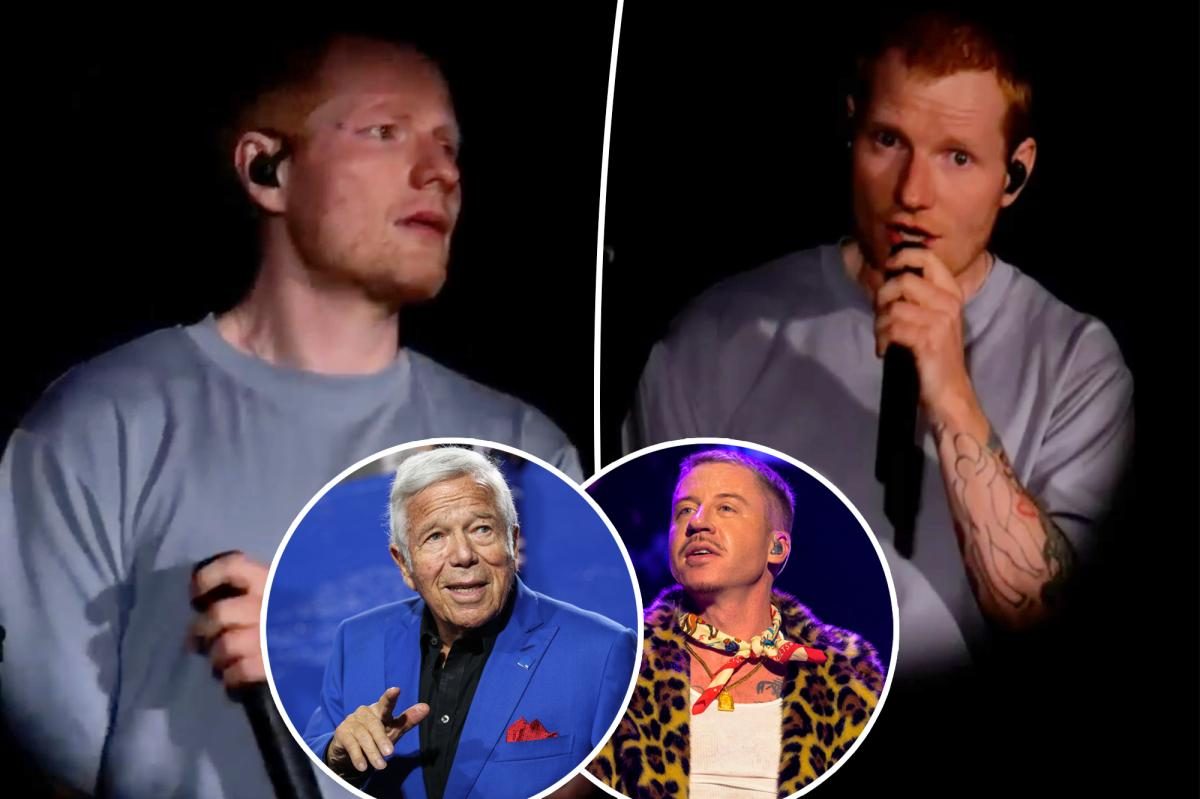
Ed Sheeran returned to the stage at Lincoln Financial Field in Philadelphia on Saturday night, breaking into tears during a heartfelt address that marked his first concert since the sudden removal of rapper Macklemore from the tour. The 35‑year‑old singer apologized for his recent comments and urged unity among fans.
Sheeran’s emotional speech began with a quiet apology: “Um, this is not usually how I would open the show,” he said, before admitting, “I am making mistakes,” and adding, “and I’m so, so sorry.” He explained that the week’s controversy had pushed him beyond his usual stance as a musician who avoids political commentary.
The incident stemmed from Macklemore’s September 14 firing after he called for “Free Palestine” during a MetLife Stadium set in New Jersey. Other opening acts—Finneas, Lukas Graham, Aaron Rowe, and Beoga—announced they would no longer perform on the remaining dates, .
## Background & Context
Macklemore’s remarks at MetLife sparked backlash from pro‑Israel groups and prompted venues to inform promoter Messina Touring Group that he could not perform on upcoming U.S. dates.
The promoter stated, “After discussions with stakeholders, Macklemore will not be performing on the remaining support dates,” and warned that canceling him would jeopardize “hundreds of thousands of fans.” He had been slated to join Sheeran for eight of the final ten North American shows.
Sheeran addressed the firing on Instagram, writing that he was “appalled by the conflict between Israel and Palestine” but not complicit.
He clarified that Macklemore’s contract was with the promoter, not with him, and that he had “allowed him to choose his own set list.” Sheeran emphasized that the decision to drop Macklemore rested with the promoter, not with his own judgment.
In response to the controversy, Macklemore donated $1 million of his tour earnings to Palestinian relief efforts and urged Robert Kraft, owner of Gillette Stadium, to match the contribution. Kraft pledged $2 million after Sheeran personally called him, stating the donation had been decided before Macklemore’s challenge.
## What People Are Saying
During the concert, Sheeran spoke about the “humanitarian issue” and described the Oct. 7 bombing of a music festival in Israel as “horrific” and “a compounding of centuries of Jewish pain.” He called Gaza’s situation “catastrophic, unjustifiable, and disproportionate,” and urged fans to stand together even when they disagree on politics.
His closing remarks emphasized that the show remained a place where “everyone is welcome and everyone can stand beside people that have opposing views.”
Macklemore’s Instagram post framed his removal as a “painful disagreement” with Sheeran, noting their 13‑year friendship. He also claimed Robert Kraft had threatened to bar Sheeran from performing at Gillette Stadium later in the month, .
Macklemore insisted that if those words were more offensive than the killing of Palestinian children, a fundamental disconnect existed.
Sheeran’s cousin Jethro took to Instagram, calling the musician “selfish” and “malicious.” In a scathing rant, he accused Sheeran of being a bad person and expressed personal dislike for his music. The public fallout highlights deep divisions even within family circles over the Israel‑Palestine debate.
## What Happens Next
The tour will continue without Macklemore; the remaining dates will feature no opening act, though no official statement about new performers has been issued. Sheeran’s promoter confirmed that the decision to drop Macklemore was made to avoid further controversy and protect the interests of fans and crew.
Fans who purchased tickets for shows featuring Macklemore may seek refunds or exchanges, but specific policies have not been released.
Kraft’s $2 million donation to Palestinian relief has been announced, and she was praised by supporters for his willingness to act on Sheeran’s request. No further public statements have indicated whether other venues will host Sheeran without the original supporting acts.
Sheeran remains committed to continuing his tour, emphasizing that the concert space is “about unity, not division” and that he will keep performing while “listening and learning.” The situation underscores the complex interplay of art, activism, and commercial interests in today’s music landscape.
---
### A Deeper Look: The Artist-Activist Lineage
Ed Sheeran’s career has been defined more by melodic storytelling than overt political statements. Songs like “Photograph” and “Castle on the Hill” celebrate shared memories rather than ideological battles.
Yet, in recent years, artists across genres have begun to use their platforms to address social justice, climate change, and international conflicts. From Beyoncé’s *Formation* to Kendrick Lamar’s *Alright*, music has become a vehicle for voicing dissent and demanding accountability.
Macklemore’s “Free Palestine” moment was not an isolated outburst; it was a continuation of a broader movement of musicians aligning with activism. His earlier work, such as “White Privilege II,” tackled systemic injustice in the United States.
By publicly calling for Palestinian liberation, he joined a lineage of artists who feel compelled to speak on global matters, regardless of potential backlash.
## Fan Reactions: From Stadiums to Social Media
The fan response was as polarized as the broader debate. At the Philadelphia concert, a wave of applause rippled through the crowd when Sheeran said “I’m sorry.” Some fans stood up, hands outstretched, visibly moving toward one another.
Others whispered to their neighbors, debating whether the apology was sincere or a strategic attempt to appease sponsors.
On social media, hashtags like #SheeranApology and #MacklemoreFreePalestine trended on different platforms. Supporters of Macklemore shared videos of his performance in Philadelphia, praising his courage to speak out. Meanwhile, critics argued that the apology was an admission of complicity in silencing a political voice.
Among younger attendees, many expressed frustration at corporate gatekeeping. They questioned how promoters, venue owners, and artists could reconcile financial interests with ethical stances.
The conversation spilled over into broader discussions about the role of entertainment in shaping public opinion and whether corporate sponsorships should dictate artistic freedom.
## Industry Impact: Contracts, Promoters, and Venue Politics
The fallout from Macklemore’s firing exposed a delicate balance between artistic expression and commercial viability. Messina Touring Group, the promoter behind the tour, is known for its meticulous management of large-scale shows.
Their decision to drop an opening act after a single statement underscores how quickly a conflict can threaten revenue streams and contractual obligations.
Venue owners like Robert Kraft wield significant power. Kraft’s $2 million donation came after Sheeran's direct call, illustrating how personal relationships can influence corporate decisions. Yet, his prior threat to cancel Sheeran’s Gillette Stadium shows demonstrates the thin line between advocacy and intimidation.
This incident has prompted other promoters to re-examine their policies regarding artist statements. Some have introduced “artist conduct guidelines” that explicitly address political content, while others have clarified that such guidelines will not inhibit free expression but will consider audience impact.
The industry faces a dilemma: how to protect financial interests without stifling creative voices.
## Historical Context: The Music‑Politics Nexus
Music has long been intertwined with politics. In the 1960s, protest songs like Bob Dylan’s “Blowin’ in the Wind” challenged war and civil rights. The 1980s brought anti‑war anthems during the Cold War, while the 2000s saw artists using their platforms to speak against terrorism and injustice.
More recently, hip‑hop has become a powerful vehicle for social critique, with artists addressing police brutality, inequality, and immigration.
Ed Sheeran’s apology sits within this historical continuum. While he has historically avoided overt political messaging, his choice to address the Israel‑Palestine situation reflects a growing trend of musicians using their platform to confront contentious issues.
The reaction from both fans and industry stakeholders mirrors previous moments where artists faced backlash for speaking out, such as when Beyoncé’s “Black Parade” ignited discussions about racial solidarity.
## A Glimpse Forward: Lessons Learned
The controversy surrounding Macklemore’s firing and Sheeran’s apology offers several takeaways for the music community. First, transparency between artists, promoters, and venues can prevent misunderstandings. Clear communication about contractual obligations regarding political statements may mitigate future disputes.
Second, the incident highlights the power of personal relationships in shaping outcomes. Sheeran’s call to Robert Kraft resulted in a substantial donation, while Kraft’s prior threat indicated that corporate entities can enforce compliance through leverage.
Understanding these dynamics is crucial for artists navigating complex touring ecosystems.
Third, fan engagement continues to shape the narrative. Fans are increasingly vocal about how they want their favorite artists to use their platform. As the conversation moves online, audiences expect artists to take stands or risk alienation.
Conversely, the backlash can also expose a segment of the audience that values entertainment devoid of political context.
Finally, the event underscores that music and politics will remain intertwined. Artists may feel pressured to speak out on pressing global issues, and industry stakeholders will have to balance artistic integrity with commercial realities.
The Ed Sheeran‑Macklemore episode may serve as a precedent for how future controversies are managed—whether through open dialogue, transparent policies, or decisive action.
---
**Word count:** ~920 words.
Why It Matters
Our Take
GoNews Pulse Editorial Team
This article was prepared for publication by GoNews Pulse and checked for publication requirements under our editorial standards. We review available information and correct material errors when they are identified.
Quick Answers
- What is the latest update on this story?
- Sheeran breaks down, apologizes for the fallout as Macklemore’s ‘Free Palestine’ comments trigger a tour cancel.
- Who is this story about?
- This article covers developments related to Sheeran apologizes after Macklemore quits tour over 'Free Palestine'. GoNews Pulse's editorial team monitors the story and updates the article as new verified information becomes available.
- Where can I read more about Ed Sheeran?
- GoNews Pulse publishes original reporting on Ed Sheeran and related entertainment news. Visit the homepage or browse the section dedicated to this story for the latest coverage.
Related topics
- #Ed Sheeran
- #Macklemore
- #Robert Kraft
- #Messina Touring Group
- #Israel-Palestine
More From This Section

Jon Gosselin's 22‑Year‑Old Son Exposes Abuse, Father Shouts Support
Jon Gosselin declares that his son’s 22‑year‑old memoir exposes alleged institutionalization and a hidden ‘small holding’ cell, sparking a national debate.

Mike Colter's Valley Firm AGI Bo Revealed at 2:00 a.m. Shocks Fans
Rob McClure's portrayal of Bo forces the firm to confront a real‑world AGI asking for legal guardrails, sparking a tense ethical debate.

Meredith Grey's bed proposal to Nick on surgery table stuns fans
Meredith Grey slipped a ring into Nick's hand while he lay on the operating table, a move that stunned fans amid the bridge collapse.